

Pulling fresh basil in February used to require a greenhouse or a forgiving climate. Today’s countertop hydroponics and seed-starting setups put that capability within reach of apartment dwellers, renters without balconies, and anyone whose windowsill gets more shade than sun. The eight kits below cover the most common indoor growing goals: low-maintenance herb gardens, compact systems for small kitchens, and a serious seed-starting tray for gardeners who want to raise dozens of seedlings at once. Each one trades off capacity, automation, and footprint in a slightly different way, so the right match depends less on brand hype and more on what you actually want to harvest.
A Quick View Of The Lineup

inbloom Hydroponics Growing System 12 Pods

Ahopegarden Hydroponics Growing System Kit 12 Pods LCD
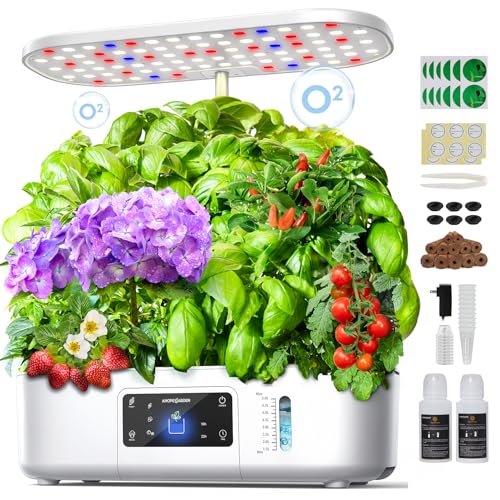
Ahopegarden Hydroponics Growing System 12 Pods Touch

Patigrow 60-Cell Self-Watering Seed Starter Tray

URUQ 8 Pods Hydroponics Growing System Black

URUQ 8 Pods Hydroponics Growing System White

Ahopegarden Hydroponics Growing System 12 Pods Climate Monitor

Ahopegarden Hydroponics Growing System 12 Pods Smart Detection
Taking A Closer Look At The Options
The inbloom 12-pod system targets the most common indoor gardening goal: keeping a steady rotation of kitchen herbs alive without daily babysitting. Its full-spectrum LED panel is built around a 16-hour-on, 8-hour-off cycle (the standard “daylight” pattern for leafy greens) and sits on an adjustable arm that lifts as plants grow, so a stretchy basil plant won’t outpace the light in week three.
A built-in reservoir alarm warns you before the pump runs dry, which solves the single biggest killer of countertop gardens: forgetting to refill until everything wilts. Compared with the Ahopegarden kits below, this one leans more toward set-and-forget than touchscreen tinkering, which is exactly the right tradeoff for first-time growers who just want basil, mint, and parsley to thrive.
Positive Points
- Twelve pods cover a generous herb rotation: basil, cilantro, dill, and lettuce can all run at the same time without crowding.
- The adjustable lamp height keeps taller plants from getting leggy (stretching toward inadequate light).
- Low-water alert prevents the most common rookie mistake: letting the reservoir run dry midweek.
- Full-spectrum LEDs support leafy herbs through every growth stage from seedling to harvest.
- Compact enough for a kitchen counter yet wide enough that the pod labels remain readable at a glance.
Things To Consider
- The reservoir needs refilling roughly every one to two weeks depending on what you grow, so plan a quick weekly check.
- Pod sponges and seed baskets are replaceable, but sourcing genuine refills means sticking with the same brand ecosystem.
Key Specs
Made For
First-time hydroponic gardeners who want a forgiving, hands-off setup that handles watering reminders automatically.
Skip It When
You want a touchscreen interface and modern aesthetics; the Ahopegarden 12-pod LCD model is a closer match.
Ahopegarden’s LCD kit takes the standard 12-pod hydroponic format and dresses it up for kitchen counters where aesthetics matter. The ABS plastic body (a tough, lightweight plastic common in appliances) keeps the unit under 17 inches tall, and the integrated touchscreen replaces the physical buttons found on older systems. For a tech-forward household, that single design choice makes the kit feel like it belongs next to the coffee maker rather than beside it.
The full-spectrum LED panel still follows the typical leafy-green rhythm, so growth performance is on par with the inbloom above. The real difference is in interaction: you tap a screen instead of guessing which button cycles the pump. For renters and apartment dwellers who entertain often, this one reads as a piece of furniture, not a science project.
Noteworthy Benefits
- LCD touchscreen simplifies pump and light scheduling for gardeners who prefer tap controls over buttons.
- Minimalist ABS body stays under 17 inches tall, leaving room above for upper cabinets.
- Twelve pods match the capacity of higher-end kits without expanding the footprint.
- Full-spectrum panel supports herbs and small leafy greens in low-light apartments.
Worth Noting
- Touchscreens can occasionally misread damp fingers, a common quirk reported with kitchen-placed electronics.
- ABS plastic wipes clean easily but can show hard-water spots if your tap runs mineral-heavy.
Whose Shelf It Belongs On
Design-conscious cooks who want their herb garden to look intentional alongside other modern countertop appliances.
Reach For A Different Pick When
You care more about climate tracking than screen styling; the Ahopegarden 12-pod Temp & Humidity Monitor covers that need.
The 12-pod Touch shares Ahopegarden’s slim aesthetic with the LCD version above but trims the feature list back to a simpler control panel. For renters and small-space dwellers, that’s often the right tradeoff: you get the same 12-pod capacity and full-spectrum lighting in a unit that takes up less visual real estate on a narrow counter.
For most everyday kitchens, the touch interface handles the essentials (light cycle, pump on/off) without requiring app pairing or Wi-Fi setup. If you want connected-home automation, skip ahead to the Smart Env.Detection pick; if you just want a clean, no-fuss pod garden that does its job, this one hits the sweet spot.
Key Advantages
- Compact footprint fits comfortably on narrow apartment counters without crowding prep space.
- Simplified touch panel reduces the learning curve for gardeners new to hydroponics.
- Twelve pods support a mixed rotation of herbs and salad greens at once.
- No Wi-Fi dependency means the unit works the moment you add water and seeds.
Trade Offs
- No environmental sensors, so you’ll want to track humidity yourself in dry winter apartments.
- The plastic body, while durable, can scratch under abrasive scrub pads during routine cleaning.
Right Fit For
Small-space renters who want a low-maintenance pod garden that stays out of the way between harvests.
A Better Fit Elsewhere
You want serious seedling volume; the Patigrow 60-cell tray raises transplants at a scale the pod kits can’t match.
The Patigrow tray does something none of the pod kits in this roundup can: it starts dozens of seeds at once. Sixty individual cells, a 4.07-inch humidity dome (a clear plastic cover that traps moisture while seedlings root), and integrated LED grow lights turn a basement corner into a nursery for tomatoes, peppers, and flowers long before transplant weather arrives.
The self-watering base keeps soil moisture consistent, which matters because uneven watering is the leading cause of germination failure. For gardeners planning a backyard or patio project, raising strong seedlings indoors is the step that determines the entire season’s harvest. The pod kits above excel at kitchen herbs; this one is built for gardeners who want to graduate to real vegetables.
What Earns Its Place
- Sixty cells let you start a full season’s worth of vegetables in a single tray.
- Humidity dome locks in moisture during germination, improving sprout rates for tricky seeds.
- Adjustable LED brightness supports seedlings through every stage from sprout to transplant-ready.
- Self-watering base prevents the dry-out pattern that ruins unattended trays.
Points To Keep In Mind
- The tray footprint is substantially larger than any pod system on this list, so measure your shelf space first.
- Transplanting sixty seedlings at once is rewarding work, but it’s also a weekend project, not a casual hobby.
- You’ll need seed-starting mix and your own seeds; this kit ships with the hardware, not the consumables.
Key Specs
Built With In Mind
Backyard gardeners starting vegetables and flowers from seed who want strong transplants ready for spring planting.
Look Elsewhere When
You want fresh herbs on the kitchen counter without a transplanting step; the inbloom 12-pod system is purpose-built for that.
URUQ’s black 8-pod kit trades capacity for visual restraint. Eight pods cover a small but useful herb rotation: basil, parsley, mint, and one or two lettuces. The 24-watt LED panel rotates 180 degrees and reaches 21 inches, which gives it enough vertical travel to handle most countertop herb gardens without clipping upper cabinets.
For minimalist kitchens where a bright white appliance would clash with darker cabinetry or stone counters, the black finish reads as deliberate rather than decorative. Compared with the white URUQ pick below, the difference is purely cosmetic, so the choice comes down to which color matches the rest of your small appliances.
A Few Strong Suits
- Black finish blends into darker kitchens without drawing attention away from the food prep zone.
- 180-degree rotatable lamp panel directs light precisely where the plants need it.
- 21-inch maximum height accommodates herbs that stretch, like dill and basil.
- Eight pods are easier to keep fully planted than a 12-pod system, which often runs half-empty in practice.
Honest Caveats
- Smaller pod count means less variety; you’ll choose between cilantro and parsley rather than growing both.
- Black plastic shows dust more visibly than lighter finishes, so weekly wiping becomes part of the routine.
Best Suited To
Minimalist cooks who want a small, dark-finish herb garden that visually disappears into modern kitchen decor.
Consider Something Else When
You want a higher pod count in the same brand; the Ahopegarden 12-pod LCD kit offers four extra growing slots.
The white URUQ shares every spec with its black sibling above: 24-watt LED, 180-degree rotation, 21-inch reach, eight pods. What changes is the finish, and that single detail matters more than beginners expect. A white unit photographs cleanly against most kitchen surfaces, making it easier to monitor water levels and algae growth at a glance.
For someone setting up their first indoor garden, eight pods is genuinely the right starting size. Twelve-pod systems look impressive on day one but often leave half the slots empty after a few months, since keeping a dozen plants alive is a real time commitment. The URUQ gives new gardeners a manageable scope.
Where It Excels
- White finish makes reservoir water levels and any algae buildup immediately visible during weekly checks.
- Eight pods match the realistic ceiling for a beginner’s herb rotation without overwhelming the routine.
- 180-degree lamp rotation lets you angle light toward a window without moving the whole unit.
- 21-inch maximum height supports basil, parsley, and dill from seedling through harvest.
Small Caveats
- Same eight-pod ceiling as the black URUQ, so variety is limited compared with 12-pod kits.
- White plastic can yellow slightly over years of exposure to the LED panel’s blue wavelengths.
Key Specs
Who Should Grab It
First-time indoor gardeners who want a manageable pod count before committing to a larger 12-pod system.
Swap It Out When
You want a deeper pod rotation and don’t mind a touch interface; the Ahopegarden 12-pod Touch handles that upgrade.
This Ahopegarden variant layers a temperature and humidity monitor onto the standard 12-pod frame. Indoor gardens fail most often because the surrounding air is wrong: bone-dry winter apartments slow germination, while steamy summer kitchens encourage mold. Reading those numbers in real time means adjusting the room before the plants show stress.
The full-spectrum panel keeps the same 16-hour daylight cycle that leafy herbs prefer. The added sensor is the headline feature for data-curious gardeners who want feedback beyond “the basil looks droopy.” Compared with the LCD version above, this one swaps the touchscreen interface for environmental awareness, which is the right tradeoff for gardeners who’d rather react to numbers than tap menus.
Points In Its Favor
- Built-in temperature and humidity readings flag stress conditions before plants visibly suffer.
- Twelve pods support a generous herb rotation including basil, mint, and lettuce.
- Full-spectrum LED panel follows a 16-hour daylight cycle suited to leafy greens.
- Adjustable lamp height accommodates stretchier herbs as they mature.
Practical Considerations
- Sensor accuracy depends on placement, so keep the unit away from heating vents and direct sunlight for honest readings.
- More electronics on board means a slightly higher learning curve during initial setup than simpler pod kits.
Who It Suits Best
Data-curious plant parents who want feedback on growing conditions beyond the visual cues leaves provide.
Where Another Pick Suits Better
You prefer app-connected smart detection; the Ahopegarden 12-pod Smart Env.Detection model targets that workflow.
The Smart Env.Detection kit represents the most connected option in this roundup. Environmental sensing is built directly into the unit, so the system can react to the surrounding room rather than just running on a fixed timer. For smart-home enthusiasts who already track their thermostat and air quality from a phone, this one extends that same awareness to the herb garden.
The 12-pod capacity matches Ahopegarden’s standard frame, so you’re not trading growing space for the added intelligence. For a connected-home setup, this is the most natural fit; for someone who prefers purely mechanical timers, the simpler inbloom unit above handles the essentials without the connectivity layer.
Everyday Wins
- Smart environmental detection adjusts lighting and watering cues based on real-time room conditions.
- Twelve pods maintain the same capacity as Ahopegarden’s other 12-pod kits.
- Full-spectrum LED follows a 16-hour-on cycle suited to leafy herbs and microgreens.
- Adjustable lamp arm grows with the plants, supporting basil and dill through harvest.
Some Limits To Know
- Smart features depend on a stable connection during setup, which can frustrate offline-first households.
- The added sensors raise the unit’s replacement-part cost compared with simpler pod kits.
Perfect Match For
Connected-home gardeners who already manage their environment through smart devices and want their herb garden in the same ecosystem.
Not Your Match When
You prefer a one-time setup with no app dependency; the inbloom 12-pod kit covers that workflow without connectivity.
Choosing Indoor Gardening Systems That Actually Fit Your Space
The honest read is that most indoor gardening kits converge on the same core technology: a water reservoir, a pump, and a full-spectrum LED that mimics daylight. The differences live in capacity, automation, and how much counter space you’re willing to give up. Match the system to the harvest you actually cook with, not the one that looks best on social media.
Capacity And Footprint
Pod count is the most visible spec, but it’s only one side of the trade. A 12-pod system sounds generous until you realize you only cook with three herbs regularly; an 8-pod kit can outproduce a half-empty 12-pod setup simply because every slot stays planted. Counter depth matters just as much as width: a 17-inch-tall unit fits under most upper cabinets, while taller systems with extended lamp arms need open shelving or a dedicated plant stand.
Lighting Cycles And Spectrum
Full-spectrum LEDs (lights covering the wavelengths plants use for photosynthesis, including red and blue) have largely replaced older single-color setups because they support every growth stage from seedling to harvest. The 16-hour-on, 8-hour-off cycle is the standard rhythm for leafy herbs and microgreens. Some kits add automatic timers or app-controlled scheduling, but a fixed cycle handles the basics reliably. Variable-brightness panels help when starting delicate seedlings under lights that would otherwise overwhelm them.
Automation And Sensors
Low-water alarms prevent the most common rookie mistake: forgetting to refill until plants wilt. Climate monitoring goes further by reading temperature and humidity, which matters in apartments where winter air pushes humidity below the range herbs prefer. Smart environmental detection adds another layer, adjusting light and watering cues based on real-time room data. Each step up the automation ladder costs more and adds setup complexity, so match the feature to how hands-on you actually want to be.
Seed Starting Vs. Continuous Harvest
Pod systems like the inbloom and Ahopegarden kits are designed for ongoing herb harvests: you plant, you snip, you replant. The Patigrow 60-cell tray sits in a different category: it’s a seed-starting nursery for gardeners who want to raise vegetable and flower transplants for outdoor beds. If your goal is fresh basil on the counter, a pod kit is the right tool. If you’re starting tomatoes for a patio garden, the seedling tray earns its keep.
Smart Shopper Notes For Indoor Growing Kits
Where Shoppers Go Wrong
The most common slip-up is choosing a pod count based on maximum capacity rather than realistic use. A 12-pod system with six empty slots underperforms an 8-pod kit with every slot planted, because unused pods waste light and let algae colonize the empty sponges. The second mistake is underestimating reservoir maintenance; every hydroponic kit needs water changes and pump cleaning on a cycle measured in weeks, not months. Plan a quick weekly visual check before bringing one home.
What Separates Premium From Basic
Higher-tier kits in this category add environmental sensing, touchscreens, and connected-home features, but the underlying growing mechanism stays roughly the same. The premium goes toward feedback: how clearly the unit communicates water levels, room conditions, and pump status. For most households, a well-built mid-range kit like the inbloom covers every essential. The smart detection and climate-monitor Ahopegarden kits earn their place when you specifically want that feedback loop, not as a default upgrade.
Frequently Asked Questions
How Often Do Indoor Gardening Systems Need Water?
Most countertop hydroponic kits need a refill every one to two weeks, depending on plant size and room temperature. Seedling trays like the Patigrow use a self-watering base that lasts longer between top-offs but still needs monitoring.
Do Indoor Herb Gardens Need Direct Sunlight?
No. The full-spectrum LEDs on every kit in this roundup replace sunlight for the plants they support. Place the unit anywhere with stable room temperature, away from heating vents and drafty exterior walls.
Can You Grow Vegetables In A Pod System?
Pod kits are optimized for leafy herbs and small greens. Larger fruiting plants like tomatoes need more root space, light intensity, and nutrients than a countertop pod system provides. For vegetables, start seeds in a tray like the Patigrow and transplant outdoors.
How Loud Are The Water Pumps?
Most modern hydroponic pumps run quietly enough to sit on a kitchen counter without disrupting conversation. You may hear a faint hum during the watering cycle, which typically lasts only a few minutes.
Do These Kits Come With Seeds?
Generally no. Most kits ship with the hardware (pods, sponges, domes, lights) and expect you to supply your own seeds. Seed starter trays like the Patigrow also require your own seed-starting mix.
Closing Remarks
The right indoor gardening system is the one that matches the herbs you actually cook with, fits the counter space you have to spare, and doesn’t demand more weekly attention than you’re willing to give. Start with a realistic pod count, confirm the footprint, and treat any environmental sensors as bonuses rather than requirements. A well-matched kit will quietly produce fresh herbs for months without much fuss, which is the whole point of bringing one home.
