

Starting a garden on a tight budget doesn’t mean giving up on fresh herbs in February or protecting seedlings from surprise frost. A small, affordable greenhouse can add weeks to your growing calendar, shelter tender transplants through cold snaps, and turn a cramped patio into a productive little ecosystem. This roundup gathers eight budget-friendly options spanning pop-up cloches, walk-in tunnels, raised beds with built-in trellises, and DIY hoop kits, so you can match the right shelter to your space, your climate, and the plants you actually want to grow.
The Essentials At A Glance
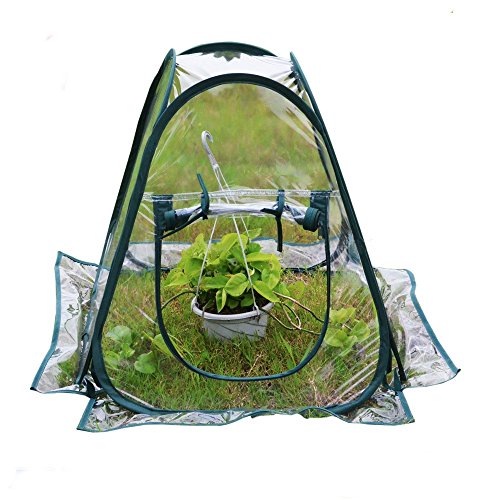
AHOME Mini Pop Up Greenhouse 27x27x31″

Ohuhu Portable Mini Greenhouse 71x36x36″

MQFORU 2-Pack Raised Bed Tomato Planter with Trellis

Xuwzenkl Garden Hoops Grow Tunnel 12 Sets

Grezone Walk-in Greenhouse 10x7x7 FT
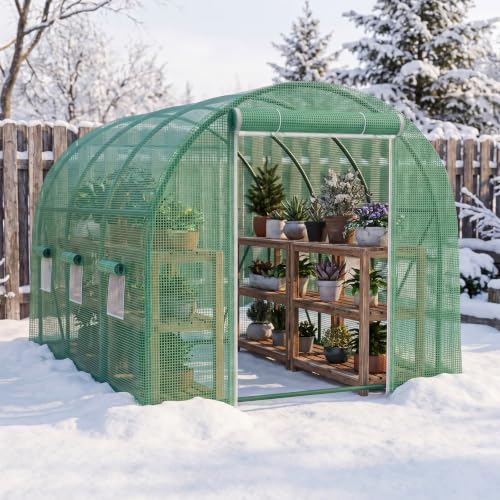
Gaildon 10x7x7 FT Heavy Duty Walk-in Greenhouse

Greengro Walk-in Greenhouse 28x57x76″

U’Artlines Portable Mini Greenhouse 36x18x33″
A Closer Look At Each Pick
A small cube of warmth that pops open in seconds, the AHOME Mini Pop Up Greenhouse fits on a balcony railing or beside a sunny window without dominating the space. The PVC cover stretched over a steel wire frame holds in humidity for a row of herb pots or a tray of germinating seeds, and the zippered front panel swings wide for watering and airflow checks. Renters like it because the whole thing folds flat into a disc that tucks into a closet between seasons.
For someone tending a half-dozen basil cuttings or hardening off tomato seedlings before transplant, the footprint feels just right. Compare that to the walk-in Ohuhu model covered next, and the obvious trade-off appears: you sacrifice vertical space and room to step inside for a price and storage profile that almost disappears.
Good Reasons To Consider
- Sets up in seconds without tools, ideal for beginners or renters
- PVC cover holds warmth and humidity around small pots
- Folds flat for off-season storage in a drawer or closet
- Lightweight steel frame is easy to move between indoor and outdoor spots
Things To Consider
- Limited headroom restricts taller plants like pepper starts
- Thin PVC can wear at fold lines over multiple seasons
- Best anchored with a brick on the base in breezy conditions
Best Suited To
Apartment gardeners and balcony growers starting a few herbs or seed trays each spring.
Look Elsewhere When
You want to walk inside and tend full rows, in which case the Ohuhu Portable Mini Greenhouse offers the standing height and reach you need.
Where the AHOME cube stays low and portable, the Ohuhu Portable Mini Greenhouse stretches into a tunnel you can crouch beside and tend like a real garden bed. The house-shaped silhouette gives seedlings more vertical breathing room, and the dual zippered doors let you open the front or back for cross-ventilation on warm afternoons. Anchored with included ground stakes, it stays planted through spring gusts that would flip a lighter pop-up.
This is the model to consider once you’ve outgrown seed trays and want a dedicated hardening-off zone for vegetables before they move to the open garden. The trade-off versus the larger walk-in Grezone covered later is straightforward: you gain affordability and tool-free setup, but you lose the reinforced frame and the headroom to stand fully upright.
Reasons It Performs
- Tool-free assembly gets you growing within an afternoon
- UV-protected plastic cover resists sun degradation longer than basic films
- Dual zippered doors allow airflow from either end
- Includes ground stakes for steadier outdoor placement
Worth Noting
- At 36 inches tall, taller gardeners will work on their knees
- Cover tensioning may need adjustment after the first windy weekend
- Best reserved for seasonal use rather than year-round heavy snow loads
Key Specs
Made For
Backyard gardeners with a small raised bed or patio strip who want a walk-up shelter without a permanent build.
Skip It When
You want full standing height and a sturdier frame for winter use, in which case the Grezone Walk-in Greenhouse is a better match.
The MQFORU planter earns its place by solving two problems in one box: where the tomato will root, and how the vine will climb. Each of the two 57-inch raised beds arrives with an integrated trellis that supports leggy indeterminate varieties as they stretch toward the sun, and a built-in reservoir that wicks moisture upward through the soil. A side fill port lets you top off water without disturbing the root zone.
This is the only option on the list that grows with the plant rather than covering it, which makes it appealing for anyone working with limited square footage. Where the Xuwzenkl hoop kit covered next is about protecting a whole row at once, the MQFORU planter focuses on giving a single crop the structure it needs from seedling to harvest.
Positive Points
- Self-watering reservoir reduces daily watering during peak summer
- Integrated trellis supports climbing crops without extra staking
- Two-pack format covers both ends of a patio or small garden
- Elevated design eases strain on knees and back
Trade Offs
- Reservoir can overwater in shaded or cool conditions without drainage checks
- Trellis height caps out for very tall heirloom tomato varieties
- Two-pack takes up more patio real estate than a single bed
Right Fit For
Container gardeners and small-space growers who want a complete tomato setup in one delivery.
Consider Something Else When
You need to cover an existing in-ground row from frost, in which case the Xuwzenkl Garden Hoops kit adapts to whatever bed you already have.
The Xuwzenkl kit skips the prefab shell entirely and hands you the bones instead. Twelve sets of 7-foot fiberglass hoops bend into a low tunnel over an existing raised bed or in-ground row, and the rust-proof material flexes without snapping when the temperature drops. You supply the row cover fabric, insect netting, or shade cloth and shape the layout to match your planting rows.
For gardeners who already know their spacing and don’t want a one-size-fits-all frame, this is the most adaptable option in the roundup. The catch is that you become the builder, so it rewards hands-on shoppers more than someone wanting a ready-to-unbox shelter like the Ohuhu above.
Standout Benefits
- Fiberglass construction resists rust and oxidation season after season
- Twelve sets cover a long row or multiple smaller beds
- Adapts to any cover fabric you already own or want to buy
- Disassembles flat for off-season storage
Points To Keep In Mind
- Cover fabric, ground anchors, and clips are not included
- Requires basic measuring and cutting to fit your bed length
- Not a stand-alone greenhouse without added cover material
Who It Suits Best
DIY-minded gardeners with established beds who want a custom row-cover layout without paying for a full prefab shell.
A Better Fit Elsewhere
You’d rather skip the build and get a complete shelter out of the box, in which case the Ohuhu Portable Mini Greenhouse arrives ready to assemble in minutes.
The Grezone Walk-in Greenhouse is the first option in this roundup that lets you actually stand up straight inside, with seven feet of headroom at the peak and a 10×7 footprint wide enough for a pair of raised beds or a serious shelf system. The frame uses galvanized steel with crossbars and four diagonal braces for added stability, and the dual zippered screen doors give you separate mesh and PE cover panels for the changing weather.
Compared to the slimmer Greengro covered later, the Grezone stretches wider and gives more elbow room for trellising tomatoes vertically. For most suburban backyards, the practical question is whether you have a flat, level 10×7 patch to spare, because once anchored, this greenhouse doesn’t want to move.
Bright Spots
- Reinforced frame with diagonal braces holds up through gusty weather
- Six screened windows provide cross-ventilation during summer heat
- Dual doors separate mesh and solid panels for seasonal flexibility
- Walking height makes daily tending far more comfortable
Honest Caveats
- Butterfly-screw assembly takes longer than tool-free pop-ups
- Large footprint demands a dedicated flat area in the yard
- PE cover should be checked for tension after major wind events
Feature Snapshot
Perfect Match For
Dedicated hobby gardeners who want a year-round shelter that doubles as a standing workspace.
Reach For A Different Pick When
Your available space is narrow or shared, in which case the Greengro Walk-in Greenhouse fits a slimmer footprint without losing walking height.
The Gaildon tunnel runs the same 10x7x7 dimensions as the Grezone but leans harder into ventilation. Six mesh windows run along the sides, and a roll-up door replaces the dual-zipper setup, so on a 90-degree afternoon you can throw the whole front open and let air move through end to end. The galvanized steel frame and 140 g/m² PE grid cover are the heavy-lift specs, with crossbars and diagonal bracing designed for repeat seasons outside.
Where the Grezone suits mixed-season use with both screen and solid doors, the Gaildon is the better match for hot-summer gardens that need maximum airflow through the middle of the day. The trade-off is less sealing control during cold snaps.
Everyday Wins
- Six mesh windows handle serious summer ventilation
- Roll-up door opens the full end for hot-day airflow
- 140 g/m² PE grid cover holds up better than thinner films
- Reinforced frame resists bending in heavy winds
Some Limits To Know
- Roll-up door seals less tightly than dual zipper panels in winter
- Mesh windows let in small insects unless paired with additional screening
- Same 10×7 footprint requires a flat, open yard spot
Who Should Grab It
Garden owners in warm-summer regions who need serious passive cooling during peak heat.
Not Your Match When
You garden in a four-season climate and want tighter winter sealing, in which case the Grezone’s dual solid-and-screen doors offer better temperature control.
The Greengro Walk-in Greenhouse squeezes a full standing interior into a footprint that fits along a side yard or driveway strip. At roughly 28 inches deep by 57 inches wide, it occupies less ground than either walk-in tunnel above, yet the 76-inch peak still lets most gardeners work upright without hunching. A zippered door and screened window cover the basics of access and airflow.
This is the right shape for anyone whose available growing space is more corridor than clearing. Compared to the much wider Grezone, the Greengro asks you to organize your plants along a narrow shelf rather than across a bed, so thoughtful interior planning matters.
Where It Excels
- Narrow footprint tucks beside a fence, house wall, or driveway
- Standing-height interior keeps daily tending comfortable
- Zippered door and screened window handle basic climate control
- Polyethylene cover provides shelter through cool spring nights
Room For Improvement
- Limited width restricts layout to shelving rather than in-ground beds
- Single window provides less airflow than six-window tunnels
- Anchor points need solid ground to resist lateral wind pressure
Built With In Mind
Side-yard and driveway gardeners with a long, narrow space who still want full standing height inside.
Swap It Out When
You have a wider yard area and want to grow multiple beds under one roof, in which case the Gaildon 10x7x7 FT Greenhouse offers the broader layout.
The U’Artlines closes the roundup the same way the AHOME opens it: small, simple, and approachable. At 36x18x33 inches with a steel frame and tear-resistant PE cover, it shelters a few mid-size pots on a porch or a row of starter trays along a windowsill. The footprint is narrow enough to fit where a side table would, and the whole frame moves without much fuss when the sun shifts.
For someone dipping into greenhouse growing for the first time, this is the lowest-commitment path. The honest read is that taller plants will outgrow the 33-inch height quickly, so it works best as a short-term shelter for seedlings and small ornamentals rather than a season-long home for fruiting crops.
Where It Delivers
- Steel frame adds durability over plastic pop-up wire designs
- Tear-resistant PE cover handles daily zippering without early wear
- Compact size fits on a porch rail, balcony, or sunny corner
- Simple assembly suits first-time greenhouse owners
Details To Watch
- 33-inch height tops out quickly for vining or tall herbs
- Single-tier layout limits how many plants you can shelter at once
- Open base needs a level surface or tray to catch drips
Feature Card
Whose Shelf It Belongs On
First-time greenhouse owners and casual herb growers who want a low-cost shelter without a complex build.
Where A Sibling Pick Shines
You want room to walk inside and tend multiple plants, in which case the Greengro Walk-in Greenhouse gives that standing-height interior in a slimmer package.
Factors That Matter When Shopping On A Budget
Size And Footprint
The single biggest decision comes down to where the greenhouse will live and how much space you can give up year-round. A 27-inch pop-up cube disappears on a balcony, while a 10×7 walk-in tunnel becomes a permanent yard feature. Measure the spot before browsing models, and leave room on at least one side for door swing and cover access.
Frame And Cover Materials
Frame material drives durability. Steel and galvanized steel resist bending and rust far longer than thin wire pop-up frames, especially in humid or coastal climates. Cover material matters just as much: PVC works for short seasons and indoor use, while polyethylene (often called PE) in the 140 g/m² range handles UV exposure and temperature swings across a full growing year. UV-protected covers outlast untreated films by several seasons.
Ventilation And Access
Plants cook fast in a sealed greenhouse once the sun hits, so doors and windows aren’t optional extras. Dual zippers let you open either end, roll-up doors expose the full interior on hot days, and mesh windows allow airflow without letting in pests. Match the ventilation layout to your climate. Hot summers call for multiple openings, while cold-winter growers need a way to seal things back up at night.
Assembly And Storage
Some models pop open in seconds and fold flat into a disc; others use butterfly screws and crossbars that take an afternoon to assemble. Honest reading: there’s nothing wrong with either approach, but match the build time to your patience and the season you need it running. Pop-ups reward renters and seasonal growers. Walk-in tunnels reward gardeners with permanent space and a few extra hours.
What To Watch For Before You Click
Common Shopping Slip Ups
Buyers often pick a greenhouse by footprint alone and forget about height at the peak, which matters for tall tomato vines and for anyone who doesn’t want to kneel daily. Another common miss is underestimating wind load. Light pop-up cubes and slimmer walk-in frames need anchoring, and a single gust can fold them flat if stakes aren’t driven deep. Finally, many first-time greenhouse shoppers forget about drainage. Without a tray or slight slope underneath, water pools at the base and shortens the cover’s life.
Where The Extra Money Goes
Higher-tier models typically invest in thicker PE covers measured in g/m², galvanized or powder-coated steel frames with crossbars and diagonal braces, and more ventilation openings. For gardeners in windy zones or anyone planning year-round use, those upgrades translate to a frame that survives its third season and a cover that doesn’t yellow halfway through the second. For seasonal or balcony use, the budget tier often does the job without the extra cost.
Frequently Asked Questions
What Size Greenhouse Do Beginners Need?
For a first greenhouse, a 6×4 or smaller footprint lets you start with herbs and a few tomato plants without committing your whole yard. Pop-up cubes and slim walk-ins fit this profile well.
Can Inexpensive Greenhouses Survive Winter?
Budget polyethylene covers handle light frost and cool nights, but heavy snow loads stress the frames of tunnel-style walk-ins. In regions with heavy snowfall, plan to remove the cover or choose a model with reinforced crossbars.
How Important Is UV Protection On The Cover?
UV-protected covers resist brittleness and yellowing across multiple seasons, which matters in any climate with strong sun. Untreated films often crack within a year of full sun exposure.
Do I Need A Foundation For A Walk-in Greenhouse?
A flat, level surface is more important than a poured foundation. Most walk-in tunnels anchor with ground stakes or sit on compacted soil, but uneven ground twists the frame and wears the cover at stress points.
Can I Move A Walk-in Greenhouse Later?
Walk-in tunnels can be disassembled and relocated, but the process is far more involved than folding a pop-up. Site selection matters more with the larger models, so choose the spot carefully before assembly.
Bottom Line
A budget-friendly greenhouse pays back quickly in longer growing seasons, healthier transplants, and the simple joy of fresh greens when the weather hasn’t quite committed to spring. Match the model to your space and your climate, anchor it properly, and ventilate it on sunny afternoons. The plants will do the rest.
