

Dealing with stinging insects around a yard, garden, or eaves can flip a calm afternoon into a tense one fast. The right product depends on what you’re up against: a paper wasp nest tucked under the porch, ground bees drilling into a lawn, or carpenter bees tunneling into a deck railing. Different bugs, different habitats, different tools. Below, eight options cover the spread from botanical sprays to professional-grade foams and pressurized dusts, so you can match the chemistry and delivery method to your specific situation.
An Overview Of The Picks

STEM Plant-Based Wasp and Hornet Spray 10 fl oz
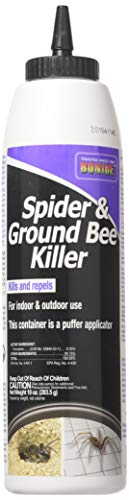
Bonide 363 Spider and Ground Bee Killer 2-Pack 10 oz

Best Bee Brothers Carpenter Bee Bait 10 mL Tube
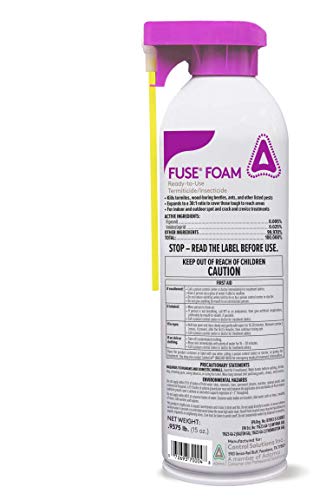
Control Solutions Fuse Foam Termiticide and Insecticide

Revenge Spider and Ground Bee Killer 10 oz Dust

Atticus Tirade 1% Dust Insecticide 1.25 lb

Spectracide Foaming Wasp and Hornet Killer 14 oz 3-Pack
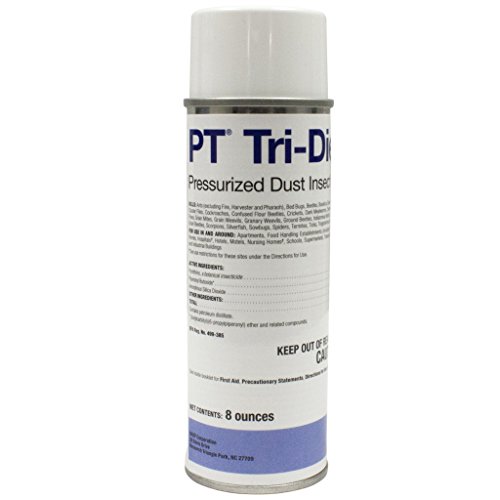
BASF PT Tri-Die Pressurized Dust 8 oz Can
A Breakdown Of The Leading Choices
For homeowners who want wasps gone without reaching for a harsh synthetic, STEM’s botanical spray brings a plant-based active ingredient to a job that usually calls for stronger chemistry. The 10 fl oz aerosol is sized for occasional nest interventions rather than whole-property programs, and the formulation skips added dye and fragrance, so the odor profile stays mild during application.
You spray from a distance at the nest, then wait for contact to do the work. The product targets wasps, hornets, and yellow jackets, and entomologist testing backs the formula’s claims about those three species. For most backyards where the nest hangs above a doorway or under a porch beam, this is a measured first response.
Everyday Perks
- Plant-based active ingredient eases concerns around kids and pets when used as directed.
- Light botanical scent avoids the harsh chemical smell that often lingers after synthetic sprays.
- Targets three of the most common stinging insects in suburban eaves and sheds.
- Single 10 fl oz can handles one or two typical nests without leftovers to store.
Things To Consider
- Botanical actives typically act slower than synthetic pyrethroids, so patience matters.
- Storage in a hot garage can shorten the can’s effective lifespan over multiple seasons.
Key Specs
Right Fit For
Households with curious pets or small children who still need a working wasp and hornet spray.
Where A Sibling Pick Shines
For ground bee burrows instead of hanging nests, the Bonide 363 Spider and Ground Bee Killer 2-Pack 10 oz reaches deeper into soil tunnels.
Ground bees dig burrows that laugh at the reach of a standard aerosol. Bonide 363 ships as a dust with a snorkel tube applicator, which lets you puff permethrin-based powder straight into a tunnel entrance without kneeling in the flight path. The two-pack format keeps a backup can on hand if a single treatment doesn’t fully resolve the colony.
You’ll want to apply in early morning or dusk when bees are calmest. The dust formulation clings to the tunnel walls, so returning foragers carry it back into the nest. Compared with the STEM botanical spray, this is a heavier-duty approach aimed squarely at ground-nesting species.
A Few Highlights
- Snorkel tube applicator reaches burrow openings without close-contact spraying.
- Dust format clings to tunnel walls and transfers on contact with returning bees.
- Two-pack value covers larger properties or follow-up treatments on stubborn colonies.
- Works against spiders and other listed pests in the same targeted area.
Worth Noting
- Permethrin dust is a synthetic pyrethroid, requiring extra caution around pollinator-friendly zones.
- Dust can drift on windy days, so timing matters for accurate application.
- Storing two cans takes more shelf space than a single aerosol can.
Made For
Homeowners tracking down ground bee burrows in lawns, garden beds, or along foundation edges.
Reach For A Different Pick When
For above-ground paper wasp nests where you want stand-off distance, the Spectracide Foaming Wasp and Hornet Killer 14 oz 3-Pack reaches further with a foam jet.
Carpenter bees chew round entry holes into untreated wood, then tunnel sideways where sprays can’t reach. The Best Bee Brothers bait takes a different angle: a proprietary formula designed to mimic carpenter bee biosignatures, applied as a dime-size drop inside a compatible trap to lure them away from the deck or fascia.
The 10 mL squeeze tube concentrates a small amount of lure that lasts through multiple refill cycles. You apply it to the designated bait area inside your trap only. Compared with broad-spectrum dusts like the Bonide 363 or Atticus Tirade, this is a targeted, trap-based solution that does nothing for general yard pests.
Practical Pluses
- Concentrated formula stretches a dime-size application across many trap refills.
- Trap-based delivery avoids spraying chemicals near decks and outdoor furniture.
- Targets carpenter bees specifically, where general insecticides often miss them.
- Squeeze tube format keeps the lure sealed between uses.
Points To Note
- Only works with compatible carpenter bee traps, so a trap purchase may also be required.
- Lures don’t address active wood damage already underway in rafters and rails.
Who It Suits Best
Homeowners protecting wooden structures who already run or plan to install carpenter bee traps.
Consider Something Else When
For broad-spectrum pest pressure including wasps and spiders in the same yard, the Revenge Spider and Ground Bee Killer 10 oz Dust covers more pest types per can.
Some pests live where sprays and dusts can’t follow, deep inside termite galleries, ant nests, and wall voids. Control Solutions Fuse Foam delivers two non-repellent actives, fipronil and imidacloprid, as a ready-to-use foam that expands into hidden cavities. The chemistry is invisible to insects at first contact, which lets foragers carry it back to the colony.
This is professional-grade territory, with state restrictions that rule out shipping to Alaska, California, Connecticut, and Puerto Rico. You inject directly into structural voids, galleries, and nest sites. Compared with the consumer-friendly STEM botanical, this is a different category of tool aimed at entrenched infestations behind walls.
Bright Spots
- Ready-to-use foam requires no mixing or measuring before injection.
- Non-repellent actives let foragers unknowingly spread treatment through the colony.
- Dual-active formulation covers termites, ants, and wood-boring beetles.
Honest Caveats
- Not available for shipment to AK, CA, CT, or PR.
- Professional-grade chemistry demands careful label review before handling.
- Injection application requires access points that homeowners may not have on hand.
Feature Snapshot
Best Suited To
Experienced handlers managing termite galleries or persistent ant nests inside wall voids.
Look Elsewhere When
For visible above-ground wasp nests where foam injection is overkill, the Spectracide Foaming Wasp and Hornet Killer 14 oz 3-Pack is the simpler tool.
Some yards deal with more than one pest at a time. The Revenge dust from Bonide targets ground bees alongside ants, spiders, roaches, crickets, mites, silverfish, wasps, and hornets, making it a broad-spectrum option when you’re not sure exactly what you’ll find next. The included applicator cap reaches into tight gaps where the listed pests hide.
This 10 oz ready-to-use dust works indoors and outdoors, so the same can move from basement corners to garden bed edges. Compared with the Best Bee Brothers carpenter bee bait, which only handles one species, the Revenge formula trades specialization for range. For most properties with mixed infestations, that range is the point.
Advantages To Know
- Targets ground bees plus seven other listed pest categories in one container.
- Applicator cap reaches behind appliances and into wall gaps.
- Works indoors and outdoors, reducing the need for separate products.
- Dust format clings in places where sprays would drip off.
Practical Considerations
- Synthetic dust means careful application around flower beds and pollinator zones.
- Single 10 oz canister may need replacement sooner on larger properties with multiple infestations.
Quick Facts
Perfect Match For
Property owners facing several pest types at once who want one product to cover the spread.
Not Your Match When
For carpenter bee damage on wooden structures specifically, the Best Bee Brothers Carpenter Bee Bait 10 mL Tube works inside traps where dusts can’t reach.
Atticus Tirade packs the same active ingredient, cyfluthrin, as a leading professional brand into a 1.25 lb canister of ready-to-use dust. That’s a serious volume, suited for outbuildings, barn corners, and detached garages where pest pressure stacks up over seasons. The dust formulation reaches into cracks where sprays drip off and aerosols can’t aim.
You’ll appreciate this one when the problem isn’t a single nest but a whole shed full of wasps and bees under the eaves. Compared with the consumer-sized Bonide 363 or Revenge dusts, Tirade offers more volume per canister and broader pest coverage. For most homes a smaller can suffices, but for acreage or outbuildings, the 1.25 lb size makes sense.
The Good Stuff
- 1.25 lb volume covers outbuildings and large perimeters without frequent refills.
- Cyfluthrin is a proven pyrethroid (a synthetic insecticide modeled on natural chrysanthemum compounds) for fast knockdown.
- Controls flying, crawling, and wood-infesting pests from one canister.
- Ready-to-use format skips the measuring and mixing step.
Some Limits To Know
- Larger canister takes up more storage space than 10 oz alternatives.
- Higher active concentration requires more careful handling around flowering plants.
Core Details
Who Will Love This
Property managers with sheds, barns, or detached garages where pest pressure recurs each season.
Swap It Out When
For a quick single-nest treatment in a residential yard, the SPECTRACIDE Foaming Wasp and Hornet Killer 14 oz 3-Pack is easier to handle.
Wasps nest high and sting fast, so reach matters as much as chemistry. Spectracide’s foaming spray jets up to 27 feet, letting you coat a paper nest from the ground with a blanketing foam that clings to surfaces and kills by contact. The 3-pack format keeps cans ready for repeat nests across a single season.
The water-based formula leaves no oily residue and won’t stain siding, which makes it gentler on painted eaves and trim than solvent-heavy alternatives. Wait at least 24 hours after spraying before removing a dead nest. Compared with the STEM botanical, this is a faster, longer-range option, but heavier on the synthetic side.
Practical Advantages
- 27-foot jet spray reaches high eaves and tall ladder-free zones.
- Blanketing foam coats nest surfaces instead of running off.
- Water-based formula avoids stains and oily residue on siding.
- Three-pack value suits properties where multiple nests appear each year.
Soft Spots
- Synthetic actives require evening application timing to minimize foraging bee contact.
- Spray pattern works best on visible nests; it doesn’t reach inside wall voids the way foam injection products do.
Built With In Mind
Homeowners dealing with above-ground wasp or hornet nests in places a ladder can’t easily reach.
A Better Fit Elsewhere
For infestations buried inside structural voids, the Control Solutions Fuse Foam Termiticide and Insecticide injects into spaces this aerosol can’t reach.
Crack-and-crevice work demands a tool that can push dust deep into wall voids and structural gaps. BASF PT Tri-Die uses a pressurized canister to deliver a dual-action blend: lambda-cyhalothrin (a synthetic pyrethroid) for fast knockdown, plus silica gel that keeps working as a desiccant (a drying agent that pulls moisture from insects’ bodies) over time. The combination gives both immediate kill and residual control in dry spots.
The 8 oz can is compact but mighty, suited to targeted applications along baseboards, switch plates, and utility penetrations where insects travel. State restrictions may apply, so confirm local rules before ordering. Compared with the gravity-fed Bonide 363 and Revenge dusts, the pressurized delivery here reaches further into tight voids without shaking or tapping the can.
The Upside
- Pressurized delivery pushes dust deep into wall voids and structural gaps.
- Silica gel component keeps working through desiccant action for extended periods.
- Lambda-cyhalothrin handles pest populations that resist other pyrethroids.
- Compact 8 oz can stores easily between seasonal treatments.
A Few Limitations
- State restrictions on sale or application may apply in some locations.
- Pressurized can requires upright storage away from heat sources.
Whose Shelf It Belongs On
Detail-oriented homeowners who want long-lasting residual control inside wall voids and structural gaps.
Skip It When
For a quick, single-nest wasp spray without the residual angle, the STEM Plant-Based Wasp and Hornet Spray 10 fl oz is the simpler grab-and-go option.
What Matters Most Before Choosing Insecticides For Bees
Start by identifying the actual pest. Wasps, hornets, yellow jackets, carpenter bees, and ground bees behave so differently that the wrong product wastes time and money. Ground bees need dusts with applicator tubes that reach burrow openings, while paper wasps under eaves respond to long-range aerosols. Carpenter bees ignore both and respond only to lures inside traps.
Match the delivery format to the habitat. Foaming aerosols coat visible nests. Pressurized dusts reach wall voids. Injectable foams penetrate structural galleries. Botanical sprays suit family spaces where odor matters. Each format earns its place in a different scenario, and buying across categories gives you coverage for whatever shows up next season.
Consider active ingredients and timing. Pyrethroid-based products (synthetic insecticides that mimic natural chrysanthemum compounds) act fast but require careful handling around pollinators. Botanical options trade speed for a gentler profile. Evening application, when foragers return to the nest, generally improves outcomes with most contact insecticides.
Check local rules before ordering. Several picks on this list carry state shipping restrictions, particularly the professional-grade foams and pressurized dusts. Confirming eligibility up front avoids wasted orders and helps you stay within the law on treatments in restricted states.
Key Considerations Across These Picks
Pitfalls Shoppers Hit
The most common mistake is reaching for a general-purpose spray on a pest it wasn’t built for. Aerosols aimed at flying wasps do almost nothing to ground bees in burrows, and dusts designed for cracks can’t reach a paper nest under the gutter. Match the format to the pest’s nesting behavior before adding chemistry to the equation.
Another trap is treating during the wrong part of the day. Midday application stirs up active foragers and increases sting risk. Evening treatments, when most stinging insects settle back into the nest, generally produce better contact and fewer surprises.
What The Higher Tier Buys
Professional-grade products like the Control Solutions Fuse Foam and BASF PT Tri-Die cost more because they bring non-repellent or dual-action chemistry and delivery formats that consumer products can’t match. You pay for the ability to treat hidden galleries and voids where infestations actually live, not just the surfaces you can see.
For most homeowners, that premium earns its place when pests keep returning after consumer-grade treatments. For single-season nest interventions, the smaller, more affordable options deliver without the extra spend.
Frequently Asked Questions
How do I tell ground bees from yellow jackets in the lawn?
Ground bees are solitary or small-colony diggers that leave round holes with small mounds of soil. Yellow jackets often use existing cavities and show more aggressive swarm behavior when disturbed. The pest identification shapes which product applies best.
Is a botanical spray as effective as a synthetic one?
Botanical sprays work, but they often act slower than pyrethroid-based synthetics. For low-pressure situations or family spaces, the gentler profile is worth the wait. For heavy infestations, synthetics usually produce faster results.
Why do bees matter when I’m trying to kill them?
Honey bees and bumblebees pollinate gardens and crops, so treatments during daylight hours risk collateral impact. Targeting wasps, hornets, ground bees, and carpenter bees at dusk minimizes contact with beneficial pollinators.
Can I use dust in rainy weather?
Dust loses effectiveness when wet. For outdoor burrow treatments, a dry forecast for 24 hours improves how well the powder clings inside the tunnel and transfers on contact with returning insects.
How far away should I stand when spraying a nest?
Most contact aerosols recommend a minimum of 15 to 20 feet of stand-off, with longer-reach products reaching 27 feet. Always check the label for the specific distance and angle before pulling the trigger on a tense situation.
Closing Remarks
The right pick depends on what you’re facing and where it lives. Match the pest to the delivery format, time the treatment for low-activity hours, and confirm any state restrictions before ordering. With those three boxes checked, any option on this list earns its place in your shed.
