

Lace bugs are the kind of pest you don’t notice until your azalea’s leaves look like they’ve been dusted with talcum powder and stippled with yellow flecks. They hide on leaf undersides, sucking chlorophyll from ornamentals and shrubs across the country. Choosing the right insecticide means matching the product to your plant type, your comfort with synthetics versus botanicals, and whether you want a fast knockdown or longer-lasting root-zone protection. The eight picks below cover the main approaches gardeners reach for, from broad-spectrum sprays to gentle botanical options.
A Snapshot Of The Selections

Hi-Yield 55% Malathion Spray, 32 oz

Hi-Yield Systemic Insect Granules, 1 lb

Earth’s Ally 3-in-1 Plant Spray, 32 oz
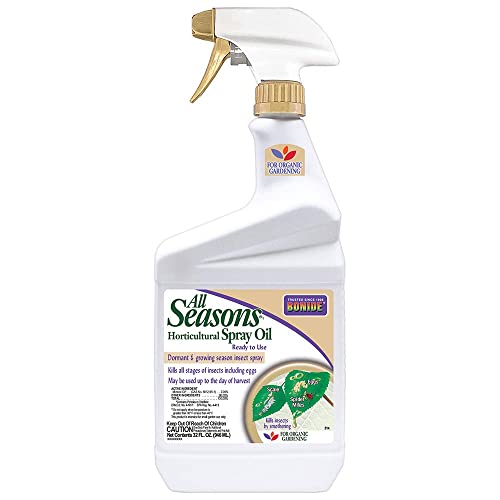
Bonide All Seasons Horticultural Spray Oil, 32 oz

GardenTech Sevin Concentrate Bug Killer, 1 Pint

BioAdvanced Shrub Care Protect & Feed, 4 lb

ARBER Organic Insecticide Spray, 16 oz

BioAdvanced Tree & Shrub Insect Killer Spray, 32 oz
The Details Behind The Selections
When lace bugs have already turned a prized azalea into a mottled mess, you often want something with backbone. Malathion is a classic organophosphate contact insecticide, and this 32-ounce bottle from Hi-Yield delivers a 55% concentration that works on a long list of sap-sucking pests beyond lace bugs, including aphids, thrips, and spider mites. It sprays on as a liquid concentrate you mix with water, so one bottle covers a fair amount of ground on ornamentals, shrubs, vegetables, and fruit trees.
For homeowners dealing with a sudden, established infestation on mature landscape shrubs, this is the kind of fast-acting tool that earns its keep. It’s less suited for indoor houseplants or for anyone uncomfortable with conventional chemistry; if that’s you, the botanical options later in this list will feel more comfortable.
Points In Its Favor
- Broad-spectrum control covers lace bugs plus aphids, thrips, spider mites, and several other common sap-feeders
- 55% Malathion concentration gives a strong knockdown when pest pressure is already heavy
- 32-ounce bottle offers good coverage for medium to large yards without constant refilling
- Labeled for ornamentals, shrubs, vegetables, and fruit trees, giving you one product for many jobs
- Liquid concentrate format is straightforward to mix in a standard pump sprayer
Things To Consider
- Synthetic chemistry, so it’s not the match for gardeners committed to organic or botanical-only routines
- Application window matters: calm, dry weather is required, and rain within 24 hours can wash it off
- You’ll want to mix only what you need each session, since leftover diluted spray is awkward to store
Who Should Grab It
Homeowners with established infestations on outdoor ornamentals who want a broad-spectrum conventional spray and are comfortable mixing concentrate.
Skip It When
You’re tending houseplants or a small kitchen-garden setup, in which case Earth’s Ally 3-in-1 Plant Spray fits more naturally.
Sprays do the visible work, but lace bugs hide on leaf undersides where coverage is tricky. Systemic granules solve that by moving the protection inside the plant itself. You scatter Hi-Yield’s 1-pound bottle around the root zone, water it in, and the active ingredient travels up through the plant’s vascular system. Anything that feeds on the sap, including lace bugs, leafminers, aphids, and whiteflies, picks up the dose as it eats.
The lasting protection window, often stretching up to two months per application, makes this an easy choice for roses, container plants, and foundation shrubs where repeat spraying is a chore. For gardeners who’d rather water and walk away than mix and spray every week, this is a quiet workhorse.
Noteworthy Benefits
- Root-absorbed protection reaches lace bugs feeding on leaf undersides where sprays miss
- Long-lasting coverage reduces how often you need to re-treat
- Works on roses, flowers, shrubs, and containerized plants both indoors and outdoors
- Granular format means no mixing, no sprayer cleanup, and minimal skin contact with concentrate
Points To Note
- Not a knockdown tool: it works best as a preventive or early-season treatment before populations build
- You’ll need to water the granules in thoroughly to activate uptake, so dry seasons may need extra irrigation
- Container plants may need re-dosing sooner than in-ground shrubs, depending on pot size and watering frequency
Quick Facts
Built With In Mind
Rose growers and shrub-care homeowners who prefer a season-long preventive approach over weekly spraying.
A Better Fit Elsewhere
Anyone facing an active, visible infestation who wants fast contact-kill should reach for the Hi-Yield Malathion Spray instead.
Not every gardener wants to mix concentrates or handle conventional chemistry, especially on herbs, leafy greens, and indoor foliage. Earth’s Ally 3-in-1 is a ready-to-use botanical oil spray built around a blend of essential oils that targets soft-bodied insects like lace bugs, aphids, whiteflies, and spider mites, while also handling common plant diseases. The trigger bottle skips the measuring cup and goes straight from shelf to plant.
For new gardeners or anyone managing a mixed indoor-outdoor collection, the low-fuss format is a real advantage. It’s worth noting that botanical oils work by contact and need thorough coverage of leaf undersides where lace bugs cluster, so a careful, slow spray pays off.
Practical Advantages
- Ready-to-use bottle means no measuring, mixing, or sprayer maintenance
- Botanical-oil formula is gentler for households with kids, pets, or edible plants nearby
- Three-in-one action handles insects and common fungal issues in one bottle
- Works on indoor houseplants, patio containers, and outdoor beds equally well
Honest Caveats
- Contact-only action requires direct coverage, including leaf undersides, for full effect
- Reapplication every few days is typical during active infestations, which adds up on big plants
- Botanical oils can spot-test on sensitive foliage, so a small leaf check before a full spray is wise
Right Fit For
Beginners and edible-garden growers who want a ready-to-spray botanical option without measuring or mixing.
Reach For A Different Pick When
You’re treating a large hedge of mature azaleas where systemic granules like the Hi-Yield Systemic Insect Granules save time.
Most gardeners only think about insecticides when leaves are already stippled, but lace bug eggs overwinter on bark and stems, ready to hatch in spring. Bonide’s horticultural and dormant oil is a paraffinic oil designed for use at multiple stages: as a dormant spray on bare branches, as a delayed-dormant spray at bud break, and as a growing-season foliar spray. That timing flexibility is the whole point, since you catch pests before they reach damaging levels.
Fruit tree owners in particular rely on dormant oils as a foundational step in their seasonal pest program. The trade-off is that timing matters: a dormant oil applied once leaves are out will not behave the same way, so you’ll want to plan applications around your last frost date.
Where It Delivers
- Multi-season use covers dormant, delayed-dormant, and growing-season applications in one bottle
- Paraffinic oil formulation is well-suited for organic gardening routines
- Targets overwintering eggs and soft-bodied insects like scale, mites, aphids, and lace bugs
- Useful across fruit trees, shade trees, shrubs, and ornamentals
A Few Limitations
- Dormant applications require careful timing around bud break for full effect
- Should not be sprayed during extreme heat or when plants are drought-stressed, which limits mid-summer use
- Owners commonly report needing a second pass for very heavy infestations on neglected plants
Best Suited To
Backyard orchardists and shrub-care homeowners planning a seasonal spray program rather than an emergency knockdown.
Look Elsewhere When
You need a contact-kill right now on a heavily damaged plant, in which case the Hi-Yield Malathion Spray gives faster visible results.
Sevin is one of the most recognized names in home garden pest control, and this 1-pint concentrate keeps that reputation intact. The active ingredient, carbaryl, is a broad-spectrum insecticide that handles a very long list of pests on fruits, vegetables, herbs, and ornamentals. For mixed beds where lace bugs are one of several problems at once, that breadth is genuinely useful rather than theoretical.
You’ll mix it yourself in a pump sprayer, so a little label-reading is part of the deal. Once diluted, a single bottle covers a meaningful area, which makes it a sensible option for gardeners managing larger flower beds or vegetable plots.
What Works In Its Favor
- Broad-spectrum carbaryl formula covers lace bugs alongside many other garden pests in one product
- Concentrate format gives strong coverage per bottle, helpful for larger landscapes
- Labeled for fruits, vegetables, herbs, and ornamentals, simplifying shopping for mixed gardeners
- Fast-acting contact action suits reactive treatments when pest pressure spikes
Possible Compromises
- Synthetic chemistry, so it’s not aligned with organic-only gardening routines
- Mixing accuracy matters: too concentrated can scorch foliage, too dilute wastes product
- Beneficial insects aren’t spared, so timing away from bloom and pollinator activity is worth thinking through
Quick Facts
Whose Shelf It Belongs On
Experienced gardeners with large mixed beds who want one strong concentrate that handles many pests at once.
Swap It Out When
You’d rather stay organic or use a ready-to-spray formula on a small indoor collection, where Earth’s Ally 3-in-1 Plant Spray is the gentler choice.
Treating shrubs for lace bugs and feeding them at the same time is the appeal of BioAdvanced’s Shrub Care Protect & Feed. The 4-pound bottle is a granular product that combines a fertilizer with systemic insect protection, so a single application around the dripline handles two jobs. Protection runs roughly six weeks, with a feed that supports the recovery of stressed foliage.
It’s the kind of product busy homeowners gravitate toward: less measuring, fewer separate products, and a longer interval between applications. For gardens with several foundation shrubs, that combination is genuinely valuable.
The Practical Payoff
- Combined fertilizer and insect control simplifies a seasonal shrub-care routine into one application
- Systemic protection reaches lace bugs feeding on foliage without spraying leaves directly
- Four-pound bottle covers a meaningful number of medium shrubs before you need more
- Granular format means less equipment cleanup and easier storage between seasons
Things To Weigh
- Works only on shrubs and listed ornamentals, so it’s not the right tool for flower beds or vegetable gardens
- Reapplication every six weeks is the realistic cadence during the growing season
- Watering in is required to activate uptake, which adds a step during dry stretches
Made For
Homeowners with several established landscape shrubs who want to combine feeding and insect protection in one application.
Not Your Match When
You’re working with a single small shrub or a mixed planting, where the Hi-Yield Systemic Insect Granules offer similar protection without the fertilizer component.
ARBER takes the organic route through biological active ingredients designed to interrupt pest life cycles rather than relying on synthetic chemistry. The 16-ounce liquid concentrate targets soft-bodied insects like aphids, whiteflies, mealybugs, spider mites, and fungus gnats, which puts lace bugs squarely in its wheelhouse on indoor houseplants, patios, and small outdoor beds.
As a concentrate, it asks for a little mixing discipline, but the trade-off is a longer-lasting bottle than a ready-to-use spray. For households committed to organic routines, it’s a flexible pick that works across the indoor-outdoor boundary.
Positive Takeaways
- Organic biological formulation aligns with chemical-free gardening routines
- Liquid concentrate format stretches further per ounce than ready-to-use sprays
- Works on houseplants, patio containers, and outdoor garden beds alike
- Designed to interrupt pest life cycles rather than relying solely on contact action
Where It Is Less Suited
- Smaller 16-ounce bottle means more frequent reordering for gardeners with many plants
- Mixing ratio matters: too weak underperforms, too concentrated can stress tender foliage
- Heavy infestations may need a follow-up contact spray, since biologicals act more gradually than synthetics
Quick Facts
Perfect Match For
Organic-minded indoor and patio gardeners who want a concentrate that handles several soft-bodied pests with one bottle.
Consider Something Else When
You’re managing a large outdoor hedge, where the BioAdvanced Tree & Shrub Insect Killer Spray covers more ground with hose-end convenience.
Tall trees and tall hedges are awkward to spray with a pump sprayer, which is exactly where hose-end products earn their keep. BioAdvanced’s Tree & Shrub Insect Killer attaches to a garden hose, dilutes itself as you spray, and reaches the upper canopy without ladders or ladders-of-effort. One application is reported to hold for a couple of weeks against listed insects, including aphids, leafhoppers, whiteflies, and lace bugs on trees and shrubs.
It’s the kind of product that turns a half-afternoon job into a 20-minute walk around the yard. For gardeners with several mature trees, that kind of convenience compounds quickly.
Where It Helps
- Hose-end format reaches tall trees and dense hedges without a pump sprayer or ladder
- Self-diluting design removes measuring and mixing from the routine
- Works on a broad list of listed insects, with lace bugs included
- 32-ounce bottle covers substantial outdoor area before a refill is needed
Factors To Consider
- Limited to outdoor use since the hose-end format doesn’t suit indoor or patio plants
- Coverage of leaf undersides depends on spray angle, which is harder to control from above with a hose
- Re-treatment every couple of weeks is the realistic cadence during peak lace bug season
Who It Suits Best
Homeowners with tall trees, established hedges, or large foundation shrubs who want fast, ladder-free coverage.
Where Another Pick Suits Better
Indoor and small patio gardeners will be better served by ARBER Organic Insecticide Spray, which is built for that scale.
What Matters When Choosing Lace Bug Insecticides
Match The Format To Your Plants
Sprays give you fast contact control and visibility into what you’ve covered, which makes them ideal for small ornamentals and indoor collections. Granular systemics, on the other hand, work from the inside out and reach pests hiding on leaf undersides, which is where lace bugs spend most of their time. For tall trees and wide hedges, hose-end sprays save your shoulders. Picking the wrong format is the most common reason gardeners feel like a product “didn’t work”, when really the application method was the weak link.
Decide Between Contact And Systemic Action
Contact insecticides, including most sprays, kill pests you directly hit, which means coverage is everything. Systemic products, including granules and certain mixed feeds, move through the plant’s vascular system so anything feeding on treated foliage picks up the dose. If you’re treating a heavy, established infestation, contact action feels more satisfying in the short term. If you’re playing defense across a season, systemic coverage tends to be less work.
Consider Your Chemistry Comfort Level
Conventional options like malathion and carbaryl are broad-spectrum and fast-acting, but they don’t distinguish between pests and beneficial insects. Botanical oils and biological concentrates are gentler on the surrounding ecosystem and align with organic gardening routines, though they often need more frequent application. There’s no wrong answer, only the answer that fits your routine, your tolerance for re-treating, and your comfort handling concentrates.
Time Your Applications Around Pollinators And Weather
Lace bugs reproduce through multiple generations per season, so a single spray rarely ends the problem. Spray during calm, dry weather with no rain in the immediate forecast, and treat early morning or evening when pollinators are less active. Dormant oils work best before bud break, while systemic granules need watering to activate. Reading the label’s timing notes saves you from re-doing the job.
Common Slip Ups Worth Dodging
Pitfalls Shoppers Hit
Buying the strongest concentrate on the shelf is tempting, but lace bugs often respond well to gentler, more targeted approaches when populations are still building. Skipping leaf-underside coverage is the other classic mistake; lace bugs rarely sit on top of leaves, so a quick pass over the canopy misses them entirely. Treating once and assuming the job is done also sets gardeners up for disappointment, since lace bug eggs and re-hatchings usually require follow-up.
Where The Extra Money Goes
Premium lace bug products tend to invest in better formulations, longer residual protection, or convenience features like hose-end delivery. You pay more for fewer applications per season, less equipment cleanup, and gentler active ingredients that play better with pollinators. For a single small shrub, that upgrade is hard to justify; for a yard with several mature trees or a fruit orchard, the time savings typically make the higher tier worth it.
Frequently Asked Questions
When Is The Best Time To Spray For Lace Bugs?
Spring and early summer are the prime windows, since you’re catching the first generation before they multiply across the season. For severe infestations, a follow-up application two to three weeks later keeps later generations from rebuilding.
Are Botanical Insecticides Effective Against Lace Bugs?
Yes, when coverage is thorough. Botanical oils work by contact, so reaching leaf undersides matters more than the brand on the bottle. Reapplying every few days during active infestations is typical.
Can I Use These Products On Edible Plants?
Some are labeled for fruits, vegetables, and herbs, while others are restricted to ornamentals. Always read the product label for the specific crop list and any pre-harvest interval before treating edibles.
Do Lace Bugs Cause Permanent Damage?
Light feeding shows up as stippling, but heavy infestations can cause leaf drop and reduced vigor over multiple seasons. Early treatment prevents most long-term harm, even on prized azaleas and rhododendrons.
How Do I Know If It’s Lace Bugs And Not Something Else?
Check the underside of damaged leaves for tiny, lacy-winged insects and dark, tar-like droppings. That combination is the signature, and once you’ve seen it, you don’t mistake it for spider mite or fungal damage again.
Closing Thoughts
Lace bugs are stubborn, but they’re not unbeatable. Match the format to your plants, decide how much chemistry you’re comfortable with, and plan on more than one application across the season. The right insecticide turns a mottled, declining shrub back into the focal point it was meant to be.
