

A dead lawn rarely dies from neglect. It dies from the wrong watering schedule, the wrong timer, or a controller that gives up mid-season. The right irrigation controller turns guesswork into a predictable routine, holding up through heat waves and dry spells without you babysitting the hose. This list covers eight controllers ranging from simple hose timers to app-driven multi-zone hubs, so you can match the hardware to the actual yard you’re working with.
An Overview Of The Picks

Rain Bird ESP-TM2 8 Station WiFi Ready Controller (TM2-8)

TiFFCOFiO Outdoor Sprinkler Timer with Rain Delay

Rain Bird TM2-6 Station Indoor/Outdoor Controller

Hunter X-Core XC800i 8-Zone Indoor Controller
Hunter X-Core XC400i 4-Zone Indoor Controller
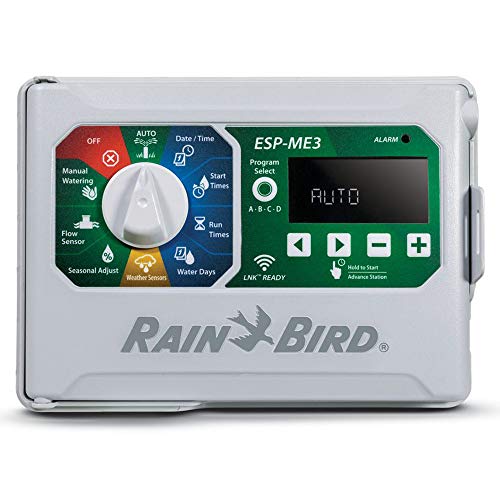
Rain Bird ESP-ME3 4 Station WiFi Ready Controller (ESP-ME3-A1)

Irritrol RD600-EXT-R Rain Dial 6 Station Outdoor Controller

Rain Bird ARC8 8-Zone Smart WiFi Sprinkler Controller
A Breakdown Of The Leading Choices
The Rain Bird ESP-TM2 sits in a comfortable middle ground between basic timers and full smart hubs, and for many homeowners that’s exactly the right altitude. Eight stations cover a typical suburban lot with separate zones for the lawn, flower beds, and a drip line for the foundation plantings, while the indoor or outdoor rated enclosure lets you tuck it into a garage or mount it to a side wall.
Setup is one of the smoother experiences on the list. The back-lit LCD stays readable in direct sun and dim basements alike, and the manufacturer claims a three-step programming path that lands reasonably close to the truth for first-timers. WiFi comes through a separate LNK module rather than being built in, which is a small upfront trade-off but keeps the base hardware affordable.
Where It Excels
- Eight zones handle a typical full-yard layout without needing expansion modules.
- Programmable without a phone, which helps in households that prefer a tactile dial.
- Compatible with the LNK WiFi add-on for app control when you want it.
- Contractor default feature speeds up initial setup for installers.
- Back-lit screen stays readable in bright sun or low-light garages.
Things To Consider
- WiFi requires buying the LNK module separately to unlock app control.
- The outdoor enclosure adds bulk, so plan your mounting spot ahead of time.
Who It Suits Best
Homeowners managing mid-size residential yards with mixed plantings who want a reliable controller that grows into smart features over time.
Where Another Pick Suits Better
If you want WiFi included out of the box and a more app-first experience, the Rain Bird ARC8 is a stronger fit.
The TiFFCOFiO timer skips the hardwired installation entirely and screws straight onto a hose bib. For a single vegetable bed, a row of containers on the patio, or a small lawn fed by one hose, that’s a refreshingly simple entry point. You don’t need a valve box, transformer, or electrician.
The interface is a small digital screen with physical buttons, and a rain delay function lets you pause the schedule during a wet stretch without losing the program. Manual mode also lets you trigger watering on demand for spot jobs like washing off the driveway.
Everyday Wins
- No wiring or valve manifold needed for basic hose-fed watering.
- Rain delay skips cycles during wet weather without erasing the schedule.
- Manual mode handles quick wash-downs outside the normal program.
Worth Noting
- Single-zone design means one faucet controls one watering schedule.
- Battery life varies with usage and temperature, so check it seasonally.
- Plastic threads can wear if you swap hoses frequently, so handle gently.
Made For
Renters, beginners, and small-space gardeners who want automatic watering without committing to a full in-ground system.
Consider Something Else When
Multi-zone yards with separate lawn and garden areas are better served by the Rain Bird TM2-6 or the Hunter X-Core XC400i.
The Rain Bird TM2-6 is the sibling of the ESP-TM2 covered earlier, scaled down to six stations for properties that don’t need quite as much reach. Six zones cover a typical small-to-medium lawn with a separate bed or two, and the same flexible indoor or outdoor installation means you can tuck the unit into a utility room or mount it on an exterior wall.
The familiar Rain Bird interface shows up here too, which matters if you’re stepping up from an older Rain Bird box and want the muscle memory to carry over. A non-volatile memory (storage that keeps its data without power) holds the schedule through power outages, and a built-in diagnostic breaker helps spot wiring faults before they become mid-summer surprises.
A Favorable Mix
- Six stations cover a typical small or medium residential lot.
- Non-volatile memory keeps the schedule intact through power loss.
- Rain sensor input with bypass switch for weather-aware watering.
- Master valve and pump start relay support for deeper system builds.
Honest Caveats
- WiFi and app control require the LNK add-on module purchased separately.
- Wiring each station takes planning, especially if the valve box is older.
Right Fit For
Homeowners with small or medium lots who want a proven, durable controller without paying for zones they won’t fill.
Not Your Match When
Larger properties with eight or more distinct zones should look at the Rain Bird ESP-TM2 or the Hunter X-Core XC800i instead.
The Hunter X-Core XC800i brings pro-grade scheduling discipline to a residential box, which lands well with installers and serious DIYers. Eight stations handle larger lawns plus separate drip and shrub zones, and the controller runs entirely from its physical interface, no WiFi or app required.
Cycle and Soak (a scheduling mode that breaks a long watering run into shorter pulses with rest periods) is the standout feature, splitting long run times into shorter bursts with rest periods to prevent runoff on slopes or clay-heavy soils. Seasonal adjustment lets you bump the watering percentage across all programs without re-entering each station.
The Helpful Details
- Cycle and Soak mode prevents runoff on slopes and slow-draining soils.
- Seasonal percentage adjustment updates all programs at once.
- Independent zone programming handles mixed plant needs.
- Solid reputation among irrigation contractors for reliability.
Trade Offs
- Indoor-only mounting limits placement options in some properties.
- Smart features require an additional accessory module.
Quick Facts
Best Suited To
Homeowners and contractors managing larger properties who want pro-grade scheduling without paying for full smart-home integration.
Look Elsewhere When
Smaller four-zone yards are better matched to the Hunter X-Core XC400i, which carries the same scheduling strengths in a tighter package.
The XC400i is the right-sized answer to the XC800i covered above, trimming the station count down to four without sacrificing the scheduling depth. For a small lawn with a couple of bed zones, that’s enough capacity without overpaying for unused stations.
The same Hunter programming language applies, including independent zone programming and seasonal adjustment. Mounting is indoor-only, so it lives cleanly in a garage or utility closet near a power outlet.
Advantages To Know
- Four-zone count matches modest yards without wasted capacity.
- Cycle and Soak helps on slow-draining or sloped areas.
- Seasonal adjustment saves time across weather shifts.
- Compact form factor fits smaller wall spaces.
Minor Gripes
- Indoor mounting limits placement near exterior valve manifolds.
- Adding zones later means replacing the unit rather than expanding it.
Feature Snapshot
Who Will Love This
Owners of small yards and townhomes who want Hunter-grade scheduling logic in a unit scaled to their actual zone count.
A Better Fit Elsewhere
Properties with more than four distinct zones should consider the Hunter X-Core XC800i or the Rain Bird ESP-TM2 for breathing room.
The ESP-ME3 starts at four stations but treats that number as a starting line, not a ceiling. Modular expansion lets you add station modules one or two at a time, growing the system as landscaping changes rather than forcing a controller replacement.
WiFi is again handled through the LNK module, so the base unit ships as a traditional dial controller. Once the module is added, the controller reaches up to 22 stations total and unlocks app-based scheduling plus EPA WaterSense certification (an EPA-backed efficiency label for water-saving products) when paired with the right accessory.
Benefits That Matter
- Modular station expansion avoids replacing the whole controller later.
- Hot-swappable modules install without powering down the unit.
- Suitable for both residential and light commercial properties.
- Compatible with Rain Bird LNK for WiFi and smart scheduling.
Points To Note
- Smart features require the LNK WiFi module purchased separately.
- Higher upfront cost compared to fixed-zone controllers.
Feature Card
Perfect Match For
Homeowners planning future landscaping expansion who want a controller that adapts without forcing an early upgrade.
Skip It When
Modest, fixed-size yards with no plans to expand are better served by the Rain Bird TM2-6, which costs less up front.
The Irritrol Rain Dial sits in a category of its own on this list, built specifically for outdoor mounting without an enclosure retrofit. For homes where the controller has to live on an exterior wall or near a remote valve manifold, that eliminates a step.
Three independent programs handle a mixed landscape: one for turf, one for drip, one for shrubs, each on its own cycle. Remote compatibility with Irritrol’s contractor remote series adds a convenience layer for installers who service multiple properties.
Practical Pluses
- Outdoor-rated housing skips the need for a separate weatherproof box.
- Three independent programs handle mixed plant materials.
- Rain sensor ready with bypass switch for weather-aware scheduling.
- Compatible with Irritrol remote accessories for quick service calls.
Small Caveats
- No native WiFi or app integration, which may matter for smart-home households.
- The interface leans more functional than flashy, so expect a learning curve.
Technical Highlights
Who Should Grab It
Homeowners with outdoor-only mounting locations and mixed plantings that benefit from independent program flexibility.
Reach For A Different Pick When
Smart-home households wanting app control out of the box are better served by the Rain Bird ARC8 covered next.
The ARC8 represents the app-first end of the Rain Bird lineup, putting the phone at the center of the scheduling experience. Eight zones cover a typical full-yard layout, and the WiFi module is built in rather than sold separately.
Through the Rain Bird mobile app, you can adjust schedules from anywhere with a signal, share access with family members, and trigger manual runs without walking to the garage. EPA WaterSense certification reflects efficiency-minded scheduling features that adapt to local weather data.
Useful Strengths
- Built-in WiFi avoids buying a separate LNK module.
- App-based scheduling works from anywhere with a signal.
- EPA WaterSense certification backs water-efficient scheduling.
- Shared access lets multiple household members or landscapers help manage the system.
Areas To Watch
- WiFi dependency means a router failure limits scheduling access.
- App-only control may frustrate users who prefer a physical dial.
- Higher upfront cost than dial-based controllers with similar zone counts.
Feature Card
Built With In Mind
Tech-comfortable households and frequent travelers who want to adjust irrigation from a phone rather than walking to a wall-mounted controller.
Swap It Out When
Properties needing fewer zones and a lower budget are better served by the Rain Bird TM2-6 covered earlier in this list.
Choosing The Right Irrigation Controller For Your Yard
Start with zone count. Count the distinct areas you want to water separately: front lawn, back lawn, side strip, flower beds, drip lines, potted patio plants. Add a couple of stations of headroom for future beds, then pick the controller whose base or expansion capacity matches that number without forcing a replacement next year.
Next, decide how you want to interact with the schedule. A physical dial works fine if you’re hands-on with the yard and don’t mind walking to the garage. App-driven controllers pay off when you travel, want weather-based adjustments, or share the property with family members who also need access. Most of the units on this list split that choice between traditional and add-on WiFi versus built-in WiFi, so it pays to weigh upfront cost against long-term convenience.
Mounting location matters more than it sounds. Indoor-only controllers need a nearby outlet and stay protected from weather, while outdoor-rated units install close to the valve manifold without a separate enclosure. Climate also plays a role: extreme heat or cold shortens outdoor electronics lifespans, so a garage or utility room mount often extends service life.
Smart Considerations Before You Buy
Pitfalls Shoppers Hit
Underestimating future zone needs is the most common slip. A new drip bed or expanded lawn quickly overruns a fixed four-zone controller, and replacing the whole unit mid-season wastes money. Modular options like the ESP-ME3 sidestep this, but only if you choose them from the beginning.
Ignoring WiFi access at the mounting spot is a close second. App-driven controllers need a reliable signal where they live, and a metal garage wall can quietly kill range. Test the signal before installing rather than after.
Where The Extra Money Goes
Higher-tier controllers buy modular expansion, weather-aware scheduling, and app-based remote control. For properties with mixed plantings or frequent travel, those features save water and time within a season or two. For small fixed layouts, the extra cost often funds capabilities that won’t get used.
Frequently Asked Questions
How many zones do I need?
Count each distinct watering area as a zone, then add two for future expansion. A typical small lawn with a flower bed lands around four zones, while a full-yard layout with drip usually needs six to eight.
Do I need WiFi in an irrigation controller?
Not necessarily. A physical dial works fine for set-and-forget schedules. WiFi pays off when you travel, want weather-based adjustments, or want to share access with family members and landscapers.
Indoor or outdoor mounting, which is better?
Outdoor-rated units install closer to the valve manifold without a separate enclosure. Indoor mounting generally extends the controller’s lifespan by protecting it from weather extremes.
Can I expand zones later?
Only modular controllers like the Rain Bird ESP-ME3 add stations without replacement. Fixed-zone units like the Hunter X-Core XC400i require swapping the whole controller to grow.
Are app-driven controllers harder to install?
Wiring is identical to dial-based units. The added setup is connecting to WiFi and walking through the app’s first-time pairing, which usually takes a few extra minutes.
Wrap Up
The right irrigation controller lines up with how your yard is actually planted and how often you want to fiddle with the schedule. A simple hose timer covers a single zone, a mid-size dial controller handles most residential lots, and a modular or app-driven unit fits properties that plan to grow. Match the hardware to the zone count, the mounting spot, and the interaction style you actually prefer, and the rest of the season takes care of itself.
