

A patchy lawn rarely comes down to bad seed or weak fertilizer. Most of the time, the culprit is uneven watering, and that’s where a purpose-built irrigation setup earns its keep. Whether you’re coaxing new sod through its first summer or protecting raised beds from the midday heat, the right system turns hours of hose-dragging into a job your faucet handles on its own. Below are eight setups worth a look, spanning quick-connect drip kits, pop-up rotors, and modular sprinkler sets that bend to almost any yard shape.
How The Shortlist Stacks Up
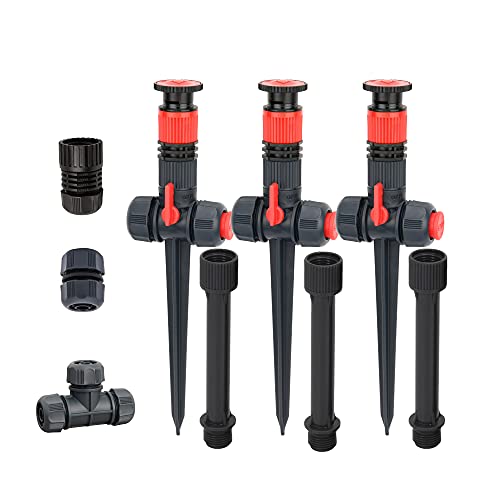
Eden 96093 Multi-Adjustable Flex Design Garden Sprinkler with Extension Set

Eden 98063 Multi-Adjustable Flex Design Above Ground Irrigation Garden Sprinkler System

Thiswing 360° Adjustable Drip Irrigation System with 16 Nozzles

Melnor Multi-Adjustable Watering Set, 1800 Sq Ft

Abakuku 230FT Quick-Connect Drip Irrigation Kit with 1/4″ and 1/2″ Tubing

Orbit 50020 All-in-One Automatic Watering System

Quick-Snap QSK-745 In-Ground 5-Inch Pop-Up Adjustable Sprinkler 5-Pack
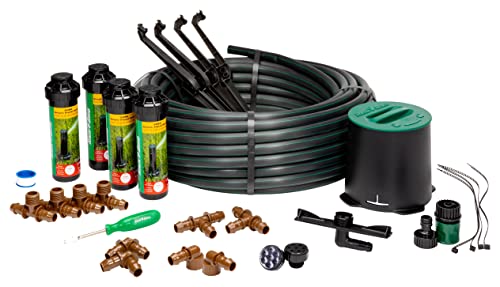
Rain Bird 32HE Professional Pop-Up Sprinkler, Click-N-Go
The Picks, Examined More Closely
If your yard looks less like a rectangle and more like a puzzle, the Eden 96093 leans into that chaos. The flex-design heads pivot independently, so you can aim a rotor at a hydrangea one minute and a tomato bed the next without re-staking the spike. The extension risers are the part most beginners undervalue: they let you lift a spray above taller perennials or low shrubs without losing the gentle arc that keeps delicate petals intact.
For most backyards under 1500 sq ft of mixed planting, this is the kind of kit you unbox and finish setting up in under an hour. Compared with the more rigid tripod sprinklers, the flex approach trades a bit of precision for adaptability, and that’s a trade most DIY gardeners happily make.
What Makes Sense
- Independent rotor adjustment means you can fine-tune flow without re-driving stakes
- Extension risers clear taller shrubs and dense ground cover without flattening plants
- Modular layout grows with you as beds expand over the season
- Compatible with standard hose fittings, so no specialty hardware needed
- Lightweight spike base pulls up easily at the end of the season for storage
Things To Consider
- Above-ground setup means you’ll move it before each mow
- Plastic spike bases can crack in hard, compacted soil during install
Right Fit For
DIY gardeners tackling irregular flower beds, herb patches, and narrow side yards where a single stationary sprinkler would waste water on the driveway.
Reach For A Different Pick When
Homeowners who want a true set-and-forget lawn experience should look at the Orbit 50020 All-in-One Automatic Watering System instead, since it handles larger turf zones without manual repositioning.
The Eden 98063 takes the modular flex concept from pick #1 and bundles it with hose segments, so you’re not hunting down connectors at the hardware store. With four sprinkler heads and matching extensions plus a feeder hose, you can daisy-chain coverage across a long side yard or wrap it around a curved border without dry gaps. The adjustable flow on each head keeps water off the sidewalk and on the roots where it counts.
Gardeners juggling lawn strips alongside vegetable rows get the most mileage here, since the layout bends to whatever shape you need. The honest read is that this is essentially pick #1’s DNA with the missing hose pieces included, which makes it a sensible step up for first-timers who’d rather unbox one box than assemble three.
Standout Benefits
- Complete kit removes the guesswork of sizing hose and connectors separately
- Four adjustable rotors comfortably cover mixed lawn-and-bed layouts
- Extension risers handle taller plantings without sacrificing spray arc
- Splits and Y-fittings let you cap off unused lines as seasons shift
Trade Offs
- Storing the long feeder hose neatly takes a reel or large bin come winter
- More connection points than a single-sprinkler setup, so a small leak check pays off
- Coverage falls short for properties over a quarter acre
Who It Suits Best
Homeowners starting from scratch on a moderately sized mixed yard who want one purchase to cover lawn strips, flower borders, and a small vegetable patch.
Where A Sibling Pick Shines
People focused purely on grass coverage and minimal maintenance will find the Quick-Snap QSK-745 In-Ground 5-Inch Pop-Up Adjustable Sprinkler 5-Pack a cleaner long-term fit since the heads retract below mowing height.
Drip systems earn their reputation by delivering water where roots actually live, and the Thiswing 360° leans into that with a thicker 5/16″ main line. The wider inner diameter pushes more volume through the tubing, which matters once you stretch the run past 50 feet. Sixteen adjustable nozzles spread across that line give you coverage flexibility rare in this price band, and each head pivots so you can dial a fine mist or a heavier stream depending on the plant.
For raised beds and densely planted borders, this kit earns its keep quickly. Where pick #1 uses spray heads that wet foliage, drip keeps leaves drier, which helps in humid climates where fungal issues love wet foliage. You’ll want to budget a weekend to lay out the tubing and stake the nozzles, but the work is mostly thinking, not muscle.
Useful Strengths
- 5/16″ main line sustains stronger pressure at the far end of long runs
- Sixteen adjustable nozzles handle mixed plant heights in one layout
- Targeted root watering cuts evaporation loss in dry spells
- Modular nozzles can be capped or added as beds evolve mid-season
Points To Keep In Mind
- Drip emitters clog more easily than spray heads, so a basic filter helps longevity
- Tubing exposed to direct sun can degrade faster over multiple seasons
- Setup time is longer than a single spike sprinkler
Made For
Gardeners managing larger planted footprints with mixed species who want efficient root-zone watering without dragging a hose every evening.
A Better Fit Elsewhere
Anyone focused on broad lawn coverage rather than targeted beds should turn to the Melnor Multi-Adjustable Watering Set for a quicker setup across turf.
The Melnor set earns its beginner-friendly reputation by trimming decisions down to the essentials. Three sprinkler heads, two connecting hoses, and an adjustable design that lets you aim, dial, and walk away. For an 1800 sq ft yard, the layout covers most rectangular lots without leaving brown corners, and the angle/direction knobs feel intuitive even for first-time setup.
This is the kit for someone who wants a low-fuss summer without studying flow rates or tubing gauges. The throw range on each head shrinks with water pressure, so homes on the lower end of municipal pressure may find the effective footprint tighter than the listed coverage. Run a quick test on a calm morning before staking it as your permanent layout.
Everyday Advantages
- Three-head design handles typical small-yard footprints out of the box
- Independent angle and direction adjustment per head
- Lightweight hoses store compactly in a basic garden bin
- Setup takes well under an hour for most first-timers
Honest Caveats
- 1800 sq ft coverage drops noticeably on low-pressure supplies
- Hoses can kink if coiled too tightly between uses
Best Suited To
Small-yard homeowners stepping into irrigation for the first time and prioritizing simplicity over advanced customization.
Swap It Out When
Anyone with a larger or unusually shaped lawn will find the Quick-Snap QSK-745 5-Pack a more scalable option thanks to its higher per-head coverage and pop-up design.
Long runs and multiple zones call for tubing you can actually click together without a heat gun, and that’s the Abakuku pitch. The kit ships 230 feet of mixed 1/2″ and 1/4″ tubing, plus connectors that snap together by hand. For greenhouses and long raised bed arrays, this saves a serious chunk of weekend labor, and the dual diameters let you run a strong main line out to thinner branches feeding individual pots.
Where pick #3 leans toward nozzles, this one gives you flexibility to mix drip emitters, mini-sprinklers, or shut-off ends. The trade-off shows up in storage: 230 feet of tubing needs a plan, and tangles are a real annoyance if you toss it in a corner. A simple reel or a few plastic storage bins keep things organized between seasons.
Strong Points
- Tool-free quick-connect fittings speed up setup and seasonal takedown
- 230 ft of dual-diameter tubing handles greenhouse and large garden footprints
- Compatible with a mix of drip emitters, misters, and shut-off caps
- Suits long main runs where smaller kits run out of line
Worth Bearing In Mind
- Tubing storage needs a reel or bin to avoid tangling
- Without a filter, hard-water mineral buildup can shorten emitter life
- More components means a slightly steeper learning curve than a basic spike sprinkler
Who Should Grab It
Greenhouse growers and serious raised-bed gardeners needing long tubing runs and the flexibility to customize emitter placement.
Where Another Pick Suits Better
Households wanting a one-and-done automatic system will find the Orbit 50020 All-in-One Automatic Watering System easier to live with on a daily basis.
The Orbit 50020 is the kit for someone who wants irrigation to feel less like a chore and more like a setting you toggle on. It runs off a standard hose faucet (your outdoor spigot) rather than requiring a hardwired underground supply line, which sidesteps the trenching that scares off most DIY homeowners. Once installed, you set zones, walk away, and let the controller handle the schedule.
Where the drip kits target plant-level precision, this one thinks in lawn-scale zones. That’s a meaningful distinction for anyone with more turf than beds. The system demands a bit of planning: routing the hose from faucet to manifold, mapping which zone covers which patch of grass. But that planning buys you summer-long consistency without dragging a single sprinkler.
Notable Gains
- Faucet-powered design avoids the cost and disruption of trenching
- Multi-zone support handles separate lawn and bed areas independently
- Automatic scheduling frees up mornings and vacation weeks
- Scales better than above-ground kits for medium and larger properties
Trade-Offs To Consider
- Initial layout planning takes longer than spike-and-hose setups
- Programming the controller has a learning curve for first-timers
Whose Shelf It Belongs On
Hands-off homeowners with medium-to-large lawns who want automated coverage without committing to a fully plumbed underground install.
Not Your Match When
Small-yard beginners may find the Melnor Multi-Adjustable Watering Set a more proportionate starting point with less upfront planning.
Pop-up sprinklers live in a sweet spot between DIY-friendly and contractor-grade. The Quick-Snap 5-Pack delivers five heads that rise with water pressure and drop back down when the faucet shuts off, so you mow right over them. Each head adjusts to dial in the spray pattern, and the included quick hose connectors and Y-splitters let you snap them together from any direction without specialty fittings.
The headline number is up to 5000 sq ft of coverage, though real-world reach depends heavily on your home’s water pressure. On a typical suburban supply, expect solid coverage for a mid-size lawn with sensible head spacing. This is the kit to consider when you’re done with hoses-on-the-lawn and ready for something that looks permanent without paying for a professional install.
Bright Spots
- Pop-up design keeps heads hidden and mower-safe between cycles
- Five-head pack covers mid-size lawns with room to expand layout
- Quick hose connectors simplify the layout during initial install
- Adjustable spray pattern adapts to curved or rectangular bed edges
Potential Drawbacks
- Coverage drops noticeably if your supply pressure runs low
- Pop-up risers need occasional debris clearing to stay smooth
- Spike depth requires basic trenching or careful soil work
Perfect Match For
Mid-size lawn homeowners ready to upgrade from portable sprinklers to a more permanent, mower-friendly system without hiring a contractor.
Skip It When
Gardeners focused on flower beds and dense planting will get more targeted results from the Thiswing 360° Adjustable Drip Irrigation System.
Rain Bird has been a fixture in professional irrigation for decades, and the 32HE brings that heritage down to a homeowner-friendly price. The “Click-N-Go” connection is the standout: snap a garden hose onto the in-ground head and the system runs without dragging hoses across the lawn. Detach the hose when you’re done, mow, and the heads retract for a clean look.
The self-draining design is the detail that matters most in cold-winter regions. Water left in lines can freeze and crack fittings; the 32HE purges residual water when the system shuts off, reducing that risk. For anyone replacing a single tired sprinkler or building out a multi-head layout over time, this is a future-proof starting point.
Points In Its Favor
- Click-N-Go hose attachment removes hose clutter between watering sessions
- Self-draining design reduces freeze-damage risk in colder climates
- Professional-grade internals handle longer service life
- Pop-up profile keeps the lawn tidy during mow days
Less Ideal Details
- Single-head pack means expansion needs separate purchases
- Requires basic trenching for the supply line connection
Built With In Mind
Homeowners in freeze-prone regions and detail-oriented DIYers building a permanent in-ground system one zone at a time.
Consider Something Else When
People wanting a multi-head starter bundle out of one box should start with the Quick-Snap QSK-745 5-Pack, which ships five heads together with connectors.
Picking The Right Setup For Your Yard
Choosing among these options comes down to three honest questions: what are you watering, how hands-on do you want to be, and how permanent should the install feel.
Match the system to your planting mix. Lawns with few beds do well with pop-up heads or a multi-zone automatic system. Yards dominated by shrubs, perennials, and vegetable rows get more from drip tubing, since targeted root-zone watering loses less to evaporation than overhead spray. The Eden flex kits and Melnor set sit comfortably in the middle for mixed layouts.
Think about your tolerance for setup time. Above-ground kits like the Eden and Melnor sets go from box to watering in under an hour. Drip kits with 200+ feet of tubing reward a longer planning session with better long-term precision. Pop-up and automatic systems need a half-day of layout work but trade that effort for years of hands-off operation.
Plan for your climate and water pressure. Low municipal pressure shrinks the effective reach of any sprinkler, so larger lots may need more heads rather than a single upgrade. Cold-winter regions benefit from self-draining designs like the Rain Bird 32HE. Hot, dry climates often favor drip over spray to stretch every gallon.
Account for maintenance reality. Drip emitters clog, pop-up risers collect debris, and hoses kink if stored carelessly. A few minutes of end-of-season care extends the life of any kit on this list, and the simpler the system, the less there is to maintain.
Before You Commit
Mistakes Worth Dodging
The most common slip is sizing a system to the lawn as it looks today, not as it will look in two years. Beds expand, new shrubs go in, and suddenly the kit that was perfect feels undersized. Buying a layout with a couple of spare head positions or extra tubing avoids a second purchase mid-season.
Another trap is ignoring your actual water pressure. Coverage figures assume ideal PSI (pounds per square inch, a measure of water force in your pipes), and real homes often run lower. Test your pressure with an inexpensive gauge before committing to a multi-head pop-up plan, or you’ll end up with dry patches that no amount of adjustment fixes.
Where The Extra Money Goes
Higher-tier kits like the Orbit 50020 and Rain Bird 32HE earn their position through automation and durability, not flashy features. You’re paying for sealed valve bodies that resist mineral buildup, controllers that handle multiple zones, and connection hardware that survives years of disconnect cycles. The upgrade pays off most when you travel, manage a larger property, or simply prefer predictable watering schedules over remembering to move a hose each evening.
Frequently Asked Questions
How many zones do most home lawns actually need?
A typical suburban lawn fits into two to four zones, depending on shape and sun exposure. Sunny front yards and shaded back beds have different watering needs, and separating them prevents overwatering one while underwatering the other.
Do pop-up sprinklers really save time?
Yes, mostly through what you stop doing. You stop moving hoses, stop setting up portable spikes, and stop bumping into fittings during mow days. The trade-off is upfront trenching and a higher initial commitment than a portable kit.
Is drip irrigation worth it for grass?
Usually no. Drip shines in beds and along foundation plantings where you want targeted root watering. For broad turf, spray or rotor coverage delivers water faster and more evenly across the wider footprint.
Can I mix a drip kit with a pop-up system on one faucet?
In many cases, yes, with a manifold (a multi-outlet valve box) and separate valves for each line type. The faucet sees the same total demand, but each zone runs independently on its own schedule. Just be cautious of total flow: running drip and spray zones simultaneously can drop pressure below what either needs.
How often should I run my irrigation system?
Most established lawns do well with two to three deep sessions per week rather than daily light watering. Deep sessions encourage roots to grow downward, which improves drought resilience over time.
Bottom Line
A reliable irrigation setup pays you back in healthier grass, lower water bills, and summer evenings spent doing something other than watering. Match the system to your yard’s shape, your climate’s quirks, and your willingness to tinker, and the rest of the season takes care of itself.
