

Japanese beetles don’t politely announce themselves before they wreck a season’s worth of roses, grapevines, or turf. The grubs underneath your lawn feed quietly through late summer and fall, then resurface as metallic-green adults ready to skeletonize leaves. Picking the right control method depends on whether you’re defending above-ground foliage, below-ground root systems, or both at once.
This shortlist mixes curative and preventive granular insecticides, pheromone traps, biological nematodes, and bait products. Each option targets a different life stage or site, so the right choice depends on your yard’s size, your tolerance for chemicals, and whether your goal is long-term prevention or a fast knockdown of an active infestation.
How The Shortlist Stacks Up
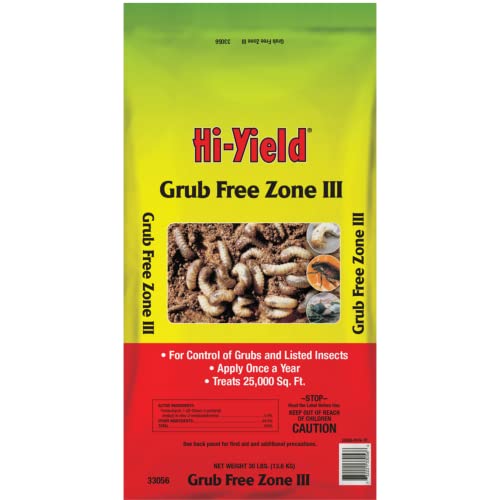
Hi-Yield (33056) Grub Free Zone III 30 lb

Bonide Captain Jack’s Bug & Slug Granules

RESCUE! Japanese Beetle Trap 3-Pack
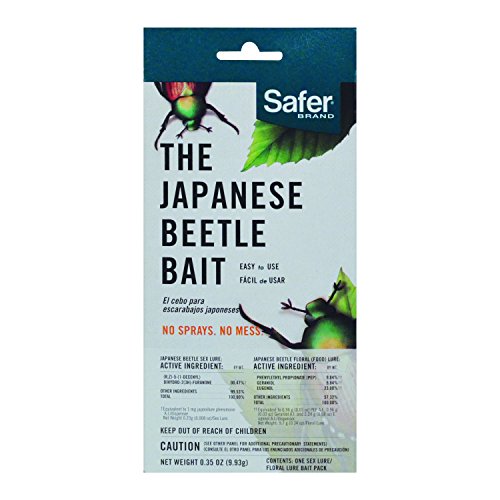
Safer Brand Japanese Beetle Trap Bait

BioLogic Scanmask Beneficial Nematodes 10M

Sevin Lawn Insect Granules 10 lb

Spectracide Bag-A-Bug Japanese Beetle Trap 4-Pack

Agrisel Bifenthrin Pro 7.9 Insecticide 1 Gallon
The Strengths Of Each Pick
Sprawling properties with half an acre or more of turf need coverage without constant refilling, and that is where Hi-Yield’s 30-pound Grub Free Zone III earns its keep. One pass through a broadcast spreader treats up to 25,000 square feet of lawn or flower beds, so a typical suburban yard usually finishes in a single application.
Versatility is the quiet strength. The same granules handle ground covers, ornamental tree rings, and mixed flower beds, which removes the need to buy separate products for each zone. For homeowners chasing both grubs and surface insects in one shot, this bag reduces tool-changing and label-juggling.
Bright Spots
- One 30-pound bag covers up to 25,000 square feet, eliminating repeat trips to the spreader shed for medium-large yards.
- Targets a wide insect roster, so grubs, mole crickets, and other lawn-damaging pests fall under the same application.
- Works across lawn, ground cover, flower beds, and ornamental tree bases without switching formulas.
- Spring through summer application window lets you time treatments to local hatch patterns instead of locking into one rigid schedule.
Worth Noting
- Application rates and timing differ by pest, so reading the full label before spreading prevents wasted product.
- Best results depend on pre-hatch timing, which can be tricky for gardeners new to grub life cycles.
- Storage in a dry spot is wise since granular insecticide can clump or lose effectiveness if left in humid sheds.
Key Specs
Built For Half-Acre Lawns
Homeowners with extensive turf who want one granular product covering both grubs and surface pests benefit most from the bag size and broad label.
Look Elsewhere When
Vegetable gardeners who need food-safe options will find Bonide Captain Jack’s Bug & Slug Killer Granules a more appropriate fit for edible beds.
Vegetable gardeners juggling tomatoes, lettuce, and berries need a granular bait that works without contaminating the harvest. Bonide Captain Jack’s Bug & Slug Killer Granules fits that brief, drawing slugs, cutworms, earwigs, snails, pill bugs, sow bugs, and crickets out of hiding before they ever reach a ripe tomato.
The 1.5-pound format suits smaller plots where a 30-pound bag of broad-spectrum insecticide feels like overkill. One application reportedly holds for up to a month, which keeps mid-season garden visits focused on watering and harvesting rather than re-baiting beds every weekend.
Advantages To Know
- Pelletized bait pulls pests from cracks, mulch, and dense growth where sprays can’t reach.
- Safe for vegetable, fruit, and berry gardens, eliminating the harvest-withholding anxiety that comes with harsher chemicals.
- Single application can last up to a month, reducing mid-season reapplications during peak harvest.
- Targets a wide pest roster in one product, removing the need to mix slug and bug controls.
Things To Consider
- Bait format means pests die after consuming pellets, so dead insects can show up in well-trodden garden paths.
- Smaller 1.5-pound bag means large raised beds or multi-row plots may need multiple jars per season.
- Reapplication after heavy rain or overhead watering can be necessary since pellets break down once soaked through.
Right Match For Edible Plots
Kitchen gardeners growing vegetables, berries, and fruit benefit most from a bait that’s approved for food crops and lasts through a busy growing month.
Swap It Out When
Homeowners managing large turf areas will get more value per pound from Hi-Yield Grub Free Zone III instead.
Adult Japanese beetles rarely arrive alone. Once they find a food source, the pheromone trail brings neighbors in waves, which is exactly the pattern RESCUE! traps are designed to interrupt. This 3-pack uses a pheromone lure that draws beetles onto large green panels, where impact stuns them into a collection bag.
Reusability matters for gardeners who treat beetle control as an annual routine rather than a one-off project. The included attractant cartridge reportedly lasts an entire season, and the easy-lock bottom lets you empty and redeploy the same trap without buying new hardware each year.
Where It Excels
- Reusable design with a season-long attractant cartridge avoids repeat hardware purchases.
- Pheromone-based attraction captures both Japanese and Oriental beetles in a single trap.
- Easy-lock bottom makes bag emptying clean enough for gardeners who don’t want to handle dead beetles directly.
- Three-trap pack covers a typical suburban yard well enough to set up a perimeter defense.
Points To Keep In Mind
- Pheromone traps can attract more beetles to the yard if placed too close to valued plants, so positioning away from roses and grapevines matters.
- Collection bags need periodic checks during peak beetle weeks in mid-summer.
- Traps target adults only, so grub-stage damage below the soil still requires a separate preventive approach like BioLogic Scanmask nematodes.
Feature Snapshot
Made For Perimeter Setups
Gardeners willing to position traps away from prized ornamentals benefit most from pheromone-based mass capture across a season.
Where Another Pick Suits Better
Shoppers who already own a Safer Brand trap should grab the Safer Brand Japanese Beetle Trap Bait replacement rather than buying a whole new system.
Existing trap owners hit a predictable wall each season: the hardware still works, but the lure has run dry. Safer Brand’s replacement bait keeps an existing Safer Brand trap operational without forcing a full system repurchase, which makes it the most economical choice for recurring beetle seasons.
The single-bait format delivers roughly two weeks of attraction per cartridge, so timing replacements around peak beetle emergence keeps coverage continuous. For gardeners who already trust the Safer Brand hardware, swapping in a fresh bait is the lowest-friction way to extend trap life.
The Upside
- Single-bait cartridge slots directly into existing Safer Brand traps without tools or modifications.
- Two-week lure life suits the typical Japanese beetle emergence window in most regions.
- Replacement-only purchase avoids unnecessary hardware waste for gardeners who already own a compatible trap.
Trade Offs
- Only compatible with Safer Brand trap hardware, which limits usefulness for owners of other trap systems like RESCUE! or Spectracide.
- Two-week lure life means frequent reordering during long beetle seasons.
- Single-unit pack may feel small for homeowners running multiple traps across a large property.
Best Suited To Existing Hardware
Safer Brand trap owners who want a seamless cartridge swap each season benefit most from this targeted replacement.
Not Your Match When
First-time shoppers without an existing trap will get more value from RESCUE!’s 3-pack, which includes both hardware and lure.
Organic lawn programs can’t rely on synthetic insecticides, and that’s where BioLogic Scanmask nematodes change the calculus. Steinernema feltiae, a microscopic beneficial organism (a tiny worm that hunts soil-dwelling pests), actively pursues grubs and other soil-stage insects, working below the surface where granular products can’t always reach.
The 10-million-count format suits small-to-medium lawns where gardeners want biological control without committing to bulk nematode production. Compared to the chemical-heavy picks earlier in this list, this option trades fast knockdown for a quieter, more sustainable suppression cycle that fits organic and pollinator-friendly programs.
Real-World Strengths
- Living biological control fits organic lawn care programs that exclude synthetic insecticides.
- Targets soil-dwelling grubs directly, addressing root-stage damage before adults emerge.
- No chemical residue, making it appropriate around vegetable plots and pollinator gardens.
- Pairs well with pheromone traps like RESCUE! for a combined above- and below-ground defense.
Honest Caveats
- Requires cool, moist soil conditions and timely application to establish, so timing matters more than with granular products.
Who Should Grab It
Organic-focused gardeners managing grub pressure without synthetic chemicals benefit most from nematode-based soil treatment.
Skip It When
Homeowners wanting immediate adult beetle suppression should layer in RESCUE! traps rather than relying on nematodes alone.
Large properties with mixed pest pressure benefit from a single product that handles more than just grubs. Sevin Lawn Insect Granules advertise coverage against over 30 listed pests, so the same spreader pass that handles Japanese beetle grubs also addresses ants, ticks, and other lawn nuisances.
The 10-pound bag strikes a middle ground between Hi-Yield’s 30-pound bulk format and smaller specialty products. Spreader application with thorough watering afterward releases active ingredients into the soil, so even gardeners without spray equipment can deploy this with basic broadcast gear.
Everyday Wins
- Targets 30-plus listed pests in one application, reducing the need for multiple products across the season.
- Granular format works with standard broadcast spreaders, so no special equipment is required.
- Water-activated release pattern fits routine irrigation schedules.
- Effective perimeter treatment around ornamental beds and structural foundations.
Less Ideal Details
- Active ingredients require watering-in to release, so dry conditions after application can limit effectiveness.
- Broad-spectrum coverage can affect beneficial insects, so placement near pollinator gardens warrants caution.
- Ten-pound bag may not stretch across multi-acre properties without repeat purchases mid-season.
At A Glance
Perfect Match For Mixed Pressure
Homeowners juggling multiple lawn pests beyond Japanese beetles benefit most from a broad-spectrum granular that simplifies their rotation.
A Better Fit Elsewhere
Gardeners running organic programs will find BioLogic Scanmask Beneficial Nematodes a more appropriate biological alternative.
One trap rarely covers a full yard, which is why the Spectracide Bag-A-Bug 4-pack exists. The dual-lure design combines a sex-attractant pheromone with a floral scent, reportedly pulling in two to five times more beetles than floral-only lures, and four units let you set up a perimeter pattern that channels beetles away from prized plantings.
Compared to the RESCUE! 3-pack reviewed earlier, this option trades trap count for stronger per-trap attraction. Homes with established rose gardens, grapevines, or fruit trees often see better results from multiple higher-catch traps than from a single high-end setup.
Useful Touches
- Dual-lure system (sex pheromone plus floral attractant) reportedly outperforms single-lure traps significantly.
- Four-pack supports perimeter placement around gardens, orchards, or ornamental beds.
- Catches both male and female beetles, slowing reproductive cycles over the season.
Practical Considerations
- High-attraction traps can worsen local pressure if placed too close to valued plants.
- Bag inspection and emptying become routine tasks during peak weeks in July.
- Strong lure pulls beetles from neighboring properties, so neighbor communication helps manage expectations.
Quick Facts
Whose Shelf It Belongs On
Homeowners with established rose or grapevine collections who want perimeter trapping benefit most from a four-trap layout.
Reach For A Different Pick When
Smaller yards with limited perimeter space will find RESCUE!’s 3-pack a more appropriately scaled alternative.
Properties stretching well past an acre need a concentrate format, and Agrisel Bifenthrin Pro 7.9 delivers that in a single gallon. As a liquid concentrate, it dilutes into spray-tank quantities that cover large lawn expanses, ornamental borders, and perimeter zones without the chore of hauling bag after bag of granules.
Versatility is the standout trait. The same jug handles spiders, ants, fleas, mole crickets, and stink bugs, so homeowners managing diverse pest pressure can consolidate their chemical rotation into one labeled bottle. Once dry, the formula is suitable for households that want a defined re-entry window before pets and family return outdoors.
Points In Its Favor
- One-gallon concentrate format dilutes into many spray-tank loads, lowering per-application cost on large acreage.
- Broad-spectrum label handles grubs, surface insects, and perimeter pests from a single bottle.
- Suitable across lawns, ornamental beds, and certain agricultural settings for flexible deployment.
- Defined drying window simplifies re-entry planning for households with pets and children.
Where It Is Less Suited
- Concentrate format requires a pump sprayer or tank, adding equipment cost for casual gardeners.
- Mixing ratios and dilution rates demand careful attention to the label.
- Liquid format has shorter shelf life than dry granules if storage conditions fluctuate.
Made For Acreage Owners
Homeowners managing multi-acre lots or small-acreage properties benefit most from the per-application value of a concentrate jug.
Consider Something Else When
Small-yard gardeners without spray equipment will find Sevin Lawn Insect Granules easier to deploy with a basic broadcast spreader.
What To Weigh Before Choosing A Grub Control Method
Timing And Life Stage Targeting
Japanese beetles spend most of their lives underground as grubs chewing through grassroots before emerging as adults. Curative granular insecticides work best when applied in late summer or early fall, before grubs mature into hard-to-kill stages. Preventive treatments target egg-laying periods, while pheromone traps and bait products handle adult populations during the visible summer feeding window. Gardeners benefit from matching the product to the life stage that’s currently causing damage rather than the one that’s easiest to find on a shelf.
Application Format And Yard Size
Granular insecticides spread easily with a broadcast spreader and suit medium lawns without extra equipment, while liquid concentrates cover larger acreages more economically but require pump sprayers or tank systems. Trap counts matter too: a 4-pack like Spectracide’s supports perimeter placement, while a 3-pack fits smaller yards where one or two units work as outposts rather than a complete perimeter.
Chemical, Biological, And Mechanical Trade-Offs
Synthetic insecticides act quickly but require careful handling around pollinator gardens, edible beds, and households with pets. Biological options like BioLogic Scanmask nematodes work more slowly without chemical residue, while mechanical traps provide visible results without altering soil chemistry at all. Mixing methods often outperforms relying on one approach alone, so layering nematodes below ground with pheromone traps above ground catches both life stages.
Reusability And Long-Term Cost
Reusable trap hardware with replaceable lures spreads cost across multiple seasons, while single-application granules require fresh purchase each treatment cycle. Homeowners treating beetles as a recurring annual problem may find reusable trap systems more economical over three to five years, while one-shot curative treatments suit gardeners with shorter-term pressure.
Key Considerations Across These Picks
Pitfalls Shoppers Hit
Placing pheromone traps too close to valued plants often backfires, drawing more beetles directly onto the roses you’re trying to protect rather than into the trap’s collection bag. Traps perform best at property edges or downwind of prized ornamentals. Treating on a fixed calendar date instead of a regional hatch window also wastes product, since Japanese beetle emergence varies by latitude and weather. Local extension service grub-emergence forecasts help align applications with actual grub activity rather than guesswork.
Why Top Tier Costs More
Higher-tier products like the Agrisel Bifenthrin Pro 7.9 concentrate command more upfront because they cover significantly more square footage per dollar once diluted into working spray. Multi-pack trap options like Spectracide’s 4-pack cost more per purchase but reduce per-trap cost and enable proper perimeter placement. Premium pricing typically reflects coverage economics, dual-lure efficacy, or biological viability windows, so paying more generally buys either scale or stronger performance rather than packaging alone.
Frequently Asked Questions
When should I apply grub control for Japanese beetles?
Apply preventive grub control in late spring through early summer before eggs hatch into feeding grubs. Curative treatments work best in late summer when young grubs are still small and vulnerable to chemical or biological control.
Are Japanese beetle traps safe around vegetable gardens?
Pheromone traps themselves don’t contact crops, but placing them too close to vegetables can attract beetles into the garden rather than away from it. Position traps at property edges or downwind of food crops for best results.
How long does it take for nematodes to work on grubs?
Beneficial nematodes typically begin reducing grub populations within two to four weeks under proper soil moisture and temperature conditions. Visible results vary based on soil type, irrigation, and grub life stage at application time.
Can I use grub control products around pets?
Granular insecticides generally allow re-entry once watered in and dried, while liquid concentrates have label-specific drying windows. Always read the product label for pet re-entry timing before allowing animals back onto treated areas.
Do Japanese beetle traps actually reduce plant damage?
Traps reduce local beetle populations when placed correctly at property edges, but improper placement can draw more beetles into the garden. Traps work best as one component of a layered strategy that includes preventive grub control and resistant plant selection.
The Takeaway
Picking the right Japanese beetle control depends on whether you’re defending roots underground, foliage above ground, or both. Granular insecticides like Hi-Yield Grub Free Zone III handle large lawns efficiently, while Bonide’s bait fits vegetable beds where food safety matters. Trap systems like RESCUE! and Spectracide work alongside biological nematodes for a layered defense across an entire season. The best results usually come from combining two approaches rather than betting on a single product.
