

Growing a Japanese maple bonsai rewards patience with year-round beauty, whether you start from seed, pick up a young starter plant, or bring home a partly trained tree. The challenge is matching your timeline and skill level to the right format, since seeds demand years of careful work while live plants deliver shape from day one.
The lineup below covers every stage of that journey: seed kits for the long game, starter kits for beginners, young live trees ready to train, mature specimens for instant impact, and a fertilizer to keep established plants looking their best.
A Quick View Of The Lineup

CZ Grain Bonsai Tree Seeds, Japanese Red Maple (Acer palmatum)

Avergo Bonsai Tree Kit Classic (5 Varieties)
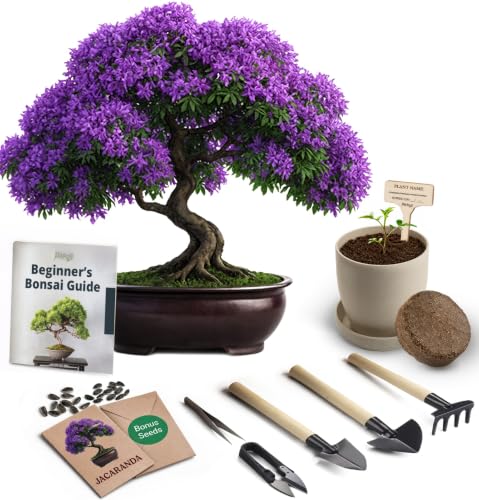
Avergo Bonsai Starter Kit (Jacaranda)

Live Dwarf Juniper Bonsai (6-Year, Ceramic Fisherman)

LUOJIBIE Bonsai Tree Kit (Wooden Box)

Floating Cloud Japanese Maple (Ukigumo, 2-Year)

Japanese Red Maple Live Plant (1–2 Ft, 3-Inch Pot)

TPS Nutrients Japanese Maple Fertilizer (8 oz Liquid)
The Details Behind The Selections
Starting Japanese maples from seed is the slowest path on this list, but it gives you total control over trunk movement, nebari (the surface root flare that anchors a quality bonsai), and branch placement from year one. This CZ Grain pack focuses purely on Acer palmatum, the species behind the classic red-leaf bonsai silhouette, with 20+ seeds aimed at hobbyists willing to spend several seasons shaping raw material.
The seeds suit hobbyists who already understand germination timing and have space for a nursery tray indoors before outdoor transplanting. If you’re comparing this to the Avergo kits coming up next, the trade-off is clear: those bundles include pots, soil discs, and instructions, while this one is raw seed only.
Advantages To Know
- Pure-species pack gives you authentic Acer palmatum genetics rather than a mixed grab bag
- Twenty-plus seeds let you select the strongest seedlings and discard weaker ones
- Lower upfront cost than a starter kit with included hardware
- Building a tree from germination teaches trunk thickening, root pruning, and wiring from scratch
Things To Consider
- Maple seeds often need cold stratification (a period of moist, chilled storage) before they’ll sprout, which adds a planning step
- You supply your own pots, soil, and dome covers since nothing is included
- A bonsai-ready tree from seed typically takes five to seven years of consistent work
Who Will Love This
Patient hobbyists who already keep other bonsai or want a long-term project and don’t mind sourcing their own propagation supplies.
Where Another Pick Suits Better
The Avergo Bonsai Tree Kit Classic suits anyone who’d rather skip the germination learning curve and start with a kit that includes pots and soil.
Where the CZ Grain pack gives you one species and zero hardware, this Avergo kit takes the opposite approach: five tree varieties, the pots and soil to start them, and bonus seed packets in case germination runs thin. It treats bonsai as a sampler platter rather than a single long project, which makes it a useful first step for anyone who’s never germinated a tree before.
The species list leans tropical and ornamental (wisteria, flame tree, blue jacaranda) rather than pure Acer palmatum, so if your goal is specifically a Japanese maple bonsai you’ll want to look at the CZ Grain seeds or the live trees later in this list. For first-timers who just want to learn the craft, this kit is forgiving.
The Good Stuff
- Everything ships in one box: seeds, pots, soil discs, and a basic guide
- Five varieties let you compare growth habits side by side
- Backup seed packets cushion the blow if your first germination round underperforms
- Step-by-step instructions flatten the learning curve for true beginners
Trade Offs
- None of the included species are Japanese maple, so this won’t deliver the Acer palmatum silhouette you may be picturing
- Plastic pots in starter kits are functional but generally need upgrading once trees root out
Right Fit For
Curious first-timers who want a complete kit to learn germination, watering rhythms, and basic styling on forgiving tropical species.
Reach For A Different Pick When
The CZ Grain Bonsai Tree Seeds, Japanese Red Maple suit anyone committed to authentic Acer palmatum rather than tropical substitutes.
This Avergo kit is the single-species sibling of the 5-variety box above, and the narrower focus pays off if you want to commit to one tree instead of juggling five at once. Jacaranda brings feathery compound leaves and, in long warm seasons, the showy purple blooms that make it a favorite gift plant.
Like the multi-variety kit, it ships as a complete starter package with backup seed packets, so the unboxing-to-potting gap is small. You’re trading species variety for a cleaner, less cluttered learning project.
Key Advantages
- Single-species focus means you learn one growth pattern deeply instead of juggling five
- Compact kit footprint works on a windowsill or small apartment shelf
- Makes a ready-to-give gift for anyone curious about bonsai
- Two backup seed packets cover any early germination losses
Room For Improvement
- Jacaranda wants warm conditions and bright light, so it’s a poor match for dim northern apartments
- Still not a true Acer palmatum, so traditionalists may want to step up to the live trees on this list
Made For
Gift-givers, parents introducing kids to a single plant project, and apartment growers with a sunny window who want one tree done well.
Swap It Out When
The CZ Grain Bonsai Tree Seeds, Japanese Red Maple suit anyone who’d rather grow true Acer palmatum from scratch, even with the longer timeline.
Stepping away from seed kits entirely, this listing is a live, partly-trained dwarf juniper shipped in a glazed ceramic fisherman pot. Around six years old and hand-shaped, it lands closer to a finished product than a project. For shoppers who want instant greenery on a desk or shelf, this is a much faster route than any seed kit on this list.
Juniper is technically a different species from Acer palmatum, but it shares the same care philosophy: outdoor placement in bright light, careful watering, and a willingness to learn wiring over time. Care guidance arrives with the order, which lowers the barrier for anyone intimidated by a “live” tree.
Real-World Strengths
- Around six years of pre-growth means the trunk already has girth and shape
- Glazed ceramic pot and fisherman figurine arrive together for display-ready setup
- Suitable for indoor windowsills with direct sun or outdoor patios in mild weather
- Handcrafted shaping trims years off what you’d wait for from seed
Honest Caveats
- Pot color and shape vary between orders, so the figurine and glaze may not match the listing photo exactly
- Attached moss is artificial, which looks fine but won’t survive watering routines
- Junipers struggle long-term in low-light indoor spots and prefer patio or bright-window placement
Perfect Match For
Office decorators, holiday gift shoppers, and anyone who’d rather skip the seedling stage and bring home a tree that’s already on its way.
A Better Fit Elsewhere
The Japanese Red Maple Live Plant suits shoppers specifically set on Acer palmatum color and willing to train their own tree from a young starter.
Where the Avergo kits lean toward plastic pots and basic packaging, this LUOJIBIE set arrives in a wooden box that doubles as a presentation case. The kit includes seeds, planters, soil, and step-by-step instructions aimed at beginners, teens, and households where the unboxing moment matters as much as the growing.
For a parent introducing kids to plant care, or a host who wants something that looks tidy on a counter before it’s even opened, the wooden crate elevates the experience. The actual horticultural content is comparable to other beginner kits, so the upgrade is mostly about presentation.
What Earns Its Place
- Wooden presentation box makes the kit feel gift-ready out of the package
- Step-by-step instructions keep the project approachable for first-time growers and kids
- All core supplies included, so you don’t need to source anything extra
- Compact footprint suits kitchen counters, classroom shelves, or apartment windowsills
Points To Keep In Mind
- Specific seed varieties aren’t fully spelled out in the source, so you can’t pre-select for Acer palmatum
- Like all seed kits, success depends on consistent moisture and warmth during germination
Best Suited To
Families with curious kids, casual gift shoppers, and classroom settings where the kit itself is part of the appeal.
Look Elsewhere When
The Avergo Bonsai Tree Kit Classic suits anyone who wants the species list spelled out and prefers a multi-variety learning project.
This is the rarest pick on the list and the only true Acer palmatum cultivar offered as a live young tree. Ukigumo, often sold as “Floating Cloud,” is one of the most heavily variegated Japanese maples in cultivation, with cream-and-pink splashed leaves that shift through the season.
The two-year-old size means you’re getting a small but established plant rather than a stick-in-a-pot, and the variegation can take several more years to fully express. It needs shade (zones 5 to 8) since bright sun scorches the pale leaf sections, which is a key difference from the red maple coming up next.
Why It Works Well
- True Acer palmatum cultivar prized by collectors for unusual variegation
- Two-year root system establishes faster than a seedling
- Compact mature size, roughly 5 to 6 feet tall and 2 to 3 feet wide, suits small gardens and large containers
- Ever-changing foliage keeps the visual interest fresh across seasons
Softer Spots
- Young Ukigumo often look like ordinary green maples for the first few years before variegation develops
- Needs part to full shade, so it’s a poor match for sunny open yards
- Slower growth than red-leaf cultivars, so patience matters more than rapid coverage
Who Should Grab It
Collectors and patient growers with shaded patio or woodland-edge space who want something conversation-worthy rather than fast coverage.
Skip It When
The Japanese Red Maple Live Plant suits anyone wanting fast red color and full-sun flexibility over rare variegation.
For shoppers who want classic Japanese maple color without the seed-kit timeline, this live young Acer palmatum arrives already 1 to 2 feet tall in a 3-inch pot. It’s a genuine landscape tree in miniature, sized to transplant into a larger container or a small garden bed and grow on from there.
The deep burgundy foliage holds from spring through fall, which makes it a stronger landscape performer than the variegated Ukigumo covered just above. It’s also sold as a bonsai starter, so you can train it in a pot or let it grow into a small specimen tree, depending on your pruning plan.
Strong Points
- Live 1 to 2 foot height skips the germination phase entirely
- Compact 3-inch pot ships safely and transplants without much root disturbance
- Burgundy-red foliage reads strongly from a distance in any garden setting
- Flexible end use: bonsai training, patio container, or landscape focal point
A Few Limitations
- Young live plants need careful watering during the first season while roots establish
- A 3-inch pot dries out faster than landscape soil, so daily checks are common in summer
- Red-leaf maples can scorch in intense afternoon sun in southern zones
The Right Fit
Patio gardeners, entryway planters, and anyone wanting a real Acer palmatum that establishes the same season it arrives.
Where A Sibling Pick Shines
The Floating Cloud Japanese Maple suits shoppers who’d rather have rare variegated foliage and have the shade conditions to support it.
Closing the list is the one item that isn’t a tree at all: a liquid fertilizer formulated specifically for Japanese maples. Once you have a live plant, whether the red maple above or a future seedling, targeted feeding makes a visible difference in leaf color and root vigor through the growing season.
Liquid feeding (mixing the concentrate with water and applying it to the soil) is faster-acting than granular options, which suits the short, intense growing window Japanese maples get in cooler climates. Pair it with any of the live trees on this list for the most noticeable results.
Where It Helps
- Formulated specifically for ornamental maples rather than general-purpose use
- Liquid format delivers nutrients faster than slow-release granules
- Works for in-ground trees, patio containers, and bonsai pots
- Compact 8 oz bottle stores easily on a shelf between feedings
Small Caveats
- Liquid feeding needs consistent application through spring and summer for best results
- Most useful for established trees, so seed-starting kits won’t benefit until seedlings leaf out
Whose Shelf It Belongs On
Anyone who already has a live Japanese maple (or is about to plant one) and wants the foliage color and root vigor that targeted feeding supports.
Not Your Match When
The CZ Grain Bonsai Tree Seeds, Japanese Red Maple suit shoppers still at the germination stage, since seedlings need time before any fertilizer helps.
What Matters Most Before Choosing Japanese Maple Bonsai Trees
Matching the format to your timeline is the single biggest decision. Seed kits demand one to several years of seedling care before any styling begins, while live plants give you a head start but cost more per tree. Pick based on whether you want a hands-on project or an instant plant to train.
Sun and climate matter just as much as species. Acer palmatum varieties prefer part shade in hot zones and full sun in cooler ones, while junipers want direct light and outdoor airflow. Ukigumo specifically needs protection from intense afternoon sun to keep its variegation intact, which rules it out for open south-facing yards.
Pot size and root space shape long-term success. Seed kits ship in starter pots that trees quickly outgrow, and even live plants in 3-inch pots need transplanting within a season or two. Plan for a deeper training pot or a landscape spot before you buy.
Care commitment varies more than most shoppers expect. Live trees need consistent watering, especially in small pots, while seedlings need daily moisture checks during germination. Honest beginners often do better with a live starter plant than a multi-variety seed kit, since fewer plants means more attention per tree.
Smart Choices For The Long Run
Common Shopping Slip Ups
Treating a seed kit like a finished bonsai is the most common disappointment. Seed kits are nurseries, not display pieces, and the trees they produce need years before they look like what you picture. Shopping for a mature live tree (like the dwarf juniper earlier in this list) sets a more realistic expectation if you want immediate visual impact.
Underestimating light requirements is the second frequent mistake. Junipers and red-leaf maples can handle more sun than variegated cultivars like Ukigumo, and indoor windowsills rarely deliver the outdoor airflow these trees prefer. Match the species to your actual placement, not the placement you wish you had.
When Paying More Pays Off
The price gap between seed kits and live trained specimens reflects years of saved growing time. A six-year-old juniper has trunk thickness that a seedling won’t match for nearly a decade, and a variegated cultivar like Ukigumo arrives with genetics that take extra years to develop from seed. Paying more buys you time and certainty, which matters if you want a display-ready tree this season rather than a five-year project.
Frequently Asked Questions
How long does it take to grow a Japanese maple bonsai from seed? Most Acer palmatum trees grown from seed need five to seven years of trunk development before they look like a recognizable bonsai, with another few years for branch refinement.
Can Japanese maple bonsai live indoors year-round? They struggle long-term indoors because they need a winter dormancy period outdoors. A bright patio, balcony, or open window with seasonal outdoor placement works much better than a climate-controlled living room.
What’s the difference between Acer palmatum and dwarf juniper bonsai? Acer palmatum is a deciduous tree grown for leaf color and shape, while junipers are conifers with needle-like foliage trained for trunk movement. Both follow similar watering and pruning principles but differ in light needs.
Do bonsai seed kits really include everything you need? Most include seeds, pots, and soil discs, but you’ll still need consistent warmth, indirect light, and patience. The kits flatten the sourcing step without removing the actual growing work.
When should you start fertilizing a young Japanese maple? Wait until seedlings have several sets of true leaves, then feed lightly through the growing season. Mature transplants benefit from regular feeding from spring through early summer, with a rest period in late summer and fall.
Wrap Up
The right Japanese maple bonsai depends entirely on where you want to start: seeds for the long game, live plants for faster shaping, or a partly-trained specimen for instant greenery. Pick the format that matches your patience and your light conditions, and you’ll set yourself up for a tree that gets better with every season.
