

A thinning lawn tells on itself fast. Bare patches creep wider through summer, weeds slip in where turf once choked them out, and the deep green color fades to a tired straw tone. Picking the right Kentucky bluegrass seed for overseeding decides whether you spend the next season nursing weak growth or watching fresh blades knit together into the dense, dark carpet most homeowners actually want.
A Side-By-Side Look

Jonathan Green Black Beauty Sun & Shade Grass Seed 7 lb

Jonathan Green Blue Panther Kentucky Bluegrass Seed 25 lb
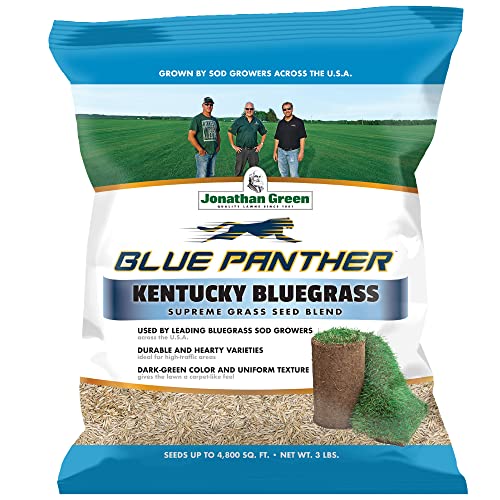
Jonathan Green Blue Panther Kentucky Bluegrass Seed 3 lb

Jonathan Green Blue Panther Bermudagrass Seed 4 lb

Jonathan Green Black Beauty Ultra Grass Seed 25 lb

Jonathan Green Black Beauty Ultra Grass Seed 7 lb

GreenView Pure Grass Seed Kentucky Bluegrass Blend 20 lb

GreenView Pure Grass Seed Kentucky Bluegrass Blend 3 lb
A Closer Look At Each Pick
Yards rarely grow in perfect sun. A maple drops shade over one corner by 3 p.m., a fence shadows the back strip, and the open lawn bakes in midday. The Jonathan Green Black Beauty Sun & Shade mix is built for exactly that patchwork, combining seed varieties that handle full sun and partial shade without forcing you to buy two bags.
For most homeowners with a quarter-acre lot, the 7 lb size hits the sweet spot. You can spread it over bare spots from pet damage, then move into a light overseeding pass across the rest of the lawn. Compared with the heavier 25 lb options later in this list, it stays manageable for a single trip from the garden center.
Well-Handled Touches
- Handles mixed sun and shade in the same lawn without blending two bags
- Targets bare patches quickly, which matters after grub damage or heavy foot traffic
- Produces a darker green color than many bargain mixes, helping older yards look refreshed
- 7 lb size suits small-to-medium yards and reduces leftover seed waste
Things To Consider
- Not a pure Kentucky bluegrass blend, so color and texture may not match an existing KBG lawn perfectly
- 7 lb runs out fast on yards above about 2,500 sq ft of coverage
Right Fit For
Homeowners with a small-to-medium mixed-light lawn who want one bag that handles both sunny and shaded zones.
Look Elsewhere When
You need a pure KBG lawn and should reach for the Jonathan Green Blue Panther Kentucky Bluegrass Seed 25 lb instead.
When the lawn has thinned across most of its surface rather than in isolated spots, you need seed by the bag, not by the scoop. The Jonathan Green Blue Panther Kentucky Bluegrass 25 lb bag is a 100% KBG (Kentucky bluegrass) blend sourced from varieties used by leading sod growers, so it behaves the way an established bluegrass lawn expects.
For new yard establishment or a thick overseeding pass across a half-acre lot, this bag covers the area without forcing a mid-project refill. Where the Sun & Shade mix above trades species for flexibility, this one commits fully to bluegrass and rewards you with a uniform look.
Practical Advantages
- Pure KBG content keeps color and blade texture consistent across the whole lawn
- Sod-quality varieties support both new lawns and overseeding older turf
- 25 lb size covers large yards or whole-lawn renovations without a second purchase
- Cool-season profile handles northern climates and the northern half of transition zones
Trade Offs
- Slower to germinate than ryegrass-heavy mixes, so patience matters during establishment
- Struggles in deep southern heat, where a Bermudagrass option becomes the smarter call
- 25 lb is heavy to haul and store, so a dry garage spot helps preserve viability
Best Suited To
Homeowners redoing a large KBG lawn or overseeding across more than 5,000 sq ft who want a uniform bluegrass look.
Skip It When
You only have a few bare spots to repair, in which case the Jonathan Green Blue Panther Kentucky Bluegrass Seed 3 lb keeps things simple.
The same Blue Panther genetics arrive in a much smaller bag for spot work. A dog run gone patchy, a stripped strip where the kids play soccer, or the shoulder along a driveway all fit comfortably in a 3 lb spread. You are not paying for seed you do not need.
For a true overseeding pass across a full lawn, you would burn through this bag too quickly and end up buying two or three. But for targeted repair in a KBG lawn, the small bag matches the task and keeps the leftover seed count low. Seed older than a season loses germination, so buying only what you will actually use pays off.
Strengths Worth Knowing
- Pure KBG content matches an existing bluegrass lawn without color shifts
- Sod-quality varieties fill bare spots and blend into established turf
- Compact 3 lb size is easy to store and quick to apply with a hand spreader
- Cool-season profile fits northern and upper transition-zone climates
Worth Noting
- Too small for any whole-lawn overseeding project above roughly 1,000 sq ft
- Slow KBG germination still applies, so repair spots take weeks to fill in
Made For
Homeowners patching small worn areas in an otherwise healthy KBG lawn who want color-matched repair.
Consider Something Else When
You need broad coverage and should reach for the GreenView Pure Grass Seed Kentucky Bluegrass Blend 20 lb instead.
This is the southern cousin of the rest of the list. Bermudagrass is a warm-season turf, meaning it thrives in hot summers and goes dormant (turns brown and stops growing) when temperatures drop. The Blue Panther Bermudagrass blend is formulated for southern lawns, with strong vertical and lateral rooting that helps it establish a dense, durable stand in heat that would cook a KBG lawn.
Compared with traditional Bermudagrass varieties, this blend is positioned to reduce the need for winter overseeding with ryegrass, which many southern homeowners rely on to keep some green color through the cooler months. In the right climate, that translates into less annual work.
Positive Points
- Handles southern heat and humidity that would stress cool-season grasses
- Strong vertical and lateral rooting builds a durable, wear-tolerant lawn
- Formulated to reduce the annual winter overseeding chore common in southern zones
A Few Limitations
- Goes brown and dormant in winter, so year-round green color requires overseeding with ryegrass
- Not a Kentucky bluegrass product, so it does not match a northern KBG lawn
- Limited fit outside USDA hardiness zones roughly 7 through 10
Who It Suits Best
Southern homeowners with full-sun lawns who want a heat-loving turf that withstands heavy summer use.
A Better Fit Elsewhere
Northern homeowners overseeding a cool-season lawn should reach for the Jonathan Green Blue Panther Kentucky Bluegrass Seed 25 lb instead.
Where the Sun & Shade mix leans on flexibility, the Black Beauty Ultra blend leans on depth. It combines tall fescues, Kentucky bluegrass, and perennial ryegrass into a multi-species mix, each species filling a slightly different niche. The result is a lawn that germinates quickly thanks to ryegrass, self-repairs through bluegrass rhizomes, and stays deep-rooted through the fescues.
The 25 lb bag covers serious ground, which suits a full-lawn overseeding or a fresh establishment on a larger lot. For a family lawn where kids, pets, and bare feet all show up daily, the multi-species structure absorbs wear better than a single-species blend.
Notable Gains
- Multi-species blend balances quick germination, self-repair, and deep roots
- Dark green color improves curb appeal across a wide range of conditions
- 25 lb size supports large yards and full-lawn renovation projects
- Tolerates heavy foot traffic better than single-species KBG
Points To Keep In Mind
- Not a pure KBG product, so a strict bluegrass lawn will look slightly different in blade texture
- 25 lb is heavy and bulky, so plan for a dry storage spot
- Multi-species blends can show uneven wear if one species thrives and another struggles
Whose Shelf It Belongs On
Homeowners with a large family lawn who want a dark green, traffic-tolerant turf and value quick establishment.
Not Your Match When
You want a strict pure-KBG lawn, in which case the Jonathan Green Blue Panther Kentucky Bluegrass Seed 25 lb is the closer fit.
The same Ultra blend in a more manageable 7 lb package. You still get the tall fescue, Kentucky bluegrass, and perennial ryegrass mix, but in a bag sized for a typical suburban yard rather than a half-acre estate. For many homeowners, this is the format that actually gets used up before the seed loses viability.
Versus the Sun & Shade mix reviewed earlier, this one trades a shade-friendly profile for a denser, darker blend geared toward mostly sunny lawns. If your yard gets at least six hours of direct sun and you want traffic tolerance plus a richer color, the Ultra 7 lb fills the bill.
Features That Help
- Multi-species structure germinates quickly and repairs itself through rhizomes
- Dark green color lifts the appearance of older or tired lawns
- 7 lb size fits typical suburban yards without heavy leftovers
- Traffic tolerance suits households with kids and pets
Worth Bearing In Mind
- Strong-fescue content can clump in deep shade where a Sun & Shade mix would do better
- 7 lb still runs short on yards above about 2,500 sq ft of overseeding coverage
Who Should Grab It
Suburban homeowners with a mostly sunny, mid-size lawn who want a darker, denser, traffic-friendly turf.
Where A Sibling Pick Shines
Yards with significant shade should reach for the Jonathan Green Black Beauty Sun & Shade Grass Seed 7 lb instead.
GreenView takes a different angle on KBG seed. The blend is uncoated, which means each seed is a pure seed rather than a coated pellet. More of the bag is actual seed rather than carrier material, which is a meaningful detail for overseeding, where you want every seed to count. It is also positioned as 99.9% weed-free, which keeps the seedbed cleaner during the slow germination that KBG is known for.
The 20 lb bag sits between the small patch-repair sizes and the 25 lb renovation sizes. For a medium-to-large overseeding pass where you want a pure KBG result without fescue or ryegrass mixed in, this blend fills a gap that the Jonathan Green Black Beauty Ultra options do not.
A Few Highlights
- Uncoated seed means higher seed-per-bag content compared to coated blends
- 99.9% weed-free spec keeps the seedbed cleaner during slow KBG establishment
- Curated KBG varieties thrive in full sun and tolerate light shade
- Blends of KBG varieties support soil adaptability across common soil types
Trade-Offs To Consider
- Slower KBG germination means weeks of patience before full fill-in
- 20 lb falls short of full coverage on the largest lawns, where the Jonathan Green Blue Panther 25 lb is the better fit
- Uncoated seed is lighter and easier to over-spread if you are not careful with the spreader setting
Key Specs
Perfect Match For
Homeowners committed to a pure KBG lawn with a medium-to-large overseeding pass who value uncoated, weed-clean seed.
Reach For A Different Pick When
You want faster germination and broader wear tolerance, in which case the Jonathan Green Black Beauty Ultra Grass Seed 25 lb is the smarter bet.
First-time overseeders often worry about buying the wrong seed or spreading it incorrectly. The GreenView Pure 3 lb bag keeps the commitment small while still delivering the same uncoated, weed-free KBG blend as the larger size. You can focus on technique without worrying about wasting a 25 lb investment.
For spot overseeding along a curbside strip, around a mailbox, or in the worn path to a backyard gate, the 3 lb size hits the spot. The source lists 1,500 sq ft of coverage for new seeding and 3,000 sq ft for overseeding, which gives a clear ceiling before you commit to a bigger bag.
Where It Helps
- Uncoated, 99.9% weed-free seed keeps the seedbed clean during slow germination
- Covers 1,500 sq ft for new seeding and 3,000 sq ft for overseeding, which sets clear expectations
- Curated KBG varieties deliver a dark green color and fine blade texture
- Thrives in full sun and tolerates light shade, fitting most suburban lots
Possible Compromises
- Slow KBG germination tests the patience of first-time overseeders
- 3 lb runs out fast on larger lawns, where a 20 lb bag is the more efficient choice
- Fine-textured bluegrass requires steady moisture during establishment
Quick Facts
Who Will Love This
First-time overseeders with a small lawn or a few worn patches who want to test KBG without committing to a 20 lb bag.
Swap It Out When
You are overseeding more than 3,000 sq ft, in which case the GreenView Pure Grass Seed Kentucky Bluegrass Blend 20 lb keeps you from running short.
Choosing The Right Kentucky Bluegrass Seed For Your Lawn
Kentucky bluegrass is a cool-season turfgrass, meaning it grows most actively in spring and fall and slows down during hot summers. It spreads through underground stems called rhizomes, which is why it self-repairs and forms that thick, carpet-like density most homeowners chase. That same rhizome spread is why overseeding works well in established KBG lawns: the new seedlings knit into the existing network.
Match The Bag To Your Climate Zone
KBG thrives in USDA hardiness zones 3 through 7 and the cooler reaches of zone 8. South of that, summer heat pushes KBG into dormancy and Bermudagrass or zoysiagrass take over. If your summers regularly hit the 90s and stay there, the Jonathan Green Blue Panther Bermudagrass 4 lb is built for that climate instead. Picking the wrong species for your zone is the fastest way to watch seed fail.
Size The Bag To Your Real Coverage Area
A 3 lb bag covers roughly 1,500 sq ft of new seeding or 3,000 sq ft of overseeding, depending on the blend. Measure your lawn’s actual square footage before buying, then add 10 percent for overlap on spreader passes. Buying too small forces a mid-project refill with potentially different seed; buying too large leaves you with old seed that loses germination by the next season.
Pure KBG Versus Multi-Species Blends
A pure KBG bag gives uniform color and blade texture, which matters when you are overseeding an established bluegrass lawn. A multi-species blend like the Black Beauty Ultra mixes in tall fescues or perennial ryegrass for faster germination and better wear tolerance. The honest read is that neither is objectively better; the choice depends on whether you value uniformity or resilience more.
Time Seeding To Cool Weather
KBG germinates best when soil temperatures sit between 50 and 65 degrees Fahrenheit. Late summer to early fall is the prime window for most of the cool-season zone, with early spring as a backup. Skip the impulse to seed in midsummer heat, when the seedlings will struggle against heat stress and crabgrass pressure at the same time.
What To Watch For Before You Buy
Pitfalls Shoppers Hit
The most common mistake is buying a seed blend without checking the actual contents. Some bargain mixes load up on cheap annual ryegrass or unnamed “filler” varieties that look green for a season and then disappear, leaving you back at square one. Look for named cultivars (specific named varieties developed for predictable performance) and a high germination rate on the label. Another trap is overseeding into compacted or thatchy soil without dethatching or aerating first, since seed sitting on top of dead material never reaches the soil.
Where The Extra Money Goes
Premium KBG blends cost more because the seed is sourced from improved cultivars bred for darker color, disease resistance, and stronger rhizome spread. The Jonathan Green Blue Panther line, for example, uses varieties developed for sod growers, which means the same genetics professional turf managers trust. Higher-tier blends also tend to include better weed screening and higher purity, which reduces the chance of introducing weed seeds into your lawn along with the grass seed you actually wanted.
Frequently Asked Questions
When is the best time to overseed with Kentucky bluegrass?
Late summer through early fall is the prime window for most cool-season zones, because soil stays warm enough for fast germination while cooler air reduces heat stress on seedlings. A spring overseeding works as a backup, but fall typically produces thicker results before winter dormancy.
How long does Kentucky bluegrass take to germinate?
Most KBG varieties germinate in 14 to 21 days under good soil moisture and temperature conditions, which is slower than ryegrass but faster than tall fescue. Expect to wait about three weeks before you see consistent green shoots, and a full growing season before the lawn fills in completely.
Can I overseed KBG over an existing fescue lawn?
Yes, overseeding KBG into a tall fescue lawn is a common practice to improve density and self-repair, since fescue grows in clumps while bluegrass spreads through rhizomes. The result is a mixed lawn that handles wear better than pure fescue and fills bare spots more reliably than pure KBG.
How much seed do I need per 1,000 square feet?
For overseeding an existing KBG lawn, most bags recommend 2 to 3 pounds per 1,000 square feet. For new lawn establishment from bare soil, plan on 3 to 4 pounds per 1,000 square feet. Always check the specific bag’s coverage chart, since uncoated and coated seed spread at different rates.
Do I need to water new KBG seed every day?
Light, frequent watering two to three times a day for the first two weeks keeps the top quarter-inch of soil moist without drowning the seed. Once seedlings reach mowing height, shift to deeper, less frequent watering to encourage strong root growth. Letting the seedbed dry out during the germination window is the fastest way to lose seedlings.
The Takeaway
A thicker lawn starts with the right bag for your zone, your yard size, and the look you want. Pure KBG blends deliver uniform color and self-repair through rhizomes, multi-species mixes trade some uniformity for faster germination and wear tolerance, and the Bermudagrass option handles southern heat where cool-season turf would fail. Match the bag to your real coverage, seed in cool weather, and prep the soil before you spread, and the rest of the season mostly takes care of itself.
