

A patchy, tired-looking lawn has a way of dragging down the whole yard. Choosing the right seed matters more than most people realize, since Kentucky bluegrass behaves very differently from blends that lean on ryegrass or fescue. This list walks through eight solid options for cool-season and transition-zone lawns, matching each to the yard it actually suits.
The Picks In Brief

Jonathan Green Blue Panther Kentucky Bluegrass Seed 25 lb
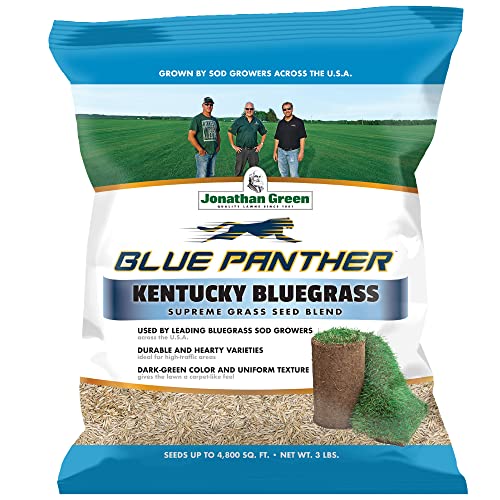
Jonathan Green Blue Panther Kentucky Bluegrass Seed 3 lb

Jonathan Green Black Beauty Rocky Mountain Colorado Grass Seed Mix 7 lb

Jonathan Green Blue Panther Bermudagrass Grass Seed 4 lb

Jonathan Green Black Beauty Ultra Grass Seed 25 lb

Jonathan Green Black Beauty Ultra Grass Seed 7 lb

GreenView Pure Grass Seed Kentucky Bluegrass Blend 20 lb

GreenView Pure Grass Seed Kentucky Bluegrass Blend 7 lb
The Details Behind The Selections
Starting a brand-new cool-season lawn from bare soil calls for volume, and this 25-pound bag of pure Kentucky bluegrass delivers it. The cultivar (a cultivated plant variety selected for specific traits like color or drought tolerance) is the same one trusted by professional sod growers, so it carries serious pedigree for a residential yard. For homeowners converting a construction-zone patch of dirt into something walkable and soft, the bag size keeps you from running short mid-spread.
Because it’s 100% KBG (Kentucky bluegrass) with no filler species, expect the kind of dense, spreading turf that fills in through rhizomes (underground stems that send up new shoots). That same spreading habit means slower establishment than ryegrass blends, so patience matters during the first few weeks.
Real Benefits
- Pure-KBG formulation produces the classic carpet-like density and rich color homeowners associate with sod-quality turf.
- Same cultivar line trusted by professional sod growers across the country.
- 25-pound size covers a full reseeding of a typical suburban yard without leaving you short.
- Rhizome-driven spread helps the lawn self-repair thin or worn patches over time.
Things To Consider
- Germination runs slower than rye or fescue blends, so visible green-up can stretch beyond three weeks in cool soil.
- Pure bluegrass prefers full sun and well-drained soil, and tends to thin out under heavy shade.
- Bag weight makes a single purchase heavy to haul and store before spreading.
Key Specs
Made For
Homeowners reseeding a full cool-season yard who want a pure-KBG lawn and don’t mind the slower establishment window.
Consider Something Else When
The Jonathan Green Black Beauty Ultra Grass Seed 25 lb is a better match if your yard mixes sun with deep shade, since the multi-species blend handles varied light more gracefully.
Not every lawn project needs a 25-pound sack. This smaller 3-pound bag of the same Blue Panther Kentucky bluegrass line targets the patchy corners, dog spots, and post-summer bare zones that show up in otherwise healthy yards. It’s the same cultivar (cultivated variety) trusted by sod growers, just scaled for a focused repair rather than a full reseed.
The trade-off shows up in coverage, since three pounds covers a much smaller footprint than its bulk sibling. For most homeowners, that’s actually the point: a bag you can store in the garage, open without a spreader, and use up before the next season.
Strengths Worth Knowing
- Matches the cultivar in the larger bag, so touch-ups blend seamlessly with existing KBG turf.
- Lightweight format is easy to carry, store, and broadcast by hand on small repair areas.
- Same sod-grower pedigree supports a thick, dark-green fill on established cool-season lawns.
Worth Noting
- Coverage runs out fast on anything larger than a few hundred square feet.
- Pure bluegrass still demands sun and patience for slow germination.
Right Fit For
Homeowners patching pet damage, foot-traffic wear, or post-summer bare spots in an existing Kentucky bluegrass lawn.
Look Elsewhere When
The GreenView Pure Grass Seed Kentucky Bluegrass Blend 7 lb is a better fit if you want a smaller bag that includes sun-and-shade flexibility rather than pure-KBG commitment.
High-altitude lawns face a different rulebook than coastal or Midwest turf, and this blend is built specifically for the cooler, drier conditions of Colorado, Montana, Utah, and Wyoming. Rather than relying on a single species, it combines Black Beauty turf-type tall fescues (a deep-rooted, drought-tolerant grass), Blue Panther Kentucky bluegrass, and elite perennial rye (a fast-germinating grass that establishes quickly). That mix gives the lawn multiple recovery paths when one species hits a rough patch.
The seven-pound format lands in a useful middle ground for residential yards at elevation. You may find that the sun-and-shade versatility handles everything from south-facing slopes to partially shaded corners around the house.
Real-World Strengths
- Region-specific blend matched to cool, semi-arid mountain climates.
- Multi-species composition offers built-in redundancy if one variety struggles.
- Tolerates both sunny and moderately shaded mountain-lot conditions.
Trade Offs
- Region-specific formula limits its usefulness outside its target zone.
- Smaller bag won’t cover large acreage without multiple purchases.
At A Glance
Best Suited To
Homeowners in the Rocky Mountain region dealing with cool nights, dry summers, and variable sunlight who need a blend tuned to that climate.
A Better Fit Elsewhere
The Jonathan Green Black Beauty Ultra Grass Seed 25 lb serves warmer, lower-elevation yards better, since the Ultra mix isn’t tuned for high-altitude stress.
Technically a Bermudagrass product rather than a KBG, but it earns its spot because southern homeowners often ask about it next to bluegrass options. Bermudagrass is a warm-season grass, meaning it grows actively through hot summers and goes dormant (turns brown and stops growing) once soil temperatures drop. The Blue Panther Bermudagrass line targets southern lawns specifically, with aggressive vertical and lateral rooting that establishes a dense, durable stand.
For homeowners tired of winter overseeding every year, the claim of reduced overseeding compared to traditional Bermudagrass is genuinely useful. The four-pound bag covers a moderate southern yard or a targeted repair without much waste.
Positive Points
- Built for southern climates where Kentucky bluegrass simply won’t survive summer.
- Aggressive rooting helps establish a dense, traffic-tolerant stand quickly.
- Reduced winter-overseeding need compared to traditional Bermudagrass varieties.
Points To Keep In Mind
- Goes fully dormant and brown through cool winters, which surprises first-time warm-season owners.
- Not suited to northern or high-elevation climates where the growing season runs too short.
Whose Shelf It Belongs On
Southern homeowners establishing or repairing a warm-season lawn who want Bermudagrass without committing to annual winter overseeding.
Swap It Out When
The Jonathan Green Blue Panther Kentucky Bluegrass Seed 25 lb makes more sense if you live in a transition-zone area with cold-enough winters to support cool-season turf.
Where the pure-KBG Blue Panther asks for full sun and patience, the Black Beauty Ultra blend trades a bit of KBG purity for genuine versatility. The mix of tall fescues, Kentucky bluegrass, and perennial rye covers the three weak spots a single-species lawn usually shows: shade tolerance, drought recovery, and quick germination. That makes it the bag most suburban yards actually need.
The 25-pound format suits full-lawn reseeding for medium-to-large yards, and the dark-green color claim holds up because of how the components interact. Compare that to the Bermudagrass option earlier, which only suits southern lawns, and the Ultra’s broader reach becomes clear.
Bright Spots
- Three-species blend handles sun, partial shade, and varied soil conditions in one bag.
- Perennial rye component speeds up visible germination while KBG and fescue fill in long-term.
- Dark-green color develops reliably across the blended stand.
- 25-pound size covers most full-lawn projects in a single purchase.
Honest Caveats
- Not 100% KBG, so purists chasing a pure bluegrass lawn should look elsewhere.
- Color and texture uniformity varies slightly across species compared to a single-variety stand.
Feature Snapshot
Who Should Grab It
Suburban homeowners with mixed sun-and-shade yards who want one bag to handle the whole property without juggling multiple seed types.
Reach For A Different Pick When
The Jonathan Green Blue Panther Kentucky Bluegrass Seed 25 lb is the better call if you specifically want a pure-KBG lawn and have full sun across the property.
Same Black Beauty Ultra blend as the 25-pound bag, just sized down for yards that don’t need bulk. For a typical quarter-acre overseeding or a smaller full reseed, seven pounds is the comfortable sweet spot. You avoid overbuying seed you’ll struggle to store, and the multi-species resilience still applies.
The trade-off shows up when a yard runs larger than expected, since seven pounds covers considerably less ground than the 25-pound version. For most homeowners though, that’s actually the honest fit.
Reasons It Performs
- Same versatile three-species blend as the larger Ultra bag.
- Manageable size for overseeding a quarter-acre lot without surplus.
- Handles mixed sun and shade across smaller properties.
Some Limits To Know
- Runs short on full reseeding of larger yards.
- Slightly higher per-pound cost than the 25-pound format.
Quick Facts
Who It Suits Best
Homeowners with a quarter-acre lot or smaller who want the Ultra blend’s versatility without paying for seed they’ll never use.
Where Another Pick Suits Better
The GreenView Pure Grass Seed Kentucky Bluegrass Blend 7 lb is worth considering if you’d rather have an uncoated, weed-free KBG-only blend at the same size.
The Jonathan Green options dominate this list, so a GreenView alternative adds useful variety. This Kentucky Bluegrass blend is uncoated (meaning no clay or fertilizer shell around each seed) and rated 99.9% weed-free, which appeals to homeowners wary of introducing unwanted plants with their seed. The 20-pound bag lands between the Jonathan Green small and large sizes, hitting a useful middle ground.
It performs in full sun to medium shade and across common soil types, which makes it a flexible DIY renovation choice. The dark-green color and fine-bladed texture (thin, narrow grass blades) deliver the classic Kentucky bluegrass look without the bulk-bag commitment.
Useful Strengths
- Uncoated seed maximizes the actual seed count per pound versus coated alternatives.
- 99.9% weed-free specification reduces the risk of introducing unwanted plants.
- Adapts across common soil types and tolerates light shade as well as full sun.
- 20-pound size fits medium-lot reseeding without the bulk of a 25-pound sack.
Less Ideal Details
- Establishes more slowly than ryegrass-heavy blends, so visible results take patience.
- Coverage specifics vary by use case, so measure your area before buying.
Perfect Match For
DIY renovators who want a pure-KBG look in an uncoated, weed-free format and don’t mind the slower establishment window.
Not Your Match When
The Jonathan Green Black Beauty Ultra Grass Seed 25 lb fits better if you need faster germination and broader light-condition flexibility.
The seven-pound companion to the larger GreenView bag targets smaller projects where a 20-pound sack would be overkill. The same uncoated, weed-free formula applies, and the blend covers roughly 3,500 square feet for new seeding or 7,000 square feet for overseeding, depending on conditions. For most front yards or focused renovation patches, that range lands right.
It’s a sensible choice when you want pure-KBG character without committing to a larger bag you’ll struggle to store through the off-season. The fine-bladed, dark-green finish matches what people picture when they imagine a Kentucky bluegrass lawn.
The Helpful Details
- Covers a generous overseeding footprint at the seven-pound size.
- Uncoated, weed-free blend keeps the seed mix clean and predictable.
- Adapts to common soil types and light shade as well as full sun.
- Develops the classic dark-green color and fine texture associated with KBG.
Practical Considerations
- Slower to germinate than rye-heavy blends, so expect a multi-week wait.
- Storage in a cool, dry spot matters once the bag is opened and partially used.
Feature Card
Who Will Love This
Homeowners with a small lot or focused overseeding project who want uncoated KBG seed without committing to a larger bulk bag.
Skip It When
The Jonathan Green Black Beauty Ultra Grass Seed 7 lb is the smarter buy if your lawn has deep-shade corners where pure KBG struggles.
What To Weigh Before Buying Kentucky Bluegrass Seeds
Match The Species To Your Climate
Kentucky bluegrass thrives in cool-season regions with cold winters and moderate summers, roughly the northern half of the country plus higher-elevation zones. If your summers run hot and humid for months, pure KBG struggles. In that case, a blend with tall fescue, or a switch to warm-season Bermudagrass entirely, protects your investment. Always check the regional fit before committing to a 25-pound bag.
Decide Between Pure KBG And A Blend
Pure Kentucky bluegrass gives you the classic dense, spreading, dark-green carpet, but it germinates slowly and demands sun. A blend that mixes KBG with tall fescue and perennial rye germinates faster, tolerates more shade, and recovers from drought with less fuss. The honest read is that most suburban yards benefit more from a blend, while pure KBG rewards patient owners with the ideal look.
Size The Bag To Your Actual Area
Coverage numbers assume ideal conditions, and real-world seeding rates run higher on clay or sloped ground. Measure your lawn in square feet, then add 10 to 15 percent for overseeding waste, missed strips, and patchy germination. Buying slightly more beats running short halfway through a weekend project.
Consider Seed Quality And Coating
Uncoated seed delivers more actual seed per pound, while coated products (seeds wrapped in a clay or fertilizer shell) weigh more but may include starter nutrients or moisture-holding materials. Weed-free specifications matter if you’re renovating a previously rough patch, since you don’t want to import problems with your seed. For most homeowners, uncoated and 99.9% weed-free is the cleanest path.
Smart Buying Notes For Kentucky Bluegrass Seeds
Pitfalls Shoppers Hit
The most common mistake is buying a warm-season Bermudagrass bag for a northern yard, or vice versa. Both grasses look similar in photos but behave very differently once soil temperatures shift. Another slip is underestimating how slow pure KBG germinates, leading homeowners to overseed too early and end up with crowded seedlings. Finally, ignoring the shade map of your yard leaves you fighting KBG in spots where fescue or rye would thrive naturally.
What The Higher Tier Buys
Bigger bags lower the per-pound cost, but the real upgrade is often in cultivar quality and weed-free processing. Premium blends combine elite varieties of multiple species for resilience, while entry-level mixes may include older cultivars with weaker color or disease resistance. Paying more usually buys faster germination, better drought recovery, and cleaner seed, which all save reseeding costs down the road.
Frequently Asked Questions
When Is The Best Time To Plant Kentucky Bluegrass Seeds?
Early fall is ideal, since warm soil speeds germination while cool air reduces stress on young seedlings. Spring seeding works but forces the new grass through summer heat before its roots fully develop.
How Long Does Kentucky Bluegrass Take To Germinate?
Expect 14 to 21 days under ideal conditions, sometimes longer in cool or dry soil. Perennial rye in blends germinates within a week, which is why mixed bags green up faster than pure-KBG options.
Can Kentucky Bluegrass Survive In Shade?
Pure KBG needs at least four hours of direct sun and struggles in deep shade. Blends with tall fescue handle partial shade much better, and that’s usually the smarter pick for tree-lined lots.
How Much Seed Do I Need Per Square Foot?
For new seeding, aim for roughly 2 to 3 pounds per 1,000 square feet. For overseeding an existing lawn, drop to about 1 to 1.5 pounds per 1,000 square feet to avoid overcrowding.
Will Kentucky Bluegrass Spread On Its Own?
Yes, through underground rhizomes that send up new shoots and gradually fill thin spots. This spreading habit is what gives KBG lawns their dense, self-repairing character once established.
Wrap Up
The right bag depends less on brand and more on your climate, sun map, and patience for slow germination. Pure KBG rewards the patient owner with the classic carpet look, while multi-species blends trade a bit of purity for resilience and faster results. Match the seed to your yard, size the bag honestly, and the lawn follows.
