

Landscape work punishes bare skin: thorns, splinters, abrasive stone, wet soil, and the occasional surprise nail from reclaimed lumber. The right pair of landscape gloves keeps your hands moving through Saturday mornings and weekend projects without blisters or grit digging into your palms. This roundup covers eight gloves built for digging, pruning, hauling mulch, and the everyday outdoor mess most yards quietly demand.
The Picks In Brief
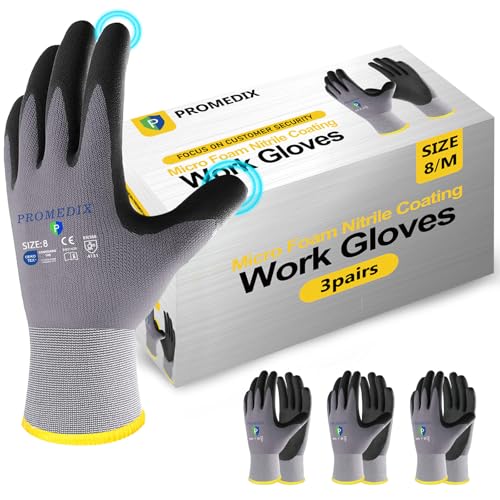
PROMEDIX P Nitrile Coated MicroFoam Gloves

Schwer 12 Pairs A6/A7 Cut Resistant Gloves (L)

Nuogo 48 Pairs Rubber Coated Gardening Gloves

Gandeer Rubber Coated Gardening Gloves

YOUKE OLA 90 Pair Breathable Rubber Coated Garden Gloves

FURWEY Nitrile Seamless Knit Work Gloves

Schwer CR5630 MicroFoam Full-Dipped Gloves (L)

WZQH Leather Work Gloves for Gardening/Welding (L)
Inside Each Recommended Option
The PROMEDIX P gloves build on the same microfoam nitrile formula found in many safety work gloves, but the seamless knit shell (nitrile-coated with a nylon-spandex base) makes them feel closer to a second skin than a stiff work mitt. The microfoam texture, which is a fine, porous nitrile layer that channels moisture away while gripping slick surfaces, helps when you pick up a wet trowel or wrestle a muddy hose fitting.
For landscape work, the breathability matters more than you’d think. Long afternoons of pruning or raking turn ordinary coated gloves into sweatboxes, and the knit back panel here lets heat escape. Compared with the bulk rubber-coated options further down this list, these offer noticeably better dexterity for handling pruners, tying twine, or sorting small fasteners on a flagstone project.
Benefits That Matter
- Microfoam nitrile palm grips wet tools without feeling sticky
- Seamless knit shell reduces hot spots during long sessions
- Snug fit keeps fingertips nimble for pruning and tying
- Lightweight feel makes them easy to forget you’re wearing them
Trade-Offs Worth Knowing
- Coating sits only on the palm and fingers, so the knit back can snag on barbed wire or rough bark
- Thin build trades outright puncture resistance for dexterity
- Routine rinsing matters, since trapped grit slowly abrades the nitrile layer
Key Details
Who It Suits Best
Homeowners who split time between pruning, planting, and light hauling, and want one comfortable glove that handles most weekend chores.
Where Another Pick Suits Better
For crews who need dozens of pairs at once, the Nuogo 48-pair bulk pack offers a more practical option than buying singles.
Schwer’s CR7120 lands in a different weight class from the microfoam knit above. The shell combines HPPE (high-performance polyethylene, a cut-resistant synthetic fiber used in industrial gloves), PU (polyurethane) coating, and metal wire strands to reach an ANSI A6/A7 cut rating, meaning the material resists significant blade pressure before failing.
For landscaping, that rating matters most when you’re reaching into overgrown rose thickets, clearing thorny brush, or handling broken glass hidden in leaf piles. The PU palm adds grip on tools while keeping the glove thin enough to pick up a small screw or tie a wire. A 12-pair count also means you can keep spares in the truck, the garage, and the potting bench.
A Few Highlights
- ANSI A6/A7 cut resistance shields against thorns and sharp debris
- Multi-pack format keeps fresh spares available across job sites
- HPPE-and-metal-wire blend stays flexible for its protection level
- PU palm coating supports grip in dry and lightly damp conditions
Things To Consider
- Colorways ship randomly, so you can’t pick a specific shade
- Stiffer than the nitrile microfoam picks, so fine dexterity takes practice
- Not waterproof, so wet soil still soaks through to the skin
Quick Facts
Made For
Homeowners tackling thorny brush, rose pruning, or cleanup around broken glass who want serious cut protection without buying industrial gear.
Skip It When
You mainly do fine transplanting work, where the FURWEY nitrile knit offers more fingertip control than this cut-rated shell.
The Nuogo set ships 48 pairs at roughly 23 cm (9.1 in) long, split across black and red colorways. That length pushes past the wrist, which helps keep soil out when you’re kneeling in a flower bed or hauling mulch by the wheelbarrow load. The rubber-coated palm acts like a water barrier for scooping wet compost or rinsing out pots.
These aren’t built for tactile precision, so think of them as the disposable-but-reusable workhorses of the list. Volunteer crews, community gardens, and shared rentals burn through gloves quickly, and a pack this size absorbs that wear without forcing anyone to ration. Where the Schwer cut-resistant pair above focuses on blade protection, this set focuses on volume and grip.
A Few Strong Suits
- 48-pair count suits crews and large properties
- Rubber-coated palm blocks moisture from wet soil and compost
- Extended cuff keeps debris from sliding into the glove
- Low per-pair cost makes replacement painless after damage
Room For Improvement
- Coated palm reduces fingertip sensitivity for detailed pruning
- Construction-glove feel can run warm during summer afternoons
- Two colorways only, with no size variety within the pack
At A Glance
Right Fit For
Property managers, volunteer gardeners, and homeowners with multi-acre yards who need a deep bench of gloves on hand.
Look Elsewhere When
You mostly do solo weekend projects and want better dexterity, in which case the PROMEDIX P nitrile pair is a smarter everyday pick.
The Gandeer pair follows a familiar knit-and-coat blueprint: stretchy fabric back, rubber-coated palm. That combination lets the glove flex with your hand while the coated side shrugs off damp soil and muddy tools. The fit lands between the precision of the PROMEDIX P microfoam above and the bulk of the Nuogo 48-pack.
Most landscaping routines involve both wet and dry tasks. You transplant seedlings into damp starter mix, then sweep a dry patio, then rinse off a wheelbarrow. The Gandeer’s coated palm handles the wet half while the knit back breathes through the dry stretches. For mid-size yard jobs, that balance is what makes a glove disappear on your hands.
Key Advantages
- Rubber-coated palm resists moisture from wet soil and pots
- Knit back breathes during long planting sessions
- Flexible shell fits a wide range of hand sizes
Points To Note
- Coating only covers the palm, so knuckles and fingers stay exposed to scrapes
- Less cut protection than the Schwer A6/A7 pair for thorny brush
Who Should Grab It
Homeowners handling mixed wet-and-dry landscape chores who want a comfortable middle-ground glove.
Swap It Out When
You push into thorny roses or glass-littered lots, where the Schwer 12-pair cut-resistant set offers more dependable protection.
Ninety pairs is a serious stockpile, and YOUKE OLA leans into the breathable side of the rubber-coated formula. The knit back vents heat, so a crew wearing these for a community-garden Saturday won’t fight sweaty palms every hour. The coated palm still handles the damp stuff: compost, irrigation work, and post-rain weeding.
The honest read is that you probably don’t need 90 pairs for personal use. But if you run a small landscaping side gig, coordinate a school garden, or outfit a rental property, having a sealed stack in the supply closet removes the daily question of who left their gloves in the truck. Compared with the Nuogo 48-pair set, this trades volume for ventilation.
What Makes Sense
- 90-pair count covers large crews or long restocking windows
- Breathable knit back reduces heat during summer work
- Rubber-coated palm supports wet-soil and irrigation tasks
Less Ideal Details
- Bulk format takes up significant storage space
- Not designed for cut-heavy brush work
- Single sizing may not fit very small or very large hands well
Best Suited To
Group leaders running volunteer days, school gardens, or rental properties where gloves walk off and need replacing often.
Consider Something Else When
You’re a solo homeowner with a modest yard, where the PROMEDIX P nitrile pair is a more comfortable everyday match.
FURWEY’s design sits in the same nitrile-knit family as the PROMEDIX P pair, but ships in a multi-pack of 16 or 32 pairs. The seamless nylon knit acts like a breathable sock for your hand, while the nitrile layer adds grip and modest abrasion resistance. The thin build is the selling point: you can sort screws, twist wire, or adjust sprinkler heads without pulling the glove off.
Landscaping often crosses into light mechanical work, especially when you maintain your own tools, sharpen mower blades, or fix a drip-irrigation line. This glove bridges those moments better than a fully coated rubber palm. The honest trade-off is that the thin knit won’t stand up to heavy thorn exposure like the Schwer A6/A7 cut-resistant pair does.
The Case For It
- Multi-pack format spreads replacements across the toolbox
- Seamless knit supports fingertip control for tool adjustments
- Nitrile palm grips oily or damp metal parts reliably
Some Limits To Know
- Thin shell sacrifices puncture resistance compared with rubber-coated picks
- Knit back can snag on rough bark or wire fencing
- Less padding for heavy hauling than the WZQH leather pair below
Whose Shelf It Belongs On
DIYers who split their time between gardening and small mechanical fixes and want one glove that handles both without slowing them down.
Reach For A Different Pick When
You’re hauling stone or handling firewood, where the WZQH leather work gloves offer more durable padding.
The CR5630 takes the microfoam nitrile idea from the PROMEDIX P pair and extends the coating across the entire hand, fingers, and back. That full-dip construction, where the nitrile covers every exposed fiber, blocks wind, dust, and water from sneaking through the knit. On a damp spring morning, that difference shows up the first time you reach into a cold wheelbarrow of mulch.
The trade-off is breathability. A fully sealed glove runs warmer than a palm-only dip, so these earn their keep in cooler seasons or wet conditions rather than mid-July afternoons. The CR5630 also ships as a two-pair set, which fits a homeowner who wants a backup glove in the mudroom.
What Pays Off
- Full-hand nitrile dip seals out moisture, dust, and wind
- Microfoam texture keeps grip reliable when surfaces are slick
- Two-pair format gives you a spare ready to go
Worth Bearing In Mind
- Full coating traps heat in warm weather
- Reduced dexterity compared with the palm-only PROMEDIX P design
Feature Snapshot
Who Will Love This
Homeowners working through cool or wet seasons who want a fully sealed glove for mulching, cleanup, and dusty demo days.
Not Your Match When
You spend long summer afternoons pruning, where the Gandeer knit-and-coat design stays cooler on your hands.
Everything else on this list uses knit fabric. The WZQH pair breaks that pattern with 100% split cowhide leather and a soft cotton-fiber lining. The reinforced palm absorbs the punishment of brick, stone, firewood, and welding sparks, scenarios where thin coated knits would wear through in an afternoon.
Landscape work crosses into construction territory more often than people expect. You’re setting a flagstone path, building a small retaining wall, or repairing a wrought-iron gate. Leather handles those jobs in a way nitrile can’t. The adjustable wrist keeps debris out, and the coffee-grey color hides the dirt that lighter gloves show after one project. The honest cost is reduced breathability: leather runs hot, so this pair is your cold-month or rough-task glove, not your everyday summer pruning mitt.
Reasons It Performs
- Split cowhide leather resists abrasion from stone and rough lumber
- Reinforced palm extends glove life under heavy loads
- Cotton lining softens the break-in period
- Adjustable wrist blocks dirt and small debris
Potential Drawbacks
- Leather runs warm during summer yard work
- Heavier build reduces fingertip precision for fine pruning
- Needs air-drying after wet days to prevent stiffening
Perfect Match For
Homeowners who move between hardscaping, firewood handling, and welding tasks and want one durable glove that survives all three.
A Better Fit Elsewhere
For light pruning and planting in warm weather, the PROMEDIX P nitrile pair keeps your hands cooler and more agile.
Picking Landscape Gloves That Actually Fit Your Work
Landscape gloves break into a few clear material families, and choosing between them starts with the work you do most. Nitrile-coated knits (like the PROMEDIX P and FURWEY picks) trade outright toughness for dexterity and breathability. Rubber-coated knit gloves add water resistance at the cost of some fingertip feel. Cut-rated HPPE blends protect against thorns and sharp debris but feel stiffer. Leather absorbs the harshest treatment but runs hot and demands more care.
The next decision is coverage. Palm-dipped gloves leave the back of the hand exposed, which breathes well but lets thorns and scrapes through. Full-dipped gloves (like the Schwer CR5630) seal the whole hand against moisture and grit, useful for wet or dusty days but warmer in summer. Extended cuffs keep soil out when you kneel in a bed; shorter cuffs feel freer when you’re constantly reaching overhead.
Fit matters more than people expect. A glove that’s too loose catches on twigs and steals your grip. Too tight, and the coating cracks early. Most knit gloves stretch to accommodate hand shape, but leather and cut-resistant shells run truer to size, so checking a size chart is worth the minute it takes. Climate plays a role too: lighter knits for summer, full-dip or leather for shoulder seasons and cold mornings. Match the glove to the season and the task, and your hands will thank you by sunset.
Where These Picks Diverge and Why
Wrong Turns To Avoid
The most common slip is choosing a glove that looks rugged but blocks all fingertip feedback. Coated palms that run too thick make it impossible to feel a thorn before it punctures through, or to grip a small sprinkler fitting. Aim for a balance between protection and the ability to actually feel what you’re holding.
Another trap is buying one multipack and assuming every glove inside fits the same person. Sizes vary, and a glove that’s snug for one volunteer may be sloppy on another. Sorting by size at the start of a project saves frustration later.
Where The Extra Money Goes
Higher-tier gloves (like the WZQH leather pair or the Schwer cut-resistant set) earn their keep through materials that last. Leather outlasts knit by years when cared for. HPPE-and-wire cut ratings resist abrasion that tears through standard coatings in weeks. The upgrade usually pays off when you wear through cheap gloves faster than you expected, or when a single thorn prick reminds you why blade resistance matters. For light, occasional yard work, a mid-tier knit covers everything you need without the higher cost.
Frequently Asked Questions
What gloves work best for thorny bushes like roses?
Cut-resistant gloves with an ANSI A6 or higher rating handle thorns best. The Schwer CR7120 pair covers rose pruning, blackberry removal, and similar brush without the thorns reaching skin.
Can gardening gloves go in the washing machine?
Most knit and nitrile-coated gloves tolerate a gentle machine wash in cold water, then air drying. Leather gloves should never go in a washer; brush them off and let them dry naturally away from direct heat.
How do I stop gloves from getting sweaty?
Palm-dipped knit gloves breathe far better than full-dip or leather options. Switching to a lighter pair for warm-weather work and rotating pairs so each dries fully between uses both help.
Are leather gloves worth it for landscaping?
Leather earns its place when the work crosses into stone, brick, firewood, or welding. For everyday pruning and planting, lighter coated knits usually outperform leather in comfort.
How long should a good pair of landscape gloves last?
With weekly use, a nitrile-coated knit typically lasts a season or two before the palm wears through. Leather and cut-resistant shells often last several seasons, depending on how often they get wet and how rough the work is.
Wrap Up
The right landscape glove depends on the work in front of you: nitrile-coated knits for everyday pruning, cut-rated shells for thorny brush, bulk packs for crews, and leather for hardscape and heavy materials. Match the material to the task, pay attention to fit, and don’t underestimate how much a breathable back panel matters on long afternoons. Your hands will keep up with the yard, season after season.
