

A 4×4 grow tent hits a sweet spot for indoor gardeners, big enough to support a flowering canopy yet compact enough to fit a closet or spare corner. The fixture overhead matters more than any other gear choice, since photon output (the number of light particles your plants actually receive) drives everything from stretchy seedlings to dense flower sites. This list pulls together eight fixtures that pair sensibly with a 4×4 footprint, from entry-level panels to commercial-grade bars.
How The Shortlist Stacks Up

Barrina 4×4 Grow Light Panel 200W

Spider Farmer SF600 LED Grow Light 72W

VIVOSUN AeroLight Wing AW400SE 400W

SAYHON SH2000 LED Grow Light 4×4

KingLED KP3000 Grow Light Full Spectrum

BESTVA DC4000 LED Grow Light 400W
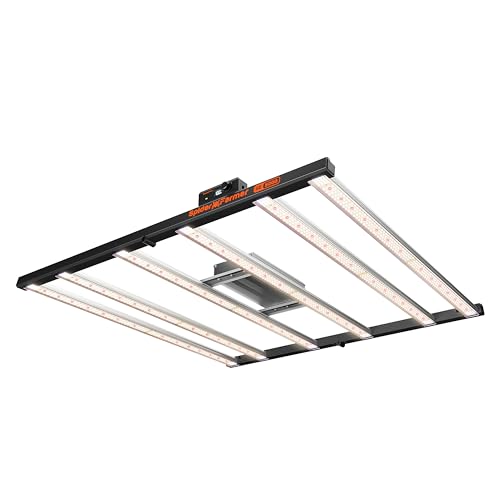
Spider Farmer SE5000 LED Grow Light 480W

RDJ Bouns 720W LED Grow Light 6 Bar
A Breakdown Of The Leading Choices
The Barrina 4×4 panel steps into a tent as a turnkey unit, with two hinged halves that fold open like a book and aim downward at your canopy. That mechanical adjustability sets it apart from a flat quantum board (a slim, evenly-lit LED panel), letting you swing the panels wider for veg and narrower for a tight bloom cluster. For someone running their first indoor tent, the lack of a separate ballast or controller box is a relief.
You get full-spectrum output across 816 diodes, and a dimmer knob on the side keeps things gentle during the seedling stage. For most hobby growers, the photo footprint feels even enough that you won’t fight hot spots at the edges.
The Practical Payoff
- Two-panel hinge lets you angle light for taller plants or denser canopies.
- Full-spectrum coverage supports veg and bloom without swapping fixtures.
- Onboard dimmer dial helps avoid bleaching young seedlings.
- Single-unit design means no extra driver box to mount or hide.
Things To Consider
- Heat dissipation is passive, so the unit runs warmer than fan-cooled competitors.
- Penetrates dense flower canopies less effectively than higher-wattage bar fixtures.
Who It Suits Best
First-time tent growers running leafy greens, herbs, and compact flowering plants will find the simple setup and friendly dimmer easy to live with.
Reach For A Different Pick When
Growers chasing deep canopy penetration on tall plants should consider the Spider Farmer SE5000 instead, since its bar layout reaches lower bud sites more directly.
The Spider Farmer SF600 is the quiet workhorse of the list, a 72W strip originally aimed at a 2×4 footprint, so two of them can cover a 4×4 with even spread. Its reflectors channel output downward rather than letting photons scatter, which improves effective brightness without spiking the wattage. For a small veg tent or a microgreens rack, this is the kind of light you hang and forget.
Compared with the Barrina panel above, you trade dimming for a much lower heat signature and a footprint that adapts to longer or narrower shelves. You will likely need a second SF600 to fully fill 4×4, so plan your build accordingly.
Key Advantages
- Low watt draw keeps ambient tent temperature easy to manage.
- Reflector design focuses output where seedlings and clones need it most.
- Plug-and-play form factor is friendly to renters and quick setups.
- Long, narrow shape fits cloning shelves or 2×4 propagation areas.
Worth Noting
- No built-in dimmer, so dimming requires raising the fixture or adding a wall plug dimmer.
- One strip alone underfills a 4×4 tent, which raises the entry cost.
- Not designed for aggressive flowering cycles at high PPFD (photosynthetic photon flux density, the measure of usable light reaching the canopy).
Made For
Seedling, clone, and herb growers who want a low-heat fixture and don’t mind running a pair for full coverage.
Look Elsewhere When
Growers needing a single-fixture flowering solution should consider the BESTVA DC4000, which is sized for the full 4×4 footprint out of the box.
The AeroLight Wing breaks the typical LED rectangle by folding its panels outward and centering a small circulation fan between them. That fan stirs the air right above the canopy, which can be the difference between a stagnant pocket and consistent humidity across a 4×4. It is a more integrated take than bolting a separate clip fan inside the tent.
You will need VIVOSUN’s Growhub controller to unlock the fan’s smart features, which is a separate purchase and adds to the system cost. The 400W panel itself still works as a standalone full-spectrum fixture if you prefer to skip the automation.
Where It Delivers
- Built-in fan addresses stale-air pockets without extra hardware on the tent pole.
- Fold-out panels let you dial the angle toward your canopy shape.
- Sun-like full spectrum supports full lifecycle growing in one fixture.
- Smart controller compatibility unlocks scheduling and climate triggers.
Trade Offs
- Smart features require a separately purchased Growhub controller.
- Moving parts (fan) introduce one more component that can wear or rattle over time.
- Higher entry cost than a passive panel at similar wattage.
Quick Facts
Right Fit For
Growers in warm rooms or tightly sealed tents who want built-in airflow and are open to building out a smart controller ecosystem.
Skip It When
Anyone who already runs a dedicated clip fan and prefers a simpler passive panel should look at the Barrina 4×4 Grow Light Panel instead.
The SAYHON SH2000 leans into the flowering stage with a dedicated UV and IR supplement bar, wavelengths most full-spectrum fixtures skip. UV nudges plants toward stronger terpene and resin output, while IR can encourage stretch during transition. The bar runs on its own switch, so you decide when those wavelengths join the spectrum.
Efficacy lands around 2.7 µmol/J (a measure of how many usable photons the fixture produces per joule of electricity), which is competitive for the price tier and means you get solid output without paying for a commercial brand mark-up. The dimmer keeps things manageable for seedlings.
What Works In Its Favor
- Separate UV/IR switch lets you toggle supplement wavelengths on demand.
- Strong µmol/J rating for the price tier.
- Dimmable driver supports sensitive early-stage plants.
- Tailored spectrum for growers prioritizing flower quality.
Soft Spots
- UV exposure requires sensible run times to avoid plant stress.
- Less established brand support compared with Spider Farmer or VIVOSUN.
Best Suited To
Flowering-focused growers who want supplement wavelengths and don’t mind running a slightly longer schedule for UV and IR periods.
Consider Something Else When
Growers who prefer a more mainstream ecosystem with broader community support should consider the Spider Farmer SF600 for early stages or the SE5000 for full bloom.
The KingLED KP3000 is a high-density panel with 1620 diodes pushing a sunlike blend of red, blue, white, and warm white wavelengths. That diode mix gives plants a broad spectral diet without leaning on supplements. For a mixed indoor garden with tomatoes, herbs, peppers, and leafy greens, that flexibility is genuinely useful.
The unit is rated to cover a 4×4 tent footprint, which makes it a sensible single-fixture solution for hobby rooms. Compared with the SAYHON SH2000 just above, you give up the dedicated UV/IR bar in exchange for a higher overall diode count.
Features That Help
- High diode count fills a 4×4 footprint evenly.
- Mixed spectrum covers a wide crop list, from basil to peppers.
- Single-fixture design keeps tent wiring simple.
- Established entry-level tier with broad user familiarity.
Honest Caveats
- Lacks a dedicated UV/IR supplement bar.
- Heavier chassis than modern bar-style fixtures.
- No smart controller integration.
Feature Snapshot
Whose Shelf It Belongs On
Mixed-crop indoor gardeners who grow tomatoes, peppers, herbs, and leafy greens in the same tent throughout the year.
A Better Fit Elsewhere
Growers prioritizing resin-heavy flowering might prefer the SAYHON SH2000, since its UV/IR bar is built specifically for that goal.
The BESTVA DC4000 brings serious photon count to a 4×4, with 2304 diodes pulling 400W and pushing coverage that can stretch toward 5×5 in veg. It is one of the heavier hitters on the list for hobby growers, sitting in the same wattage band as the VIVOSUN AeroLight Wing but without the fan integration. If your tent is set up for serious vegetative growth, this is a capable anchor.
You also get a dimmer knob, which keeps the unit useful for younger plants without moving the fixture. Compared with the KingLED KP3000 above, you trade diode variety for raw output count and a larger coverage ceiling.
What Makes Sense
- 2304 diodes fill a 4×4 footprint with headroom to spare.
- Sunlike spectrum mimics daylight for familiar plant behavior.
- Dimmable driver avoids bleaching during early veg.
- Veg coverage can stretch to 5×5, giving layout flexibility.
Points To Keep In Mind
- Runs warm due to high diode count and passive cooling.
- No active cooling or smart controller support.
- Larger footprint than panel lights in the same wattage band.
Feature Rundown
Perfect Match For
Growers running large vegetative canopies or pushing high-light crops that want a single fixture to anchor the tent.
Not Your Match When
Growers wanting app control and Bridgelux-grade diodes should consider the Spider Farmer SE5000, which trades raw diode count for smarter controls.
The Spider Farmer SE5000 is the bar-style flagship in this list, with Bridgelux diodes (high-efficiency LEDs known for tight wavelength bins and long lifespans) pushing 1420 µmol/s at a real 480W. That spread covers a 4×4 evenly from wall to wall, and the bar geometry lets photons slip deeper into the canopy than a flat panel typically manages. App control rounds out the package for growers who like dialing intensity from a phone.
Compared with the BESTVA DC4000, you trade diode count for build quality and a digital display that takes the guesswork out of dimming. The tradeoff shows up in the price, which is meaningfully higher than the panel-style competition.
Where It Excels
- Bridgelux diodes deliver efficient, high-output photons per watt.
- Bar-style design improves penetration into dense flower canopies.
- App-controlled dimming and scheduling fit modern grow rooms.
- Even wall-to-wall coverage across a 4×4 footprint.
Where It May Fall Short
- Higher upfront cost than passive panels in the same wattage band.
- App reliance may frustrate growers who prefer a manual dimmer knob.
- Heavier hanging weight than lightweight panels.
Details At A Glance
Who Should Grab It
Data-driven growers who want even coverage, app-based control, and the build quality that comes with Bridgelux diodes.
Swap It Out When
Budget-focused growers who don’t need app control can save with the BESTVA DC4000, which delivers heavy output without the smart features.
The RDJ Bouns 720W is the commercial-leaning option, a six-bar fixture sized at 44 inches square for an exact 4×4 fit. Each bar runs a blend of LM281B+ and EPI diodes (LEDs from two popular manufacturers combined for higher efficiency and broader spectrum), and you can daisy-chain multiple units together on a single dimmer for room-wide control. The 100V-277V range also suits a wide variety of electrical setups, including 240V commercial runs.
At 720W, this fixture pushes deep into the canopy, so growers with shorter plants may want to keep the height adjustable. Compared with the Spider Farmer SE5000, you trade brand polish for raw wattage and a daisy-chain friendly design.
A Few Highlights
- 720W output fills 4×4 and 5×5 tents with strong intensity.
- Daisy-chain dimming scales to multi-light rooms.
- Six-bar geometry pushes light into lower canopy sites.
- Wide voltage range supports home and light-commercial circuits.
- Mixed diode blend (LM281B+ and EPI) targets efficient full-spectrum output.
- Reported efficacy around 2.8 µmol/J supports serious flowering goals.
Where It Is Less Suited
- High wattage generates noticeable heat in small or poorly ventilated tents.
- Larger hanging footprint than compact panels.
- Daisy-chain benefits only show up when running more than one unit.
Built With In Mind
Experienced growers running larger flower cycles or planning multi-light rooms will appreciate the daisy-chain and commercial voltage range.
Where A Sibling Pick Shines
Single-tent hobby growers can save cost and complexity with the Spider Farmer SE5000, which delivers strong output without commercial-tier wattage.
Matching Wattage, Spectrum, And Form Factor To Your Tent
Wattage tells you how much power the fixture pulls, but µmol/J (micromoles per joule) is the better signal of usable output per watt. For a true 4×4 flowering footprint, plan for roughly 30 to 40 watts per square foot at the canopy, which lines up with fixtures in the 300W-720W band covered above.
Spectrum matters more than most newcomers expect. A sunlike full-spectrum blend covers vegetative and bloom stages in one fixture, while supplemental UV and IR bars (like the SAYHON SH2000) push resin and flower development further. Skip “blurple” (purple-only red+blue LED) fixtures if you want to inspect your plants under the light without straining your eyes.
Form factor changes how light reaches the canopy. Flat panels spread light evenly across short plants, while bar fixtures drop photons deeper into dense flower clusters. Heavier fixtures also demand sturdy hanging hardware, so check your tent poles and ratchet straps before mounting.
Finally, factor in your electrical capacity. A 720W fixture on a 120V household circuit draws more than 6 amps, and a 4×4 room with two such fixtures may exceed a standard 15A circuit if other gear is on the same line.
Sharpening Your Shortlist
Pitfalls Shoppers Hit
The most common trap is picking a fixture sized for vegetative coverage and expecting the same area to handle bloom. Flowering plants demand roughly twice the photon density of vegetative plants, so a fixture that works at 5×5 in veg may only deliver usable intensity across 4×4 in flower. Underestimating this gap is how growers end up with airy, loose buds.
Another misstep is ignoring heat management. Higher-wattage fixtures generate real warmth, and small tents without adequate exhaust can cook a canopy even when the light is technically dimmed. Plan ventilation before you mount the fixture.
When Paying More Pays Off
Premium fixtures buy you better diodes, tighter wavelength bins (meaning each LED emits a more precise color wavelength, which plants respond to more consistently), and more uniform coverage. For hobby growers running a few plants per year, the jump from a 300W panel to a 480W Spider Farmer SE5000 mostly delivers deeper canopy penetration. For commercial-leaning growers pushing 4×4 tents hard every cycle, the daisy-chain ready RDJ Bouns 720W pays back through labor savings and tighter environmental control.
The upgrade is worth it when you regularly run dense flower cycles or multiple tents. It is less worth it for propagation, mother plants, or low-DLI (daily light integral, the total usable photons delivered over a 24-hour period) leafy greens where a simple 200W panel covers the need.
Frequently Asked Questions
How many watts do I need for a 4×4 grow tent?
Aim for 300W to 480W as a practical range for full-cycle growing, with 700W+ reserved for experienced growers chasing maximum density. The exact number depends on whether your plants are leafy greens (lower needs) or heavy-flower crops (higher needs).
Is full spectrum enough for flowering plants?
Yes, a sunlike full spectrum covers bloom for most crops. Supplemental UV and IR bars can enhance resin and flower development but are not strictly required for a solid harvest.
How high should I hang my LED grow light?
Start around 18 to 24 inches above the canopy for most 300W-480W fixtures, then watch for bleaching or tacoing (leaves curling upward from light stress) on upper leaves. Adjust up if you see stress, down if plants stretch.
Can I use one grow light for the entire grow cycle?
Yes, full-spectrum LEDs support seedlings through bloom. You may want to dim during early vegetative growth and ramp up during flowering to match each stage’s needs.
Do LED grow lights use a lot of electricity?
A 4×4 setup typically draws 0.3 to 0.7 kWh per hour depending on wattage. Running a 400W fixture on a 12-hour photoperiod adds roughly 5 kWh per day to your energy bill.
Wrap Up
Your tent, your crop list, and your electrical setup all shape which fixture fits. Lean toward a 300W to 480W full-spectrum bar or panel for most home gardens, and reach into commercial wattage only when you have the ventilation and circuit capacity to match. The right fixture fades into the background, and your plants stay the loudest thing in the room.
