

Citrus trees quietly ask for a lot from a small bag of fertilizer. Nitrogen fuels leafy growth, phosphorus anchors roots and flower set, and potassium shapes fruit quality, with magnesium and iron quietly correcting the yellowing leaves that pop up in container-grown Meyer lemons. Picking the right blend means matching the format to your setup, whether that’s a backyard orchard or a sunny patio pot.
An Overview Of The Picks
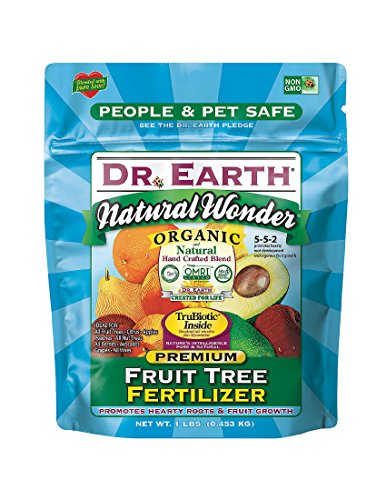
Dr. Earth Natural Wonder Fruit Tree Fertilizer 1 lb

Farmer’s Secret Citrus Tree Booster 8oz Concentrate

Farmer’s Secret Citrus Tree Booster 32oz Concentrate

Espoma Organic Citrus-Tone 5-2-6 Fertilizer 4 lb

GARDENWISE Professional Citrus Fertilizer 1/2 Quart

GARDENWISE Professional Citrus Fertilizer 2 Quarts

GARDENWISE Professional Citrus Fertilizer 1 Quart

Miracle-Gro Organic Plant Food 32 fl oz
The Strengths Of Each Pick
Dr. Earth’s MINI Natural Wonder is a granular fruit-tree feed built around human- and feed-grade ingredients, a smart fit for backyard growers who want a clean label. The 1-pound pouch is sized for one or two small trees, so it suits a starter Meyer lemon on a patio without leaving half a bag slowly going stale in the shed.
Unlike the liquid concentrates further down this list, the dry format encourages slow nutrient release and supports the soil biology rather than just feeding the tree directly. You can broadcast it during transplanting or work it into the topsoil around actively growing trees, depending on your routine.
Advantages To Know
- Non-GMO Project Verified, which matters to shoppers who actively read labels
- Pet- and people-safe formulation with no synthetic chemicals
- Granular format feeds slowly, so you spend less time reapplying
- Enriched with humic acids and trace minerals that support long-term soil health
Honest Caveats
- Small 1-pound bag may run out quickly on multiple trees
- Granules need watering in to activate, which is an extra step
Who It Suits Best
Organic-leaning growers with one or two backyard fruit trees want a clean-label granular that builds soil over time.
Consider Something Else When
You tend to forget granular feedings; Farmer’s Secret Citrus Tree Booster 8oz is easier to mix into a watering can.
Farmer’s Secret Citrus Tree Booster is a super-concentrated liquid that you dilute into a watering can before pouring it along the drip line (the soil directly under the outer edge of the canopy). The 8-ounce bottle is built for indoor citrus or a couple of patio trees, and the format is forgiving if your routine is more “Sunday watering” than “calendar-precise”.
Compare that to the dry Dr. Earth MINI: this is a fast-absorbing liquid that moves into the root zone quickly. The trade-off is that you do have to dilute and apply on a consistent schedule for it to pay off, which is fine for hands-on plant parents.
Well-Handled Touches
- Teaspoon-per-gallon dilution means one bottle stretches across many feedings
- Works for indoor and outdoor trees, so a single product covers your collection
- Liquid format reaches roots faster than granular alternatives
Points To Note
- Requires weekly mixing and application, so a busy schedule may slip
- Smaller 8oz bottle costs more per ounce than the 32oz size below
Quick Facts
Made For
First-time citrus growers nurturing a single indoor Meyer lemon who want a simple, repeatable feeding routine.
Look Elsewhere When
You maintain a backyard orchard; the Farmer’s Secret 32oz size scales better to many mature trees.
The 32-ounce Citrus Tree Booster is the same formula as the 8-ounce, just scaled up for serious citrus households. Mature trees use more teaspoons per feeding, and at that volume you’d burn through a small bottle in a few weeks. The bigger jug is the practical pick when you maintain a row of trees or a small grove.
It uses the same teaspoon-per-gallon routine as its smaller sibling, so switching sizes does not require learning a new process. For shoppers who already trust the 8oz, the 32oz is a straightforward upgrade.
Good Reasons To Consider
- Same concentrate formula as the smaller 8oz bottle, just larger
- Better value per ounce for orchards with multiple mature trees
- Suitable for both container and in-ground citrus in the same yard
Trade-Offs To Consider
- Larger bottle is heavier and takes up more storage space
- Dilution discipline still matters; over-applying wastes concentrate
Best Suited To
Multi-tree citrus households running a steady weekly feeding schedule across several mature lemon or orange trees.
Skip It When
You’re only feeding one small patio tree; the Dr. Earth MINI Natural Wonder 1 lb dry option is easier to store.
Espoma Citrus-Tone is the workhorse of organic citrus feeding, a 5-2-6 granular blend (the three numbers stand for nitrogen, phosphorus, and potassium percentages) tailored to lemons, limes, oranges, Meyer lemons, and even avocados and nut trees. The 4-pound bag covers a meaningful backyard with room to spare, which is why long-time citrus growers tend to keep it stocked.
Versus the GARDENWISE liquids later in this list, Citrus-Tone is a slow-release granular that also feeds the soil biology, not just the tree. You sprinkle it around the drip line, scratch it in, and water, and the Bio-tone component (Espoma’s blend of beneficial microbes) keeps working between applications.
Real-World Strengths
- 5-2-6 ratio with 5% calcium suits citrus-specific needs beyond a generic feed
- Bio-tone formula supports root-zone microbial life over time
- Works across citrus, avocado, and nut trees, so one bag covers mixed orchards
- 4-pound size offers a longer supply than smaller organic bags
Worth Bearing In Mind
- Granular feeding still requires watering in to release nutrients
- Strong smell on application that fades within a day or two
Feature Snapshot
Whose Shelf It Belongs On
Backyard citrus keepers who prefer a slow-release organic and don’t mind a bit of granular handling.
Another Choice May Suit
You want a quicker green-up; GARDENWISE Professional Citrus Fertilizer 1 Quart delivers nutrients as a liquid drench.
The half-quart GARDENWISE Professional Citrus Fertilizer is the smallest liquid option in the GARDENWISE trio, sized for one or two indoor citrus pots. It pairs a balanced NPK with added magnesium, which is the nutrient most often responsible for those yellowing leaves on potted lemons.
Compared to the dry Espoma Citrus-Tone, this is a faster-acting feed that doubles as a corrective tonic for micronutrient deficiencies. If your Meyer lemon’s leaf veins are staying green while the rest fades to pale yellow, magnesium and iron in the mix tend to help.
The Case For It
- Includes magnesium and iron to correct common citrus leaf yellowing
- Liquid format absorbs quickly in container soil
- Suitable for indoor and outdoor use across citrus types
Small Caveats
- Half-quart runs out fast if you’re feeding more than one mature tree
- Needs consistent application to maintain micronutrient levels
Spec Overview
Perfect Match For
Apartment growers with one or two potted citrus who want fast liquid uptake and micronutrient correction.
Reach For A Different Pick When
You tend to a small backyard; the GARDENWISE Professional Citrus Fertilizer 2 Quarts stretches further.
The 2-quart GARDENWISE bottle carries the same 6-4-6 NPK and micronutrient blend as its smaller siblings, just at a scale meant for a backyard of trees. For shoppers who maintain lemon, lime, and avocado trees side by side, this is the size that doesn’t demand a reorder every month.
The format mirrors the half-quart and 1-quart versions, so routines built around those carry over directly. You measure, dilute, and pour along the drip line, depending on how each tree is responding.
What Earns Its Place
- Generous 2-quart volume for multi-tree households
- Same magnesium and iron micronutrients as smaller GARDENWISE sizes
- Covers lemons, limes, oranges, and avocados from one bottle
Practical Considerations
- Bottle weight makes pouring and measuring a bit awkward
- Liquid feed evaporates if left in hot sheds without climate control
Right Fit For
Backyard growers feeding several mature citrus and avocado trees on a regular liquid schedule.
Swap It Out When
You prefer to apply less often; Espoma Organic Citrus-Tone 5-2-6 4 lb is a slow-release granular alternative.
The 1-quart GARDENWISE sits right between the half-quart indoor option and the 2-quart orchard jug. It’s the practical pick for a mixed patio of three to five citrus containers, where the smaller bottle runs dry too fast and the larger jug is overkill.
You get the same 6-4-6 NPK with magnesium and iron as the rest of the GARDENWISE line, which keeps the routine consistent across your trees. Compared to Espoma Citrus-Tone, this is a faster-release liquid, useful when you want to see leaf color respond within a few weeks.
Reasons It Performs
- Mid-size volume suits typical 3-5 tree patio collections
- Micronutrient blend helps prevent interveinal chlorosis (yellow leaves with green veins)
- Same formula as the 1/2 quart and 2 quart sizes for easy swapping
Potential Drawbacks
- Not tailored specifically to citrus bloom cycles, so supplemental feeding may be needed during peak flowering
Details At A Glance
Who Should Grab It
Patio gardeners maintaining a small mixed collection of citrus who want one liquid that covers the lot.
A Better Fit Elsewhere
You’re an organic-only shopper; Dr. Earth Natural Wonder 1 lb is a granular organic alternative.
Miracle-Gro Organic Plant Food is a general-purpose liquid built with a high percentage of plant-based ingredients. While it isn’t citrus-specific like the other picks in this roundup, its broad compatibility makes it a sensible backup for households that want one bottle for vegetables, herbs, and a lemon tree alike.
Versus the citrus-tailored formulas from Farmer’s Secret or GARDENWISE, this one skips the magnesium and iron correction citrus often needs. Think of it as a versatile supplement rather than a dedicated citrus program.
Notable Gains
- Plant-based formula for shoppers who avoid animal-derived ingredients
- Works on indoor and outdoor container plants, including vegetables and herbs
- Liquid format feeds quickly for fast visible results
Less Ideal Details
- Not specifically formulated for citrus, so it may need supplementing with magnesium or iron
- Higher concentration means careful measuring avoids leaf burn
Built With In Mind
Multi-purpose gardeners who want one organic liquid that covers a citrus tree alongside other container plants.
Where A Sibling Pick Shines
Citrus is your main focus; Farmer’s Secret Citrus Tree Booster 8oz is purpose-built for lemons and limes.
What To Weigh Before Choosing Your Citrus Feed
The format matters as much as the formula. Granular organic options like Espoma Citrus-Tone release slowly and improve soil biology over time, which suits patient backyard growers who want a once-a-month routine. Liquid concentrates such as Farmer’s Secret and GARDENWISE work faster and let you adjust strength per tree, but they require consistent weekly application. For a single indoor Meyer lemon, a half-quart liquid is plenty. For a backyard with several mature trees, you’ll want the larger 2-quart or 32-ounce format to avoid running out mid-season.
The NPK ratio tells you a lot about who a fertilizer is built for. A 5-2-6 like Citrus-Tone leans toward fruiting and flowering, while a 6-4-6 like GARDENWISE splits the difference with more nitrogen for leafy growth. Mature trees in production often need less nitrogen and more potassium; young trees benefit from the higher nitrogen side to build canopy. Matching the ratio to your tree’s life stage prevents overstimulating leaves at the expense of fruit.
Micronutrients quietly solve the most common citrus complaints. Yellow leaves with green veins (interveinal chlorosis) usually point to magnesium or iron deficiency, and fertilizers that include both save you from buying a separate amendment. Container-grown citrus runs out of micronutrients faster than in-ground trees, so a liquid with magnesium and iron pays off there.
Storage and application fit your real life. Granular bags can sit in a dry shed for months; liquid bottles prefer climate-controlled spaces and get heavy at 2-quart sizes. Whichever format you pick, the actual feeding schedule only works if you can stick to it, so honest self-assessment goes a long way.
Key Considerations Across These Picks
Where Shoppers Go Wrong
The most common slip is grabbing a general-purpose plant food and expecting citrus-specific results. All-purpose fertilizers often lack the magnesium and iron citrus trees quietly demand, which leads to yellowing leaves and weak fruit set. Reading the label for citrus-targeted NPK and micronutrients is the easiest way to avoid that trap.
Another pitfall is overfeeding, especially with concentrated liquids. A teaspoon per gallon is enough for most mature trees, and piling on more doesn’t speed growth. It often burns roots and leaches nutrients into the soil before the tree can absorb them.
What Separates Premium From Basic
Higher-tier citrus fertilizers earn their cost through balanced micronutrient packages and biologically active ingredients. Citrus-Tone’s Bio-tone microbial blend, for example, supports soil life rather than just feeding the tree directly, which shows up as more resilient growth over seasons. Premium liquids include chelated micronutrients, which means the minerals are chemically bound for easier root uptake, so smaller doses go further. Whether that upgrade is worth it depends on how long you plan to keep the same tree productive; the longer the timeline, the more the premium format returns on investment.
Frequently Asked Questions
How often should I fertilize a lemon tree? Most citrus fertilizers call for monthly granular feedings during the growing season or weekly diluted liquid applications. Indoor trees grow more slowly and usually need lighter, less frequent feedings than outdoor trees.
Can I use a general-purpose plant food on citrus? You can, but a citrus-specific formula with magnesium and iron prevents the yellowing leaves that general-purpose feeds often miss. If you go general, plan to add a micronutrient supplement separately.
What NPK ratio is best for lemon trees? A ratio around 5-2-6 or 6-4-6 works for most lemon trees, with more potassium during fruiting and slightly more nitrogen for young trees building canopy. The exact balance depends on whether your tree is in a container or in the ground.
Is granular or liquid fertilizer better for citrus? Granular feeds release slowly and improve soil health, while liquid feeds act faster and are easier to control. Container trees usually benefit from liquid, while in-ground trees do well with either.
When should I stop fertilizing my lemon tree? Most growers stop feeding six to eight weeks before expected cold snaps, since tender new growth is more frost-sensitive. In warm climates, a light winter feeding keeps the tree on a steady path into spring.
The Takeaway
The right fertilizer for your lemon tree comes down to format, scale, and how hands-on you want to be. A single indoor Meyer lemon does fine with a small concentrated liquid, while a backyard orchard benefits from a slow-release organic granular or a larger liquid format. Pick the option that matches your actual routine, and your tree will return the favor with healthier leaves and a more reliable harvest.
