

Ants rarely arrive alone. A single scout on your kitchen counter usually means a colony hiding somewhere behind the wall, under the slab, or out in the yard, and most contact sprays only kill the forager you can see. Liquid ant baits take a slower, smarter path: foraging ants carry the active ingredient back to the nest, where it spreads through the colony and reaches the queens. That makes them especially useful in homes, restaurants, and food prep areas where you want results without saturating every surface with insecticide. The eight options below cover common household sugar ants, stubborn bait-shy species, and broader yard infestations that need a different tool.
The Essentials At A Glance

Rockwell Labs InTice Thiquid Ant Bait 4 oz

TERRO 1 oz Liquid Ant Killer T100 (2-Pack)

TERRO 2 oz Liquid Ant Killer T200 (2-Pack)
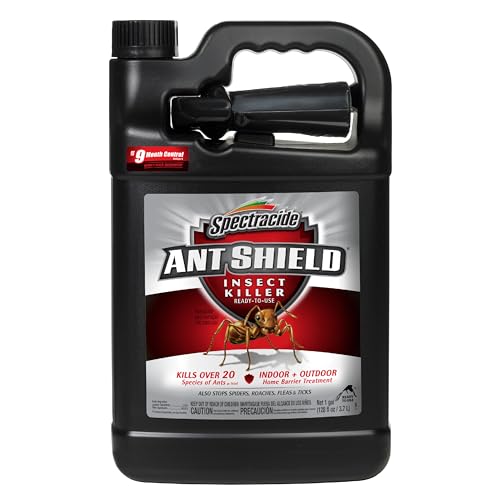
Spectracide Ant Shield Home Barrier 1 Gal

Revenge Termite & Carpenter Ant 32 oz Concentrate

Ant Killer 1-oz. Liquid Stations

Ant Killer 1-oz. Liquid Bait Stations

Amdro Quick Kill Insect Killer RTS 32 oz
The Strengths Of Each Pick
This Rockwell Labs formula is built for the ants regular sugar baits struggle to control. Sodium tetra borate decahydrate (a hydrated form of borax) sits at a 5% concentration, and the gel-style consistency holds moisture long enough to keep bait-shy species feeding. In a facility kitchen or a multi-unit residential building, that translates into fewer station refills and steadier colony pressure.
It is also one of the few liquid baits marketed for both indoor and outdoor placement, including use in food handling and institutional settings. For households that have already tried the basic options without success, it offers a step up in formulation without committing to a perimeter spray. Compared with the TERRO T100 below, this is the pick for stubborn infestations rather than routine maintenance.
What Stands Out
- Targets bait-resistant species including pharaoh ants that ignore standard sugar baits
- Approved for both indoor and outdoor sites, from homes to food processing areas
- Hydrated borax formula stays attractive to ants over a longer window
- Works as part of an integrated approach for multi-unit residential buildings
Things To Consider
- The 4 oz tube is small for a large yard, and you may need multiple units for a heavy infestation
- Slower contact action means you won’t see dead ants immediately, and patience is required
- Placement near pets or small children requires the same caution as any ant bait
Right Fit For
Facility managers, landlords, and homeowners facing persistent infestations from bait-shy or pharaoh ants who need a stronger liquid option than basic sugar baits offer.
Look Elsewhere When
The TERRO 2 oz Liquid Ant Killer T200 (2-Pack) is a better fit if you want pre-filled stations and broader household-name familiarity rather than a gel-tube format.
The T100 is the small-format workhorse of the TERRO line, sold here as a two-pack for tighter budgets and quick kitchen deployment. Each station holds about an ounce of borax-based liquid (borax is a mineral form of boron long used as a slow-acting ant toxin), which is enough to feed a stream of foraging ants for several days. For renters and apartment dwellers, the low setup effort is the main draw.
Mechanism matters here: foraging ants ingest the liquid, survive long enough to return to the nest, and share it with other workers and the queen. That’s why complete control typically takes a couple of weeks rather than overnight. Compared with the Spectracide Ant Shield below, this is a slow-and-steady indoor bait rather than a perimeter spray, so it suits people who want to avoid chemical residue on exterior surfaces.
Features That Help
- Compact stations tuck into corners and along baseboards without drawing attention
- Borate-based active ingredient lets ants return to the colony and share the dose
- Two-pack format covers multiple rooms or a kitchen plus a bathroom
Worth Noting
- Stations need replacement once the liquid drops or evaporates, so plan for refills during long infestations
- Owners commonly report that bait-shy ants sometimes ignore the formulation
Who Should Grab It
First-time users in apartments or small homes who want a low-fuss, pre-filled bait station for everyday household ants.
Consider Something Else When
Rockwell Labs InTice Thiquid Ant Bait is a stronger fit if common household baits haven’t put a dent in your ant problem over several weeks.
The T200 is simply the bigger sibling of the T100 above, with each station holding 2 oz of borax liquid bait. The doubled capacity means fewer refills during multi-week treatments, which matters in homes where ant pressure returns each spring or in rental units with chronic trails along the same routes. You still get the same pre-filled, ready-to-place design.
Like the smaller T100, this works by letting foragers share the dose with the colony rather than killing on contact. It’s the better pick when you know you’ll be running baits through a full season. If your problem is one isolated trail that vanished after a week, the T100 is probably enough.
Everyday Perks
- Larger 2 oz stations handle longer infestations with less babysitting
- Two-pack lets you place bait in several problem zones at once
- Familiar TERRO mechanism reduces the learning curve for first-time users
Trade Offs
- Takes longer than a contact spray, so you may still see ants for the first week or two
- Stations are larger and harder to hide in tight spaces behind appliances
Best Suited To
Homeowners dealing with recurring seasonal ant pressure who want a multi-week bait program without constant refilling.
Swap It Out When
The Amdro Quick Kill Insect Killer Ready-to-Spray is the better pick if your ant activity is outside on a lawn or landscape bed rather than inside the home.
Spectracide’s Ant Shield Home Barrier shifts the strategy from bait stations to a perimeter spray. The 1-gallon container is ready to use (no mixing required) and is designed to cover a full exterior foundation, plus patios, decks, and the edges of lawn beds where ant trails form. For homes where ants keep marching in from outside, treating the entry points is often what finally breaks the cycle.
The trade-off is chemistry: this is a contact and residual insecticide spray rather than a colony-elimination bait. It kills ants quickly on surfaces but does not work the way borax baits do inside the nest. That makes it a complement, not a substitute, for an indoor bait program during a serious infestation. Compared with the TERRO T200, it covers ground rather than patience.
Everyday Advantages
- Ready-to-use formulation skips the measuring and mixing step
- One gallon covers a full perimeter application for an average suburban home
- Targets multiple listed ant species along foundation lines and entry cracks
Honest Caveats
- Surface spray does not reach the colony the way a bait does
- Outdoor applications can wash off in heavy rain and may need reapplication
- Always follow label directions around pets, kids, and garden edible plants
Who Will Love This
Homeowners fighting ants that keep marching in from the yard and want a one-step exterior barrier application without mixing concentrates.
Reach For A Different Pick When
The Revenge Termite & Carpenter Ant Killer concentrate is the better fit if carpenter ants or other wood-damaging species are the actual culprit.
When the ants you’re seeing are large black carpenter ants tunneling into window frames or porch beams, a sugar-water bait won’t solve the problem. This Bonide concentrate is formulated for the heavier hitters: subterranean termites, carpenter ants, carpenter bees, wood-infesting beetles, and a long list of common yard pests. You mix it with water and apply it with a sprinkler can, hand sprayer, or low-pressure sprayer.
One trenching treatment around a structure is described as lasting up to roughly five years if the treated soil stays intact. That makes this less of an “ant killer” and more of a long-term structural defense. Compare it to the Spectracide Ant Shield, which is a quick perimeter spray, and the difference is depth versus speed.
A Few Strong Suits
- Covers wood-destroying pests that standard ant baits cannot reach
- Dual action: contact kill plus residual activity on treated surfaces
- Soil treatment is described as lasting up to about five years undisturbed
- 32 oz concentrate stretches into multiple gallons of mixed spray
Practical Considerations
- Mixing and sprayer setup add steps compared with ready-to-use products
- Label directions need careful reading, especially around ornamental plants and edible gardens
- Overkill for a trail of small sugar ants inside a kitchen
Feature Snapshot
Made For
Homeowners with confirmed carpenter ant or termite activity around a structure who want a soil-applied barrier rather than a kitchen countertop bait.
A Better Fit Elsewhere
The TERRO 1 oz Liquid Ant Killer T100 (2-Pack) is the better match for routine indoor sugar ant trails that don’t involve wood damage.
These small 1 oz stations are built for tight living spaces where a larger bait tray would be in the way. The pre-filled design uses a borax-based liquid that foraging ants take back to the colony, working through the nest the same way as the larger TERRO T100. For studio apartments, dorm rooms, and small offices, the small footprint is the actual selling point.
It’s the most discreet option on the list, which also makes it the easiest to deploy in places where guests or roommates might not appreciate a full bait program. Compared with the Ant Killer 1 oz Liquid Bait Stations covered below, this is the pick when shelf and floor space is at a premium.
What It Does Well
- Compact stations hide under sinks, behind small appliances, and along narrow baseboards
- Pre-filled liquid means no measuring or handling of concentrate
- Standard borax bait mechanism, so most household ants will feed
Minor Gripes
- 1 oz capacity runs out faster than larger stations during heavy infestations
- Same patience requirement as other borax baits: full results take about two weeks
Perfect Match For
Studio apartment residents, dorm dwellers, and small-office users who need a discreet, low-profile bait station for everyday household ants.
Skip It When
The TERRO 2 oz Liquid Ant Killer T200 (2-Pack) is the better fit for larger homes with multiple rooms where a longer-lasting station reduces refill trips.
Marketed as the original liquid ant bait, this multi-pack borax station has been a familiar sight in pantries and along kitchen baseboards for decades. Each pre-filled tray holds about an ounce of sugar-and-borax liquid that foragers carry back to the colony, eventually reaching the queens. The wide distribution pack suits homes that need several stations running at once.
If you’re not sure what’s working in your kitchen and just want a proven, mass-market option to start with, this is the safe first step. It’s less specialized than the Rockwell Labs InTice Thiquid bait covered earlier, and that simplicity is part of the appeal. For most households dealing with common ants, it’s the default starting point.
Reasons It Performs
- Long-trusted borax bait format with a wide multi-pack count
- Pre-filled stations go straight from the package to the trail
- Targets the common household ant species you’re most likely to see indoors
Some Limits To Know
- Standard formulation may not control bait-resistant or pharaoh ant colonies
- Stations are small and may need replacing more than once during a long infestation
The Right Fit
Most homeowners with everyday sugar ant trails who want a familiar, multi-pack option to scatter around the kitchen, bathroom, and laundry room.
Where A Sibling Pick Shines
The Spectracide Ant Shield Home Barrier is the better choice if the source of your problem is clearly outside and you need a perimeter spray instead of indoor bait stations.
Amdro’s 32 oz ready-to-spray bottle hooks onto a standard garden hose and treats broad lawn and landscape areas in a single pass. It is positioned as a general outdoor insect control rather than a precision ant bait, covering a long list of nuisance pests beyond ants, including mosquitoes, ticks, fleas, and several beetle species. For yard-level ant mounds and perimeter activity, that breadth is the point.
Keep expectations realistic: a broadcast lawn spray knocks down what’s out in the open and may offer short-term residual protection, but it doesn’t substitute for a colony-targeted bait when ants have moved indoors. Pairing it with an indoor bait like the Ant Killer 1 oz Liquid Bait Stations above handles both sides of the problem.
Positive Takeaways
- Hose-end sprayer covers lawn and landscape beds quickly without mixing
- Broad-spectrum coverage handles ants plus mosquitoes, ticks, and other listed pests
- Designed for outdoor use around foundations, patios, and ornamental beds
Details To Watch
- Coverage duration on treated surfaces is shorter than a soil-applied barrier concentrate
- Not a precision indoor tool, so you’ll still need indoor bait for trails inside the home
Who It Suits Best
Homeowners with ant activity spread across lawn, foundation, and ornamental beds who want a single outdoor application that also handles other listed yard pests.
Not Your Match When
The Revenge Termite & Carpenter Ant Killer concentrate is the stronger pick if you’re specifically targeting wood-destroying pests around a structure.
Matching The Right Approach To Your Ant Problem
Choosing the right liquid ant killer starts with identifying where the ants actually live. Borax-based bait stations work best on common indoor sugar ants because foragers share the active ingredient with the rest of the colony, eventually reaching the queens. Bait stations also keep chemicals off your countertops, which matters in homes with kids, pets, or food prep areas.
Perimeter and barrier sprays are the better fit when ants are streaming in from the yard, foundation cracks, or patio edges. Ready-to-use sprays like the Spectracide option above require no mixing and work well for a one-time exterior application, while concentrates like the Revenge Termite & Carpenter Ant Killer let you cover larger areas and even trench soil around a structure for long-term defense. Read the label carefully before treating around edible gardens or ornamental plants.
Pest identity changes the math too. Pharaoh ants, carpenter ants, and fire ants each respond to different active ingredients and delivery methods. If standard borax baits haven’t made a dent in two weeks, that’s a strong signal the colony species is bait-shy, and a specialty gel like the Rockwell Labs InTice Thiquid or a structural concentrate may be the smarter investment. Picking the right tool the first time usually costs less than cycling through three that don’t match the species you’re fighting.
Where Shoppers Go Wrong
One of the most common mistakes is mixing bait stations with a strong-smelling cleaner or surface spray in the same area. The repellent effect of the spray can keep ants away from the bait, which means they never carry it back to the colony. Place baits along the trail, then leave the surrounding surfaces alone.
Another pitfall is giving up after a few days. Borax baits work slowly by design, and a visible increase in ant activity during the first week is often a sign the bait is working, not failing. Reapplying a contact spray on top of the bait disrupts that process. Patience, fresh refill stations, and a clean bait perimeter usually finish the job.
The Upgrade Payoff
Higher-tier options in this category earn their keep through stronger active ingredients, broader pest coverage, and longer residual protection. A concentrate like the Revenge Termite & Carpenter Ant Killer handles wood-destroying pests that standard indoor baits cannot reach, and a single soil application is described as lasting up to several years. Specialty gel baits like the Rockwell Labs InTice Thiquid target bait-resistant ants that ignore ordinary sugar water. For occasional indoor trails, the value picks make sense. For persistent infestations or structural pests, the upgraded formulations pay for themselves by solving the underlying problem instead of chasing it month after month.
Frequently Asked Questions
How long does it take for a liquid ant bait to work? Most borax-based baits show measurable reduction within about a week, with complete colony control typically taking up to two weeks of consistent placement and refilling.
Are liquid ant baits safe around pets and kids? Pre-filled stations keep the bait enclosed, which is safer than open trays, but any ant control product should be placed where pets and small children cannot reach or chew the station.
Do I need different products for indoor and outdoor ants? Indoor trails usually respond well to bait stations, while outdoor mounds and perimeter activity often need a spray or concentrate treatment that reaches the entry points around your home.
Why do I see more ants after placing bait? Increased ant activity near a fresh bait station often means foragers are feeding and carrying the active ingredient back to the colony, which is the intended mechanism rather than a sign of failure.
When should I call a professional instead of using a liquid ant killer? Carpenter ant damage to wood, recurring large mounds, or infestations that don’t improve after several weeks of consistent baiting usually warrant a professional inspection.
The Takeaway
The right liquid ant killer depends on whether you’re dealing with common indoor sugar ants, persistent bait-shy species, or structural pests around your home. Start with a basic borax bait station for everyday trails, step up to a specialty gel for stubborn colonies, and reach for a perimeter spray or soil concentrate when the problem is clearly outside. Match the tool to the species and the setting, and you’ll spend less time chasing ants month after month.
