

A mature tree throws shade, then it throws your back out. Loppers look simple until you grab the wrong pair and discover what 1.5 inches of hardwood actually feels like through a thin handle. After combing the category, the picks below cover the common headaches: dry deadwood, live green growth, tall limbs, and the kind of repetitive cuts that punish wrists. You’ll see ratchet mechanisms, compound-action gears, telescoping shafts, and one cordless option for anyone who wants to skip the workout entirely. Each pick comes with a clear use case, so you spend less time guessing and more time pruning.
The Essentials At A Glance
Jardineer Ratchet Anvil Loppers with 2″ Cutting Capacity

YRTSH Loppers, Hedge Shears & Pruners Combo Set

YRTSH Heavy Duty Branch Cutter with 1.6″ Capacity

Corona Tools 33″ Bypass Loppers with DualLINK
GARDENWORK Loppers with SK5 Carbon Steel Blade

Electric Pruning Shears with 2.36″ Opening
GARTOL Telescopic Pole Pruner with Rotating Head
STEELHEAD Adjustable Gear-Bypass Limb Lopper
A Breakdown Of The Leading Choices
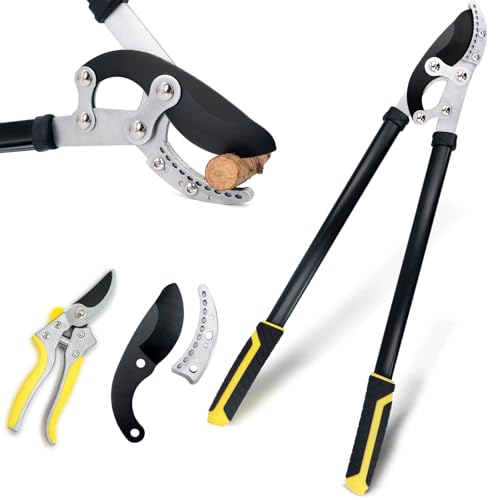
The Jardineer Ratchet Anvil Loppers take aim at the most stubborn pruning job in a typical yard: dry, dead, hardwood branches that have been sitting since last fall. The anvil design, where a top blade closes onto a flat lower surface rather than sliding past another blade, chews through brittle wood that would wedge a bypass cutter. A ratchet mechanism multiplies hand force step by step, so each squeeze finishes the cut without the all-out grip that punishes wrists.
You see this pair working best on fruit trees, mature rose thickets, and neglected shrub rows. The SK5 carbon steel blade carries a Teflon coating that helps sap and debris slide off, and the spare blade in the box extends the working life by years for anyone who prunes seasonally.
The Case For It
- Ratchet gearing makes 2-inch cuts achievable without brute hand strength.
- Anvil head is well matched to dry, dead hardwood where bypass blades would jam.
- SK5 steel blade with Teflon coating resists sap buildup and stays sharper longer.
- Included spare blade doubles the usable lifespan across multiple pruning seasons.
Things To Consider
- Anvil heads tend to crush green, live growth rather than slice cleanly, so this is not the right tool for tender shoots.
- The ratchet action adds a few seconds per cut compared to a single-stroke bypass.
Key Specs
Who Should Grab It
Older gardeners, smaller-framed shoppers, and anyone clearing neglected dry wood from an established yard.
Look Elsewhere When
You mostly cut live green growth, where the YRTSH Loppers for Tree Trimming compound-action design slices with less crush.
Most yards need more than a single tool, and the YRTSH combo set delivers three coordinated cutting heads for one shed footprint. You get a 26-inch compound-action lopper for branch work, a 23-inch hedge shear for shaping shrubs, and an 8-inch bypass pruner for fine cuts on stems and small branches. Low-friction coated alloy steel shows up on every blade, which keeps each cut smooth and the cleanup quick.
For homeowners who want one purchase to cover a full tidy-up, this trio fills gaps that a dedicated lopper cannot. Compared with the Jardineer anvil head, these tools handle green growth with cleaner slices, and the hedge shear picks up detail work that no lopper is built for.
Useful Strengths
- Three coordinated tools cover branch, hedge, and detail pruning in one bundle.
- Low-friction blade coating reduces sticking when cutting sappy green wood.
- Alloy steel construction balances durability with manageable weight.
Honest Caveats
- Individual tools do not match the cutting capacity of dedicated heavy-duty models.
- Holding three tools means more storage space and more pieces to maintain.
Right Fit For
Homeowners with mixed hedging, ornamental shrubs, and occasional branch clean-up who want a coordinated starter kit.
Reach For A Different Pick When
Your priority is brute force on thick limbs, where the STEELHEAD Gear-Bypass Lopper delivers heavier leverage.
The single-tool YRTSH branch cutter concentrates everything on a 1.6-inch capacity, leaning on compound-action gearing. Compound action means a pivoting internal linkage adds mechanical advantage on top of the handle length, so the blade delivers noticeably more force per squeeze. Owners typically find this design easier on hands and forearms during long pruning sessions.
It handles both live green and dry brown wood, which broadens its usefulness across seasons. The steel blade carries a low-friction coating that helps it glide through sappy cuts without grabbing, a meaningful upgrade for anyone who has fought sap-stuck blades before.
Strengths Worth Knowing
- Compound-action gearing multiplies cutting force and reduces hand fatigue over long sessions.
- Handles both live green and dry brown wood without changing tools.
- Low-friction coating helps the blade glide through sap-laden cuts cleanly.
Softer Spots
- 1.6-inch capacity falls short of the 2-inch class leaders on truly heavy hardwood.
- More internal moving parts than a basic bypass, which adds occasional maintenance.
Feature Card
Made For
Gardeners tackling mixed live and dry wood in established trees and large shrubs without straying into commercial territory.
Swap It Out When
You need extra reach above shoulder height, where the GARTOL Telescopic Pole Pruner offers a much longer working span.
Corona has built a reputation among arborists and serious home gardeners, and the 33-inch DualLINK bypass lopper shows why. The 33-inch handle delivers noticeable leverage, while the DualLINK MAXFORGED power mechanism (a compound-lever assembly that boosts blade force) turns that length into cutting authority on 2-inch branches. The forged steel head and bypass-style upper and lower blades deliver clean cuts on live growth, where a slice heals faster than a crush.
This is the pick for anyone pruning fruit trees, ornamental specimens, or larger woody shrubs where finish quality matters. Compared with the Jardineer anvil design, the Corona preserves the cambium layer (the thin living tissue just under the bark) on green stems, supporting healthier regrowth.
Useful Highlights
- 33-inch handle length provides strong leverage for high or stubborn cuts.
- DualLINK MAXFORGED compound mechanism multiplies blade force on 2-inch wood.
- Bypass geometry suits live growth and supports cleaner healing on cuts.
- Forged steel head is built for season-after-season professional use.
Trade Offs
- Longer handles can feel unwieldy for shorter gardeners or tight spaces between branches.
- Premium build carries a heavier weight than entry-level loppers.
Best Suited To
Experienced home orchardists, landscapers, and anyone pruning established trees where clean cuts and reach both matter.
Skip It When
Your arms tire quickly on heavy work, where the GARDENWORK adjustable handle reduces strain with a lighter, shorter grip.
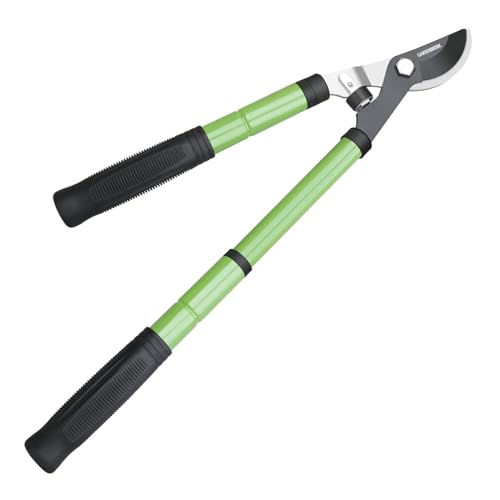
The GARDENWORK loppers solve a real headache: one pair rarely fits every job. The handle telescopes from 16 to 24 inches, letting you shorten up for tight spots and lengthen out for extra leverage on thicker cuts. The SK5 carbon steel blade carries a Teflon coating, which protects against rust across damp seasons and helps sap glide off instead of gumming the edge.
You see this design earning its keep in mixed-height gardens where ground-level shrubs and mid-canopy branches share the same weekend. The shorter closed length also helps if storage space in a shed or garage runs tight, compared with the fixed 33-inch Corona.
Practical Pluses
- Adjustable 16-24 inch handle fits tight spaces and reaches high cuts with one tool.
- SK5 blade with Teflon coating resists corrosion and sap buildup.
- Compact closed length is easier to store than long fixed-handle designs.
Worth Bearing In Mind
- Adjustment mechanism introduces one more thing to check before each session.
- Maximum reach still falls short of true pole pruners for overhead work.
Quick Facts
Who It Suits Best
Gardeners managing mixed-height pruning with limited shed space who want one adjustable tool instead of several.
A Better Fit Elsewhere
You mostly work on tall overhead limbs, where the GARTOL Telescopic Pole Pruner reaches up to roughly 13 feet.
The Anttctig electric pruning shears skip the workout almost entirely. A 600-watt motor drives the blade through wood up to 2.36 inches thick, which tops every manual model in this roundup. Two batteries ship in the box, so you can rotate between them and keep cutting while the spare recharges. Spare blades come included, which matters because cordless cutters see a lot of action.
This is the pick for large properties, small orchards, or anyone with grip strength limits. The trade-off is a heavier tool and battery management, plus charging downtime, none of which trouble a hand-powered lopper like the STEELHEAD.
Where It Excels
- Motorized action cuts through branches up to 2.36 inches with almost no hand strain.
- Two included batteries extend runtime for big pruning days.
- Spare blades in the package reduce downtime when sharpening is needed.
Practical Considerations
- Heavier than manual loppers, which can fatigue shoulders over long sessions.
- Battery and charger add cost and storage requirements beyond a basic hand tool.
- Charging downtime can interrupt a full day’s pruning.
Perfect Match For
Owners with large orchards, mature overgrown lots, or anyone with limited grip strength facing thick branches.
Consider Something Else When
You prune occasionally and prefer zero maintenance, where the Jardineer Ratchet Anvil Loppers run on arm power alone.
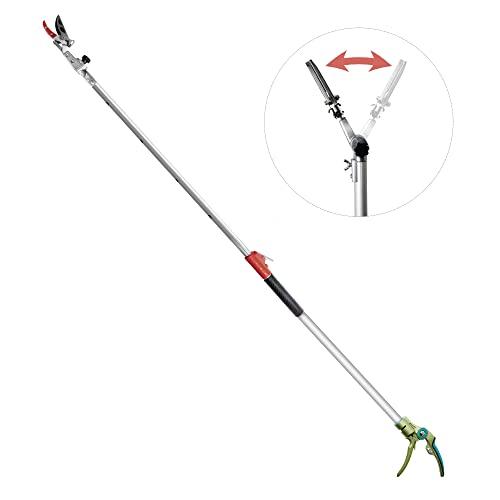
The GARTOL pruner swaps brute force for reach. The aluminum handle telescopes from roughly 3.67 feet up to 5.45 feet, and the rotating blade head pivots to match awkward branch angles. For overhead cuts on fruit trees or the upper limbs of tall shrubs, this design removes the ladder from the job and keeps both feet on the ground.
The 1-inch cut capacity reflects the trade-off. A longer pole concentrates less leverage at the blade, so this is not the tool for the thickest limbs. Compared with the STEELHEAD telescoping lopper, the GARTOL prioritizes vertical reach over raw cutting power.
Practical Advantages
- Extends to roughly 5.45 feet, reaching high branches without a ladder.
- Rotating head adjusts blade angle for awkward overhead cuts.
- Lightweight aluminum handle reduces arm fatigue during vertical work.
Where It Is Less Suited
- 1-inch maximum cut is far thinner than competing loppers in this roundup.
- Long pole reduces leverage on stubborn wood compared with shorter-handled loppers.
At A Glance
The Right Fit
Tall-garden owners and fruit-tree growers who need safe overhead pruning without climbing.
Another Choice May Suit
You face thick, ground-level hardwood, where the STEELHEAD Gear-Bypass Lopper offers heavier cutting capacity.
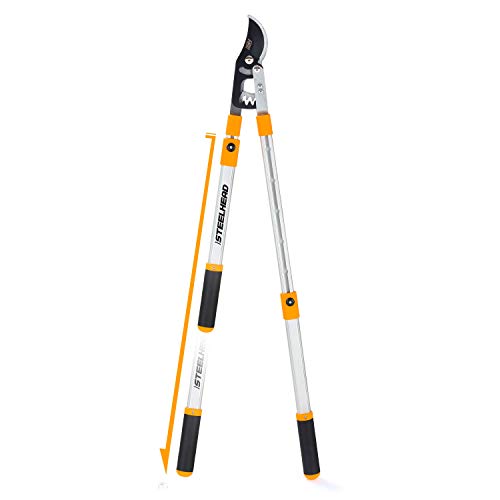
The STEELHEAD adjustable lopper pushes two ideas at once: telescoping reach and a ratcheting gear-bypass jaw. The compound-ratcheting gear-bypass fulcrum (a geared pivot that multiplies force as the handle closes) delivers up to three times the cutting power of a basic bypass, while the handles extend tool-free from 27 inches to 40 inches for added leverage on stubborn limbs. Shock-absorbing DuraGrip handles reduce the jarring that travels up to wrists and shoulders.
Forged high-carbon steel and a non-stick corrosion-resistant finish hold up across multiple seasons. Compared with the GARDENWORK adjustable model, the STEELHEAD trades compactness for higher leverage and longer reach when fully extended.
Noteworthy Benefits
- Compound-ratcheting gear-bypass jaw multiplies cutting force on stubborn limbs.
- Handles telescope tool-free from 27 to 40 inches for adjustable leverage.
- Forged high-carbon steel with non-stick finish resists corrosion season after season.
- DuraGrip handles absorb shock to protect wrists and shoulders during heavy work.
Some Limits To Know
- At full 40-inch extension, control becomes harder in tight spaces between branches.
- 1.75-inch maximum cut is below the 2-inch class leaders for truly massive limbs.
- More mechanical complexity means more potential maintenance over years of use.
Whose Shelf It Belongs On
Homeowners with large shrubs, established ornamental trees, and anyone pruning often enough to appreciate serious leverage.
Where Another Pick Suits Better
You prune only a few times a year and want minimal moving parts, where the simpler Jardineer Ratchet Anvil Loppers do the job with less complexity.
Picking The Right Lopper For The Work In Front Of You
Before chasing the biggest cutting capacity, match the tool to the job. Start by looking at the wood in your yard: dry dead branches lean toward an anvil or ratchet head, while live green growth benefits from a bypass design that slices cleanly and helps cuts heal faster. Branch thickness matters too, and a small overspec gives headroom when you hit a thicker limb than you expected. For most home pruning, 1.5 to 2 inches covers everything outside major tree surgery.
Handle Length And Leverage
Longer handles mean more leverage but less control. A 33-inch fixed lopper like the Corona delivers strong cutting authority but can feel unwieldy for shorter gardeners or tight spaces. Telescoping designs such as the GARDENWORK and STEELHEAD adjust on the fly, trading ultimate rigidity for versatility. If your pruning involves a lot of overhead work, a pole pruner like the GARTOL trades raw cutting force for safe reach without a ladder.
Mechanisms That Multiply Effort
Ratchet and compound-action mechanisms add internal pivots that boost the force your hands deliver at the blade. The trade-off is a few extra seconds per cut and slightly more maintenance. For long sessions, that mechanical advantage protects wrists noticeably. For occasional light pruning, a simple bypass may be all you need. A non-stick or Teflon coating keeps sap from gumming the blade and reduces how often you stop to clean.
Weight, Storage, And Maintenance
Heavier tools cut more aggressively but tire shoulders faster. Cordless electric pruners like the Anttctig eliminate hand strain but introduce battery charging and storage considerations. Manual loppers need blade cleaning, occasional sharpening, and a dry spot in the shed. For most homeowners, a mid-weight model with corrosion-resistant steel and a comfortable grip hits the practical sweet spot.
Smart Choices Before You Buy
Pitfalls Shoppers Hit
Chasing the largest stated cutting capacity often backfires, since bigger ratings usually mean heavier tools that tire you out before the job is done. Skipping the anvil-versus-bypass distinction is another common miss: an anvil chews dead wood but crushes live growth, while a bypass slices cleanly but jams on hard, dry limbs. Finally, ignoring handle ergonomics tends to haunt anyone pruning for more than a few minutes at a stretch.
Where The Extra Money Goes
Premium loppers invest in forged steel heads, multi-stage gearing, and corrosion-resistant coatings that hold up across many seasons. You also pay for tighter machining, which keeps the cutting action smooth and the blade alignment true. The upgrade pays off for anyone pruning weekly, managing mature trees, or simply tired of replacing bargain tools every couple of years.
Frequently Asked Questions
What size branches can a typical lopper handle?
Most residential loppers cut cleanly through branches up to about 1.5 inches, with heavy-duty models reaching 2 inches or slightly beyond. Anything thicker usually calls for a pruning saw rather than a lopper.
Bypass or anvil: which is better for thick branches?
Bypass loppers suit live green wood because they slice cleanly and help cuts heal, while anvil designs power through dry, dead, brittle branches where a bypass blade would jam. Match the style to the wood in your yard.
Are ratchet loppers worth the extra cost?
For anyone with limited hand strength, or for gardeners tackling many thick cuts in one session, the stepped gearing reduces strain noticeably. For light occasional pruning, a basic bypass may be perfectly adequate.
How do I keep lopper blades sharp and rust-free?
Wipe blades dry after each session, oil the pivot lightly, and store the tool indoors. A non-stick or Teflon coating slows sap buildup, but a quick clean after cutting sappy wood keeps the edge working longer.
Can telescoping loppers replace a pole pruner?
For branches within roughly eight feet of the ground, an extendable lopper handles the job well. For truly high overhead work, a dedicated pole pruner like the GARTOL offers safer reach without a ladder.
Wrap Up
The right lopper turns pruning from a chore into a quick weekend task, and the wrong one leaves you halfway through with sore hands. Match the mechanism to your wood, the handle length to your reach, and the weight to your stamina. Any of the picks above will serve you well once it fits the job in front of you.
