

A lawn that feels spongy underfoot or sheds water instead of soaking it in usually has one root cause: compacted soil. Thatch and foot traffic choke the root zone, and fertilizer washes off before grass can drink it in. Manual core aerators solve that without renting a machine or firing up a gas engine, pulling small soil plugs so air, water, and nutrients can finally reach the roots.
The seven picks below cover every realistic yard scenario. Handheld pluggers work for spot repair and tiny patches. Stand-up spike and coring tools handle mid-size lawns with less back strain. Rolling drum designs turn aeration into a steady walk-behind workout. Each entry below covers design, real-world feel, trade-offs, and a better-fit alternative from the same list.
The Main Contenders

Jardineer Lawn Aerator Tool 36″ Spike Aerator

Landzie Lawn Aerator Tool 42″ Hollow Tine

Dolibest Lawn Coring Aerator Stainless 4 Corer
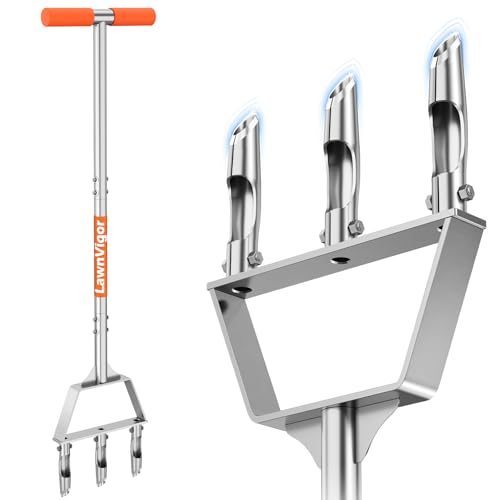
LawnVigor Manual Lawn Core Aerator Hollow Tines

Corona LG 3604 YardBREATHER Manual Core Aerator

K.D STONEDGE Patented Rolling Lawn Aerator
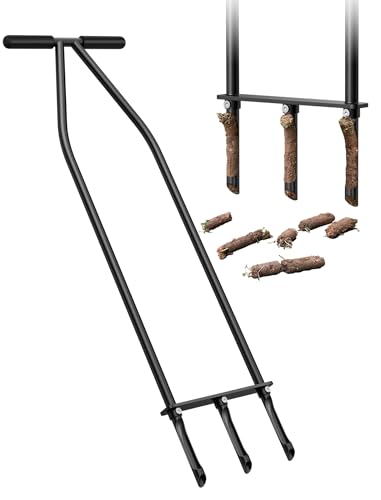
Xuperace Core Lawn Aerator Alloy Steel
Why These Options Stand Out
The Jardineer spike aerator lands at number one for anyone stepping into lawn care for the first time. The 36-inch handle keeps your back mostly upright, and twelve heat-treated steel spikes (here, a “spike” just means a solid point that punches into soil without removing a plug) punch a grid of holes with each step. Spikes are gentler on soft topsoil than coring tubes, so you can repeat passes without leaving unsightly cores on the lawn.
Pre-assembly matters more than people realize, because most first-time tool setups stall in the garage. For clay-heavy or heavily compacted yards, you may find the spikes need a soaking session beforehand to sink fully. Compared with the rolling pick further down the list, this is a slow walk rather than a brisk push, but the workout is real and the result is measurable in a season.
Notable Upsides
- Pre-assembled out of the box, so you skip the Allen-key ritual
- Twelve spikes per step cover a meaningful footprint
- Heat-treated steel resists bending on rocky patches
- Longer handle reduces stooping on mid-size lawns
Things To Consider
- Spikes don’t remove soil plugs, so the relief is short-lived on hardpack clay
- Foot pressure is required on tougher ground, tiring on larger areas
- Spike tips may need cleaning if soil clings after a wet session
Made For
First-time homeowners with a small to mid-size yard who want a low-cost entry point before committing to a plug-style tool.
Consider Something Else When
Anyone fighting serious clay compaction should reach for the Landzie Lawn Aerator Tool 42″ Hollow Tine instead, since core removal delivers deeper, longer-lasting relief.
The Landzie 42-inch hollow tine tool is the one experienced homeowners tend to point newcomers toward, and the design choices explain why. “Hollow tines” are open tubes that cut into the soil and lift out a small plug (a core of earth roughly finger-thick), leaving actual channels for air and water rather than just compressing the soil sideways like a spike. The brand’s signature beveled tine geometry reduces one of the worst manual aerator frustrations: clogged tubes that need constant finger-cleaning.
On a typical suburban lawn, you can expect a steady rhythm once the ground is moist, and the longer 42-inch handle gives real leverage for taller users. It does demand body weight, so anyone with knee or back concerns should plan short sessions. The trade-off versus the spike model above is more effort per pass, but the channels actually stay open for weeks, and that is what makes this one our editor’s choice for the category.
A Strong Showing
- Beveled hollow tines resist clogging better than straight-walled designs
- Stainless steel construction holds up season after season
- 42-inch handle suits taller users without forcing a crouch
- Core removal gives longer-lasting aeration than spikes
Honest Caveats
- Heavier foot pressure required compared to spike tools
- Plugs need to be collected or broken up afterward, which adds cleanup time
Feature Snapshot
Right Fit For
Homeowners with mid-size lawns (roughly 1,000 to 4,000 square feet) who want deeper, plug-style aeration without renting a machine.
Swap It Out When
Very small patch work calls for the Dolibest Lawn Coring Aerator Stainless 4 Corer, which fits into tight corners a 42-inch tool can’t reach comfortably.
The Dolibest corer is the handheld pick in this lineup, and it fills a niche the stand-up tools ignore. Think of a few bare patches near the mailbox, a worn strip by the back gate, and stubborn spots where runoff always pools. The all-steel build with a black powder-coated finish shrugs off the rough use a hand tool takes, and the stainless steel core tubes (the business end that cuts and lifts the plug) resist the rust that quickly finishes cheaper handheld corers.
The soft rubber grip matters more than it looks because pressing down with your full weight on a metal T-handle is brutal on the palms. For ongoing whole-lawn aeration, this is the wrong tool, since you would be kneeling for hours. For targeted patch work, though, no rolling or stand-up tool can match its precision.
Positive Takeaways
- Powder-coated steel body holds up to repeated foot pressure
- Stainless core tubes resist rust between uses
- Soft rubber grip reduces palm fatigue during patch sessions
- Reaches corners and narrow beds that stand-up tools miss
Trade Offs
- Kneeling or stooping is required, so it is not ideal for whole-lawn projects
- Slower coverage than any stand-up or rolling option
Who It Suits Best
Homeowners with a handful of compacted patches or thin spots who want to fix specific trouble zones without dragging out a full-size tool.
Another Choice May Suit
Anyone planning a full-yard pass should look at the K.D STONEDGE Patented Rolling Lawn Aerator, which trades precision for much faster coverage on open ground.
The LawnVigor tool earns its heavy-duty label by targeting the problem that ruins most manual coring sessions: clogged tines. The non-clogging hollow tine geometry is engineered so soil slides up and out rather than packing into the tube. On dense, neglected lawns where straight-walled corers seize up after a few plunges, that design difference is the difference between finishing the yard and giving up halfway through.
The manufacturer is unusually clear about usage rules: water dry soil before working and never rock the tool side to side once it is in the ground. Both instructions protect the tool and your lawn. Treat the tines gently and the build should last many seasons. The trade-off is real effort per step, so plan on hydrating the lawn the day before.
The Helpful Details
- Non-clogging tine profile keeps the rhythm going on dense soil
- Pulls actual cores, opening channels that last weeks
- Sturdy metal construction suited to repeated force
Worth Noting
- Demands thorough pre-watering on dry lawns, or penetration suffers
- Rocks and buried roots can damage tines if you pry sideways
- Heavier than spike tools, so transport to a far corner of the yard is a real walk
Best Suited To
Homeowners with stubborn clay or heavily compacted soil who want a plug-style tool engineered to keep working in the toughest conditions.
Look Elsewhere When
Smaller yards and lighter use cases are better served by the Jardineer Lawn Aerator Tool 36″ Spike Aerator, which gets the job done with much less body weight per step.
Corona is a long-established name in hand tools, and the YardBREATHER reflects that heritage. The heat-treated steel footplate is the stand-out feature, giving you a real, textured platform to drive your weight down through. Traction grooves and a slip-resistant surface are not glamorous details, but they are the difference between a planted foot and a slipped ankle on wet grass.
Compared with the spike-style Jardineer at the top of this list, the YardBREATHER pulls actual cores rather than just punching holes, which is more useful on compacted ground. The trade-off is per-step effort. For routine seasonal aeration twice a year, the durability story carries the day. For weekly touch-ups, a lighter spike tool might be friendlier on the joints.
A Few Strong Suits
- Heat-treated steel footplate resists bending and flex under load
- Traction grooves add confidence on damp or dewy lawns
- Slip-resistant surface keeps the foot planted during the plunge
- Pulls cores that open real channels for air and water
A Few Limitations
- Heavier than pure spike tools, which adds fatigue over long sessions
- Footplate adds weight, so storage on a tight shed wall is a consideration
Spec Overview
Whose Shelf It Belongs On
Homeowners planning routine seasonal aeration who want a familiar brand name and a tool that handles repeated use without complaint.
Reach For A Different Pick When
Anyone with the largest yards here should grab the K.D STONEDGE Patented Rolling Lawn Aerator for faster coverage, since the YardBREATHER rewards patience over pace.
Rolling drum aerators turn a frustrating workout into a controlled walk, and the K.D STONEDGE design leans into that strength. The drum carries weight that drives the tines into the soil as you push, so the per-step effort is lower than with a stand-up coring tool. A scientifically balanced weight design is the manufacturer’s claim, and in practice the tool feels planted rather than tippy on turns.
This is the pick for homeowners with genuinely open lawn space rather than postage-stamp yards. On a 5,000-square-foot lawn, the rolling format pays for itself in time saved. Around tight landscaping beds, though, the drum is harder to maneuver than a stand-up spike tool, so plan your passes to avoid backing up repeatedly.
Useful Touches
- Drum design reduces per-step effort compared to stand-up coring
- Pulls plugs while rolling, so coverage is genuinely fast
- Balanced weight keeps the tool tracking straight on long passes
Points To Note
- Harder to maneuver in tight beds than stand-up spike or coring tools
- Drum storage takes more space than a slim spike tool on a shed wall
Who Should Grab It
Homeowners with larger open lawns who want to cover ground quickly without renting a powered aerator.
Where A Sibling Pick Shines
Smaller, irregular lawns with narrow side passages are better served by the Corona LG 3604 YardBREATHER Manual Core Aerator, which threads through tight spaces more easily.
The Xuperace rounds out the list with one specific engineering answer: getting the soil plug out of the tool without stopping. The patented side-eject design routes cores out the side rather than back up the tube, which sounds small but solves the most common reason manual coring sessions die early: a tine packed with mud. On wet, recently watered lawns, this design earns its keep.
Alloy steel tines give you confidence in the build, and the three-tine head keeps the per-plunge weight reasonable. The brand’s own guidance is to work on moist grass, which is good advice for any coring tool but especially important here. For very large lawns, the rolling pick above is faster. For persistent, pluggy conditions, this one is hard to beat.
Why It Works Well
- Side-eject design keeps tines clear even on wet, plug-prone ground
- Alloy steel tines resist bending and wear
- Three-tine head balances coverage with manageable per-step effort
Room For Improvement
- Works best on moist grass, so dry-soil sessions require pre-watering
- Three tines cover less ground per pass than the drum-style option
Perfect Match For
Homeowners dealing with moist, pluggy soil conditions who want fewer mid-pass stops to unclog tines.
Skip It When
Anyone needing to cover a wide open lawn quickly should reach for the K.D STONEDGE Patented Rolling Lawn Aerator instead, since the rolling design wins on raw speed.
What Matters Most Before Choosing Manual Core Aerators
Spike vs. Core: The First Real Decision
Spike aerators push narrow points into the ground, opening small holes without removing material. They are gentle, lightweight, and forgiving on soft topsoil. Core (or plug) aerators use hollow tubes to extract a small soil core, leaving actual channels that stay open longer and deliver deeper relief. Spike tools suit light maintenance and quick spring refreshes. Core tools suit compacted lawns, heavy clay, and any yard where water still pools after a rain.
Tine Count, Handle Length, and Your Body
Tine count affects coverage and effort. A spike tool with more tines covers more ground per step, but each step demands more downward force. A core tool with three tines is more practical for most adults than one with five. Handle length should match your height: a 36-inch handle is fine for users around 5’5″, while anyone 5’10” or taller benefits from a 42-inch shaft to keep the back mostly upright.
Storage, Material, and Long-Term Care
Steel tines hold up best, but they will rust if stored wet. Stainless or powder-coated finishes buy you years of shed storage without maintenance. Drum-style rolling tools need a corner of the garage, while slim spike tools hang on a wall hook. Cleaning tines with a stiff brush after each session prevents the slow buildup that ruins performance the following spring.
Mistakes Worth Dodging in This Category
Traps First Timers Fall Into
Buying a spike aerator for hardpack clay is the most common error, since spikes simply compress already tight soil sideways. Aerating a bone-dry lawn is the second. Dry ground resists penetration, leaving bent tines and a frustrated owner. The third trap is skipping the pre-watering step on core tools and then forcing the plunge, which can warp thin tines or loosen handle joints.
Where The Extra Money Goes
Higher-tier manual aerators earn their cost through tine geometry, balance, and material. Beveled or side-eject tines reduce clogging, which means fewer stops and a finished lawn in one session. Heat-treated steel footplates last decades rather than seasons. Longer handles mean fewer back complaints over years of use. The upgrade pays off for anyone planning routine seasonal aeration, since the per-session time and effort drop noticeably. A budget pick makes sense for a one-time fix, but a regular routine justifies spending up.
Frequently Asked Questions
How often should I aerate my lawn with a manual tool?
Most cool-season lawns benefit from aeration once a year, ideally in early fall. Warm-season grasses do best with a late-spring pass. Compacted yards or clay-heavy soils may need a second pass in the same year during the first season of recovery.
Do I need to water the lawn before using a core aerator?
Yes, thorough watering the day before makes a real difference. Moist soil allows tines to penetrate cleanly and reduces the force you need to apply. Aerating bone-dry ground is the most common cause of bent tines and tired shoulders.
Should I leave the soil plugs on the lawn or clean them up?
Leaving the plugs is standard practice. They break down within a week or two, returning nutrients to the surface and acting as a light top-dressing. Rake them up only if appearance matters, such as right before a gathering.
Can a manual aerator handle a large yard?
Manual tools can cover large yards, but the time and effort scale quickly. For lawns above about 4,000 square feet, a rolling drum design dramatically reduces per-step fatigue. Anything approaching half an acre or more usually calls for a powered rental.
Will aerating fix a lawn that pools water after rain?
It helps, but it is not a complete fix. Aeration improves infiltration by opening channels, but pooling often combines compaction with grading issues. Plan to address drainage direction separately if puddles persist after aeration and reseeding.
The Takeaway
Manual core aerators give you a low-cost, no-fuel way to revive compacted soil, and the right tool depends on yard size, soil type, and how often you plan to work. A small yard with soft topsoil is well-served by a lightweight spike model, while clay-heavy or heavily compacted lawns need a plug-pulling tool with smart tine geometry. Match the tool to your soil and your body, water the lawn the day before, and let the cores break down naturally for the best results over a full season.
