

Growing citrus next to a sunny window changes the feel of a room, and the right indoor fruit tree can do the same with very little fuss. Apartment dwellers without a yard, beginners who want something forgiving, and hobbyists chasing tropical flavors all want the same thing: a tree that thrives in a pot, under household lighting, through the seasons. This roundup covers ten options across artificial decor, live citrus, compact berries, bonsai, and seed-starting kits, so you can match a tree to your space and the time you actually have to care for it.
The Essentials At A Glance
LuceAlberi 6FT Artificial Olive Tree with Planter

Brighter Blooms Meyer Lemon Tree, 1-2 ft.

Garden State Bulb Meyer Lemon Tree in 1 Gallon Pot

Via Citrus Calamondin Tree Live Plant 13-22″

Wellspring Gardens Dwarf Everbearing Mulberry (2-Pack)

Brussel’s Dwarf Pomegranate Bonsai, 5 Years Old
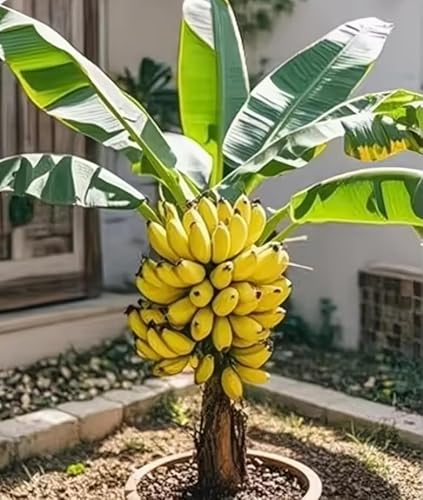
CZ Grain Banana Tree Seeds for Planting (10 Seeds)

Brussel’s Bonsai Chinese Sweet Plum, 5-Year
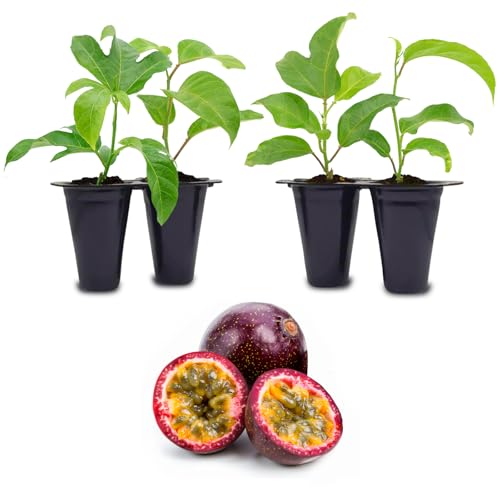
Fam Plants Possum Purple Passion Fruit Vine (4-Pack)

QEVJEKR 200+ Mix Dwarf Bonsai Fruit Tree Seeds
A Deeper Look At The Lineup
Not every indoor tree has to be alive, and the LuceAlberi artificial olive makes a strong case for going faux. Standing six feet tall with branch detailing and small faux olives, it fills the corner of a living room or office the way a real specimen would, without demanding light, water, or pruning. The trunk arrives pre-assembled and the branches slot in, so setup is more like fluffing than building.
For renters, allergy-prone households, or anyone whose window light runs more fluorescent than golden, this is a practical workaround. It also sidesteps the biggest headache with real indoor fruit trees: the mess. Compare that to the live citrus options below, which reward effort with real blooms and fruit. The trade-off is that this tree stays exactly as you unbox it, season after season.
Strong Points
- Six-foot height fills bare corners without overwhelming ceiling space
- Pre-assembled trunk with insertable branches shortens setup time
- Included white pot and woven basket cover two decor styles in one
- Zero watering, light, or pest concerns over years of use
Things To Consider
- Faux foliage can collect dust on leaves and olives, so occasional wiping helps it look fresh
- No real fragrance or fruit, which matters if you want a sensory experience from a tree
- Branch arrangement is manual, so the final silhouette depends on how you spread them
Best Suited To
Anyone who wants the visual weight of a mature tree without the daily care routine, especially renters and office decorators.
Swap It Out When
You want real, edible fruit indoors, in which case the Brighter Blooms Meyer Lemon Tree offers a living, fragrant alternative.
The Meyer lemon has earned its reputation as the gateway indoor fruit tree, and Brighter Blooms ships a young specimen between one and two feet tall. At that size, it slips onto a kitchen counter or a south-facing windowsill without dominating the room. Meyer lemons differ from the thick-skinned grocery store variety: the rind is thinner, the juice sweeter, and the aroma closer to mandarin.
You will need to plan around a southern exposure or a grow light, and the tree appreciates consistent watering rather than sporadic soakings. Unlike the artificial olive above, this one asks for ongoing attention, but it pays you back with real blossoms and eventually real fruit. For a first-time citrus grower, the small starter size lowers the stakes while you learn the rhythm.
What Makes Sense
- Mature tree size stays manageable for indoor containers over time
- Meyer lemons offer a sweeter, less acidic flavor than standard grocery lemons
- One- to two-foot starter height is forgiving for tight indoor spaces
Honest Caveats
- Cannot ship to a long list of warm-weather states, so double-check your state before ordering
- Young trees can take a season or two to settle in before fruiting reliably
- Demands bright light for at least six hours a day to flower indoors
Core Details
Made For
First-time citrus growers who want a forgiving, well-documented lemon variety to learn the basics of indoor fruiting.
A Better Fit Elsewhere
People in restricted shipping states should consider the Garden State Bulb Meyer Lemon Tree, which lists a different delivery footprint.
Where the Brighter Blooms tree ships at one to two feet, this Garden State Bulb Meyer arrives in a one-gallon growers pot, already established enough to handle the transition to a decorative container. The source notes it is self-pollinating, which simplifies indoor growing since you do not need a second tree to set fruit. For a windowsill setup, that single-tree convenience is a real advantage.
The trade-off is shipping geography: it cannot be sent to FL, AZ, CA, TX, or LA, which removes a lot of warm-climate gardeners. If you are in an eligible state, you get a tree that is described as disease resistant and a known butterfly and bird attractor when grown outdoors in season. Indoors, the main role is decorative greenery with a chance at fruit, and partial sun through a bright window satisfies its light needs.
What It Does Well
- Self-pollinating habit removes the need for a second tree indoors
- Hardiness zone 8 to 11 rating helps when you eventually move it outside in summer
- One-gallon starter pot supports a stronger root system than smaller starts
Some Limits To Know
- Excluded shipping states include major warm-climate regions, so check eligibility first
- Partial sun is a minimum, meaning north-facing windows may not be bright enough
- One-gallon pot is just a starter, so repotting will be on the schedule within a year
Right Fit For
Gardeners in eligible states who want a self-fertile lemon tree ready to drop into a decorative container at the brightest window.
Skip It When
You live in a state on the exclusion list, in which case the Brighter Blooms Meyer Lemon Tree may still be available where you are.
Calamondin, sometimes called calamansi, is a small sour orange that punches above its weight indoors. The Via Citrus tree ships at 13 to 22 inches in a one-gallon pot, and the headline feature is steady performance: fragrant white flowers and small orange fruit appearing on the same plant throughout the year, rather than in one seasonal flush.
That makes the calamondin a strong alternative for indoor growers who find the Meyer lemon a little patient. The fruit is tart, the kind you slice thin into tea or use as a squeeze over seafood. Same story as the other live citrus here: bright light, well-drained soil, and patience during the adjustment period after shipping.
Good Reasons To Consider
- Flowers and fruit can appear in the same year, unlike slower-to-fruit citrus
- Fragrant white blossoms add a sensory layer beyond just greenery
- Sour fruit lends itself to teas, marinades, and cocktail work
Where It Is Less Suited
- Cannot be shipped to AZ, CA, LA, HI, TX, or several other warm-weather states
- Flowering on and off year-round uses energy, so feeding matters more than with seasonal citrus
- Sour fruit is not a direct substitute for sweet oranges, so set expectations accordingly
Whose Shelf It Belongs On
Home cooks who want a steady supply of sour citrus for flavoring without running a full orchard.
Look Elsewhere When
You want classic sweet lemons, in which case the Brighter Blooms Meyer Lemon Tree is the better flavor match.
Most indoor fruit tree lists stop at citrus, but mulberry belongs in the conversation. The Wellspring Gardens dwarf everbearing mulberry tops out at two to six feet at maturity, which keeps it in container territory. Two plants per order also lets you cross-pollinate or stagger placements in different rooms.
The Morus Nigra type is the deeper-flavored black mulberry rather than the milder white type. Hardiness zone 5 to 11 means a wide range of climates, full sun to light shade, and moderate watering. The catch is that indoor mulberries still want strong light, and fruit drop can be messy on hardwood floors, so placement near a tile surface is a common-sense move.
Where It Delivers
- Compact two- to six-foot mature size keeps it indoors or on a small patio
- Hardy across zones 5 to 11, more forgiving than many fruit trees
- Two-pack lets you keep one inside and one outside, or place them in different rooms
Less Ideal Details
- Fruit drop can stain flooring, so a tile or tray underneath helps
- Young plants may arrive with shipping stress, so a quiet acclimation week helps
- Berries attract small insects when ripe, which matters in a closed room
Feature Rundown
Perfect Match For
Gardeners who want a real berry harvest indoors and have space for a two-plant setup near a sunny window.
Not Your Match When
You want zero mess and no pollinator concerns, in which case the artificial LuceAlberi 6FT Olive Tree is a cleaner pick.
A bonsai is a tree with homework, and Brussel’s has spent decades shaping them. The dwarf pomegranate arrives at five years old, between 8 and 12 inches tall, planted in a ceramic container with a humidity tray and decorative rock. That makes the unboxing feel like a finished display rather than a project.
Dwarf pomegranates are forgiving bonsai subjects: they tolerate indoor conditions, produce bright orange-red blooms, and occasionally set small fruit. The honest read is that bonsai care is a craft on its own, and the tree will reward consistent watering and light more than casual attention. Compared to the looser potted citrus above, this one asks for more shape but gives back more visual character.
Bright Spots
- Includes ceramic pot, humidity tray, and decorative rock for a finished look
- Five years of growth means a developed trunk and branching structure
- Dwarf pomegranate can flower indoors under the right light
Some Limits To Know
- Bonsai care requires regular watering and occasional pruning, not set-and-forget
- Humidity tray needs refilling, and ceramic pots without drainage demand careful watering
- Blooming indoors is less reliable than with full-size potted citrus
Who Will Love This
Collectors and hobbyists who enjoy shaping a living tree and want a display-ready bonsai from the first day.
Reach For A Different Pick When
You want a fruiting plant with less hands-on shaping, in which case the Via Citrus Calamondin Tree offers a similar potted-citrus experience.
Bananas indoors are mostly a foliage play, and CZ Grain’s pack of ten seeds lets you start your own from scratch. The pitch is tropical drama: large green leaves unfurling from a single stem in a bright room. For someone who enjoys the seedling stage more than buying a finished plant, this is the right kind of project.
The reality of seed-grown banana plants is that fruit indoors is rare without a long warm season and a lot of light, so the appeal here is the look more than the harvest. Germination rates vary widely across seed packs, and not every seed in a batch will sprout. If you enjoy experiments, the price of admission is low and the reward can be a striking houseplant.
Practical Pluses
- Ten seeds give multiple attempts at germination in one pack
- Tropical foliage adds a different shape than typical indoor trees
- Starting from seed teaches the full life cycle of a tropical plant
Trade-Offs To Consider
- Indoor banana fruit is uncommon, so expect a foliage plant rather than a harvest
- Germination success varies and may need warmth and patience over several weeks
- Seed-grown plants take longer to reach display size than potted starters
Best Suited To
Patient hobby growers who want to start a tropical plant from scratch and are happy with foliage as the payoff.
Another Choice May Suit
You want immediate height and structure, in which case the LuceAlberi 6FT Artificial Olive Tree delivers visual impact on day one.
The Brussel’s Chinese Sweet Plum is a smaller, more desk-friendly sibling to the dwarf pomegranate above. At six to ten inches tall, planted in a ceramic bonsai container, it fits comfortably on a work surface or a bookshelf. Glossy green foliage and a mature trunk shape give it the look of a much older tree.
Sweet plum bonsai is marketed as a low-maintenance indoor option, and the source notes it thrives in bright, indirect light, which most home offices already have. Compared to the pomegranate bonsai, this one is a touch more compact and a little easier to slot into a tight setup. It will not produce plums indoors, but the styling and leaf quality do most of the visual work.
Everyday Wins
- Six- to ten-inch display size fits on a desk or shelf without rearranging the room
- Glossy foliage keeps its color under typical indoor lighting
- Ceramic container ships planted, so it is display-ready out of the box
A Few Limitations
- No edible fruit, so the appeal is decorative rather than productive
- Bright, indirect light is a real requirement, not a suggestion
- Small ceramic pot needs careful watering to avoid drying out fast
Made For
Office workers and apartment dwellers who want a small living sculpture on a desk without dedicating a window to it.
Skip It When
You want a fruit-producing tree, in which case the Wellspring Gardens Dwarf Everbearing Mulberry offers a real harvest at a similar size.
Passion fruit is a vine, not a tree, but it earns its place on an indoor fruit plant list because of one feature: the flowers. The Fam Plants ‘Possum Purple’ is self-fertile, so a single plant sets fruit on its own, and the four-pack gives you a head start on a trellis or arbor. The blossoms are large, intricate, and fragrant, often the real reason people grow it.
It will need a sturdy support to climb, ideally a trellis, arbor, or a large patio container near a bright window. The fruit is sweet and purple when ripe, and the plant grows quickly once established. This is the most space-hungry option on the list, so it suits a sunroom or a large bright room more than a small apartment corner.
The Upside
- Self-fertile variety means fruit without a pollinator plant
- Four starter plants per pack lets you build a fuller vine display quickly
- Distinctive flowers are a visual highlight in their own right
Less-Strong Areas
- Vine needs a trellis or arbor, which adds setup work and space
- Six to eight hours of full sun is a heavy ask for many indoor setups
- Fast growth means regular pruning once the vine matures
Feature Snapshot
Who Should Grab It
Sunroom growers and trellis-builders who want striking flowers and edible fruit on a climbing plant.
Where Another Pick Suits Better
You have only a small windowsill, in which case the Brighter Blooms Meyer Lemon Tree fits a more contained footprint.
For pure experimentation, the QEVJEKR seed pack covers four classic fruits, with 50-plus seeds each of lemon, cherry, orange, and apple. That is over 200 seeds across individually packaged varieties, so you can split them between family members or stagger sowing across the year. Each pack is sealed in a moisture-resistant zip pouch, which helps with long-term storage.
Seed packs are always a long game. Realistically, a small percentage will germinate, fewer will survive to a plantable seedling, and only a handful will mature into a fruiting tree. The reward is variety and the satisfaction of growing from seed, but the timeline is years, not weeks. Treat this as an education kit more than a finished indoor orchard.
Well-Handled Touches
- Four varieties in one order gives broad exposure to different fruits
- Individually sealed pouches keep each seed type fresh
- Large seed count allows for trial and error without running out
Where It May Fall Short
- Germination success is uncertain and varies by variety and home conditions
- Years of growth are needed before any realistic fruit indoors
- Many seedlings will need culling, which can be emotionally tough
Built With In Mind
Classrooms, families, and patient hobbyists who want a year-long germination project across multiple fruit types.
Consider Something Else When
You want a fruiting tree this season, in which case the Via Citrus Calamondin Tree arrives ready to grow.
What Matters Most Before Choosing Fruit Trees For Indoors
Light Availability Comes First
A south-facing window that gets six or more hours of direct sun is the baseline for citrus, pomegranate, and passion fruit. If your brightest window only delivers partial sun, focus on calamondin or Meyer lemon as more forgiving options, or fall back on the artificial olive if natural light is unreliable. The Brighter Blooms and Garden State Bulb lemon trees both succeed or fail on this single factor, and the passion fruit vine is the most demanding on the list.
Container Footprint and Mature Size
Indoor trees do not stay small forever, even when labeled dwarf. Meyer lemons and calamondins will eventually need a 12- to 16-inch pot, and a mulberry can reach six feet in a container. Bonsai picks from Brussel’s cap out by design, which makes them easier to place. Measure your window sill or floor space before ordering, and remember that a plant you love is harder to enjoy if it blocks the walkway.
Live Versus Artificial, Honestly
An artificial tree solves decoration, water, and light problems in one purchase, and the LuceAlberi 6FT olive is the standout for visual weight. Live plants reward effort with real fragrance, blossoms, and eventually fruit, but they need consistent watering, feeding, and pest checks. Pick the option that matches the time you actually have, not the time you wish you had.
Climate and Shipping Restrictions
Several live trees on this list cannot ship to warm-weather states like FL, CA, AZ, TX, LA, and HI, due to USDA rules. The Brighter Blooms lemon, Garden State Bulb lemon, and Via Citrus calamondin all carry restrictions. Check your state’s eligibility on the product page before adding to cart, since ordering out of zone can mean a cancelled order rather than a refunded one.
Key Considerations Across These Picks
Common Shopping Slip Ups
Buying a live fruit tree without checking your window’s light hours is the most common regret, especially for citrus and passion fruit. Another trap is assuming a “dwarf” label means the tree will never need repotting, when in reality most will outgrow their starter pot within a year. For seed packs, treating the seed count as a guaranteed plant count sets the wrong expectation. Treat the count as raw material, not a finished lineup.
Where The Extra Money Goes
A five-year-old bonsai from Brussel’s costs more than a young live citrus because the trunk and branching have already been shaped by hand, which takes years of grower labor. Premium artificial trees like the LuceAlberi use higher-density foliage and better trunk materials to look convincing in person rather than only in photos. Higher-tier picks in this category buy you time, either in the form of pre-grown structure or zero maintenance, and that time is the actual value if you do not have years to wait.
Frequently Asked Questions
Can indoor fruit trees really produce edible fruit?
Yes, but yields depend heavily on light. Citrus like Meyer lemon and calamondin can flower and fruit indoors under a bright window or grow light. Tropical plants like banana and passion fruit are far less reliable for fruit indoors, so treat them as foliage or flowering plants first.
How much light do indoor fruit trees need?
Most live options on this list want at least six hours of direct or very bright indirect light per day. South-facing windows are the easiest fit, while north-facing windows usually need a supplemental grow light to keep citrus and pomegranate healthy.
Do dwarf fruit trees stay small forever?
No. Dwarf refers to a slower growth habit and a smaller mature size compared to standard varieties, but most will still need a larger container within a year or two and can reach several feet in height over time. Bonsai picks are the real exception, since their size is maintained by pruning and root work.
Are artificial fruit trees worth it?
They are worth it when the goal is decor, allergy control, or low maintenance, and the LuceAlberi 6FT olive is the most convincing option on this list. They are not a substitute for live plants if you want real fragrance, real fruit, or the satisfaction of growing something alive.
What is the easiest indoor fruit tree for beginners?
The calamondin from Via Citrus and the Meyer lemon from Brighter Blooms are both widely recommended for first-time growers. They tolerate indoor conditions, fruit at a small size, and bounce back well from occasional watering mistakes during the learning curve.
Closing Thoughts
The best indoor fruit tree is the one that matches your light, your time, and your patience. Citrus leads for first-time growers, bonsai picks reward careful hands, and seeds are right for the curious experimenter. Pick a tree that fits your space, give it the light it actually needs, and let the rest unfold season by season.
