

Container gardening shifts the rules. Without a backyard orchard, your success depends on the tree, the pot, the soil mix, and the protection you set up around it. A potted lemon needs the same drainage and sun as a ground-planted one, only with sharper limits on root run, watering frequency, and winter shelter. Skip the wrong combination, and you’ll watch leaves yellow by midsummer.
The list below covers live trees, decorative faux options, fabric and plastic containers, a propagation kit, and pest netting, because a healthy potted tree is rarely just one purchase. Every pick was chosen for what it actually delivers: container compatibility, manageable size, and durability through several seasons.
A Fast Comparison Of The Options
LuceAlberi 6FT Artificial Olive Tree with Planter
Hirt’s Gardens Meyer Lemon Tree 5″ Pot

FEED GARDEN 25 Gallon Fabric Grow Bags 8-Pack

Homoda Fruit Tree Netting with Zipper 10×10

GSB Garden State Bulb Meyer Lemon Tree 1 Gallon
VIVATREES 7FT Artificial Olive Tree with Pot

PAMAZY 9-Piece Air Layering Propagation Kit

Via Citrus Calamondin Tree Live 1 Gallon

Hzloyat 9.8″ Deep Nursery Pots 20-Pack

Hzloyat 9.8″ Tree Pots 50-Pack
A Deeper Look At The Lineup
Not every “fruit tree for pots” needs to bear fruit, and the LuceAlberi 6-foot faux olive is the cleanest answer for renters, basement offices, and anyone with zero natural light. The tree ships with a pre-assembled trunk and a white pot tucked inside a woven basket, so the 5.7-inch-tall base stays stable even on hardwood or low-pile carpet.
You simply insert the branches into the trunk, fluff them, and the silhouette reads as a mature Mediterranean olive from across the room. The piece doubles as decor in a hallway corner or behind a reading chair, and it never drops a leaf onto your rug.
Everyday Wins
- Zero maintenance: no sunlight, water, or pruning required
- Stable planter-and-basket combo that protects floors
- Realistic branching that holds its shape after fluffing
- Allergen-free alternative to live olive trees
- Six-foot height fills a bare corner without a ladder for care
Worth Noting
- Plastic foliage can collect dust and benefits from a monthly wipe-down
- Not a living plant, so no fruit or air-purifying benefit
Who It Suits Best
Renters and apartment dwellers who want Mediterranean style without watering schedules or landlord disputes over soil stains.
A Better Fit Elsewhere
Shoppers wanting live fruit should step to the Hirt’s Gardens Meyer Lemon Tree, which actually produces edible citrus in a compact footprint.
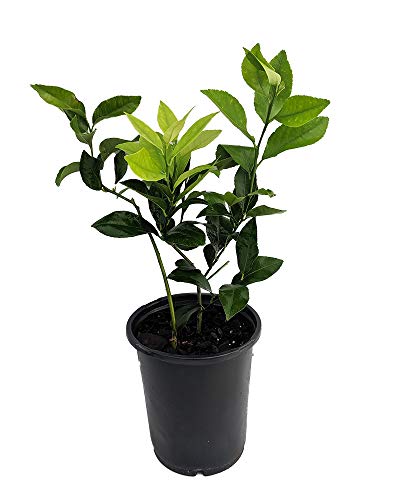
The Meyer lemon is the gateway citrus for first-time potted fruit growers, and Hirt’s ships it already at fruiting size in a 5-inch pot. Sweet-tart and thin-skinned, Meyer lemons tolerate indoor conditions better than grocery-store Lisbon varieties, and this one arrives with a gift card certificate to confirm its nursery origin.
The tree stays compact enough for a sunny kitchen window but still produces full-size fruit once established. The trade-off is shipping restrictions: USDA rules block delivery to Texas, Florida, Arizona, California, Louisiana, and Hawaii, so confirm your zip code before ordering.
Everyday Advantages
- Arrives at fruiting size for a faster first harvest
- Tolerates indoor sun and outdoor patio life above 40°F
- Compact 5-inch starter fits a windowsill
- Self-pollinating, so a single tree fruits without a partner
Trade Offs
- Cannot ship to six warm-weather states due to USDA regulations
- Will need repotting into a 10+ gallon container within a season
- Demands six or more hours of direct sun for reliable fruiting
Made For
Beginners with a south-facing window or sheltered patio who want edible citrus without grafting or pollination work.
Consider Something Else When
Growers in restricted shipping zones should look at the Garden State Bulb Meyer Lemon Tree in a 1-gallon pot, which carries a similar citrus profile in a larger starter size.
When your potted fruit tree outgrows its first home, the FEED GARDEN 25-gallon fabric bags give you breathing room without the weight of ceramic. Eight bags arrive in one order, each made from 300-gram nonwoven fabric that holds its shape through wet soil and multiple growing seasons.
Fabric containers work differently from rigid pots: air pruning, where roots stop circling when they hit the porous wall, happens naturally here. That means denser, more fibrous root systems, especially helpful for fig, citrus, and dwarf stone fruit.
Reasons It Performs
- 300-gram fabric resists tearing under saturated soil
- Breathable weave reduces root rot and circling roots
- Reinforced handles make relocating a 25-gallon bag manageable
- Folds flat for winter storage in a garage or shed
Points To Note
- Fabric dries out faster than plastic in summer heat
- 25 gallons is overkill for small herbs or young starts
Feature Snapshot
Right Fit For
Backyard growers running an edible container orchard and needing multiple large-capacity vessels that move with the season.
Skip It When
Small-start growers should consider the Hzloyat 9.8″ plastic nursery pots in a 20-pack, which fit seedlings and young cuttings at a smaller scale.
You can do everything right with a potted fruit tree, only to lose the harvest to birds or aphids. The Homoda netting covers that gap with two 10-by-10-foot enclosures built from ultra-fine HDPE mesh, with a side zipper for easy access and a drawstring that cinches around the base of a container.
For a single patio citrus or a small cluster of berry bushes, one enclosure is often enough. The mesh keeps out insects while letting sunlight and rain through, so pollination schedules aren’t disrupted, though self-pollinating species like the Meyer lemon and calamondin fare best under cover.
Everyday Perks
- Zippered access beats tying and untying drawstring bags
- Ultra-fine mesh blocks small pests like aphids and fruit flies
- HDPE material handles UV exposure and rain without fraying
- Two-pack covers a small orchard or a tall specimen plus a side grouping
Honest Caveats
- 10×10 ft may require stakes or hoops to clear branches
- Drawstring needs adjusting each time you move the pot
Best Suited To
Edible potted growers battling local bird pressure or soft-bodied insects who want a reusable, washable barrier over chemical sprays.
Look Elsewhere When
Anyone with a single small Meyer indoors can skip netting entirely and let a south-facing window do the pest-control work, the Hirt’s Gardens Meyer Lemon handles apartment life that way.
Garden State Bulb sends the Meyer lemon in a 1-gallon growers pot, which gives you a meaningful head start over a 5-inch starter. The tree is self-pollinating and disease-resistant, with hardiness recommended for zones 8 through 11, so most of the southern and coastal U.S. can leave it outdoors year-round.
You get more developed branching and root mass at delivery, and partial-shade placement near a bright window works for indoor growers in colder zones. The shipping restrictions mirror the Hirt’s version, so check the disallowed state list before checkout.
Good Reasons To Consider
- 1-gallon pot skips the most fragile seedling stage
- Self-pollinating for solo growers
- Tolerates partial sun indoors, full sun outdoors
- Disease-resistant rootstock reduces common citrus issues
Points To Keep In Mind
- Cannot ship to Florida, Arizona, California, Texas, or Louisiana
- Hardy only to zone 8, so northern growers must overwinter indoors
Key Product Details
Whose Shelf It Belongs On
Patio gardeners in zones 8 to 11 who want a fast-establishing citrus and have a bright indoor spot as backup for cold snaps.
Not Your Match When
Coastal and tropical growers shut out by USDA shipping rules should pivot to the Via Citrus Calamondin Tree, which is similarly compact and ornamental.
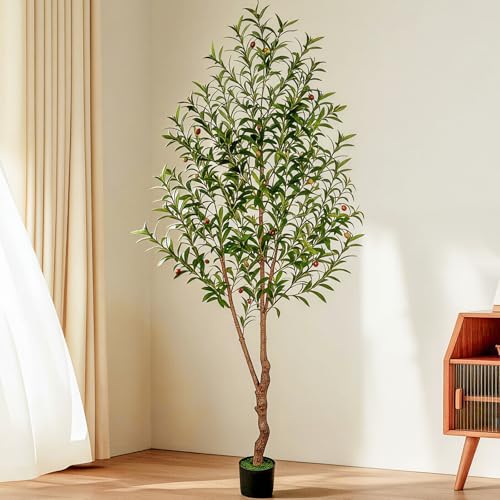
The VIVATREES 7-foot faux olive stands a full foot taller than the LuceAlberi version and arrives pre-assembled in a black plastic planter, which means no branch-stuffing on arrival. If you measure ceiling-to-floor before ordering, you can slot it into a vaulted living room or behind a standing desk without rework.
The maintenance profile is the same as any faux: no light, no water, no fertilizer. The trade-off is that the taller silhouette needs a wider base footprint for visual balance, so smaller apartments under 9×9 feet may feel crowded.
What Stands Out
- Pre-assembled trunk saves setup time
- 84-inch height suits double-height ceilings
- Included black planter removes the extra-purchase step
- No watering or pruning ever
Small Caveats
- Taller silhouette overwhelms small rooms under 100 square feet
- Plastic base looks less finished than the LuceAlberi basket styling
Perfect Match For
Apartment dwellers with tall ceilings who want the tallest faux olive available without the branch-assembly step.
Reach For A Different Pick When
Anyone decorating a smaller room should stay with the LuceAlberi 6FT Artificial Olive Tree, which is more proportional to compact spaces.
Air layering, also called marcotting, lets you clone a tree branch while it’s still attached to the parent. The PAMAZY kit brings nine reusable rooting boxes, each half-transparent so you can watch the root mass develop without disturbing the branch.
For potted fruit growers, this opens the door to duplicating a favorite Meyer lemon, an unusual fig variety, or a hard-to-source heirloom. The boxes include drain holes and a clip-on design, so they stay put on vertical or angled branches. Expect a longer wait than seed-starting, but the resulting trees are genetic copies of the parent.
The Upside
- Clones parent tree genetics exactly, no grafting skill required
- Transparent halves let you monitor root growth visually
- Nine boxes allow simultaneous propagation of multiple branches
Where It May Fall Short
- Slower than seed-starting, often several months per branch
- Requires mature parent wood, not green new growth
Quick Facts
Who Should Grab It
Backyard grafters and citrus collectors who want to multiply a single prized tree without buying additional nursery stock.
Swap It Out When
Casual growers wanting fruit fast should skip the propagation route and buy the Hirt’s Gardens Meyer Lemon Tree, which arrives already fruiting-size.
The calamondin is a calamansi-kumquat hybrid, and Via Citrus ships it as a 13-to-22-inch live plant in a 1-gallon pot. Fragrant white flowers and small orange fruit appear in cycles rather than seasons, so the tree pulls double duty as both edible crop and ornamental.
The fruit itself tastes sour, more like a lime-kumquat blend, and is widely used in Filipino and Southeast Asian cooking. USDA rules bar shipping to several citrus-producing states, so check eligibility, since restrictions are stricter than the Meyer options above.
The Case For It
- Year-round flowering and fruiting in proper conditions
- Fragrant blooms add indoor sensory appeal
- 1-gallon starter establishes faster than a 5-inch pot
- Compact size suits a bright kitchen window
Potential Drawbacks
- Cannot ship to AZ, AL, CA, LA, HI, TX, and several U.S. territories
- Fruit is tart, not for fresh eating off the branch
Built With In Mind
Edible-ornamental growers who want continuous color and cooking-friendly citrus rather than sweet-snacking lemons.
Another Choice May Suit
Sweet-citrus fans should step back to the Hirt’s Gardens Meyer Lemon Tree, which produces fruit more familiar for juices and zest.
The Hzloyat 20-pack trades the heavy fabric of the FEED GARDEN bags for lightweight, reusable plastic. Each 9.8-inch-tall pot gives taproot-friendly depth for fruit tree seedlings, which need vertical room to drive a strong central root before they outgrow a shallow starter.
You get three garden tools alongside the pots, so the unboxing covers the basics for transplanting, mixing, and watering. The thin plastic wall is intentional: easy to flex when you need to pop a root-bound seedling out without tearing the soil mass.
Why It Works Well
- 9.8-inch depth supports taproot development in young trees
- Flexible plastic releases root balls cleanly at transplant time
- 20-pack covers a small nursery operation
- Reusable across multiple seasons with simple rinse-cleaning
Less Ideal Details
- Thin walls may warp under full sun over many seasons
- No reinforced rim, so moving a soil-heavy pot requires two hands
The Right Fit
Seedling-stage growers who want depth without weight and plan to upsize into fabric or larger rigid pots by year two.
A Better Fit Elsewhere
Long-term container orchardists should jump to the FEED GARDEN 25 Gallon Fabric Grow Bags, which suit mature trees better than 9.8-inch starters.
The 50-pack version of the Hzloyat nursery pot doubles the count over the 20-pack, with the same 9.8-inch depth and side-and-bottom drainage. If you propagate from cuttings, run a small home nursery, or grow herbs and flowers alongside fruit trees, this bulk option flattens the per-pot cost noticeably.
The thin-wall construction still holds up for at least a few seasons, though heavy outdoor sun exposure may shorten lifespan. The added quantity means you can rotate pots out of service for cleaning without leaving seedlings potless.
The Good Stuff
- 50-pack offers meaningful per-unit value
- Side and bottom holes support healthy drainage
- Lightweight plastic simplifies moving plants around
What To Weigh
- Bulk count exceeds the needs of casual patio growers
- Requires indoor or covered storage to extend plastic life
Who Will Love This
Backyard propagators and school-garden programs running multiple fruit tree seedlings at once and rotating pots through the season.
Where A Sibling Pick Shines
Single-tree growers should stick with the Hzloyat 9.8″ Deep Nursery Pots 20-pack, which is the right size for a one-tree household.
What To Weigh Before Choosing A Potted Fruit Tree
A potted fruit tree lives or dies on three things: container size, sun, and drainage. Smaller starter pots, the 5-inch or 1-gallon class, work for the first season but constrict the taproot fast. Plan to upsize into a 10-to-25-gallon container within twelve to eighteen months for any citrus, fig, or stone fruit you expect to fruit reliably.
Sun is the second filter. Meyer lemons and calamondins want six or more hours of direct light, and a south-facing window is the bare minimum indoors. The faux olive trees in this list free you from that requirement entirely, useful for north-facing apartments and windowless offices.
Drainage matters just as much. Fabric grow bags air-prune roots naturally, while plastic nursery pots rely on drilled side and bottom holes. Either works, but never let a fruit tree sit in standing water; the root rot shows up in yellow leaves before you realize what happened.
Climate Compatibility And Overwintering
USDA hardiness defines what survives your winter. The Garden State Bulb Meyer Lemon handles zones 8 through 11 outdoors, and the Via Citrus calamondin follows a similar range. Colder zones mean dragging the pot inside once nights dip below 40°F, a real chore with a 25-gallon fabric bag. Pick a tree whose climate range matches your zone, or commit to a wheeled saucer for indoor moves.
Sourcing And Shipping Restrictions
Citrus faces the strictest shipping rules in the U.S. Both Meyer lemon options and the Via Citrus calamondin cannot ship to Florida, Arizona, California, Texas, Louisiana, and several other warm-weather states under USDA rules intended to protect commercial groves. Confirm your zip code before checkout, and consider the GSB Meyer or Hirt’s Meyer in colder states where shipping is unrestricted.
Matching Tree To Effort Level
Faux trees like the LuceAlberi and VIVATREES olives demand zero horticultural skill and zero maintenance, but they never fruit. A live Meyer lemon needs watering, sun, and an annual repot. The PAMAZY propagation kit sits at the hobbyist end of the spectrum, ideal for growers who already have a mature tree to clone from. Match the pick to the time you actually have, not the time you wish you had.
Key Considerations Across These Picks
Common Shopping Slip Ups
The biggest mistake is choosing a tree by appearance rather than climate. A calamondin or Meyer lemon looks great on a sunny patio in July, then dies in a January frost because the pot couldn’t shelter the root ball. Match the tree’s hardiness zone to your location, or commit to a wheeled indoor setup before you buy.
Second on the list is underestimating pot depth. Fruit trees develop taproots that need vertical room, and a 6-inch decorative pot starves them within a season. Choose at least 9.8 inches of depth for seedlings and upsize to 10-plus gallons for mature trees.
What The Higher Tier Buys
Paying more on this list usually buys you either container scale (the FEED GARDEN 25-gallon bags versus the smaller Hzloyat plastic pots) or starter maturity (the 1-gallon Meyer versus the 5-inch version). Larger fabric bags cost more because they hold more soil and use thicker 300G nonwoven material that resists tearing, and that translates to multiple seasons of service without replacing them.
For live trees, a higher tier typically means a bigger starter pot, more developed branching, and a shorter wait to first fruit. The trade-off is weight: a 1-gallon live tree plus 10-gallon transplant pot becomes a real piece of furniture, so budget for a plant caddy with wheels if you plan to move it seasonally.
Frequently Asked Questions
How Big Of A Pot Does A Fruit Tree Need?
A young fruit tree seedling needs at least 9 to 10 inches of depth to drive a healthy taproot. Mature dwarf citrus and figs do best in 10-to-25-gallon containers, while full-size trees can require 25 gallons or more.
Can Fruit Trees Stay In Pots Year-Round?
Yes, in USDA hardiness zones that match the tree’s range. Outside those zones, the tree needs to overwinter indoors, since potted roots freeze faster than ground-planted ones and a hard frost can kill the tree outright.
How Often Should You Water Potted Fruit Trees?
Most potted citrus and figs need water when the top inch of soil feels dry, often every two to three days in summer and weekly in winter. Fabric pots dry out faster than plastic and usually need more frequent watering.
Do Container Fruit Trees Need Fertilizer?
Yes, frequent watering leaches nutrients from the soil faster than ground planting does. A balanced citrus fertilizer applied monthly during the growing season covers most species, and slow-release granular options reduce the frequency.
Why Are Citrus Trees Restricted From Shipping To Some States?
USDA regulations block citrus shipments to states with commercial citrus industries to prevent the spread of diseases like citrus greening. This affects California, Florida, Arizona, Texas, Louisiana, and Hawaii, and several others depending on the seller.
Wrap Up
The right potted fruit tree matches your zone, your sun, and your willingness to repot every year or two. A south-facing Meyer lemon in a 10-gallon fabric bag suits a hands-on patio grower, while a tall faux olive solves the no-light problem entirely. Pull one tree and one container from the picks above, and you’ve got the start of a setup that should hold up for several seasons.
