

Zone 8 covers a wide swath of the South and Pacific coast, and it gives gardeners room to grow figs, citrus, pomegranates, peaches, and more without extreme winter losses. Choosing the right rootstock and variety matters more here than in colder zones, because mild winters can confuse trees that expect a long dormancy. The picks below focus on plants that handle Zone 8’s heat, humidity swings, and shorter chill periods, while still fitting real backyard spaces and skill levels.
The Picks In Brief
Perfect Plants Chicago Hardy Fig Tree, 1 Gallon

Garden State Bulb Meyer Lemon Tree, 1 Gallon Pot
Mulberry Illinois Everbearing Plant (4 Pack)

Fig Tree Chicago Hardy Live Plant (4 Pack)

Perfect Plants Russian Pomegranate Tree, 1 Gallon
Fig Tree Collection (4 Pack) Edible Fruit Plant
Illinois Everbearing Mulberry Tree, 6–10″

Contender Peach Tree by DAS Farms, 2–3 ft

Barbados Cherry Tree (4 Pack) Live Plant
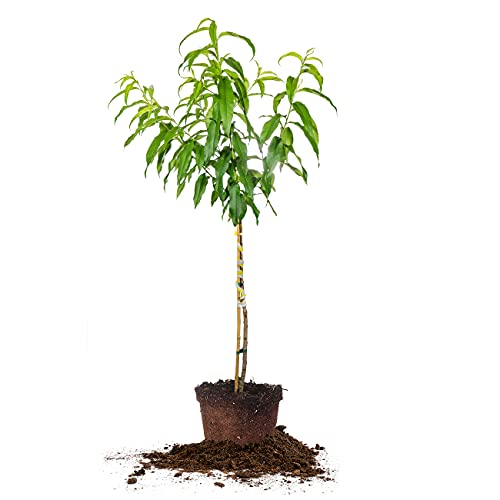
Perfect Plants Flordaking Peach Tree, 4–5 ft
A Breakdown Of The Leading Choices
Fig lovers in Zone 8b often struggle with varieties that die back to the roots during an unusually cold snap, and the Perfect Plants Chicago Hardy Fig solves that problem with a root system designed to bounce back from hard freezes. The 1-gallon size arrives young but vigorous, ready to establish itself in either a sunny landscape bed or a large patio container. You don’t need a second tree for pollination, which removes a common barrier for first-time fig growers.
The bright green, deeply lobed leaves create a Mediterranean feel, and the tree’s leggy branching habit leaves room beneath the canopy for fruit to develop without crowding. For a homeowner with a compact yard, it tends to stay manageable with light annual pruning, though it can stretch taller if left alone.
Everyday Wins
- Self-pollinating, so a single tree produces a full crop without a partner nearby
- Cold-hardy roots recover from deep freezes that would kill many fig varieties
- Shipped with a starter packet of fig fertilizer to shorten the guesswork
- Handles full sun in a container or in-ground planting equally well
Things To Consider
- Cannot be shipped to AZ or CA due to state agricultural restrictions
- Expect two to three growing seasons before a meaningful first harvest
- Young plants may need staking in windy spots until the trunk thickens
Who It Suits Best
Backyard gardeners in the cooler edge of Zone 8 who want a forgiving fig that forgives a missed watering or two.
Where Another Pick Suits Better
The Garden State Bulb Meyer Lemon Tree suits someone wanting citrus instead, and it stays small enough for a sunny window or porch.
Citrus used to feel off-limits in cooler parts of Zone 8, but the Meyer lemon is the variety that bridged that gap, and the Garden State Bulb offering ships a young tree in a 1-gallon nursery pot that transitions easily to a decorative container. Rated for hardiness zones 8 through 11, it tolerates light frost when established and rewards you with fragrant white blossoms before the fruit sets. Indoor placement near a bright window keeps it productive in winter where outdoor temperatures drop too far.
The smoother, slightly orange-tinted skin and sweeter juice of a Meyer lemon (a hybrid of lemon and mandarin) make it the choice for cooks who want something mellower than a supermarket lemon. You may find the tree drops leaves briefly after the shipping transition, which is normal as it adjusts to new light and humidity.
Notable Upsides
- Self-pollinating, so a single plant on a sunny patio can set fruit
- Compact enough to move indoors during cold snaps
- Fragrant spring blooms attract pollinators and smell wonderful
- Disease-resistant rootstock handles common citrus issues gracefully
Honest Caveats
- Cannot ship to FL, AZ, CA, TX, or LA, which excludes many Zone 8 shoppers
- Needs well-drained soil to prevent root rot in heavy pots
- Outdoor placement still requires frost protection in colder Zone 8a pockets
Key Details
Right Fit For
Apartment and patio gardeners who want a real lemon tree they can roll inside when the temperature dips below freezing.
Swap It Out When
The Perfect Plants Flordaking Peach Tree suits someone in a warm, humid Zone 8 corner who wants stone fruit instead of citrus.
Buying fruit trees in bundles makes sense when you’re planting a hedge, a food forest edge, or a row along a fence, and the Mulberry Illinois Everbearing 4-pack lets you do that economically. Hardy across USDA zones 4 through 9, the variety shrugs off Zone 8 summers and produces sweet, seedless, blackberry-like fruits from mid-July into late summer, sometimes stretching into October. The black mulberry-style flavor has a tart edge when fully ripe, which is a plus for jam makers.
For homesteaders running chickens or ducks beneath the canopy, mulberry drop becomes a free ranging feed, and the tree’s quick growth means you won’t wait a decade for shade. Depending on your soil, you may find the four plants establish at slightly different rates during the first season.
The Practical Payoff
- Four-plant bundle lowers the per-tree cost for larger plantings
- Adaptable to a wide range of soil types, including clay
- Extended fruiting window stretches the harvest across months
- Self-fertile, so you don’t need multiple cultivars for pollination
Trade Offs
- Mature height can reach 15 to 20 feet, so it outgrows small lots
- Ripe fruit drops and stains patios, driveways, and shoes
- Four plants may be more than a single backyard needs
Made For
Homesteaders and gardeners with acreage who want a fast-growing, productive tree that doubles as shade and bird habitat.
Look Elsewhere When
The Garden State Bulb Meyer Lemon Tree is a better fit for someone in a smaller lot who wants citrus and a plant that stays under 10 feet.
For Zone 8 gardeners on the colder side of the spectrum, four rooted Chicago Hardy fig plants create an instant mini-orchard that can absorb a hard freeze down to roughly -10°F once established. Like the single Perfect Plants version, this cultivar regrows from the roots after a dieback, so a harsh winter rarely means losing the tree entirely. Buying four at once works well for a fruiting hedge, a gift project, or a small nursery operation.
The plants ship as rooted cuttings or starter plants, so they need attentive watering and a sheltered spot through their first season. You may find the establishment period is the hardest part, since young figs dislike root disturbance more than most fruit trees.
Key Advantages
- Bulk pricing makes sense for hedgerow or windbreak plantings
- Cold tolerance protects against Zone 8a’s deepest snaps
- Self-pollinating, so every plant produces independently
- Edible landscaping use for those who want both beauty and food
Some Limits To Know
- Young starter plants need more attentive watering than established stock
- Shipping restrictions vary by state, so verify before ordering
- First-year growth can be slow while roots build below the surface
Best Suited To
Northern Zone 8 gardeners and small-acreage owners who want multiple figs without paying single-plant retail each time.
Reach For A Different Pick When
The Illinois Everbearing Mulberry Tree is a better match for someone who wants a single specimen tree rather than a multi-plant bundle.
The Perfect Plants Russian Pomegranate earns its place on a Zone 8 list because it pushes the cold-tolerance envelope of a fruit that’s usually associated with Mediterranean climates. The bushy, dense growth habit and orange-red spring blooms give it ornamental value before the fruit even ripens in mid to late September. Self-fertile by design, it skips the need for a second tree, though a partner can boost yields in marginal areas.
The fruit tends to ripen in clusters, and the tree’s smaller mature size (often grown as a shrub) makes it manageable in a mixed border. Not suitable as a house plant, it really wants outdoor sun and well-drained soil to perform.
Strengths Worth Knowing
- Edible fruit arrives relatively early compared to many pomegranate types
- Showy flowers add landscape value well before harvest
- Self-fertile flowering removes the need for a pollinator
- Low overall maintenance once the root system establishes
Points To Note
- Outdoor planting only; will not thrive indoors long-term
- First substantial harvest can take three to four years
- Susceptible to root rot in poorly drained beds
Feature Snapshot
Who Should Grab It
Gardeners who want a dual-purpose plant that pulls double duty as a flowering ornamental and a fall fruit producer.
Not Your Match When
The Garden State Bulb Meyer Lemon Tree suits someone who wants a container-friendly fruit they can move indoors for winter.
Planting one fig tree is one thing, but the Fig Tree Collection ships four plants across three cultivars: Black Mission, Chicago Hardy, and Violette de Bordeaux. That mix lets a Zone 8 gardener compare ripening times, flavor profiles, and cold tolerance in a single backyard experiment. Black Mission brings the classic dark-skin supermarket flavor, Chicago Hardy provides the deep-freeze insurance, and Violette de Bordeaux adds a smaller-stature option for tight spaces.
The bundle approach makes sense for someone building a small home orchard or filling an empty fence line. You may find the four plants arrive at slightly different sizes, since they’re shipped as young rooted stock rather than uniform gallon containers.
The Upside
- Three cultivars in one order create a built-in taste comparison
- Edible landscaping use in both small and large yards
- Self-fertile varieties eliminate the need for additional pollinators
- Useful for sustainable-living gardens focused on food production
What To Weigh
- Variety pack means less predictability in mature size and harvest timing
- Four young plants need careful spacing planning before planting
- Some plants in the mix may establish faster than others
Perfect Match For
Curious beginner fig growers who want to learn the differences between cultivars before committing to a single favorite.
A Better Fit Elsewhere
The Perfect Plants Chicago Hardy Fig Tree (single plant) suits someone who only has room for one tree and wants a known quantity.
The Illinois Everbearing Mulberry ships as a young potted plant, often just 6 to 10 inches tall, which sounds small until you remember how fast mulberries grow. Hardy across zones 3 through 10, it adapts to almost any soil and produces sweet fruit for many weeks in summer. The leaves are large and tropical-looking, and the mature tree can reach 25 to 35 feet if left unpruned, providing genuine yard shade in addition to fruit.
For a homeowner planting a single specimen tree, this one rewards patience with a long productive lifespan. The small starter size means your first summer is mostly root-building, but by year three, expect a meaningful crop.
Reasons It Performs
- Adapts to a wide range of soil types and pH levels
- Long fruiting season extends from early summer into fall
- Self-fertile, so one tree produces a full crop
- Decorative value from heart-shaped leaves and broad canopy
Possible Compromises
- Mature size may overwhelm a small urban lot without regular pruning
- Ripe fruit drops and can stain patios or walkways
- Starter size requires careful first-year watering and weed control
Quick Facts
Who Will Love This
Homeowners with room for a large shade tree who want a low-fuss perennial food source and aren’t worried about fruit drop.
Skip It When
The Barbados Cherry Tree (4 Pack) suits someone wanting a compact, container-friendly fruiting plant that stays much smaller.
The Contender peach has earned its reputation as a cold-tolerant, late-blooming variety that sidesteps the late-spring frosts that wreck earlier-blooming peaches. Hardy in zones 5 through 8, it ships from DAS Farms at 2 to 3 feet tall, double-boxed for safe arrival, and ready to plant directly in the ground. Self-pollinating by nature, a single tree sets a full crop without a partner variety nearby, which simplifies orchard planning.
This is an in-ground tree rather than a container plant, so it needs a permanent site with full sun. Depending on your soil, you may want to amend heavy clay before planting to give the roots a head start.
Benefits That Matter
- Late bloom helps dodge Zone 8a’s unpredictable spring frosts
- Self-pollinating, so a single tree produces a full harvest
- 2-3 foot shipping size transplants quickly with minimal shock
- Double-boxed shipping reduces transit damage to young branches
Worth Noting
- Ground planting only; not suited to container culture long-term
- California orders ship bare root per state regulations
- Deciduous, so the tree arrives leafless in dormant months
Whose Shelf It Belongs On
Traditional orchard planters in northern Zone 8 who want a peach that won’t lose its crop to a surprise late frost.
Consider Something Else When
The Perfect Plants Flordaking Peach Tree suits a Gulf Coast or coastal grower in the warmer end of Zone 8 who needs fewer chill hours.
Barbados cherry (also called acerola) is a tropical plant with a reputation for vitamin C-rich fruit, and this 4-pack makes sense for a food forest, a small nursery, or a tropical-themed edible garden. The trees reach roughly 12 feet at maturity, which qualifies as compact in the fruit tree world, and they bloom with small pinkish-lavender flowers before setting bright red cherries. The fruiting season runs from spring through fall, so a single planting supplies fresh cherries for months.
Best in the warmest part of Zone 8, the Barbados cherry wants full sun and well-drained soil. You may find container planting extends the practical range into slightly cooler pockets of Zone 8, since the pots can move to protected spots during cold snaps.
Where It Delivers
- Four-plant bundle gives plenty of material for a hedge or multiple sites
- Prolific fruiting across a long spring-to-fall window
- Edible cherries packed with vitamin C, useful for fresh eating and preserves
- Compact mature height fits smaller yards and large containers
Practical Considerations
- Tropical origins mean the cooler end of Zone 8 may need winter protection
- Cherries are soft and bruise easily during harvest and transport
- Four plants may be overkill for a single small yard
Built With In Mind
Warm-zone gardeners in Zone 8b or 9 who want a tropical fruit that produces over a long season and stays a manageable size.
Another Choice May Suit
The Garden State Bulb Meyer Lemon Tree is a better fit for someone in cooler Zone 8a who wants citrus that can move indoors.
The Flordaking peach solves a problem that regular peach varieties can’t: it only needs about 350 chill hours, which means it can set fruit in the warmest parts of Zone 8 where winter temperatures rarely drop low. Designed for hardiness zones 8 and 9, the tree produces red-skinned, yellow-fleshed peaches that often ripen in May, beating many other stone fruits to the kitchen. The 4 to 5 foot shipping size is taller than most fruit tree mailings, which shortens the wait for the first meaningful harvest.
Pink spring blooms double as an ornamental feature, and the tree tolerates warm, humid conditions that stress other peach varieties. For most home growers in coastal and Gulf areas, it’s a more reliable choice than a high-chill variety that won’t set fruit without a colder winter.
A Few Highlights
- Low 350 chill-hour requirement suits warm Zone 8 regions
- Tolerates humid environments better than most peaches
- Self-pollinating, so one tree fills the fruit bowl
- Pink spring flowers add ornamental value before fruit arrives
Factors To Consider
- Best suited to zones 8 and 9, so cooler Zone 8a sites may struggle
- Early May ripening concentrates the harvest into a short window
- May require more attentive pest management in humid climates
Technical Highlights
The Right Fit
Gulf Coast and coastal Zone 8 gardeners who struggle to get chill hours for traditional peach varieties.
Where A Sibling Pick Shines
The Contender Peach Tree by DAS Farms is a better match for northern Zone 8 spots that get plenty of winter chill and want a late-blooming variety.
Picking The Right Specimen For Your Yard
Choosing fruit trees for Zone 8 starts with knowing your microclimate, because the zone number only tells you the average minimum temperature, not the summer heat, humidity, or soil type. Gardeners along the Gulf Coast face very different conditions than those in the Pacific Northwest’s Zone 8 pockets, and a variety that thrives in one spot can struggle in the other.
Chill hours matter more than the zone label. Chill hours (the cumulative hours below 45°F during dormancy) drive whether a tree can set fruit the following year. A Flordaking peach handles roughly 350 hours, while a Contender peach needs more, so picking the wrong direction leaves you with a leafy tree that never bears. Match the variety to your actual winter, not just your zone number.
Space planning decides everything else. A mature mulberry at 30 feet needs a different site than a 12-foot Barbados cherry or a 6-foot container citrus. Before ordering, sketch the canopy spread at maturity and check for overhead wires, nearby structures, and root competition from existing trees.
Soil and water make or break the first year. Most fruit trees need well-drained soil and consistent moisture while establishing, even varieties marketed as drought-tolerant. A two-inch layer of organic mulch conserves moisture, keeps roots cool, and reduces weeding during that critical first season.
Key Things To Think Through Before Ordering
Slip Ups Worth Dodging
The most common fruit tree mistake in Zone 8 is buying a high-chill variety like a traditional apple or cherry for a warm-winter area, then watching it grow vigorously but never fruit. Always check the chill-hour requirement against your local average, not the USDA zone alone. Another frequent miss is underestimating mature size, which leads to crowded trees that shade each other and reduce yields.
What The Higher Tier Buys You
Larger, older starter trees cost more but save years of waiting, and premium rootstocks often bring disease resistance or dwarfing traits that cheaper seedlings lack. Paying extra for a 4-5 foot tree instead of a 6-inch liner means your first real harvest comes one to two seasons sooner, which adds up over the life of the tree.
Frequently Asked Questions
What fruit trees grow best in Zone 8? Figs, pomegranates, peaches, plums, persimmons, citrus (in 8b and warmer), and mulberries all perform well across most of Zone 8, with variety selection depending on your specific chill hours and summer humidity.
When should I plant fruit trees in Zone 8? Late winter through early spring is the safest window, giving roots time to establish before summer heat stresses young trees. Fall planting works in the milder parts of Zone 8b where the ground doesn’t freeze deeply.
How many chill hours does Zone 8 get? Zone 8 covers a wide range, from roughly 400 to 900 chill hours depending on location. Coastal and Gulf areas run lower, while inland and northern Zone 8 sites accumulate more.
Can I grow citrus in Zone 8? Yes, in Zone 8b and warmer, citrus like the Meyer lemon can grow outdoors year-round with protection during rare freezes. In cooler Zone 8a pockets, container planting with winter indoor placement is the practical approach.
How long until my fruit tree produces a harvest? Most fruit trees take two to four years from planting to produce a meaningful crop, with figs and some peaches occasionally fruiting sooner. Mulberries and pomegranates often take longer before they hit their stride.
Final Take
Zone 8 rewards gardeners who match variety to microclimate rather than just to the zone label on a map. Fig, pomegranate, peach, mulberry, and citrus each have cultivars bred for this mild-winter range, and the picks above cover the core options for in-ground and container planting. Start with your soil, your chill hours, and your available space, and the right tree becomes a much easier choice.
