

Bermuda grass handles heat and foot traffic like few other lawns can, yet the same dense mat that survives summer stress also traps humidity near the soil. That moisture layer is exactly where brown patch, dollar spot, and leaf spot get their start. A targeted fungicide routine, timed before symptoms spread, keeps your turf thick, green, and ready for weekend barefoot traffic.
Your Options, Compared

Fertilome F-Stop Fungicide Granules 10 lb

Fertilome Liquid Systemic Fungicide II RTS 32oz
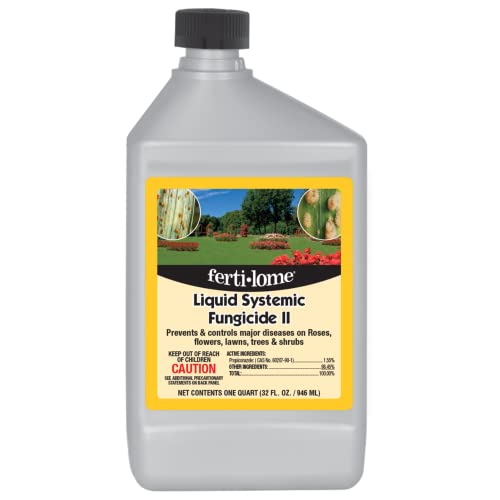
Fertilome Liquid Systemic Fungicide II Concentrate 32 oz

Fertilome F-Stop Fungicide Granules Eagle Systemic 20 lb
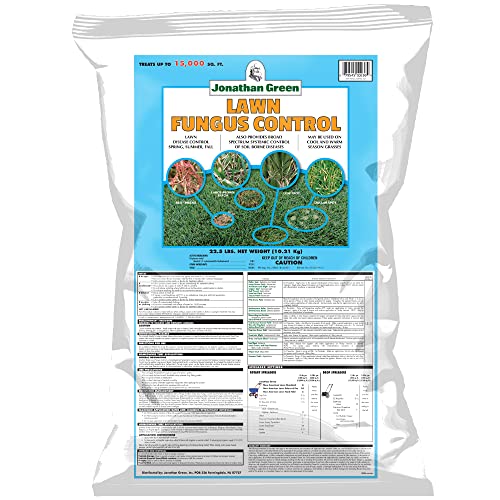
Jonathan Green Lawn Fungus Control 15,000 Sq Ft

Earth’s Ally Disease Control Fungicide Concentrate 32 Oz
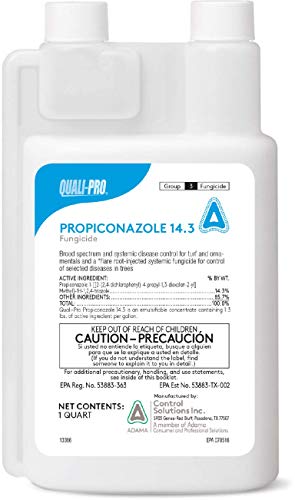
Quali-Pro Propiconazole 14.4 Fungicide 32oz

Root 98 Warehouse Bio Fungicide Organic 8 oz
The Details Behind The Selections
Granular fungicides earn their keep on Bermuda lawns because they spread evenly with a standard broadcast spreader and stay put through irrigation. The Fertilome (12770) F-Stop formula works systemically, meaning the active ingredient moves into the plant rather than sitting only on the leaf surface, which gives it a fighting chance against diseases already taking hold below the canopy.
For most backyards under 2,500 square feet, this 10-pound bag lines up with a single application cycle. The curative angle matters if brown patch has already shown up; the protective angle matters if you’re trying to stay ahead of it during the humid shoulder months when Bermuda is most vulnerable.
Where It Helps
- Granular format spreads uniformly with a push spreader, avoiding the streaks and skips common with cheap spray bottles.
- Systemic action (absorbed into plant tissue) tackles both active outbreaks and the early infections you cannot yet see.
- Covers over 15 labeled turf diseases, giving you one product for brown patch, dollar spot, and leaf spot combined.
- Single application holds for up to four weeks, cutting down on repeat trips with the spreader.
Things To Consider
- Application must go on dry turf, then be watered in, so timing around your irrigation schedule matters.
- The curative power depends on catching the disease early, and heavily infected patches may still need a follow-up treatment.
Key Specs
Made For
Homeowners with a small to mid-size Bermuda lawn who prefer a granular, spreader-based routine over mixing liquids.
Skip It When
Larger Bermuda properties get more mileage from the Fertilome (10768) F-Stop 20 lb bag, since it doubles the per-bag coverage and cuts down on repurchasing.
Liquid fungicides reach leaf surfaces faster than granules, and a ready-to-spray (RTS) bottle removes every barrier between you and treatment. The Fertilome (11380) Liquid Systemic Fungicide II connects to a standard garden hose, so you’re spraying within minutes of spotting the first yellow ring on your Bermuda.
For homeowners who don’t own a spreader, or who want one product they can also use on roses, flowers, and ornamentals, the multi-surface label is a quiet bonus. Early-season application lines up with Bermuda’s green-up window, and the systemic chemistry continues protecting new growth as the canopy thickens.
Everyday Wins
- Hose-end ready-to-spray bottle means no measuring, no mixing, no extra equipment.
- Labeled for turf, flowers, and ornamentals, so the same bottle handles the whole yard.
- Targets take-all patch, brown patch, dollar spot, and leaf spot in one pass.
- Systemic movement reaches new growth that emerges after treatment.
Worth Noting
- Coverage is more limited than a granular bag, so very large Bermuda lawns may need multiple refills.
- Spray drift can hit desirable plants, so a calm morning and steady hand matter during application.
Right Fit For
First-time Bermuda caretakers who want a no-mix, hose-end bottle for small patches and early-season prevention.
Consider Something Else When
Property owners covering more than a few thousand square feet will save time with the Fertilome (11378) Liquid Systemic Fungicide II Concentrate, since you control the dilution for larger tanks.
Concentrates reward homeowners who already own a pump or backpack sprayer with lower per-application cost and more control. The Fertilome (11378) Liquid Systemic Fungicide II Concentrate mixes readily with water, so you can dial the dilution for spot treatments or full Bermuda coverage without buying multiple products.
Compared to the ready-to-spray sibling above, this version assumes you’re comfortable measuring and tank-mixing. The trade-off is real economy: a 32-ounce bottle stretches across multiple treatments on larger Bermuda lawns, which adds up fast over a full growing season.
What Pays Off
- Lower per-use cost than ready-to-spray bottles once you own a tank sprayer.
- Flexible dilution lets you treat one stubborn patch or the full lawn with the same bottle.
- Same broad-spectrum disease label as the RTS version, including take-all patch and brown patch.
Trade Offs
- Requires a separate sprayer and basic measuring discipline to avoid over- or under-dosing.
- Mixing must happen on treatment day; pre-mixed solution loses potency if stored.
- Storage in a stable, frost-free spot extends bottle life but adds a small chore to your routine.
Feature Snapshot
Best Suited To
Mid-size to large Bermuda lawns where the owner already runs a sprayer and wants lower per-treatment cost.
Another Choice May Suit
The Earth’s Ally Disease Control Concentrate is a gentler citric acid alternative for homeowners who prefer to avoid synthetic chemistry around kids and pets.
When a Bermuda lawn stretches across several thousand square feet, small bags turn into a repeat shopping trip. The Fertilome (10768) F-Stop Fungicide Granules Eagle Systemic doubles down on the format with a 20-pound bag, the same systemic action as the 10-pound version, and the same multi-disease coverage.
The Eagle branding points to the active ingredient (myclobutanil), which has a long track record on turfgrass and ornamental diseases. You may find the larger format more efficient if your spreader holds a meaningful volume, and you will not be tossing plastic as often as you would with smaller refill bags.
Useful Strengths
- Bigger 20 lb bag covers larger Bermuda areas in a single pass.
- Systemic protection from myclobutanil continues working inside the plant for up to four weeks.
- Same 15-plus disease label, simplifying a multi-disease Bermuda care plan.
- Granular spreader application reduces drift onto flower beds versus spray bottles.
Room For Improvement
- Bulk format is awkward to lift for one-handed use, so plan a helper or a wheeled spreader.
- Storage requires a dry, sealed container to prevent clumping between applications.
Who It Suits Best
Homeowners with multi-thousand-square-foot Bermuda lawns who want fewer bag changes and a granular routine.
Look Elsewhere When
The Jonathan Green Lawn Fungus Control fits Bermuda owners fighting recurring brown patch and dollar spot who want a granular product labeled for over 20 diseases.
Some Bermuda lawns fight fungus every summer, no matter the weather. The Jonathan Green Lawn Fungus Control is a broad-spectrum granular designed to interrupt that pattern, covering more than 20 soil-borne and foliar diseases in a single bag. The 15,000-square-foot coverage range targets larger properties where a single spring and fall pass is the realistic goal.
Where the Fertilome granule focus is systemic absorption, Jonathan Green leans into broad-spectrum prevention plus treatment. That balance suits Bermuda owners who see brown patch show up in the same spots year after year and want a product that handles the rotation of pathogens those lawns attract.
The Helpful Details
- Over 20 disease targets include brown patch, leaf spot, red thread, dollar spot, and pink snow mold.
- Granular format fits standard spreaders for fast, even Bermuda coverage.
- Functions as both preventative and active treatment on established outbreaks.
Honest Caveats
- Coverage numbers assume a single application rate, so heavy infestations may need a follow-up pass.
Quick Facts
Perfect Match For
Bermuda owners who battle the same diseases every season and want a granular product that handles multiple pathogens at once.
A Better Fit Elsewhere
Small Bermuda lawns under 2,500 square feet can save on product waste with the Fertilome (12770) F-Stop 10 lb bag instead of opening a 15,000-square-foot jug.
Bermuda lawns where kids and dogs roll around in the grass call for a different chemistry conversation. The Earth’s Ally Disease Control Concentrate is built around citric acid, a familiar food-grade ingredient, which sidesteps the harsher active ingredients found in synthetic options. The concentrate format means you control the dilution for spot treatment or full lawn passes.
Realistic expectation matters here: citric acid is gentler on the lawn, easier on curious pets, and works on common foliar issues like powdery mildew, downy mildew, blight, canker, black spot, and leaf spot. The honest read is that it shines for low-pressure prevention and early intervention rather than rescuing a Bermuda lawn already overrun with brown patch.
Points In Its Favor
- Citric acid base reduces worry about kids and pets re-entering the yard after treatment.
- Targets the foliar diseases that show up on Bermuda during humid stretches, including powdery mildew and leaf spot.
- Concentrate bottle stretches across multiple treatments when diluted properly.
Points To Note
- May struggle against aggressive brown patch or take-all root infections compared to synthetic chemistry.
- Bottle must be stored away from direct sunlight to preserve the citric acid activity.
Whose Shelf It Belongs On
Family yards, pet households, and Bermuda owners who want a softer, naturally derived approach to foliar fungus control.
Reach For A Different Pick When
The Quali-Pro Propiconazole 14.4 is the stronger option when brown patch is already visible across large Bermuda sections and you need a professional-strength synthetic.
Propiconazole is a workhorse active ingredient in commercial turf management, and the Quali-Pro 83013366 delivers it in a microemulsion (an extra-fine liquid mix that holds together in the spray tank) formulation. That matters for Bermuda caretakers who tank-mix with other products, since better tank stability means fewer clogs and more uniform coverage on the leaf surface.
The locally systemic action (the active ingredient penetrates the leaf and moves short distances within the plant) keeps protection active inside the plant for an extended window, which is why golf courses and sports turf managers reach for propiconazole formulations. The honest read is that this is overkill for a small backyard but earns its place on Bermuda properties that need a serious, broad-spectrum tool.
A Favorable Mix
- Microemulsion formulation improves tank stability when mixing with other lawn care products.
- Broad-spectrum disease control for both warm and cool season turfgrasses, Bermuda included.
- Locally systemic mode of action delivers long-lasting protection inside the plant.
- Lower-odor profile compared to older emulsifiable concentrate formulations.
Softer Spots
- Concentrate demands careful measurement and proper PPE during mixing.
- Bulk 32 oz bottle is built for repeated use, so a single small treatment leaves significant leftover product.
- Sprayer equipment must be cleaned thoroughly after use to avoid residue buildup.
Technical Sheet
Who Will Love This
Seasoned Bermuda caretakers and turf hobbyists who already run tank sprayers and want a commercial-strength option.
Where A Sibling Pick Shines
The Fertilome Liquid Systemic Fungicide II Concentrate is the more approachable option if you’d rather skip measuring and PPE routines.
Biological fungicides take a different angle: instead of killing fungus on contact, they crowd out bad microbes with beneficial bacteria. The Root 98 Warehouse Garden Friendly Bio Fungicide Organic centers on Bacillus amyloliquefaciens, a soil-friendly bacterium that colonizes the root zone and leaf surface, leaving less room for disease to take hold.
The 8-ounce bottle is small, which keeps it approachable for hobbyist gardeners and Bermuda owners dabbling in organic lawn care. It doubles as a bactericide (a product that controls bacterial infections on plants), giving you a single bottle for bacterial spot on vegetables and fungal issues on turf.
What Earns Its Place
- Biological approach aligns with organic gardening practices on Bermuda lawns.
- Doubles as a bactericide, expanding use to vegetables, fruit trees, and ornamentals.
- Small bottle is approachable for first-time users testing biological lawn care.
Possible Compromises
- Works slowly compared to synthetic chemistry, so it suits prevention more than rescue treatments.
- Small 8 oz bottle means multiple purchases for large Bermuda coverage.
- Performance depends on consistent application timing, which adds a small calendar commitment.
Built With In Mind
Organic gardening enthusiasts and Bermuda caretakers curious about biological lawn care without synthetic chemistry.
Swap It Out When
The Earth’s Ally Disease Control Concentrate is a simpler organic-friendly choice if the citric acid route and a larger bottle fit your routine better.
What Matters Most Before Choosing Fungicides For Bermuda Grass
Form And Coverage Footprint
Granular products spread evenly through a broadcast or drop spreader and stay put under irrigation, while liquids reach the leaf canopy faster and cover ornamentals at the same time. Bermuda lawns above 2,500 square feet usually favor granules for efficiency; smaller lawns or mixed plantings lean toward a hose-end or concentrate bottle. Pick the format that matches the gear you already own and the speed you want on a treatment day.
Disease Spectrum And Active Ingredient
The five most common Bermuda diseases (brown patch, dollar spot, leaf spot, take-all patch, and spring dead spot) each respond to different active ingredients. Products covering 15 to 20-plus diseases give you one bottle for the full season, while single-pathogen formulas work when you already know what you are fighting. Look at the label disease list before you buy, not the marketing copy.
Timing And Reapplication Window
Most fungicides protect for two to four weeks per pass, so the calendar matters as much as the chemistry. A product with a four-week window cuts your treatment days in half across a humid summer. Plan applications around Bermuda’s growth cycle rather than waiting for visible damage, since prevention is always easier than cure on a dense, low-cut lawn.
Tolerance For Synthetic Chemistry
Households with pets and kids often prefer citric acid or biological options, even if the disease suppression is gentler. Synthetic propiconazole and myclobutanil formulas deliver stronger knockdown but require more careful handling during mixing and a re-entry pause on treated grass. The right pick depends on which trade-off your household actually lives with.
Key Considerations Across These Picks
Pitfalls Shoppers Hit
Buying the largest bag “for value” is a common Bermuda owner misstep, since opened granules lose potency faster in humid garages than a smaller, sealed container. Skipping the disease label is the second trap: a great price on a five-disease bottle does nothing when your lawn is fighting take-all patch. Match the product to the disease, not the size of the bag.
Where The Extra Money Goes
Stepping up to a microemulsion formulation or a biological active ingredient brings measurable benefits: better tank stability, lower odor, and softer chemistry for family yards. The extra cost reflects the R&D behind those delivery systems rather than a stronger pour of the same active. For Bermuda lawns that face disease pressure every summer, that upgrade usually pays for itself in fewer repeat treatments and less collateral damage to nearby ornamentals.
Frequently Asked Questions
When is the best time to apply fungicide to Bermuda grass?
The best window is early in the growing season, before humidity-driven diseases take hold, with follow-up applications timed every two to four weeks based on the product’s protection window. Treating at the first sign of discoloration beats waiting for a full outbreak, since systemic products work best on early-stage infections.
Can you use fungicide and fertilizer on Bermuda grass at the same time?
Many fungicides can be tank-mixed with compatible fertilizers, but mixing without checking both labels risks reduced efficacy or leaf burn. Apply them separately when in doubt, and always water in granular products according to the label directions.
How long does fungicide take to work on Bermuda grass?
Systemic fungicides typically show visible improvement within one to two weeks, while contact or biological products may take longer. Repeat applications on the label’s protection window keep the protection consistent through high-pressure stretches.
Are organic fungicides effective on Bermuda grass?
Organic options like citric acid and Bacillus-based biofungicides work well for prevention and early intervention, though severe brown patch or take-all patch may still require synthetic chemistry. Match the product to the disease pressure your lawn actually faces.
How often should you rotate fungicides on Bermuda grass?
Rotating between active ingredients with different modes of action every season or two reduces the risk of pathogen resistance building up in the soil. Using the same chemistry year after year gives diseases a chance to adapt, especially in lawns that see recurring outbreaks.
Bottom Line
Healthy Bermuda grass comes down to timing, format, and matching the active ingredient to the disease you are actually fighting. Small lawns do well with granular 10-pound bags or ready-to-spray bottles, while larger properties benefit from concentrate or bulk options. Pick the product that matches your gear, your disease pressure, and your household’s tolerance for synthetic chemistry, and stick to the label’s reapplication window for the cleanest, greenest result.
