

Boxwood blight spreads quietly through landscapes, turning sculpted hedges into defoliated skeletons within a single season. Once Calonectria pseudonaviculata or its cousin C. henricotiae shows up on your shrubs, you need a treatment plan that combines prevention with active control. The six products below cover everything from organic biological options to heavy-duty synthetic fungicides built for serious outbreaks. Pick based on how bad your infestation looks, whether you grow edibles nearby, and how much coverage your boxwoods need.
A Quick View Of The Lineup

Fertilome Tree & Shrub Drench Systemic Insecticide 1 gal
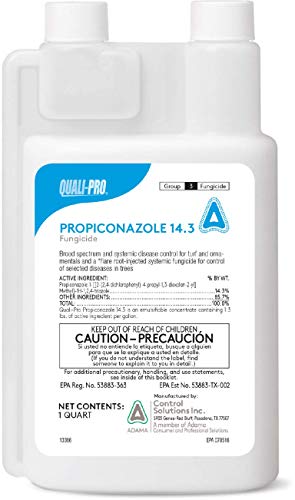
Quali-Pro Propiconazole 14.3 Fungicide 32oz

Root 98 Warehouse Garden Friendly Bio Fungicide 8 oz

Bonide Fung-onil Multi-Purpose Fungicide 16 oz

Atticus Gunner 14.3 MEC Propiconazole Fungicide 32oz

TOPBUXUS Boxwood Restore & Protect Mix
More Details On Our Top Picks
Stressed boxwoods invite every passing fungal spore, and the Fertilome Tree & Shrub Drench works on the underlying insect pressure that often weakens shrubs before blight takes hold. As a soil drench, the active ingredient moves up through the root system and into the foliage, giving you up to 12 months of protection from pests like aphids and psyllids that can damage new growth and open wounds for infection.
You pour it around the root zone once a year in early spring or early fall, then let irrigation or rain pull it into the soil. Boxwood keepers dealing with a chronic pest problem alongside fungal symptoms will find this drench takes one variable off the plate. It pairs well with a contact fungicide like Bonide Fung-onil from this list, but the drench alone does not treat active boxwood blight.
Strong Points
- One application per year keeps insect pressure low for a full season
- Liquid concentrate mixes easily and pours cleanly around the drip line
- Formulated for outdoor residential trees and shrubs, not commercial farms
- Targets pests like aphids and psyllids that weaken new growth
- Reduces the need for repeated foliar insecticide sprays
Things To Consider
- Designed for insects, not fungi, so it won’t treat active blight on its own
- Best applied in early spring or early fall, so timing matters for first-year users
- A one-gallon jug is heavy to carry and store in small garden sheds
Who It Suits Best
Homeowners whose boxwoods battle recurring insect damage alongside fungal stress benefit most, especially those who want one annual soil treatment instead of repeated foliar sprays.
Not Your Match When
Reach for the TOPBUXUS Boxwood Restore & Protect Mix instead, since that pick is built specifically for boxwood health and blight defense.
Propiconazole is one of the few synthetic fungicides that has real published research behind it for boxwood blight suppression, and Quali-Pro’s 14.3 formulation delivers that active ingredient in a concentrated microemulsion (a fine liquid mixture that stays blended longer in the tank). The locally systemic mode of action means the chemical moves into the leaf tissue rather than just sitting on the surface, which gives longer protection between sprays.
Compared to the insect-focused Fertilome drench above, this is a true fungicide, so it belongs in a rotation if your boxwoods already show blight lesions or defoliation. Mix it into a pump sprayer, coat the foliage to the point of runoff, and reapply on the label schedule. For most home landscapes, the 32-ounce bottle covers a season of treatments on a moderate hedge.
Positive Takeaways
- Broad-spectrum disease control suited to ornamentals, shrubs, and turf
- Microemulsion concentrate holds its mix longer and smells less than older EC formulas
- Systemic uptake means rain shortly after spraying is less of a concern
- Pairs with most other fungicides in a tank mix for resistance management
Trade Offs
- Synthetic chemistry, so reentry intervals and PPE (personal protective equipment like gloves and a mask) matter during application
- Overuse on the same site can push fungal resistance, so rotating with a different mode of action is wise
- You’ll need a separate pump sprayer, since the concentrate must be diluted before use
Feature Snapshot
Made For
Homeowners with established landscape plantings who want a research-backed synthetic fungicide and don’t mind reading a label carefully before mixing.
Look Elsewhere When
Choose the Root 98 Warehouse Garden Friendly Bio Fungicide if you’d rather avoid synthetics around edibles, kids, or pets.
For gardeners who refuse to spray synthetics anywhere near the vegetable patch, Root 98 Warehouse’s bio fungicide uses Bacillus amyloliquefaciens strain D747, a beneficial bacterium that crowds out fungal pathogens on leaf surfaces. It works as both a biofungicide and a bactericide, so it covers a wider range of common plant diseases than most biological options.
You can apply it to home gardens, vegetables, ornamental and fruit trees, shrubs, lawns, flowers, and potted plants without worrying about residue. Against boxwood blight specifically, results tend to be strongest as a preventive spray, since biologicals work best before infection takes hold. The 8-ounce bottle is a good starter size for someone testing biologicals on a small hedge.
The Case For It
- Listed for organic use, so it fits gardens with edibles nearby
- One product handles fungal and bacterial diseases across many plant types
- Safe to use on bedding plants, potted ornamentals, and lawns in the same yard
Honest Caveats
- Works best as a preventive rather than a curative on established blight
- The 8-ounce bottle runs out quickly on a long hedge row
- Storage matters: biological products lose potency if left in a hot garage
Right Fit For
Garden keepers who grow food alongside ornamentals and want a soft option that won’t disrupt pollinator or pet routines.
A Better Fit Elsewhere
Pick the Quali-Pro Propiconazole 14.3 instead when boxwood blight is already visible and you need a stronger systemic treatment.
Chlorothalonil has decades of field use behind it, and Bonide packs that active ingredient into a 16-ounce concentrate that covers a long list of ornamentals. Unlike the propiconazole-based picks above, Fung-onil works as a contact protectant, meaning it forms a barrier on the leaf surface rather than moving into plant tissue. That makes timing and thorough coverage the keys to success.
You’ll get broad coverage of leaf spot, rust, blight, mildew, scab, and mold on boxwoods, roses, and other landscape shrubs from the same bottle. The trade-off is reapplication, since contact fungicides wash off in rain and break down in sunlight. For a gardener managing several different plant diseases across the yard, having one jug that handles them all is genuinely convenient.
A Few Highlights
- Broad-spectrum control covers many common fungal diseases on a single shelf
- Concentrate format stretches a small bottle into multiple treatments
- Works on ornamentals beyond boxwoods, so one product handles the whole bed
- Contact action makes it a good rotation partner for systemic fungicides
Points To Note
- Contact-only mode means you’ll reapply more often than systemic options
- Thorough coverage is essential, since missed spots stay unprotected
- You’ll want to avoid spraying on the hottest part of the day to prevent leaf burn
Quick Facts
Best Suited To
Multi-plant gardeners who want a single concentrate that handles roses, ornamentals, and boxwoods in the same rotation.
Skip It When
Try the Atticus Gunner 14.3 MEC Propiconazole instead, since that one gives longer residual control on a heavy boxwood rotation.
Gunner 14.3 MEC uses the same active ingredient as the Quali-Pro product above, but the microemulsion concentrate (MEC) here is built around very small particle sizes that improve tank stability and leaf coverage. For boxwoods in active treatment mode, that translates into fewer clogged nozzles and more uniform spray patterns across dense foliage.
The 32-ounce size is geared toward repeat seasonal spraying, so larger properties or commercial landscape work gets the best value. Coverage extends to turf as well as ornamentals, which is helpful if dollar spot or brown patch show up in the lawn at the same time your boxwoods need attention. Compared to the Bonide Fung-onil, this is a synthetic systemic, so the timing and rotation rules apply just the same.
Useful Strengths
- Microemulsion particles mix smoothly and cling to leaf surfaces
- Covers more than 20 listed plant fungi on the label
- Larger 32-ounce size fits repeat seasonal use on bigger hedges
- Doubles as a turf fungicide for lawn and landscape in one bottle
Things To Weigh
- Synthetic systemic, so rotating modes of action prevents resistance build-up
- The 32-ounce bottle takes up more storage space than smaller concentrates
Feature Rundown
Who Will Love This
Homeowners and small-scale landscapers treating a sizable hedge or several boxwood rows through the season appreciate the larger bottle and smoother mixing.
Swap It Out When
Reach for the Bonide Fung-onil Multi-Purpose Fungicide if you want a contact fungicide to rotate with a synthetic systemic in your program.
TOPBUXUS built this mix specifically for boxwoods, and the formulation differs from the other picks on the list in one important way: it’s a foliar fertilizer, not a synthetic fungicide. The 8-0-10 NPK ratio (nitrogen-phosphorus-potassium, the three numbers on any fertilizer label) with secondary nutrients feeds the plant from the leaf down, helping boxwoods recover vigor so they can naturally fight off infection.
You dissolve one tablet in a quart of water, let it activate for about ten minutes, and spray the foliage for full coverage. Treating the entire hedge at once matters here, since the goal is uniform plant strength rather than spot-curing a lesion. For a homeowner whose boxwoods are stressed but not yet decimated, this boxwood-specific nutrition often pairs well with one of the synthetic fungicides above as a long-term health program.
Practical Pluses
- Formulated exclusively for boxwood nutrition and blight resilience
- Tablet format dissolves cleanly without measuring powders
- Nutrients derive from natural sources, so it fits a gentler treatment philosophy
- Foliar feeding reaches leaves directly for faster visible greening
A Few Limitations
- Not a fungicide, so it won’t replace chemical control in a heavy outbreak
- Tablet prep adds a step compared to a ready-to-pour liquid concentrate
Feature Snapshot
Perfect Match For
Boxwood-focused homeowners who want a targeted foliar feed that supports the plant’s own defenses, ideally alongside a rotation fungicide during active outbreaks.
Where A Sibling Pick Shines
Pick the Quali-Pro Propiconazole 14.3 when active blight lesions demand a stronger synthetic treatment in the same season.
Picking The Right Fungicide For Your Boxwoods
Choosing a product for boxwood blight means matching the chemistry to your yard, your tolerance for synthetics, and how far the infection has spread. Start by diagnosing honestly, then build a plan around the answer.
Reading The Active Ingredient First
The active ingredient on the label tells you almost everything about how a fungicide will behave. Propiconazole, found in the Quali-Pro and Atticus picks, is a synthetic systemic (a chemical that the plant absorbs and moves through its tissues) that research has shown suppressive against boxwood blight, and it works best in a rotation with another mode of action. Chlorothalonil in Bonide Fung-onil is a contact protectant, meaning it sits on the leaf surface and needs thorough coverage plus repeat applications. Bacillus-based products like the Root 98 bio fungicide work biologically, which is gentler but slower, and usually shines as a preventive. TOPBUXUS shifts the conversation entirely toward nutrition rather than chemistry, since it feeds the plant so it can defend itself.
Match The Product To Your Yard Layout
A few mature boxwoods in a front bed need a different plan than a 50-foot hedge row. For small plantings, the 8-ounce bio fungicide bottle or 16-ounce Bonide concentrate covers the season without waste. Larger hedges benefit from the 32-ounce Atticus or Quali-Pro bottles, since you’ll be mixing full pump sprayers repeatedly through the growing season. Properties with both turf and shrubs can stretch a propiconazole product across both uses, while edible gardens next to boxwoods push the choice toward the Root 98 biological or TOPBUXUS foliar feed.
Rotation Matters More Than Any Single Bottle
Boxwood blight pathogens can develop resistance when one mode of action (the specific way a chemical kills or suppresses a fungus) is used exclusively. The standard practice in landscape IPM (Integrated Pest Management, a strategy that combines multiple control methods to reduce chemical reliance) is to rotate at least two fungicides with different modes of action across the season, often pairing a contact like chlorothalonil with a systemic like propiconazole. Add the TOPBUXUS foliar feed to that rotation, and the boxwoods get nutrition support between chemical treatments. The Fertilome drench belongs in a separate slot, since it targets insects rather than fungi.
Honest Trade Offs To Accept
Synthetic fungicides work faster, but they require PPE, reentry intervals (the waiting period before people or pets can safely enter a treated area), and careful mixing. Biologicals and foliar feeds are gentler but demand preventive timing, which means starting before symptoms peak. The honest read is that no single bottle on this list solves boxwood blight alone; the cure is a season-long program built around rotation, sanitation, and plant health.
What To Watch For Before You Buy
Wrong Turns To Avoid
The biggest misstep is grabbing a general-purpose fungicide that doesn’t list boxwood blight on its label, since not every broad-spectrum product has data behind it for this specific pathogen. Another common trap is treating only the visibly affected shrubs while ignoring nearby boxwoods that may already be carrying spores without showing symptoms. A third mistake is skipping PPE with synthetic concentrates, even on a calm day in your own yard, because inhalation and skin contact add up across multiple applications.
Where The Extra Money Goes
Higher-tier picks in this category earn their cost through concentration, coverage, and tank stability. The Atticus and Quali-Pro propiconazole bottles cost more than basic chlorothalonil because the microemulsion formulation mixes cleaner, smells less, and clings to foliage more reliably, which means fewer re-treatments per season. TOPBUXUS costs more than a generic boxwood fertilizer because the nutrient profile is tuned specifically to boxwood foliage health rather than a one-size-fits-all NPK blend. For homeowners with a long hedge row or recurring blight pressure, the upgrade typically pays for itself in saved time and cleaner application.
Frequently Asked Questions
How Often Should I Spray Boxwoods For Blight?
Most fungicide labels call for repeat applications every 7 to 14 days during active growth, especially after rain. Stop spraying once new growth hardens off in early summer and resume in fall if conditions favor disease.
Can I Mix Biological And Synthetic Fungicides Together?
Tank-mixing biologicals with synthetics usually kills the beneficial bacteria before they can colonize the leaf. Apply biologicals like Root 98 on a separate day, ideally a few days apart from any synthetic treatment.
Is It Safe To Use These Products Around Pets And Kids?
Biologicals and foliar fertilizers carry the lowest risk, and most labels allow reentry once the spray dries. Synthetic concentrates require PPE during mixing and a reentry interval, so keep pets and children off treated boxwoods until the foliage is fully dry.
Do I Need To Prune Out Infected Branches First?
Yes, sanitation comes before spraying. Remove and bag any branches with dark streaks or dropped leaves, then sterilize your pruners between cuts with a dilute bleach or alcohol solution to avoid spreading spores.
Will Boxwood Blight Come Back Next Year?
Spores can overwinter in fallen leaves and soil, so recurrence is common without sanitation and a preventive spray program. A rotation of contact and systemic fungicides each spring, plus annual TOPBUXUS foliar feed, gives the best shot at keeping it from rebounding.
Closing Remarks
Boxwood blight is stubborn, but the six picks above give you real options across organic, synthetic, and nutritional approaches. Start with sanitation, choose the chemistry that fits your comfort level, and stick to a rotation through the season. Your hedges will thank you for the consistency.
