

A brown patch creeping through the lawn, dollar spot dotting the fescue, or rust freckling the blades of St. Augustine after a wet week: fungal disease shows up fast, and it punishes neglect. Choosing the right product comes down to grass type, disease pressure, and how you prefer to apply. The list below covers granular spreaders, hose-end sprays, and concentrated liquids for everything from small city lawns to sprawling turf. Each pick earns its slot for a clear, specific reason.
A Side-By-Side Look

Fertilome F-Stop Fungicide Granules 10 lb
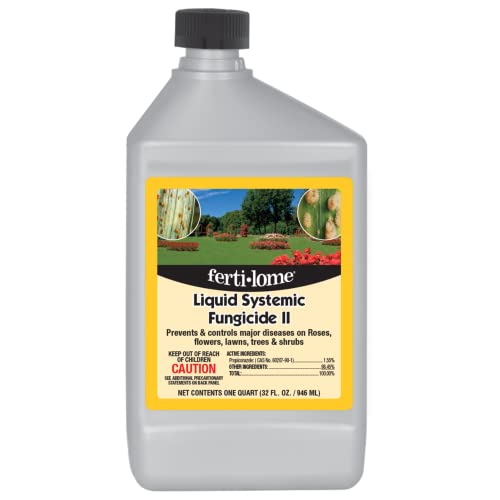
Fertilome Liquid Systemic Fungicide II 32 oz

Fertilome F-Stop Eagle Systemic 20 lb

Fertilome F-Stop Lawn and Garden RTS 32 oz
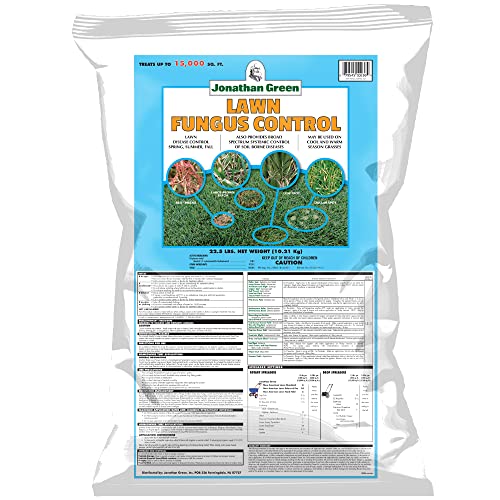
Jonathan Green Lawn Fungus Control 15,000 Sq Ft
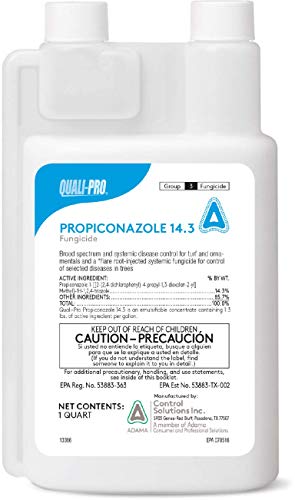
Quali-Pro Propiconazole 14.4 Fungicide 32 oz

Select Source Propiconazole 14.3 Pint Fungicide

Scotts Turf Builder Healthy Plus 13.70 lb

Atticus Gunner 14.3 MEC Propiconazole 32 oz
A Breakdown Of The Leading Choices
For most cool-season lawns, granular fungicides offer a forgiving, broadcast-friendly way to protect turf. The Fertilome F-Stop Granules 10 lb bag is built around a systemic active ingredient (a chemistry that moves inside the plant rather than sitting only on the surface) that fights disease from within the blade.
Spreader application means no mixing, no measuring cups, and a fairly even pass over a typical suburban yard. For homeowners who treat brown patch or dollar spot as a recurring spring headache, this format tends to fit routine maintenance schedules well.
What Makes Sense
- Granular format flows through standard rotary or drop spreaders for even coverage.
- Systemic action keeps working inside the plant after watering-in, so rain shortly after application is less of a worry.
- One application typically holds protection for roughly four weeks, which suits monthly treatment calendars.
- Covers listed disease range that includes the usual suspects on cool-season turf.
Honest Caveats
- Granules need watering-in to activate, so dry stretches without irrigation reduce effectiveness.
- Bag weight adds up for anyone carrying product up a hill or across a large lot; a wheeled spreader helps.
Key Specs
Whose Lawn It Belongs On
Cool-season turf owners managing brown patch on a mid-size yard benefit most from this routine-friendly format.
Where A Sibling Pick Suits Better
For yards with widespread disease and a need for higher volume, the Fertilome F-Stop Eagle Systemic 20 lb bag covers more ground per purchase.
Liquids shine where granulars cannot reach: rose bushes, ornamental shrubs, and tight lawn edges. The Fertilome Liquid Systemic Fungicide II 32 oz concentrate mixes with water and sprays through a standard pump or backpack sprayer.
For households managing roses, flowers, and turf in the same weekend, the multi-plant label list cuts down on bottle clutter. It works as a preventive shield, so early-season application tends to pay off most.
A Few Highlights
- Concentrate format scales with sprayer size, from a 1-gallon handheld to a 4-gallon backpack.
- Systemic movement means new growth stays protected after the initial spray dries.
- One bottle covers roses, flowers, trees, and lawn areas, simplifying the shed shelf.
- Mix-and-spray process lets you treat precise problem patches without waste.
Small Caveats
- Requires a separate sprayer purchase if the household does not already own one.
- Mixing ratios must be measured carefully; over-concentration risks leaf burn on sensitive ornamentals.
- Concentrate bottles need cool, dark storage between seasons.
Right Fit For
Mixed-yard gardeners treating roses, ornamentals, and lawn edges in the same routine benefit from this multi-plant label.
Skip It When
For pure broadcast lawn treatment without mixing, the Fertilome F-Stop Granules 10 lb is a faster choice.
Big lawns chew through product fast, and the 20-pound bag exists for that exact reason. The Fertilome F-Stop Eagle Systemic 20 lb doubles the volume of the smaller granular pick while keeping the same systemic active ingredient and four-week protection window.
For properties over half an acre, running out mid-application is the kind of headache this format prevents. The trade-off is storage: a sealed container in a dry shed is essentially required.
Reasons It Performs
- Higher bag volume reduces mid-treatment refill stops on larger properties.
- Same systemic chemistry as the 10-pound version, so coverage behavior stays consistent.
- Granular format suits broadcast spreaders for fast, even passes.
Some Limits To Know
- 20-pound bags are heavy to lift and awkward to pour, especially for shorter users.
- Needs dry indoor storage; moisture clumps the granules and ruins spreader flow.
- Overkill for lawns under 5,000 square feet where a smaller bag is easier to finish.
Key Specs
Made For
Owners of large lawns over half an acre who prefer fewer refill stops during treatment sessions.
Not Your Match When
For small city lawns, the Fertilome F-Stop Granules 10 lb is easier to store and finish before the season ends.
Ready-to-spray bottles remove the mixing step entirely. The Fertilome F-Stop Lawn and Garden RTS 32 oz arrives pre-diluted with a trigger or wand sprayer built in, so point-and-shoot is the entire application process.
For first-timers or anyone who treats a small patch rather than a full lawn, this format lowers the entry barrier considerably. Black spot on roses, blights on shrubs, and small lawn outbreaks all fall under its label list.
Positive Takeaways
- Pre-mixed bottle eliminates measuring and separate sprayer equipment.
- Wand or trigger head reaches under leaves where fungal spores settle.
- Covers ornamentals, fruits, vegetables, and lawn patches in one bottle.
Points To Keep In Mind
- 32 oz runs out fast on anything beyond a few hundred square feet, so larger yards need multiple bottles.
- Pre-diluted format costs more per ounce than the concentrate version, depending on retailer pricing.
Key Specs
Who It Suits Best
Beginners tackling a small outbreak of black spot, rust, or blight on roses and shrubs get the easiest path to a working treatment.
Another Choice May Suit
For homeowners with larger lawn areas, the Fertilome Liquid Systemic Fungicide II concentrate delivers better value per application.
Jonathan Green targets the recurring-fungus crowd with a broad-spectrum granular product. The Lawn Fungus Control formula covers a long list of common turf diseases, including brown patch, leaf spot, red thread, dollar spot, and pink snow mold.
For Northeast and transition-zone lawns that fight the same pathogens year after year, the prevention framing matters. Spreader application keeps the routine familiar, and the 15,000 square foot coverage tier suits mid-size to upper-mid-size properties.
What Helps Most
- Broad disease list covers most cool-season lawn headaches in one bag.
- Granular format works with standard rotary spreaders, no special equipment required.
- Acts as both preventive and curative, so it can interrupt an active outbreak or head one off.
- Coverage tier matches the typical suburban lot without forcing a second purchase mid-treatment.
Potential Compromises
- Granules still need watering-in to activate, so dry conditions delay the protective effect.
- Bag weight is a real consideration for anyone carrying product up stairs or across uneven ground.
Feature Snapshot
Perfect Match For
Suburban homeowners in cool-season or transition zones who deal with the same fungal repeat offenders each year benefit from the broad coverage.
Look Elsewhere When
For warm-season turf like Bermuda or St. Augustine, the Quali-Pro Propiconazole 14.4 covers those grass types on its label list.
Propiconazole is the same active ingredient trusted on golf courses and sports turf for years, and the Quali-Pro Propiconazole 14.4 delivers it in a 32 oz microemulsion concentrate. The microemulsion format mixes cleanly with water and holds stability in the tank longer than older EC formulations, which matters for anyone mixing multiple products in one pass.
For turf managers and serious homeowners with warm-season or cool-season grass, locally systemic action provides protection inside the plant rather than just on the leaf surface.
Features That Help
- Microemulsion concentrate mixes readily and resists separation in the spray tank.
- Locally systemic mode of action moves within the plant for longer-lasting protection than contact-only products.
- Tank-mix compatibility lets you combine with other labeled products in a single pass.
- Covers cool and warm season turf, plus trees, shrubs, and flowers on the label list.
Trade-Offs To Consider
- Concentrate format requires a sprayer, accurate measuring, and PPE during mixing.
- Smaller bottle volume than the granular picks, so a 32 oz container covers a limited number of applications on bigger properties.
- Label-driven application rates vary by grass type, so reading the label is non-negotiable.
Best Suited To
Detail-oriented turf managers and serious DIYers comfortable measuring concentrates and reading product labels benefit most from this pro-grade format.
Swap It Out When
For a granular path that needs no mixing, the Jonathan Green Lawn Fungus Control is simpler for casual users.
The Select Source Propiconazole 14.3 Pint delivers the same trusted active ingredient as larger pro-grade bottles, but in a pint-sized format that fits a garage shelf without dominating it. Low use rates mean a small amount of product covers meaningful square footage.
For homeowners with a few thousand square feet of lawn who want pro-level chemistry without buying a quart, this pint strikes a practical middle ground. The flowable suspended concentrate (a liquid with active ingredient held in tiny particles) mixes smoothly into spray water for a clean application.
The Value In It
- Low application rates stretch a pint across multiple treatments on small lots.
- Foliar and systemic activity protects both leaf surface and inner plant tissue.
- Compact bottle stores easily on a shelf or in a small shed.
Room For Improvement
- Smaller bottle raises the per-application cost compared to a 32 oz container, depending on retailer pricing.
- Still requires a sprayer and careful measuring like any concentrate.
Key Specs
Who Should Grab It
Small-lot homeowners who want pro-grade propiconazole in a pint-sized bottle appreciate the shelf-friendly format.
Where Another Pick Suits Better
For larger turf areas that need more volume per session, the Quali-Pro Propiconazole 14.4 in 32 oz covers more ground.
Combining a fertilizer and a fungicide in one pass, the Scotts Turf Builder Healthy Plus 13.70 lb takes a different angle on the category. The included systemic fungicide targets a long list of turf diseases, while the fertilizer component feeds blades and roots at the same time.
For lawns that look thin or stressed after summer stress, the combined approach reduces the number of spreader passes across the season. The trade-off is timing: a fertilizer-fungicide blend is harder to schedule than a standalone product because feeding windows and disease windows do not always overlap.
Notable Upsides
- One pass feeds the lawn and applies a systemic fungicide, saving time during the season.
Practical Considerations
- Combined product reduces scheduling flexibility; the feeding window and disease window must align.
- Heavier bag weight is awkward to lift for users with back or mobility concerns.
- Granules still need watering-in to release both the fertilizer and the fungicide.
The Right Fit
Homeowners with thinning, stressed lawns who want to feed and protect in one pass get the most value from this combined format.
Reach For A Different Pick When
For pure disease control without the feeding effect, the Jonathan Green Lawn Fungus Control keeps the application targeted.
The Atticus Gunner 14.3 MEC rounds out the roundup with another propiconazole option, this time in a microemulsion concentrate that mixes readily with spray water. The MEC (microemulsion concentrate) format uses very fine particles for cleaner mixing and better plant coverage than older EC formulations.
For homeowners facing heavy disease pressure on a broad range of plants, the broad-spectrum label and tank-mix-ready chemistry make this a flexible choice. Coverage scope spans more than 20 plant fungi on the label list.
Points In Its Favor
- Microemulsion concentrate mixes smoothly without the separation common in older EC formulas.
- Broad-spectrum label covers more than 20 listed fungi across turf, ornamentals, and nursery stock.
- Tank-mix compatibility supports combining with other labeled products in one pass.
Worth Noting
- Concentrate format requires a sprayer, accurate measuring, and PPE during handling.
- 32 oz may run short on properties that need many repeat applications; storage for backup bottles may be needed.
Built With In Mind
Homeowners facing recurring heavy disease pressure who want pro-grade chemistry in a clean-mixing concentrate benefit from this format.
Consider Something Else When
For a hands-off granular path with no mixing at all, the Fertilome F-Stop Granules 10 lb is the simpler route.
What To Weigh Before Choosing Your Fungicide
Granular vs. Liquid vs. Concentrate
Granular fungicides work through a broadcast spreader and need watering-in to activate. They suit large, uniform lawn areas where speed matters. Liquid concentrates mix with water and spray through a pump or backpack sprayer, reaching ornamentals, edges, and tight patches that granulars miss. Ready-to-spray bottles split the difference for small jobs. The right format depends less on which is “best” and more on the shape of the lawn and how the rest of the yard gets treated.
Grass Type And Disease Match
Cool-season turf (fescue, bluegrass, ryegrass) faces a different disease roster than warm-season turf (Bermuda, St. Augustine, zoysia). Brown patch hits both, but dollar spot and red thread lean cool-season, while dollar spot and large patch vary by region. Match the product’s label list to the specific disease and grass type on the lawn rather than picking by brand recognition alone.
Application Frequency And Timing
Most systemic fungicides protect for roughly 2 to 4 weeks per application, so schedule around that window during peak disease pressure. Preventive applications in early spring or at the first sign of favorable conditions tend to outperform curative applications once disease is fully established. The honest read is that timing matters as much as the product itself.
Key Considerations Across These Picks
Common Shopping Slip Ups
The most common mistake is reaching for a fungicide after disease has already taken hold. Curative products exist, but preventive applications during favorable disease windows (warm, humid, wet stretches) usually win. The other frequent misstep is buying the largest bag for a small lawn and ending up with stale, clumped product next season. Match bag size to actual coverage needs.
What The Higher Tier Buys
Premium concentrates like the Quali-Pro and Atticus MEC products buy cleaner tank mixing, broader label coverage, and pro-grade active ingredients at the same concentration. For most home lawns, the granular mid-tier handles routine disease pressure fine. The upgrade is worth it when disease pressure is heavy, the lawn includes ornamentals on the same schedule, or mixing accuracy is a priority.
Frequently Asked Questions
How long does a fungicide application typically last?
Most systemic lawn fungicides protect turf for roughly 2 to 4 weeks per application, depending on the active ingredient, weather, and disease pressure. Reapply on the shorter end during warm, humid stretches when fungal growth peaks.
Can one product handle multiple diseases at once?
Yes, broad-spectrum fungicides list a wide range of targets on the label, including brown patch, dollar spot, leaf spot, and red thread. Check the label for the specific diseases on your lawn before applying.
Do I need a sprayer for liquid concentrates?
Liquid concentrates require a pump sprayer, backpack sprayer, or hose-end applicator to mix and disperse. Granular products only need a broadcast or drop spreader, which is often simpler for first-time users.
Is a preventive or curative application better?
Preventive applications during favorable disease conditions generally outperform curative applications once disease is fully established. Most product labels support both uses, but the timing window matters more than the choice of product.
Can I apply fungicide and fertilizer at the same time?
Combined products like the Scotts Turf Builder Healthy Plus feed and protect in one pass. For separate applications, check the product label for compatibility before tank-mixing, since not all fungicides blend cleanly with all fertilizers.
Wrap Up
The right fungicide for your lawn depends on grass type, disease pressure, and whether you prefer spreading granules or mixing liquids. Granular options earn their place for routine maintenance on cool-season turf, while concentrates serve households managing both lawn and ornamentals on the same schedule. Match the product to the actual disease on the ground, follow the label, and time applications for the weather window when fungi thrive.
