

Tall fescue handles heat and foot traffic better than most cool-season grasses, yet brown patch, dollar spot, and leaf spot still creep in once humidity climbs. Choosing a fungicide that fits your lawn size, application style, and disease pressure makes the difference between a quick recovery and a season-long struggle. This roundup walks through ten options worth your attention, whether you’re managing a small yard or maintaining a larger property. The goal is to match the right formulation, active ingredient, and coverage to the way you actually care for your grass.
An Overview Of The Picks
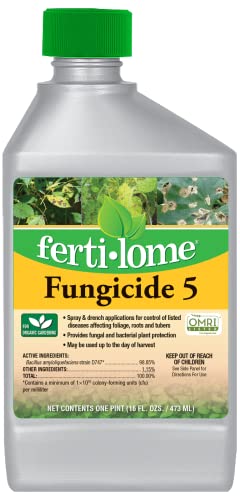
Fertilome 5 Concentrate Fungicide, 16 oz

Fertilome F-Stop Fungicide Granules, 10 lb
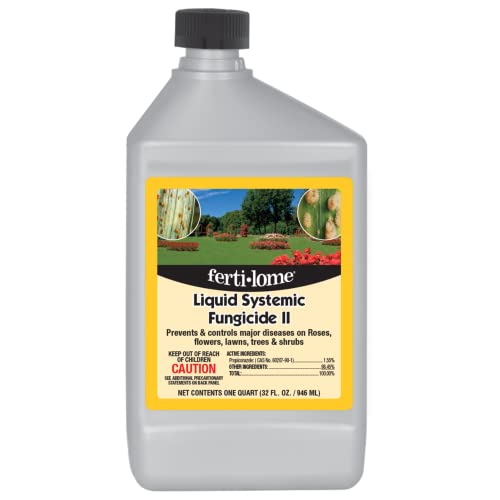
Fertilome Liquid Systemic Fungicide II, 32 oz

Fertilome F-Stop Eagle Systemic Granules, 20 lb

Fertilome F-Stop RTS Fungicide, 32 oz
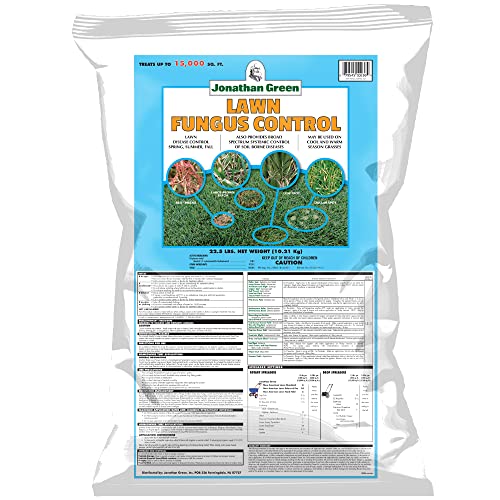
Jonathan Green Lawn Fungus Control, 15,000 sq ft
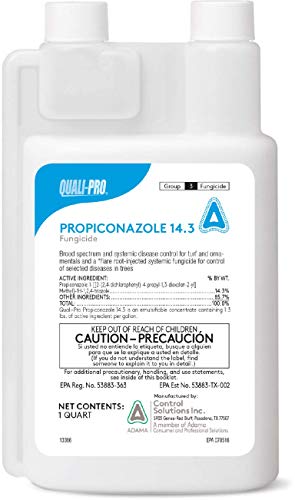
Quali-Pro Propiconazole 14.4 Fungicide, 32 oz

Select Source Propiconazole 14.3 Pint
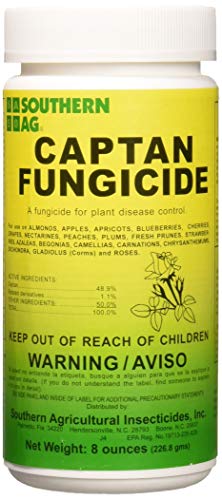
Southern Ag Captan Fungicide, 8 oz

Scotts Turf Builder Healthy Plus Lawn Food
A Deeper Look At The Lineup
Tall fescue lawns rarely deal with fungal issues alone, especially when nearby ornamentals and vegetable beds share the same humidity. Fertilome 5 Concentrate covers both fungal and bacterial problems, which matters once you start noticing symptoms that don’t respond to a standard lawn-only product. It mixes with water for a pump sprayer and labels for trees, shrubs, flowers, and turf alike.
Compared to the granular F-Stop options later in this list, the liquid concentrate gives you more flexibility on coverage rate and tank mixing. You trade convenience for control, and for many homeowners that trade is worth it.
The Good Stuff
- Addresses both fungal and bacterial diseases in one product
- Suitable across lawns, ornamentals, and edible gardens
- Concentrate format lets you adjust strength per application
- Compact 16 oz bottle stores easily on a shelf
Points To Keep In Mind
- Requires a separate pump sprayer and basic mixing
- Smaller bottle means more frequent refills on large properties
Key Product Details
Best Suited To
Homeowners with a mix of lawn, flower beds, and shrubs who want one concentrate that handles both fungal and bacterial symptoms.
Skip It When
You’d rather skip measuring and mixing, in which case the Fertilome F-Stop RTS offers a grab-and-spray alternative.
If you already own a broadcast or drop spreader, granular fungicides save real time. Fertilome F-Stop Granules push through a standard spreader and treat up to 2,500 square feet per bag. The systemic action, meaning the active ingredient moves through the plant rather than sitting on the surface, means coverage keeps working after the granules dissolve.
For most home lawns, the 10 lb bag is the right size to handle a single full-yard treatment without leftovers going stale. Heavier properties will want the 20 lb version reviewed below.
What Stands Out
- Works through a standard lawn spreader, no sprayer needed
- Systemic protection reaches new growth
- Covers broad disease spectrum on cool and warm season grasses
Things To Consider
- Granules need watering in to activate
- Storage in a dry spot is important, since moisture clumps the product
- 10 lb bag runs short on properties above a quarter acre
Right Fit For
Homeowners with a spreader already on hand and a lawn under 2,500 square feet who want quick, even coverage.
A Better Fit Elsewhere
Larger properties are better served by the Fertilome F-Stop Eagle Systemic Granules, 20 lb, which covers double the area per bag.
Brown patch and dollar spot both respond to the active ingredient in Fertilome Liquid Systemic Fungicide II, and the 32 oz bottle gives you more working solution than the 16 oz concentrate above. For tall fescue lawns where these two diseases show up year after year, a systemic approach often pays off better than contact sprays.
The trade is application effort: you still need a pump or backpack sprayer, and the concentrate mixes with water before going down. Once the routine is set, the larger bottle stretches further per dollar spent.
Why It Works Well
- Targets the most common tall fescue diseases head-on
- Systemic movement protects new growth after application
- 32 oz bottle handles multiple treatments for a typical yard
Trade Offs
- Mixing ratios need to be measured accurately for results
- Requires a dedicated sprayer, which is a separate purchase for some
Feature Snapshot
Made For
Homeowners who deal with recurring brown patch or dollar spot and want systemic, long-lasting protection.
Where Another Pick Suits Better
Anyone wanting a granular routine should look at the Fertilome F-Stop Fungicide Granules, 10 lb instead.
When your lawn pushes past a quarter acre, the 10 lb F-Stop bag becomes a hassle. The 20 lb Eagle Systemic version keeps the same active ingredient but doubles the coverage per container, which saves you from juggling multiple smaller bags mid-application. The granular format still flows through standard spreaders without clumping, assuming you keep the bag dry.
One application protects the lawn for several weeks, which is a real benefit during peak summer humidity. The catch is the upfront weight: 20 lb is a meaningful lift, and you’ll want a wheelbarrow or cart for transport.
What Works In Its Favor
- One bag handles up to 5,000 square feet, depending on rate
- Systemic action keeps working between treatments
- Broad disease coverage on cool and warm season turf
Worth Noting
- 20 lb bag is heavy to move around
- Needs watering in shortly after spreading
- Storage container should be airtight to prevent clumping
Whose Shelf It Belongs On
Property owners with larger lawns who prefer granular application and want fewer bag changes.
Look Elsewhere When
You only need to treat a small patch, in which case the Fertilome F-Stop Granules, 10 lb makes more sense.
The “RTS” in this product’s name stands for ready-to-spray, which is the entire pitch. The bottle screws onto a standard garden hose and dispenses already-diluted fungicide as you water. For homeowners who don’t want to buy a pump sprayer or measure concentrates, this format removes every barrier between the product and the lawn.
It’s well suited for spot treatments on emerging brown patch areas or preventive sprays on roses, shrubs, and small lawn sections. Coverage on full lawns is possible but slower than concentrate or granular options.
Real-World Strengths
- No mixing, no measuring, no extra equipment
- Hose-end format covers large areas without refilling a tank
- Works on lawns, flowers, fruits, and ornamentals
Small Caveats
- Less precise dilution than concentrate products
- Hose connection adds a small step before spraying
Quick Technical Notes
Perfect Match For
First-time fungicide users and anyone who wants a grab-and-spray option without buying additional equipment.
Reach For A Different Pick When
You need precise coverage on a large lawn, where the Fertilome Liquid Systemic Fungicide II 32 oz concentrate offers more control.
Jonathan Green built its name on lawn-specific products, and the coverage claims here are unusually generous for the category. Targeting 15,000 square feet per bag puts this in serious large-lawn territory. The granular formula targets brown patch, dollar spot, red thread, and similar cool-season grass diseases that hit tall fescue during humid stretches.
For homeowners who measure lawns in acres rather than square feet, the value proposition is hard to beat. The bag is hefty, so plan a cart or wheelbarrow for delivery to the spreader.
Everyday Perks
- Covers up to 15,000 square feet, well above category norms
- Targets the most common cool-season turf diseases
- Spreader-friendly granule size
Some Limits To Know
- Bag weight makes it cumbersome to handle without a cart
- Still requires watering in after spreading
Who It Suits Best
Suburban homeowners with big lawns who want to cover maximum square footage with a single purchase.
Swap It Out When
You prefer liquid application for faster visible coverage, in which case the Quali-Pro Propiconazole 14.4 is worth a look.
Propiconazole is one of the most studied active ingredients in lawn care, and Quali-Pro’s microemulsion concentrate delivers it in a form that mixes cleanly with water. The result is a low-odor, stable tank mix that sprays evenly without constant agitation. For tall fescue lawns in transition zones where multiple diseases overlap, the broad-spectrum control earns its keep.
The locally systemic mode of action means the active ingredient moves into the plant and keeps protecting new growth after the spray dries. It’s a step up in precision compared to broad granular products.
Notable Gains
- Microemulsion formula reduces odor and improves tank stability
- Broad-spectrum control across cool and warm season grasses
- Locally systemic action protects new growth
Practical Considerations
- Concentrate requires accurate measuring and a clean sprayer
- Higher-end price point than residential concentrates
Feature Rundown
Who Should Grab It
Detail-oriented lawn care enthusiasts who want professional-grade disease control and don’t mind measuring concentrates.
Consider Something Else When
You’d rather avoid concentrate mixing entirely, in which case the Fertilome F-Stop RTS offers a simpler path.
Select Source’s propiconazole 14.3 shares the same trusted active ingredient as the Quali-Pro product above, but the formulation is a flowable suspended concentrate designed for low use rates. Less product per application means a single pint goes further than you might expect, especially for routine preventive sprays across a few thousand square feet of tall fescue.
The pint container is easier to handle than a quart bottle, and the low use rates make it a good fit for homeowners who treat small areas several times a season rather than one big annual application.
What It Does Well
- Low use rates stretch a single pint across multiple treatments
- Same trusted propiconazole active ingredient
- Foliar and systemic properties for layered protection
Possible Compromises
- Smaller container runs out faster on large properties
Built With In Mind
Homeowners running preventive spray schedules who want a pint-sized concentrate that handles several applications.
Where A Sibling Pick Shines
For larger coverage in a single container, the Quali-Pro Propiconazole 14.4 in the 32 oz size fits better.
Captan has a long track record as a wettable powder fungicide, and the Southern Ag 8 oz bottle is a useful size for homeowners who also tend to fruit trees, berries, or flower beds alongside the lawn. The powder format mixes into a slurry that suspends in water, so a bit of stirring keeps it consistent in the tank.
For tall fescue specifically, captan is more of a complementary tool than a primary defense, since its labeled turf uses are narrower than the propiconazole options above. It earns a place when the rest of your yard needs protection too.
Features That Help
- Compact 8 oz bottle stores easily on a shelf
Where It Is Less Suited
- Wettable powder requires mixing and stirring to stay suspended
- Narrower turf labeling than propiconazole-based products
- Powder can be dusty during measuring
Right Fit For
Homeowners managing multiple plant types who want a versatile fungicide in a small container.
Not Your Match When
Your focus is purely on the lawn, where the Fertilome Liquid Systemic Fungicide II provides more targeted turf coverage.
Scotts combines a fertilizer with a broad-spectrum fungicide, so a single pass with the spreader covers feeding and disease prevention at the same time. For tall fescue lawns on a regular seasonal schedule, that combination is a meaningful time-saver. The 13.70 lb bag handles a typical suburban yard with room to spare.
The trade-off is specialization: a 2-in-1 product rarely targets a specific disease as precisely as a dedicated fungicide. For preventive care during high-risk months, it works well. For an active outbreak, a dedicated option is the stronger move.
A Strong Showing
- Combines fertilizer and fungicide in a single application
- Targets 27 listed lawn diseases including brown patch and red thread
- Spreader-friendly granule size
Honest Caveats
- Less targeted than dedicated fungicides for severe outbreaks
- Bag weight calls for a cart or wheelbarrow
Who Will Love This
Homeowners who prefer one-pass seasonal care and want to keep their routine simple.
Another Choice May Suit
Anyone fighting an active, identifiable disease should reach for a dedicated product like the Fertilome Liquid Systemic Fungicide II.
What Matters Most When Choosing Fungicides For Tall Fescue
Matching Active Ingredients To Your Disease
Tall fescue faces a predictable cast of fungal villains. Brown patch, dollar spot, and leaf spot are the most common, and each responds to slightly different active ingredients. Propiconazole-based products handle broad-spectrum preventive and curative work well. Captan and similar protectants work as contact treatments but don’t move through the plant. Picking the right active ingredient starts with correctly identifying the disease, which often means looking at the pattern of damage and the weather conditions that triggered it.
Granular, Liquid Concentrate, Or Ready-To-Spray
Application format shapes your routine as much as the chemistry does. Granular products go through a standard spreader and require watering in, which fits busy weekends. Liquid concentrates mix with water and need a sprayer, but they offer more precise coverage. Ready-to-spray bottles attach to a hose and remove every barrier for spot treatments. The honest read is that the best format is the one you’ll actually use on schedule, since missed applications undermine any product’s performance.
Coverage And Re-Treatment Timing
Bag and bottle sizes on this list range from 8 oz to 20 lb, and coverage varies accordingly. A good rule is to measure your lawn accurately and then pick a size that handles the full treatment in one go, with a small buffer for overlap. Most fungicides on this list recommend re-treatment intervals measured in weeks, not days, so timing applications before disease pressure peaks typically delivers better results than reacting after symptoms appear.
Storage And Handling Considerations
Fungicides have specific storage needs that affect how practical each option really is. Granular products clump when exposed to moisture, so a dry shed or garage is essential. Liquid concentrates last longer in sealed containers but should be kept out of direct sunlight. Wettable powders like the Southern Ag Captan stay stable for years when stored dry. Considering where each product will live between uses helps avoid waste and maintains effectiveness.
Key Considerations Across These Picks
Where Shoppers Go Wrong
The most common mistake is treating symptoms without identifying the disease first. A fungicide that works on brown patch may do little for dollar spot, and misdiagnosis leads to wasted product and continued damage. Another frequent slip is skipping preventive applications during high-humidity stretches and only treating after disease shows up. By that point, curative products have a harder time catching up, and you may need multiple applications to recover. Reading the product label for the specific diseases listed, and matching those to what’s actually appearing in your lawn, saves both time and money.
When Paying More Pays Off
Higher-tier products like the Quali-Pro Propiconazole 14.4 cost more upfront, but the upgrade typically buys better formulation quality, broader spectrum control, and longer residual protection. For lawns with recurring disease pressure year after year, a more concentrated professional-grade product often delivers results that budget options can’t match. The premium also tends to show up in tank stability, meaning less settling and clogging during application. The honest read is that the upgrade pays off most when you’ve already tried a basic product and found it lacking, rather than as a first purchase for a lawn with no history of fungal issues.
Frequently Asked Questions
How Often Should Fungicides For Tall Fescue Be Applied?
Most fungicides for tall fescue recommend re-treatment intervals of two to four weeks, depending on the product and disease pressure. Preventive schedules typically space applications further apart than curative treatments, which may need closer intervals during peak humidity.
Can These Fungicides Be Used On Other Grasses Too?
Yes, most fungicides for tall fescue are labeled for both cool and warm season grasses, including Kentucky bluegrass, perennial ryegrass, and Bermuda. Always check the product label for the full list of compatible turf types before applying to a mixed lawn.
Is It Better To Apply Fungicides In The Morning Or Evening?
Evening applications are generally preferred, since lower temperatures and less direct sunlight reduce evaporation and give the product more time to absorb. Morning applications still work, but expect slightly faster drying and potentially reduced uptake in hot weather.
Do Fungicides For Tall Fescue Need To Be Watered In?
Granular fungicides typically need watering in to activate the active ingredient and move it into the root zone. Liquid concentrates and ready-to-spray products vary, with some requiring dry foliage for absorption and others benefiting from light irrigation after application.
Will These Fungicides Harm Pets Or Children?
Most residential fungicides are designed with safety intervals that keep pets and children off treated areas until the product dries. Check the specific product label for re-entry times, and keep pets away from granular products before watering in to prevent accidental ingestion.
Wrap Up
Tall fescue rewards consistent care, and the right fungicide turns a stressful disease outbreak into a manageable seasonal task. Whether you prefer the simplicity of a ready-to-spray bottle, the efficiency of granules through a spreader, or the precision of a liquid concentrate, the options on this list cover the most common situations homeowners face. Match the active ingredient and format to your lawn size, your disease history, and the equipment you already own. That combination tends to deliver the best results without overcomplicating the routine.
