
Zoysia grass earns its reputation as a tough, drought-tolerant turf, but it isn’t bulletproof. Brown patch, dollar spot, and large patch all target zoysia during humid stretches, and the wrong product can set your lawn back further than the disease itself. The right fungicide for zoysia grass matches the active ingredient to the pathogen, fits your application style (granular spreader versus hose-end spray), and respects the surrounding landscape. This lineup balances systemic protectants, curative options, and natural-leaning formulas across ten different approaches, so you can match a product to your lawn size, climate, and comfort level with chemicals.
A Closer Look At The Lineup

Fertilome F-Stop Fungicide Granules Eagle Systemic, 20 lb
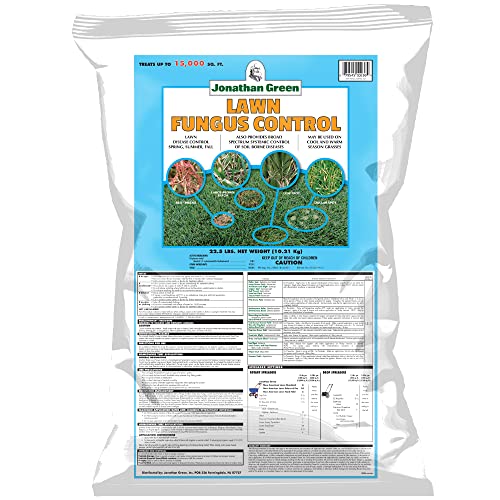
Jonathan Green Lawn Fungus Control 15,000 Sq Ft

Earth’s Ally Disease Control Fungicide Concentrate, 32 Oz
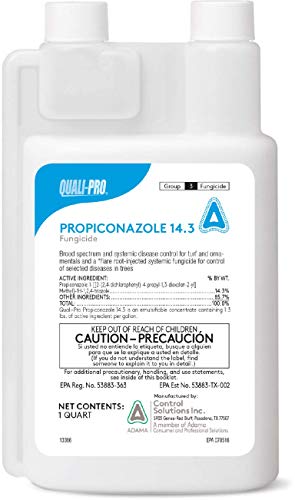
Quali-Pro Propiconazole 14.4 Fungicide, 32oz

Scotts Turf Builder Healthy Plus Lawn Food, 13.70 lbs.

Atticus Gunner 14.3 MEC Propiconazole Fungicide (32oz)

The Andersons Prophesy Propiconazole Fungicide on DG Pro, 25lbs

Bonide Infuse Lawn & Landscape Systemic Disease Control, 7.5 lb.

Atticus Gravex 20EW Fungicide (16oz) Myclobutanil Concentrate
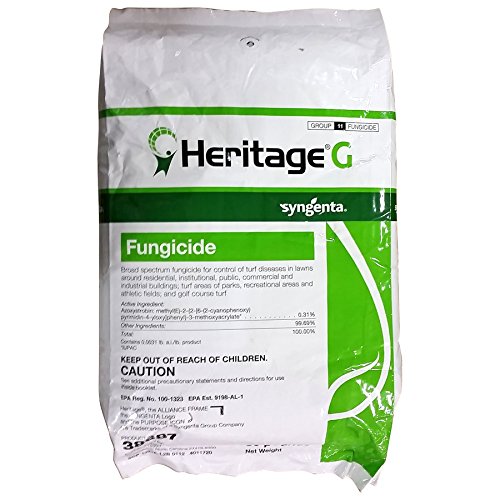
Heritage G Fungicide 30 lb Bag
The Strengths Of Each Pick
Large zoysia lawns under constant disease pressure need a granular product that spreads evenly and stays active, and Fertilome’s F-Stop fits that role. The 20-pound bag covers meaningful square footage, and the systemic action means the active ingredient moves through the plant rather than sitting on the surface. For homeowners who already own a broadcast spreader, the workflow is straightforward: load, dial in the rate, and walk the lawn.
Compared to liquid concentrates later in this list, granular fungicides trade precision for convenience. You won’t measure ounces or calibrate a sprayer, which matters for anyone intimidated by mixing chemicals. The trade-off is slightly slower uptake, so plan applications around forecasted dry windows rather than expecting overnight results.
Useful Strengths
- Systemic action reaches pathogens inside the plant, not just on the leaf surface
- Granular format works with any standard broadcast or drop spreader you already own
- Coverage designed for mid-to-large residential lawns in a single bag
- Protects against more than 15 listed turf diseases, covering the common zoysia offenders
Things To Consider
- Granules need watering-in or rainfall to activate, so dry-spell timing matters
- Spreader calibration varies by model, and over-application can stress zoysia
Quick Facts
Made For
Homeowners with mid-to-large zoysia lawns who prefer spreader application over mixing concentrates.
Consider Something Else When
Pet households sensitive to synthetic actives may prefer Earth’s Ally Disease Control for a citric-acid-based approach instead.
Jonathan Green’s granular formula targets the turf diseases zoysia owners actually see, including brown patch, dollar spot, and red thread. The 15,000-square-foot coverage makes it a practical match for typical suburban lawns where a single bag handles the whole property. The product works as both a preventive barrier and a treatment once symptoms appear.
For most homeowners, this is a set-and-spread routine. You won’t wrestle with measuring cups or worry about sprayer drift onto the neighbor’s garden. Where Jonathan Green differs from Fertilome’s F-Stop is in the disease list and coverage area, so compare your lawn size before deciding between the two granular options.
Useful Touches
- Covers up to 15,000 square feet, suiting most suburban zoysia lawns in one pass
- Dual-purpose formula prevents new outbreaks and suppresses active infections
- Targets familiar zoysia diseases like brown patch, dollar spot, and red thread
- Spreader application means no measuring or mixing
Points To Note
- Soil-borne disease coverage varies, so confirm your specific issue on the label
- Storage in a dry shed or garage prevents granule clumping between applications
Feature Snapshot
Right Fit For
Suburban homeowners who want a single granular product that handles both prevention and early-stage treatment.
Look Elsewhere When
Large estates needing heavier coverage should consider Heritage G for its 30-pound bag size and longer residual action.
Earth’s Ally takes a different route with a citric-acid-based formula that treats common plant diseases without synthetic active ingredients. The 32-ounce concentrate targets powdery mildew, downy mildew, blight, black spot, and leaf spot, making it a flexible option for households that use the same product on ornamentals, vegetables, and zoysia patches. For families worried about kids and pets on the lawn, the ingredient list reads more like a cleaning product than a pesticide.
You will trade some raw potency for that peace of mind. Natural-leaning formulas often require more frequent reapplication, so plan on a tighter spray schedule during peak humidity. The concentrate format also means you need a pump sprayer, which adds a small upfront step compared to granular picks like Jonathan Green.
Reasons It Performs
- Citric acid active ingredient reads safer around children and pets than synthetic alternatives
- Multi-purpose formula works on ornamentals and edibles, not just turf
- Targets the disease spectrum that affects zoysia during humid stretches
- Liquid concentrate allows targeted spot-spraying instead of whole-lawn treatment
Worth Noting
- Requires a separate pump sprayer for application, adding a small equipment step
- Organic-leaning formulas typically need more frequent reapplication to stay effective
Who It Suits Best
Pet households and parents who prefer plant-based active ingredients and don’t mind more frequent applications.
Another Choice May Suit
Homeowners with active, large-scale brown patch may need the stronger systemic action of Fertilome F-Stop instead.
Quali-Pro brings the propiconazole concentration that golf course superintendents have relied on for years into a residential-friendly bottle. The microemulsion formulation (a fine-particle liquid mix that spreads evenly) reduces odor and improves tank stability, which matters when you’re mixing a full batch in a backpack sprayer. For experienced applicators, the 32-ounce concentrate stretches across thousands of square feet when properly diluted.
The trade-off is responsibility. Concentrated fungicides demand accurate measurement, protective gear, and careful drift management near desirable plants. Unlike the granular picks earlier in this list, there’s no room for “close enough” dosing. If you’re comfortable with sprayer calibration, the performance upside is real; if not, consider a simpler granular option like Bonide Infuse.
Strong Points
- Microemulsion concentrate provides better leaf coverage and tank stability than older formulations
- Economical per-application cost when diluted correctly across large zoysia areas
- Locally systemic mode of action delivers longer-lasting disease control than contact-only products
- Works across cool and warm season grasses, trees, and shrubs with one bottle
Trade Offs
- Requires accurate sprayer calibration to avoid under- or over-application
- Concentrate handling calls for gloves and basic protective equipment
Core Details
Best Suited To
Experienced applicators comfortable with sprayer calibration and reading fungicide labels closely.
Swap It Out When
First-time fungicide users may find the granular simplicity of Bonide Infuse easier to handle.
Scotts combines a broad-spectrum systemic fungicide with fertilizer in a single bag, letting you feed the lawn and protect it from disease in the same pass. The 13.70-pound container covers a typical yard, and the formulation addresses 27 listed lawn diseases including brown patch and red thread, two of the most common zoysia problems. For homeowners who want fewer trips around the yard, this 2-in-1 approach simplifies the calendar.
Where Scotts differs from straight fungicides is the fertilizer component. You’ll time applications around your feeding schedule rather than disease pressure alone, which can mean applying fungicide when the lawn doesn’t strictly need it. The dedicated fungicide picks earlier in this list offer more surgical control if you’re troubleshooting a specific outbreak.
Advantages To Know
- Combined fertilizer and fungicide reduces total seasonal applications
- Broad disease coverage targets 27 lawn diseases in one product
- Strengthens grass down to the root, helping recovery from disease damage
- Granular format fits standard Scotts and similar spreaders
Less Ideal Details
- Feeding component means less flexibility to apply fungicide without adding nitrogen
- Storage space for a 13.70-pound bag is larger than liquid concentrate options
Who Should Grab It
Homeowners who prefer feeding and disease prevention on the same schedule, rather than treating separate products separately.
Reach For A Different Pick When
Active disease outbreaks may need a dedicated curative like Atticus Gravex 20EW with stronger myclobutanil action.
Atticus Gunner 14.3 MEC shares its active ingredient with Banner Maxx, the fungicide golf course crews have trusted for decades. The microemulsion concentrate format breaks the active into extremely small droplets, which improves coverage on dense zoysia canopies that shed water-based sprays. For thick, well-established zoysia that resists spray penetration, that finer droplet profile makes a real difference.
Like the Quali-Pro concentrate earlier in the list, Gunner requires sprayer know-how. You’ll mix into water at label-specified rates and walk the lawn with a pump or backpack sprayer. Homeowners used to granular convenience may find the prep step heavier, though the disease coverage on zoysia is broader for the effort.
What Makes Sense
- Microemulsion concentrate delivers smaller droplets for better canopy penetration
- Same propiconazole active ingredient trusted on professional golf turf
- Broad-spectrum coverage addresses more than 20 listed plant fungi
- Concentrate format stretches across multiple application sessions per bottle
Honest Caveats
- Sprayer calibration and PPE (personal protective equipment) are part of the deal with concentrates
- Mixing must follow the label closely to avoid waste or turf stress
Perfect Match For
Homeowners with thick, mature zoysia who already own a pump sprayer and want professional-grade coverage.
A Better Fit Elsewhere
Smaller lawns and first-time users may prefer Bonide Infuse’s granular format to avoid mixing steps.
The Andersons built Prophesy around DG Pro technology, a dispersible granule carrier that breaks down into many fine particles once it hits the lawn. That means more particles per square foot and more even coverage than traditional granular fungicides, which tend to bounce or roll on thick zoysia thatch. The 25-pound bag covers up to 10,000 square feet, suiting larger properties that need a single-pass solution.
Prophesy works as both a preventive and curative, targeting brown patch, dollar spot, and snow mold among other common diseases. Where it stands apart from Fertilome’s F-Stop is the carrier technology: DG Pro dissolves rather than sitting on the surface, so more active ingredient actually reaches the plant. For zoysia with a thatch layer, that distinction often matters more than the bag weight.
Real Benefits
- DG Pro dispersible granule carrier delivers more particles per square foot than standard granules
- Dual preventive and curative use across the growing season
- 25-pound bag handles up to 10,000 square feet in one purchase
- Targets brown patch, dollar spot, and snow mold among other common zoysia diseases
Practical Considerations
- Spreader calibration is critical to avoid streaking on zoysia with dense thatch
- 25-pound bag needs dry, sealed storage to prevent the DG carrier from absorbing moisture
Feature Card
Whose Shelf It Belongs On
Homeowners with larger zoysia lawns and a quality broadcast spreader who want granular convenience with pro-grade coverage.
Not Your Match When
Small urban lawns under 5,000 square feet will get more value from a lighter bag like Jonathan Green’s 15,000-square-foot option.
Bonide Infuse covers more than 30 plant diseases and works on lawns, annuals, perennials, and foliage plants alike. For homeowners managing both a zoysia lawn and a mixed landscape bed, that versatility means one product handles multiple problems. The 7.5-pound container is a manageable size for typical suburban lots, and the systemic action moves into the plant to stop disease from spreading.
The flip side of broad coverage is a less specialized formula. Zoysia-specific products earlier in this list (Prophesy, F-Stop) concentrate their active ingredient on turf diseases. Infuse trades that focus for flexibility, which is exactly the right call if your disease problems span roses, crepe myrtles, and turf in the same yard.
Key Advantages
- Controls over 30 plant diseases across lawns, flowers, shrubs, and foliage
- Systemic action provides both soil-borne and foliar disease control
- 7.5-pound bag suits smaller properties without leftover storage issues
- Granular format works with standard residential spreaders
Factors To Consider
- Less turf-specialized than dedicated zoysia products like The Andersons Prophesy
- Smaller bag means reordering for properties over about 5,000 square feet
Built With In Mind
Homeowners with mixed landscapes who want one granular product for lawn and ornamental disease problems.
Where A Sibling Pick Shines
Pure zoysia-focused owners with larger lawns may prefer the heavier coverage of The Andersons Prophesy.
Gravex 20EW is built for the moment disease has already shown up. The myclobutanil active ingredient shares chemistry with Eagle 20EW, a trusted name in curative turf care. Where preventive products like Jonathan Green Lawn Fungus Control try to stop disease before it starts, Gravex hits active infections and keeps them from spreading. The emulsion-in-water (EW) formulation mixes cleanly into sprayer tanks without the odor of older solvent-based products.
For homeowners who missed the preventive window and now see dollar spot or brown patch patches, Gravex is the right tool. You’ll need a pump sprayer, accurate measuring, and a tight application window, but the curative payoff is real. Compare to Atticus Gunner earlier in the list: that one leans preventive, this one leans responsive.
The Case For It
- Curative action addresses active disease rather than waiting for prevention
- Myclobutanil active ingredient is a proven turf fungicide chemistry
- Emulsion-in-water formulation mixes cleanly with reduced odor
- Works on a broad spectrum of common zoysia pathogens
Points To Keep In Mind
- 16-ounce bottle is smaller than other concentrates, so larger properties may need multiple bottles
- Curative products work best when applied at first sign of disease, not after heavy spread
The Right Fit
Homeowners facing an active zoysia disease outbreak who need curative action alongside prevention.
Skip It When
You have no current disease and want pure prevention; Bonide Infuse fits that routine better.
Heritage G is the heavyweight in this lineup, a 30-pound bag built for serious turf. The active ingredient, azoxystrobin at 0.31%, is the same strobilurin chemistry that golf course superintendents apply across fairways and greens. The label covers residential lawns, landscape areas, parks, and athletic fields, which tells you the product is designed for scale rather than a single backyard.
For most homeowners, 30 pounds is more product than needed, and the price reflects that scale. The right fit is a large property, an estate lawn, or a shared community space where one bag needs to cover a lot of ground. Smaller yards will get better value from lighter options earlier in the list.
What Earns Its Place
- 30-pound bag handles estate-sized zoysia lawns and landscape areas
- Azoxystrobin active ingredient is trusted on golf course and athletic turf
- Suitable for residential, commercial, and recreational lawn areas
- Granular format spreads with standard broadcast equipment
Some Limits To Know
- 30-pound bag is more product than most residential yards need in a single season
- Storage space and dry conditions are required to keep granules usable
Made For
Property owners with large zoysia turf, multi-acre lawns, or community green spaces who need scale coverage.
Where Another Pick Suits Better
Typical suburban yards under 10,000 square feet will find The Andersons Prophesy more size-appropriate.
Matching Fungicides To Zoysia’s Disease Cycle
Zoysia’s disease calendar drives most fungicide decisions. Brown patch and large patch hit during warm, humid stretches, often in late spring and early fall, while dollar spot shows up when nights are cool and dew lingers on the grass. The right product depends on whether you are protecting before symptoms show or treating after they appear.
Granular systemic options (Fertilome F-Stop, Jonathan Green, Bonide Infuse, The Andersons Prophesy) work best as preventive applications timed to seasonal risk windows. Liquid concentrates (Quali-Pro, Atticus Gunner, Atticus Gravex) offer more precision for curative work, and natural-leaning formulas like Earth’s Ally suit households that prefer plant-based actives over synthetic chemistry. The 2-in-1 feeding and disease control approach in Scotts Turf Builder Healthy Plus appeals to homeowners who want fewer seasonal passes.
Application Method And Equipment
Granular fungicides pair with any broadcast or drop spreader and require watering-in to activate. Liquid concentrates need a pump or backpack sprayer and accurate calibration. Earthy Ally’s concentrate adds the same sprayer step but with a citric-acid twist. If you do not already own a sprayer, granular options remove a piece of equipment from the equation. Sprayer owners gain finer control and faster uptake, which matters during active outbreaks.
Coverage, Bag Size, And Storage
Square footage coverage ranges from around 5,000 square feet for lighter bags to 15,000-plus for the larger granular options, and 30 pounds for estate-scale Heritage G. Match bag size to lawn size to avoid leftover storage headaches. Granules need dry conditions; liquids need temperature-stable storage away from children and pets.
Active Ingredients And Their Strengths
Propiconazole (Quali-Pro, Atticus Gunner, The Andersons Prophesy) is a go-to systemic for brown patch and dollar spot. Myclobutanil (Atticus Gravex) leans curative. Azoxystrobin (Heritage G) delivers broad strobilurin protection. Citric acid (Earth’s Ally) trades raw potency for ingredient simplicity. Choosing among them comes down to which disease you are managing and how aggressive a treatment you are comfortable applying.
Key Considerations Across These Picks
Where Shoppers Go Wrong
Two common traps catch first-time zoysia fungicide shoppers. The first is buying a curative product when a preventive would have been cheaper and easier, or vice versa. Knowing whether you are protecting ahead of symptoms or treating after they appear narrows the list fast. The second is skipping the label on bag size. A 30-pound Heritage G bag sounds appealing until you realize your 4,000-square-foot lawn will sit on unused product for years. Match the container to the actual coverage you need, and store the rest properly or pass on the bulk format.
What The Higher Tier Buys
Premium fungicide pricing usually pays for concentration, formulation technology, and active ingredient pedigree. Atticus Gunner’s microemulsion concentrate costs more per ounce than a basic granular, but the finer droplet profile reaches deeper into thick zoysia canopies where contact sprays bounce off. The Andersons Prophesy’s DG Pro carrier delivers more particles per square foot than standard granules, and Heritage G’s azoxystrobin chemistry is the same trusted compound used on professional turf. When the lawn justifies the upgrade, the extra cost buys coverage that cheaper picks struggle to match.
Frequently Asked Questions
When is the best time to apply fungicide to zoysia grass?
Apply preventive fungicides before disease pressure peaks, typically in late spring for brown patch and large patch, and in early fall for cool-season fungi. Curative products work best at the first sign of symptoms, not after the disease has spread across the lawn.
Can I use the same fungicide on zoysia and other plants?
Some products like Bonide Infuse are labeled for lawns, flowers, and shrubs, while turf-specific options like Fertilome F-Stop are designed for grass only. Always read the label for approved use sites before spraying near ornamentals or edibles.
How long does fungicide protection last on zoysia?
Most systemic fungicides provide 2 to 4 weeks of protection per application, depending on the product and weather conditions. Heavy rain or irrigation can shorten the residual window, so plan re-applications around forecasted dry stretches.
Is a granular or liquid fungicide better for zoysia?
Granular fungicides offer easier application with a spreader and longer shelf life, while liquid concentrates provide faster uptake and more precise coverage. Granulars suit routine prevention; liquids suit curative work and dense turf where spray penetration matters.
Can I fertilize and apply fungicide at the same time?
Some products like Scotts Turf Builder Healthy Plus combine both functions, but applying them separately gives you more control over timing. Feed zoysia during active growth and apply fungicide when disease pressure is highest, not necessarily on the same day.
Closing Remarks
Your zoysia lawn will tell you what it needs, and the right fungicide depends on the disease you are managing, the equipment you already own, and your comfort with synthetic versus plant-based actives. Match the product to your lawn size and your application style, and time applications around the seasonal risk windows. A little label-reading now saves a lot of guesswork later, and a healthy zoysia stand is well worth the effort.
