

Those tiny black flies circling your fiddle leaf fig are fungus gnats, and they show up the moment potting soil stays too damp. You water, you wait, and a cloud of them lifts off every time you move the pot. Left alone, the larvae chew roots and stunt growth, especially in seedlings and tender tropicals.
The good news: today’s control options go way beyond sticky traps. You can target larvae in the soil with biological agents, knock back adults with botanical sprays, or use systemic granules that protect plants from the inside. Below are ten picks that cover every angle, from a single windowsill pothos to a whole greenhouse bench.
The Main Contenders

Root Cleaner Soil Gnat, Fungus and Pathogen Killer 8 oz

Safer Brand SH5026 Houseplant Sticky Stake Insect Traps 16-Pack

Environmental Factor NemaKnights Slow-Release Nematodes 280g

Arber Organic Insecticide and Fungicide 16oz

Summit Mosquito Bits 20 lb Biological Control

ARBER Organic Insecticide Spray 16 oz

Eco Defense Plant Gnat Spray for Houseplant Soil

NatureStop Fungus Gnat Killer 16 oz

Bonide 951 Systemic House Plant Insect Control 8 oz 3-Pack
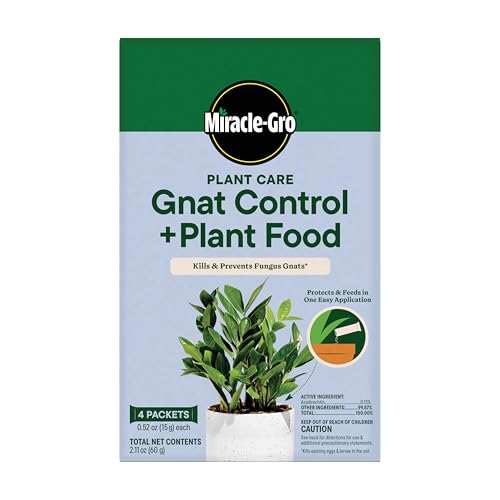
Miracle-Gro Plant Care Gnat Control + Plant Food 4 Packets
More On The Choices That Made The List
Root Cleaner is a soil drench, not a foliar spray, so the active ingredients work where larvae actually live. You mix the concentrate into water and pour it through the root zone, which means it keeps working between waterings. Unlike the Safer Brand sticky stakes that only intercept flying adults, this one targets the life stage doing the real damage underground. For a serious outbreak on a propagated cutting or a stressed calathea, the soil-first approach is the right call.
The 8-ounce bottle concentrates down to a generous working volume, enough to treat a windowsill collection of medium pots several times over. You won’t need gloves or a respirator to apply it, which matters in a living room or small greenhouse. For most indoor growers, the honest read is that this is the most thorough single product on the list, with a track record on damping-off pathogens (fungal diseases that collapse seedling stems at the soil line) as a bonus.
Positive Points
- Kills larvae on contact in the soil, breaking the breeding cycle rather than just swatting adults.
- Effective against soil fungi and pathogens that cause root rot, so seedlings and cuttings get a stronger start.
- No personal protective equipment required for application, which simplifies routine drenches.
- One bottle stretches across multiple treatment rounds for a typical houseplant collection.
- Targets a broad pest list, including thrips and nematodes, so it pulls double duty in mixed infestations.
Trade Offs To Consider
- Larvicides (products that kill the larval life stage) only help once the soil is treated, so adults keep flying for a few days after the first drench.
- Strongly infested media sometimes needs a second pass, which means tracking mix ratios each time.
- Concentrate form isn’t as grab-and-go as a ready-to-spray bottle like the ARBER spray below.
At A Glance
Right Fit For
Growers dealing with heavy larvae pressure, damping-off, or a soil mix that keeps coming back infested after every watering.
Swap It Out When
You’d rather not mix anything and prefer a contact spray; in that case the ARBER Organic Insecticide Spray is the simpler grab-and-bottle option.
The Safer Brand sticky stakes are about as low-commitment as fungus gnat control gets. You push a yellow sticky card into the soil, and it attracts and traps flying adults as they hover over the pot. Sixteen traps cover a generous indoor collection, and they work on aphids, whiteflies, and fruit flies in the same pass. For someone who just noticed a small swarm around a new Monstera, this is a confidence-building first move.
You won’t address larvae with these, so think of them as monitoring and adult suppression rather than a full cure. Pair them with a soil drench like Root Cleaner if pressure persists, or a botanical spray if you prefer staying on the foliar side. For most beginners, the appeal is the zero-mix, zero-spray simplicity, and the visual feedback of seeing what you’re catching.
Why It Works Well
- No mixing, no spraying, no protective gear required at any step.
- Sixteen traps cover a sizable plant shelf in one purchase.
- Yellow color attracts multiple pests, so it doubles as a general monitor.
- Visible catch rate helps you gauge whether your overall strategy is working.
Honest Caveats
- Only catches flying adults, so larvae in the soil keep maturing into the next generation.
- Sticky surfaces collect dust and pet hair over time and need periodic replacement.
- Visual appearance may bother minimalists who want their plant shelf to look clean.
Best Suited To
New plant parents who want a no-fuss entry point and prefer a visual, low-risk approach to fungus gnats and other flying houseplant pests.
Look Elsewhere When
You need to break the breeding cycle underground; the Environmental Factor NemaKnights nematodes attack larvae directly and are a stronger long-term play.
NemaKnights uses beneficial nematodes, microscopic organisms that parasitize fungus gnat larvae in the soil. The slow-release granular format is the interesting twist: you shake the product onto the potting mix and the nematodes activate with moisture over time. For a greenhouse bench or a covered patio with many pots, this gives you weeks of background protection without repeated mixing or spraying.
Compare this to the Safer Brand sticky stakes, which only intercept adults after they’ve emerged. Beneficial nematodes hunt larvae in the substrate, so you address the population at its source. For most organic-minded growers, the trade-off is patience: nematodes work gradually and depend on consistent soil moisture to stay active.
The Good Stuff
- Non-toxic biological control safe around children, pets, and pollinators.
- Granular shake-on application eliminates measuring and mixing liquids.
- Slow-release format extends working time across multiple watering cycles.
- Targets fungus gnats, thrips, and whiteflies in a single application.
Points To Keep In Mind
- Living organisms have a shelf life, so timing the application close to use matters for potency.
- Soil must stay consistently moist or the nematodes dry out before doing their job.
- Granular texture is visible on top of decorative moss or fine-textured mixes until watered in.
Made For
Greenhouse hobbyists, patio gardeners, and anyone managing a large collection who wants set-and-forget biological control without weekly spraying.
Not Your Match When
You’re after immediate adult knockdown in a small indoor shelf; the Safer Brand sticky stakes give faster visual feedback for a lighter setup.
Arber’s 2-in-1 concentrate handles insect pests and fungal issues in the same bottle, which is useful when you spot yellowing leaves, spotting, and gnats all at once. The bio-based formula coats both foliage and soil zones, disrupting pest life cycles across the whole plant rather than just one surface. For an outdoor rose bed that’s pulling double duty as a fungus gnat nursery, that broader coverage earns its keep.
Indoors, you’ll likely want a more focused soil drench like Root Cleaner for pure fungus gnat work, but if powdery mildew and chewing pests tag along, this becomes the more efficient purchase. For most mixed-use gardeners, the 16-ounce size covers a season of spot treatments across multiple plant types without forcing you to buy a separate fungicide.
Points In Its Favor
- Dual-action formula reduces the number of products you need to stock.
- Plant-safe concentrate suitable for houseplants, vegetables, ornamentals, and turf.
- Works on contact and continues to suppress pest life cycles after application.
Softer Spots
- Broad-spectrum strength is slightly less targeted than a pure larvicide like Root Cleaner for gnat-only problems.
- Concentrate format requires measuring and a clean spray bottle for application.
Who It Suits Best
Garden-wide growers managing multiple pest and disease issues who want one bottle instead of three specialty products.
A Better Fit Elsewhere
You have a single dedicated fungus gnat problem in a small indoor shelf; Root Cleaner delivers a more focused soil drench for that exact scenario.
Mosquito Bits are Bti granules (a naturally occurring soil bacterium toxic only to larvae), originally designed for standing water but widely adopted by houseplant growers as a fungus gnat drench. You soak the bits in water, stir, and pour the Bti-rich liquid through your pots. The 20-pound bag is overkill for one windowsill and perfect for a serious collection or small greenhouse operation.
Summit’s product is harmless to beneficial insects, pets, and wildlife, which makes it one of the safest biological options for households that worry about chemical residues. For most large-scale indoor growers, this is the cost-per-treatment workhorse, and the granular form keeps indefinitely in storage. The trade-off is the dust and the prep, since you’re measuring and steeping instead of grabbing a ready-to-use bottle.
What Works In Its Favor
- Bulk format dramatically lowers the cost per pot treated for big collections.
- Pathogen-free for people, pets, birds, and beneficial insects, with no chemical residue concerns.
- Long shelf life in dry storage means you can buy once and use across multiple seasons.
- Quick larval knockdown once the Bti suspension reaches the soil.
Things To Weigh
- 20-pound bag is heavy to store and excessive for a casual single-shelf grower.
- Requires steeping time before each application, unlike ready-to-spray options.
Right Fit For
Greenhouse operators, serious plant collectors, and hydroponic growers running a recurring gnat suppression program across many pots.
Consider Something Else When
You have only a handful of houseplants; the Safer Brand sticky stakes plus a small bottle of Root Cleaner is a more appropriately sized kit.
ARBER’s ready-to-spray bottle is the grab-and-go answer when you spot gnats and want to act in the same minute. You mist foliage and soil surface, and the organic biologicals disrupt pest life cycles on contact, including fungus gnats, aphids, whiteflies, mealybugs, and spider mites. For a quick knockdown between more thorough soil treatments, this fits a busy routine.
Compare it to Root Cleaner, which targets larvae deep in the root zone. ARBER’s spray handles adults and surface-dwelling stages faster, but doesn’t penetrate as far into heavy media. For most indoor growers, the honest read is that this is the everyday workhorse for visible outbreaks, while a drench handles the slower underground cleanup.
A Strong Showing
- Ready-to-spray bottle eliminates measuring and mixing for fast response.
- Broad pest coverage handles multiple issues during a single spray session.
- Liquid penetrates foliage and topsoil layers where flying pests rest and breed.
Practical Considerations
- Contact-action profile means you’ll likely need repeat sprays to catch newly emerged adults.
- Doesn’t replace a dedicated soil drench when larvae populations are well established in the root zone.
Made For
Houseplant owners who want a no-prep spray for routine gnat sightings and quick treatment of multiple plant types.
Swap It Out When
You have a chronic, deep-soil infestation that keeps returning after each spray; Root Cleaner’s soil drench goes where this spray can’t reach.
Eco Defense leans into a plant-based formula aimed at the entire gnat lifecycle, larvae in the soil and flying adults around the pot. The botanical approach appeals to households that want to keep synthetic chemicals away from kids, pets, and food-adjacent plants. For a windowsill herb garden that doubles as a gnat hatchery, this hits the right tone.
Unlike the ARBER spray above, which uses biological active ingredients, Eco Defense’s profile is more aligned with essential-oil-derived pest control. That means it works gradually rather than as a hard knockdown, and you may find multiple treatments necessary to see population drops. For most cautious households, the trade-off is patience in exchange for a gentler ingredient list.
Bright Spots
- Plant-based formula fits households that avoid synthetic pesticides.
- Targets both larvae in soil and adults around the plant for full lifecycle coverage.
- Safe to use around herb gardens and food crops when applied as directed.
Honest Caveats
- Botanical actives typically act more slowly than biological larvicides like Root Cleaner.
- Strong-smelling ingredients may bother sensitive noses in small enclosed rooms.
Best Suited To
Households with children, pets, or edible plants who prioritize plant-based ingredients and can stick with a steady treatment schedule.
Not Your Match When
You need to clear a heavy infestation quickly before plant damage sets in; Summit Mosquito Bits deliver faster larval knockdown at scale.
NatureStop focuses on the exact problem the list is built around, fungus gnats in moist potting soil, with an essential oil-based formula designed for indoor plant care. The 16-ounce size is enough for repeated treatments on a small cluster of pots, and the plant-friendly profile suits growers who don’t want to handle harsh concentrates. For a single room of plants, this hits the right scale.
Compared to the Safer Brand sticky stakes that only catch flying adults, NatureStop works on the soil zone where larvae develop. For most apartment growers, the appeal is the targeted purpose and the gentler ingredient list, and you can pair it with sticky traps for a full coverage routine.
Notable Upsides
- Essential oil-based formula designed specifically for fungus gnats in houseplant soil.
- 16-ounce size suits a small indoor collection without the bulk of greenhouse-scale products.
- Plant-friendly profile fits routine use on tender tropicals.
Things To Consider
- Single-purpose focus means it doesn’t address other pests like aphids or spider mites that a broader spray like ARBER covers.
- Essential oil scents can be noticeable in enclosed spaces during and after treatment.
Right Fit For
Apartment growers with a focused fungus gnat problem in a small cluster of indoor plants who want a purpose-built gentle formula.
Look Elsewhere When
You’re managing a mixed pest problem across many plant types; ARBER Organic Insecticide Spray covers a broader range in one bottle.
Bonide 951 works inside the plant rather than on the soil surface. You sprinkle the granules onto the potting mix, water them in, and the active ingredient moves into the plant tissue. Insects that feed on the plant ingest the treatment, which is why it handles sucking pests like aphids, mealybugs, and scale alongside any fungus gnat larvae browsing on roots.
The three-pack format gives you a long runway of treatment rounds without reordering, and the granules won’t wash off after watering. For most ornamental houseplant owners, this is the right pick when gnats keep coming back despite repeated sprays. The honest read: this is a different mode of action than the foliar and soil-surface products above, and it shines when the problem is persistent rather than acute.
Good Reasons To Consider
- Internal plant protection lasts up to eight weeks per application.
- Won’t wash off with routine watering, so it survives normal care schedules.
- Three-pack format covers multiple treatment rounds across a sizable collection.
- Targets mealybugs, aphids, and scale in addition to fungus gnat-adjacent pests.
Points To Note
- Systemic action only affects pests that feed on the plant, so non-feeding adult gnats may still appear briefly.
- Granules are not a fit for edible plants or herbs being grown for consumption.
Right Fit For
Ornamental houseplant owners dealing with recurring infestations who want long-lasting protection without weekly reapplication.
A Better Fit Elsewhere
You grow herbs or vegetables alongside ornamentals; Summit Mosquito Bits keep treatment confined to the soil without entering plant tissue.
Miracle-Gro’s packets blend gnat control with plant nutrition, so each application simultaneously kills existing eggs and larvae in the soil and feeds the plant. That 2-in-1 approach saves a step in your monthly routine, especially for houseplants like pothos, philodendrons, ferns, and orchids that benefit from regular feeding. The four-packet count gives you a few months of scheduled treatments.
Compared to a pure soil drench like Root Cleaner, this product trades a degree of larval-killing intensity for added fertilizer value. For most growers with a maintenance mindset rather than a crisis mindset, the convenience of one packet handling two jobs is the appeal. The honest read: this works best as a steady prevention habit, not as an emergency response to a full-blown swarm.
The Upside
- Combines gnat suppression with essential nutrients in a single application.
- Pre-measured packets remove the guesswork from dosing.
- Suitable for a wide range of common houseplants including cacti, succulents, and orchids.
Practical Considerations
- Designed for ongoing feeding cycles, so it works best as prevention rather than crisis intervention.
- Fewer packets than bulk options like Summit Mosquito Bits, so high-volume growers will run out faster.
Made For
Houseplant owners who want a single monthly routine that feeds their collection and prevents gnat populations from establishing.
Consider Something Else When
You’re already dealing with a heavy outbreak that needs aggressive larval knockdown; Root Cleaner’s concentrated drench is the stronger first strike.
Choosing The Right Fungus Gnat Approach For Your Collection
The first decision is whether your problem is the adults you can see or the larvae in the soil. Sticky traps and foliar sprays handle the visible side fast, while soil drenches, nematodes, and systemic granules address the source. Skipping the soil step is the most common reason gnats keep coming back after a spray seems to work.
The second decision is scale. A single pothos in a 4-inch pot needs different product sizing than a 30-pot greenhouse bench. Bulk granules like Summit Mosquito Bits make sense at volume, while a 16-ounce spray or a four-pack of sachets covers a windowsill without waste.
The third decision is formulation. Botanical and essential-oil-based products like NatureStop and Eco Defense trade some knockdown speed for gentler ingredients. Biological controls like Bti granules and beneficial nematodes take longer to work but avoid chemical residues entirely. Systemic granules like Bonide 951 fit ornamentals but not edible plants, so match the active ingredient to what you’re actually growing.
Key Considerations Across These Picks
Mistakes Worth Dodging
The most common slip is treating only the flying adults and ignoring the larvae. Sticky traps catch some, but every surviving larva becomes the next generation within days, so a soil-targeted product should be part of any serious plan. Another frequent miss is overwatering right after treatment, which dilutes the active ingredient and slows results.
Don’t apply systemic granules to herbs, vegetables, or any plant you intend to eat. The internal mode of action that protects ornamentals doesn’t belong on the dinner plate. Finally, avoid skipping repeat applications on the assumption that one round cleared the issue. Fungus gnat eggs hide in the top half-inch of soil and hatch on a delay.
What The Higher Tier Buys
Premium and bulk options like Summit Mosquito Bits and Bonide 951 cost more upfront but spread across many treatments, so the per-application cost often drops below cheaper small bottles. Higher-tier biological products also tend to use more stable formulations, which means longer shelf life and more reliable potency when you finally open them.
For growers managing larger collections, the upgrade pays off in time saved on mixing and reordering. For a single windowsill plant, the simpler packet or spray format is the more honest fit, and stepping up to bulk makes sense only when you cross roughly ten to fifteen pots in regular rotation.
Frequently Asked Questions
How long does it take to get rid of fungus gnats?
Most products show visible adult reduction within a week, but breaking the breeding cycle takes two to three weeks of consistent soil treatment. Larvae in the root zone need time to be affected and replaced by adults that don’t survive to reproduce.
Are fungus gnat killers safe for pets and kids?
Biological options like Bti granules and beneficial nematodes are non-toxic to mammals. Botanical sprays with essential oils are generally safe once dry, though keeping pets away from wet foliage during application is sensible. Systemic granules are designed for ornamentals and should not be used on edible plants.
Can I use multiple products at the same time?
Yes, layering approaches often works best. A common routine is sticky traps for adults plus a soil drench for larvae, or foliar spray plus nematodes for larger collections. Avoid mixing two chemical concentrates in the same spray bottle unless the labels confirm compatibility.
Why do gnats keep coming back after I treat them?
The most likely cause is surviving larvae in the soil that you didn’t reach with a foliar-only product. The second most likely cause is overwatering, which keeps the soil moist and ideal for egg-laying. Adjust watering intervals and add a soil-targeted treatment to break the cycle.
Do fungus gnats damage plants?
Adult gnats are mostly a nuisance, but larvae feed on roots and organic matter in the soil. Seedlings, cuttings, and stressed plants suffer the most, showing stunted growth, yellowing leaves, or wilting that doesn’t respond to normal watering.
Final Verdict
The shortest path to a gnat-free plant shelf combines a soil-targeted treatment for larvae with a simple way to monitor adults. Heavy infestations call for Root Cleaner or Mosquito Bits as the foundation, while a spray like ARBER handles the visible flying side. For a low-effort prevention habit, Miracle-Gro’s packets keep populations from establishing in the first place, and sticky stakes like Safer Brand give you a clear read on whether the program is working. Match the product to your collection’s size, your plant types, and how much routine you can sustain, and the gnats will fade into a memory rather than a constant.
