

Food waste adds up fast. Between coffee grounds, vegetable trimmings, and yard clippings, a typical household can divert a surprising amount of material from the trash with the right setup. Garden composters make that process easier, whether you want a tidy countertop helper for daily scraps or a backyard tumbler that churns out finished soil in a few weeks.
The picks below cover both ends of the spectrum. You’ll find compact electric units for apartments, large capacity bins for serious gardeners, and a handful of dual-chamber tumblers that keep compost cycles running without interruption. Each one is matched to a specific kind of user, from beginners testing the waters to seasoned growers processing whole yards of leaves.
A Closer Look At The Lineup

Ouaken 4L Electric Composter for Kitchen, Odorless Countertop Bin

Hourleey 43 Gallon Dual Chamber Tumbling Composter with Sliding Doors

VIVOSUN 300 Gallon Outdoor Compost Bin, Expandable Backyard Composter

VEVOR 80 Gallon BPA Free Composter with Top Lid and Bottom Door
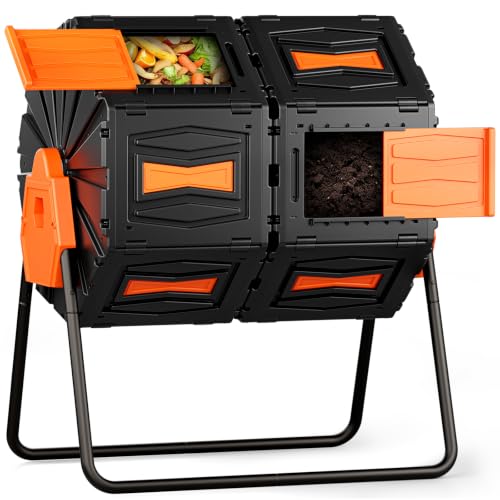
Marcytop 45 Gallon Dual Chamber Compost Tumbler, Orange Door
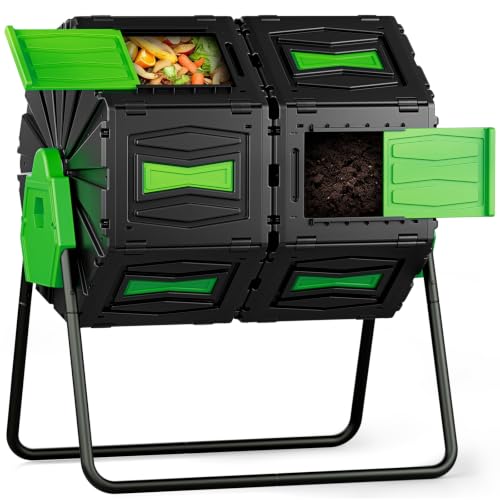
Marcytop 45 Gallon Dual Chamber Compost Tumbler, Green Door

VEVOR 43-Gal Dual Chamber Tumbling Composter with Steel Frame

THE Growing 43 Gal Outdoor Compost Bin Tumbler, Green
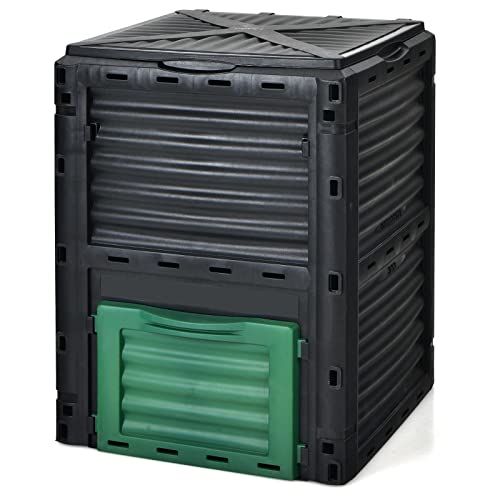
Goplus 80 Gallon Outdoor Composter with Flip Lid and Exit Door

JupiterForce 80 Gallon BPA Free Composter with Gloves, Black
The Strengths Of Each Pick
The Ouaken 4L Electric Composter takes a different route from the backyard tumblers elsewhere on this list. It sits on a countertop, runs on electricity, and handles scraps through a high-temperature drying, grinding, and cooling cycle rather than traditional decomposition. The result is a dry, reduced byproduct you can mix into potting soil without waiting months.
For apartment dwellers or anyone without a yard, this solves the real problem of where food waste goes between trash days. The unit runs quietly, claims an odorless operation, and includes an auto-clean function that takes some of the worst part of countertop composting off your hands. You trade the patience of outdoor composting for electricity and a slightly higher upfront cost.
A Few Strong Suits
- Compact 4L footprint fits neatly beside a coffee maker or knife block in most kitchens.
- High-temperature cycle turns scraps into usable material in hours, not weeks.
- Odorless sealed design keeps smells contained during the drying process.
- Auto-clean function reduces the hands-on maintenance that usually puts people off countertop composters.
Things To Consider
- It uses electricity on every cycle, so operating cost is part of the deal.
- The 4L capacity fills quickly in households that cook from scratch daily.
Who It Suits Best
Apartment residents and small households with no yard access who want a tidy, low-effort way to handle daily food scraps.
Consider Something Else When
You produce more than a small bag of scraps a day and want true outdoor volume, in which case the VIVOSUN 300 Gallon Outdoor Compost Bin is the stronger match.
The Hourleey 43 Gallon Dual Chamber Tumbling Composter is built for first-timers who want the learning curve handled by the design. Two chambers let you fill one while the other finishes, which means beginners never have to dig through a half-broken pile to check progress. The 27.6 by 25.8 by 36-inch footprint fits comfortably in most suburban yards without dominating the space.
Sliding doors on each end make loading and unloading straightforward, and the tumbler design means you can mix contents with a few rotations instead of a fork and patience. Compared to the static bins further down the list, this is a more hands-on style of composting, but also faster once you get the rhythm.
Strengths Worth Knowing
- Dual chamber system means compost is always ready to harvest from one side.
- Aeration holes and deep fins speed up breakdown by keeping oxygen moving through the pile.
- Sliding doors make it easy to scoop finished compost without dismantling anything.
Points To Note
- At 43 gallons total, capacity may feel tight for households generating serious yard waste.
- Tumblers need enough empty space around the axis to rotate fully, so placement takes planning.
Made For
First-time composters who want a forgiving setup that teaches the basics without requiring manual turning.
Look Elsewhere When
You need higher volume or a reinforced frame for rougher weather, where the VEVOR 43-Gal Dual Chamber Tumbling Composter with its steel frame is worth comparing.
The VIVOSUN 300 Gallon Outdoor Compost Bin plays in a different weight class than everything else here. At 300 gallons of capacity, it handles serious volume, the kind that comes from a full lawn, mature trees, and a household producing real kitchen waste. The bin uses HDPE, a high-density polyethylene plastic that resists corrosion and weather, so it sits outside year-round without complaint.
Unlike the rigid tumblers earlier in the list, this is an expandable mesh-style bin. You can adjust its shape and size as your pile grows, which is the real selling point for anyone whose waste output varies by season. It’s less about quick compost and more about long-term processing power.
Real-World Strengths
- 300-gallon capacity absorbs fall leaves, grass clippings, and kitchen scraps in the same pile.
- HDPE construction holds up against UV, rain, and temperature swings through the year.
- Expandable design lets you scale the footprint up or down based on what you’re processing.
A Few Limitations
- It is a static pile bin, so you’ll need to turn compost by hand or with a pitchfork for fastest results.
- The full 300-gallon configuration takes a lot of yard space and may not suit small lots.
Right Fit For
Homeowners with large yards, mature trees, or seasonal leaf volume who want a set-and-forget processing setup.
Swap It Out When
Your yard is modest and you prefer tumbling convenience, in which case the Hourleey 43 Gallon Dual Chamber Tumbling Composter is a friendlier entry point.
The VEVOR 80 Gallon BPA Free Composter lands in the middle of the capacity range, large enough for a serious household but compact enough to fit a typical backyard corner. Its standout feature is four-sided ventilation, with airflow channels on every panel to keep oxygen moving through the pile. That constant breath of air matters because compost microbes need oxygen to work efficiently, and stagnant piles turn anaerobic, meaning they break down without oxygen, which produces smells and slows the process.
Compared to the static VIVOSUN bin, this is a more contained design with a top-loading lid and a bottom door for finished compost. The BPA-free material is a thoughtful touch for gardeners worried about chemical leaching into soil that grows food.
The Helpful Details
- Four-sided ventilation speeds decomposition by feeding the microbes that drive the process.
- 80-gallon capacity handles most suburban households without overflowing.
- Top lid and bottom door create a clean separation between fresh scraps and finished compost.
Some Limits To Know
- Like most static bins, faster results depend on manual turning every week or two.
- At 80 gallons, you may outgrow it within a couple of seasons if your yard produces heavy leaf fall.
Best Suited To
Suburban gardeners running a vegetable bed or flower garden who want BPA-free materials and good airflow in one unit.
Reach For A Different Pick When
You want tumbling convenience to skip manual turning, where the Marcytop 45 Gallon Dual Chamber Compost Tumbler handles that chore for you.
The Marcytop 45 Gallon Dual Chamber Compost Tumbler is built around a simple but effective logic: two 22.5-gallon chambers mean one side is always ready to harvest. The orange door adds a visual pop in the garden, but the real story is the rotating drum design. Each turn mixes the contents, which forces air through the pile and accelerates decomposition compared to leaving everything static.
For most home gardeners, this is the sweet spot of capacity and footprint. It’s not as roomy as the 80- or 300-gallon bins, but the active tumbling produces finished compost in weeks rather than months. The trade-off is physical effort, since you rotate a loaded drum by hand.
Strong Points
- Two 22.5-gallon chambers let you alternate batches for continuous compost output.
- Tumbling design cuts the manual mixing that static bins require.
- Compact enough for smaller yards where a 300-gallon bin would be overkill.
Worth Bearing In Mind
- Rotating a full drum takes a fair bit of elbow grease, especially with wet, heavy material.
- Capacity is shared between two chambers, so the active working volume per batch is half the listed total.
Who Will Love This
Active gardeners who want faster turnaround on finished compost and don’t mind the physicality of tumbling a loaded drum.
Skip It When
You prefer a hands-off approach or have a large property, where the VIVOSUN 300 Gallon Outdoor Compost Bin matches your scale better.
The Marcytop 45 Gallon Dual Chamber Compost Tumbler in green is functionally identical to the orange-door version above, but the color choice matters more than it seems. The green finish blends into garden beds and lawn edges, which gardeners with curated outdoor spaces tend to appreciate. Beyond the door color, you get the same dual 22.5-gallon chambers and rotating drum design.
For households that want the active composting benefits of a tumbler without an industrial-looking piece of equipment in the yard, this version offers a softer visual footprint. It performs exactly the same as its sibling.
What Stands Out
- Green door color blends with garden foliage rather than standing out as industrial equipment.
- Same dual-chamber system enables a constant rotation of fresh and finishing compost.
- Tumbling action reduces the manual turning workload compared to static bins.
Honest Caveats
- Color is purely cosmetic, so you pay essentially the same as the orange-door model with no functional difference.
- Shared capacity between two chambers means each batch works with roughly 22.5 gallons at a time.
Perfect Match For
Garden-focused households who want a tumbler that looks at home among the flower beds and shrubs.
A Better Fit Elsewhere
You produce more than a small bin’s worth of waste per week, in which case the VEVOR 80 Gallon BPA Free Composter offers more working volume.
The VEVOR 43-Gal Dual Chamber Tumbling Composter is the more rugged sibling to the Hourleey model. The steel frame adds stability that matters when you’re rotating a full drum, especially in windy conditions or on uneven ground. The PP (polypropylene) body is built for year-round outdoor exposure, and the two sliding doors let you add scraps and remove finished compost independently.
What separates this from a generic tumbler is the 360-degree rotation. Each turn cycles material more thoroughly than a partial rotation, so composting cycles tend to be shorter. The BPA-free construction is a quiet but real benefit for edible gardens.
The Value In It
- Steel frame adds structural rigidity that pure-plastic tumblers often lack.
- 360-degree rotation promotes faster, more even decomposition than half-turns.
- Two sliding doors give you independent access to each chamber.
Less Ideal Details
- Steel frame adds weight, so moving the unit once assembled is harder than with all-plastic designs.
- 43 gallons split between two chambers means each working batch is modest in size.
Built With In Mind
Year-round outdoor composters who want the speed of tumbling with the structural integrity to handle it.
Another Choice May Suit
You have a small yard and want maximum capacity in a stationary footprint, where the JupiterForce 80 Gallon BPA Free Composter fits more material in less space.
THE Growing 43 Gal Outdoor Compost Bin Tumbler is engineered for a specific pain point: assembly frustration. The pre-embedded metal nuts molded directly into the weatherproof resin panels mean you can drive screws straight into the iron frame without juggling loose washers. For anyone who has wrestled with a composter in a windy yard, solo, this detail is genuinely useful.
Beyond the smart assembly, the dual-chamber design supports year-round cycling, and the green finish keeps it visually quiet in a garden setting. It’s a practical choice for households where one person handles setup and maintenance.
What Earns Its Place
- Pre-embedded nuts eliminate loose hardware and let you assemble the unit without a second pair of hands.
- Dual chambers support continuous compost production through the year.
- Green color integrates well with backyard landscaping.
Practical Considerations
- 43-gallon total capacity is on the smaller side for yards producing heavy fall leaf volume.
- Iron frame adds weight, so consider placement carefully before assembly.
Whose Shelf It Belongs On
Solo gardeners and anyone who dreads complex assembly projects but still wants a real dual-chamber tumbler.
Where A Sibling Pick Shines
You need to process larger yard volumes and don’t mind hand-turning, in which case the Goplus 80 Gallon Outdoor Composter offers more capacity at a similar effort level.
The Goplus 80 Gallon Outdoor Composter is a stationary bin with thoughtful access points. The top flip latch-on lid keeps rain and animals out, while the bottom exit door lets you scoop finished compost without digging through active material on top. The body is made from BPA-free thickened PP with UV inhibitors, so it handles sun exposure without becoming brittle.
At 23.5 by 23 by 32 inches, the footprint is manageable for suburban lots. It uses the same general approach as the VEVOR 80-gallon model, but the latch-on lid system is a different access style that some users find more secure than a simple lift-off top.
Well-Handled Touches
- Latch-on lid stays closed in wind and keeps curious animals out more reliably than friction-fit lids.
- Bottom exit door separates finished compost from active material cleanly.
- PP construction with UV inhibitors is built for permanent outdoor placement.
Small Caveats
- As a static bin, you’ll need to turn the pile by hand for the fastest results.
- The square footprint uses space less efficiently than round bins of similar volume.
Right Fit For
Suburban households that want a secure, lidded bin with clean separation between fresh and finished compost.
Not Your Match When
You’d rather skip the manual turning entirely, in which case a tumbling model like the Marcytop 45 Gallon Dual Chamber Compost Tumbler saves you the work.
The JupiterForce 80 Gallon BPA Free Composter is built for cold and wet climates. The all-weather body is described as frost and rainproof, meaning it handles freeze-thaw cycles and heavy rainfall without cracking or leaking. Each side features four vents for air circulation, which keeps the microbial activity humming even when ambient temperatures drop.
The included gloves are a small but welcome touch, since handling raw compost without hand protection is unpleasant. It’s the kind of detail that signals the manufacturer thought about how the unit gets used, not just how it ships.
Practical Advantages
- Frost and rainproof body holds up in climates with harsh winters and heavy precipitation.
- Four vents per side maintain airflow, which is the engine of fast decomposition.
- Included gloves save a separate purchase and keep hands clean during loading and turning.
Where It May Fall Short
- It’s a static bin, so you’re back to manual turning for fastest results.
- The 80-gallon capacity may still feel tight during peak fall leaf season in wooded lots.
Best Suited To
Gardeners in four-season climates who need a unit that survives winter and still works hard in spring and summer.
Skip It When
You process a large property’s worth of leaves and yard debris, where the VIVOSUN 300 Gallon Outdoor Compost Bin is better suited to the volume.
What Matters Most Before Choosing Garden Composters
Capacity And The Space You Actually Have
A 300-gallon bin is pointless on a small patio, and a 4L countertop unit won’t dent the waste from a quarter-acre yard. Match the composter’s working volume to your realistic output. For most suburban households, 40 to 80 gallons hits the sweet spot between usable capacity and manageable footprint. Bigger isn’t always better, because static bins need turning, and tumblers need rotating, and a half-full large bin composts slower than a full smaller one.
Tumbling Versus Static Designs
Tumblers rotate on an axis, mixing contents with each turn and producing finished compost in weeks. Static bins rely on manual turning with a fork or shovel, which takes more labor and produces compost over months. The trade-off is that tumblers have lower per-batch capacity because the drum needs empty space to rotate. Choose tumbling for speed, and static for volume and lower effort per session.
Materials And Outdoor Durability
HDPE and PP plastics are the standard for outdoor composters, and both handle UV and rain well. BPA-free construction matters if you’re adding compost to edible gardens, since you want zero chemical leaching into soil that grows food. Metal frames add rigidity but also weight, which affects placement and relocation. The honest read is that a well-made plastic bin with a metal support frame tends to outlast an all-plastic unit in real-world conditions.
Access Points And Daily Usability
Top-loading lids, bottom exit doors, and sliding access panels all shape how often you actually use the composter. A bin that’s awkward to fill tends to get ignored. Look for wide openings for the materials you add most (kitchen scraps versus bulk yard waste) and a clean way to extract finished compost without disturbing the active pile.
Key Considerations Across These Picks
Common Shopping Slip Ups
The biggest mistake is buying by total capacity without thinking about working volume. A 43-gallon dual-chamber tumbler only holds about 21 gallons per batch because the chambers split the space. Another frequent trap is underestimating yard space. A 300-gallon bin sounds generous until you measure the actual footprint and realize it dominates a small lot. Buyers also sometimes forget that composters need nearby space for storing browns like dried leaves and cardboard, which feed the carbon side of the decomposition balance.
When Paying More Pays Off
The jump from a basic static bin to a dual-chamber tumbler is the most meaningful upgrade in this category. You get faster compost, easier turning, and a continuous cycle that produces finished material every few weeks. The higher upfront cost pays back through less manual labor and more usable output per season. If your household generates steady kitchen and yard waste, a tumbler typically earns its keep within the first year.
Frequently Asked Questions
How long does it take to get finished compost?
Static bins typically produce finished compost in 3 to 12 months, depending on turning frequency, moisture, and the balance of green (nitrogen-rich food scraps and fresh clippings) to brown (carbon-rich dried leaves and cardboard) materials. Tumblers speed this up significantly, often producing usable compost in 2 to 6 weeks because each rotation forces air through the pile and accelerates microbial activity.
Can composters work in winter?
Yes, but decomposition slows considerably when temperatures drop below freezing. Insulated bins or models rated for frost hold up better, but the microbial activity that drives composting essentially pauses in deep cold. Many gardeners continue adding scraps through winter and resume active processing in spring, when the pile thaws and warms up naturally.
Do composters smell bad?
A well-managed composter with the right balance of greens and Browns should smell earthy, not unpleasant. Bad smells usually signal an imbalance, often too much wet material without enough carbon-rich browns to absorb moisture and balance the nitrogen. Turning the pile and adding dry leaves, shredded cardboard, or straw typically resolves odor issues within a few days.
Where should I place a backyard composter?
Most composters do best on level ground in a spot with good drainage and partial sun, since direct sun dries the pile and deep shade slows microbial activity. Place it within reach of a hose for adding moisture during dry stretches, but not right against the house, since even well-managed piles can attract occasional insects.
Are BPA-free composters worth it for vegetable gardens?
BPA-free construction matters if you’re adding compost to soil that grows food, since the concern is chemical leaching from the bin material into the compost and then into edible plants. For ornamental beds, the concern is less pressing, but BPA-free is a thoughtful standard either way and costs little or nothing extra in this category.
Closing Remarks
The right composter depends on your space, your waste volume, and how much hands-on time you want to spend. Countertop electric units solve the apartment problem, dual-chamber tumblers deliver the fastest results for active gardeners, and large static bins handle serious yard volume with minimal fuss. Pick the design that matches your routine, and the rest of the system tends to fall into place. Your garden will thank you within the first season.
