

Turning a stubborn patch of ground into a workable bed takes the right fork, and the wrong tool makes the work feel twice as long. This roundup rounds up ten garden digging forks built for different soil types, body types, and project scopes, from short-handled border tools to long carbon-steel workhorses. Each pick is chosen for what it actually does in the ground, not what its box promises, so you can match the fork to the task at hand.
The Leading Options At A Glance

Truper 4-Tine Spading Fork 30-Inch D-Handle (30293)
5-Tine Heavy Duty Pitch Fork for Gardening

VNIMTI 4-Tine Spading Fork 45-Inch Steel Y-Grip

Berry and Bird Stainless Steel Hand Weed Fork

Spear and Jackson Neverbend Professional Digging Fork

WORKPRO Hoe and Cultivator Garden Rake 14-Inch

Garden Guru Stainless Steel Hand Weeder Fork

FORCOLID 4-Tine Spading Digging Fork 45-Inch Red
TABOR Tools J59A Digging Fork 40-Inch D-Handle

Dikuyeel Heavy Duty Garden Fork 45-Inch 4-Tine
More Details On Our Top Picks
A 30-inch shaft puts the Truper 30293 in a sweet spot for gardeners who want more leverage than a hand fork but don’t need full adult-standing height. The four steel tines are spaced for genuine soil work rather than light fluffing, so it actually bites into compacted earth instead of skating across the surface.
You get a wooden D-handle for two-handed control during heavy lifts, which matters when you pry up a root mass or lever a stubborn clump loose. For raised beds and tight borders where a 45-inch fork would feel clumsy, this shorter build earns its keep.
Where It Excels
- Compact 30-inch length suits raised beds and shorter gardeners.
- Steel head handles turning, loosening, and aerating tasks without flexing.
- D-handle grip supports two-handed control during heavy lifts.
- Reach is short enough to use comfortably from a kneeling position.
Worth Noting
- Wood handle benefits from an annual oiling to fend off drying and splinters.
- Shorter shaft means more bending for taller users on deep digs.
Key Specs
Best Suited To
Home gardeners working raised beds, kitchen gardens, and shorter reach zones who want a controllable, mid-sized fork.
Look Elsewhere When
Taller gardeners handling deep double-digging projects will find the Spear and Jackson Neverbend Professional Digging Fork’s longer shaft easier to manage.
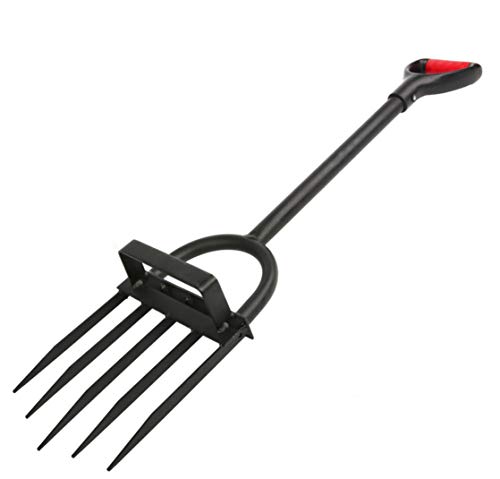
Most digging forks stop at four tines, but this Ymachray model adds a fifth, which spreads each lift across more surface area. That extra contact point makes a real difference when you’re turning compost, fluffing mulch, or working through loose material in bulk.
The longer handle gives a full adult reach, and the layout feels closer to a classic hay fork than a spade. You trade some penetration in hard ground for much better volume handling, which is the right call for loose, fibrous jobs.
Practical Pluses
- Five tines move more material per scoop.
- Long handle suits full-height working posture.
- Better suited to loose, fibrous loads than four-tine designs.
Trade Offs
- Wider tine spacing may struggle in very hard, compacted soil.
- Less specialized for deep digging than narrower four-tine forks.
Whose Shelf It Belongs On
Composters, mulchers, and anyone regularly moving loose organic material in volume rather than prying into packed earth.
Skip It When
You mainly need to break new ground in tight clay, where the Truper 4-Tine Spading Fork 30-Inch D-Handle will penetrate more easily.
VNIMTI’s 45-inch fork lands in that useful middle territory where the shaft is long enough for most adults to stand upright while digging, yet the build stays approachable. A steel Y-grip and wooden shaft form a familiar configuration that handles typical yard work without ceremony.
For gardeners who want full-length reach and a four-tine steel head for bulb lifting, double digging, and compost flipping, this is a sensible everyday tool. Owners commonly find it lighter than expected, which makes longer sessions less tiring.
The Value In It
- 45-inch reach supports upright digging for most adults.
- Four-tine steel head suits bulb lifting, transplanting, and compost work.
- Steel Y-grip adds a solid anchor point for two-handed prying.
- Reasonable weight helps during longer bed-prep sessions.
Points To Keep In Mind
- Wood handle benefits from periodic oiling in dry climates.
- Not built for extreme rocky soil the way a dedicated heavy-duty fork is.
Key Specs
Right Fit For
Home gardeners tackling new bed prep, bulb lifting, and compost turning who want a full-length fork without overspending.
Swap It Out When
You face rocky, root-heavy ground daily, where the TABOR Tools J59A Digging Fork 40-Inch D-Handle’s steel shaft will outlast wood.
The Berry and Bird hand fork belongs in the close-up category of garden tools, the kind you grab for the ten minutes of weeding between coffee and lunch. Its short handle and small stainless tines give precise control in places a full-size fork simply cannot reach.
You use it kneeling beside a bed, working between established perennials, or loosening soil in a patio container. The stainless steel pins resist rust, which matters for a tool that lives outdoors and gets wet often.
Points In Its Favor
- Compact size fits pots, tight borders, and crevice work.
- Stainless tines resist rust and soil sticking.
- Wooden handle ages into a smoother grip over time.
- Good balance reduces wrist strain during detail weeding.
Room For Improvement
- Not built for breaking ground or lifting large root masses.
- Smaller head means more passes for bigger jobs.
Who Should Grab It
Container gardeners, perennial bed maintainers, and anyone needing a precision weeding tool for tight spaces.
Not Your Match When
You’re turning full compost piles or digging beds, where the FORCOLID 4-Tine Spading Digging Fork 45-Inch Red will do the job far faster.
The Spear and Jackson Neverbend earns its pro-grade reputation through materials, not marketing. Forged carbon steel tines (meaning the steel was heated and shaped under pressure for higher density) sit ahead of pressed or welded alternatives, and a weatherproofed hardwood shaft is built to survive wet, cold, and hot storage alike.
For landscapers and serious home gardeners working heavy clay or stony ground, this fork stands up to day-in, day-out punishment. It’s heavier than budget picks, and that heft is part of why it bites into tough soil so effectively.
What Earns Its Place
- Forged carbon steel head resists bending in tough soil.
- Weatherproofed hardwood shaft holds up to outdoor storage.
- Long-lipped riveted socket adds strength at the stress point.
- Trusted brand heritage for landscaping professionals.
Some Limits To Know
- Heavier than budget forks, which can tire out smaller users.
- Premium positioning commands a higher spend than entry options.
Key Specs
Perfect Match For
Serious gardeners and professional landscapers who work abrasive, compacted, or rocky soil and want a fork that lasts.
Where A Sibling Pick Shines
Container gardeners and casual weekend weeders will find the Garden Guru Stainless Steel Hand Weeder Fork more appropriate for everyday detail work.
Strictly speaking, the WORKPRO is a hybrid rather than a traditional digging fork, but its three-tine cultivator side and sharpened hoe blade earn it a place on this list. You flip the head depending on the job, so loosening soil and slicing weeds become one tool rather than two.
The 14-inch handle keeps the build compact, which suits raised beds and quick weeding passes. The catch is that this is a surface tool, not a deep-digging instrument, so it complements a fork rather than replacing one.
A Few Highlights
- Two tools in one: hoe blade and three-tine cultivator.
- Compact handle fits raised beds and kneeling work.
- Quick flip between loosening soil and cutting weeds.
Practical Considerations
- Not designed for deep digging or breaking new ground.
- Assembly required, with a noted orientation during setup.
- Wood handle benefits from occasional oiling over time.
Made For
Vegetable gardeners maintaining established beds who want a fast tool for surface cultivation and weed slicing.
Consider Something Else When
You need to break new ground, where the VNIMTI 4-Tine Spading Fork 45-Inch Steel Y-Grip delivers the leverage and depth required.
The Garden Guru hand fork sits in the same category as the Berry and Bird, but it leans harder into ergonomics. The handle shape is friendlier to longer sessions, and the rust-resistant stainless tines hold up well to wet soil and frequent rinsing.
You reach for it to loosen transplants, pull weeds from mulched beds, and work soil around small perennials. Owners commonly mention that the stainless build cleans up easily, which keeps it ready for the next round.
Everyday Wins
- Rust-resistant stainless tines stand up to moisture.
- Ergonomic handle reduces hand fatigue during longer sessions.
- Easy to rinse clean after wet or muddy work.
- Maneuvers well around small, established plants.
Worth Bearing In Mind
- Not designed for breaking ground or prying large roots.
- Smaller scale means more passes on bigger jobs.
Key Specs
Who Will Love This
Daily bed maintainers and vegetable gardeners who want a comfortable hand tool for routine weeding and transplanting.
Another Choice May Suit
Those working large established borders may prefer the Berry and Bird Stainless Steel Hand Weed Fork for its similar but slightly different balance.
FORCOLID keeps things simple: a 45-inch shaft, a forged steel four-tine head, and a Y-grip for two-handed control. The standout detail is the weight, around 4.5 pounds, which lands lighter than many full-size forks without feeling flimsy.
You trade a bit of mass-driven bite for reduced fatigue, which is a worthwhile exchange for gardeners with smaller frames or anyone working long bed-prep sessions. The red finish also makes the tool easy to spot in tall grass or leaf litter.
Everyday Perks
- Light 4.5-pound build reduces arm and shoulder fatigue.
- Forged one-piece head resists bending in hard soil.
- Y-grip supports firm two-handed control during heavy lifts.
- Bright red finish is easy to find in overgrown beds.
Some Limits To Know
- Lighter weight means slightly less momentum in very hard ground.
- Wood handle benefits from seasonal oiling.
Built With In Mind
Smaller-framed gardeners, seniors, and anyone who wants a long-reach fork that won’t wear them out before lunch.
Reach For A Different Pick When
You regularly work rocky or compacted ground where added fork weight helps drive the tines deeper, in which case the Spear and Jackson Neverbend Professional Digging Fork makes more sense.
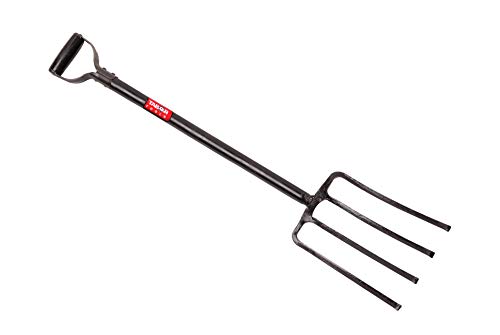
Most digging forks rely on a wooden handle that, given enough seasons, will eventually crack or rot. The TABOR J59A takes a different route with a fully welded steel shaft running from head to D-grip, hardened and tempered for impact resistance. That design choice trades the familiar feel of wood for serious durability.
For gardeners working rocky, root-heavy, or commercial-scale projects, the steel shaft removes one of the most common failure points. The 40-inch length is a touch shorter than many full-size forks, which keeps the tool controlled even with its heavier build.
What Pays Off
- Welded steel shaft removes the wood-rot failure point.
- Forged high-carbon steel tines resist bending in rocky ground.
- D-handle supports heavy, two-handed prying.
- 40-inch length keeps the build controlled despite added weight.
Trade-Offs To Consider
- Heavier than wood-handled forks, which can tire smaller users.
- Steel shaft transmits more vibration into the hands.
- Cold to the touch in winter storage.
Key Specs
The Right Fit
Serious gardeners, smallholders, and professionals working rocky or abrasive soil who want a fork that won’t quit after a few seasons.
A Better Fit Elsewhere
Casual weekend gardeners will find the Dikuyeel Heavy Duty Garden Fork 45-Inch 4-Tine lighter and friendlier for occasional use.
The Dikuyeel fork closes the list with a focus on resilience in tough soil chemistry. Manganese steel gives the head elasticity, so the tines flex slightly under load rather than snapping, and the anti-rust coating adds a layer of defense against acidic or damp ground.
The 45-inch wooden handle keeps the build approachable for most adults, and the one-piece roll-forged head (a process where heated steel is shaped between rollers for denser grain) should hold up to the kind of work that punishes lighter forks. Depending on your soil’s acidity, the coating may be the difference between a tool that lasts one season and one that lasts many.
Positive Points
- Manganese steel head offers good elasticity under heavy load.
- Anti-rust coating helps in acidic or damp soil.
- One-piece roll-forged head resists bending.
- 45-inch reach suits most adult users.
Practical Considerations
- Wood handle needs periodic oiling to stay in shape.
- Anti-rust coating can wear over years of abrasive use.
Who It Suits Best
Gardeners in coastal, damp, or acidic-soil regions who need a corrosion-resistant fork for routine bed work.
Not Your Match When
You work in very rocky ground daily, where the TABOR Tools J59A Digging Fork 40-Inch D-Handle’s all-steel shaft and heavier head will outlast the wooden handle.
What Matters Most When Choosing a Garden Digging Fork
Tine Count, Spacing, and Shape
Four-tine forks are the standard for serious digging because the spacing penetrates compacted soil. Five-tine forks, like the 5-Tine Heavy Duty Pitch Fork, move loose material faster but lose some bite in hard ground. Tine shape also matters: flat, pointed tines dig deeper, while square or rounded tines lift more volume per scoop.
For most home gardens, a four-tine layout with pointed tips strikes the right balance. If you mainly turn compost or fluff mulch, the extra tine pays off.
Head Material and Construction
Forged carbon or manganese steel heads outlast pressed or welded alternatives because the grain structure is denser. A one-piece forged head won’t separate at the tine-to-shoulder junction the way a two-piece design eventually can. Coatings, such as powder coat or anti-rust finishes, add a layer of protection in damp or acidic soil.
Stainless steel is common on hand forks because it resists rust, but it’s softer than carbon steel and less common on heavy-duty digging tools.
Handle Length, Material, and Grip
Handle length should match your height and the work: 30-inch shafts suit raised beds and shorter users, while 40 to 45 inches fit full adult standing height. Wood handles feel familiar and absorb vibration but need occasional oiling. Steel shafts, like the TABOR J59A’s, last longer but transmit more shock and cold.
Grip style affects leverage. D-handles and Y-grips support two-handed prying, which matters for heavy lifts and root work.
Matching the Fork to Your Soil and Project
Light, sandy, or recently worked soil welcomes most forks. Heavy clay, rocky ground, and root-filled beds reward a forged head with pointed tines and a stiffer shaft. If you mostly weed and transplant, a hand fork like the Berry and Bird or Garden Guru covers the daily detail work without overkill.
For most home gardeners, a single mid-size four-tine fork plus a hand fork handles the year, with specialized tools reserved for bigger projects.
Key Considerations Across These Picks
Mistakes Worth Dodging
Choosing a fork by tine count alone often backfires. Five tines sound like more value, but in hard soil they spread force across more contact points and reduce penetration per tine. Match the fork to the soil, not the spec sheet.
Another common slip is ignoring handle length. A 45-inch fork feels unwieldy for shorter gardeners, and a 30-inch fork means constant bending for taller ones. Standing next to the fork before you commit helps avoid the wrong fit.
Where The Extra Money Goes
Premium digging forks charge more for forged steel, sealed or weatherproofed shafts, and tighter quality control. In most home gardens, a mid-tier option does the job well, but for daily pro use or rocky ground, the upgrade pays off in fewer replacements and less fatigue.
Spend more when you’ll use the tool weekly, when the soil is abrasive, or when the failure point (a cracked handle, a bent tine) would derail a project. Spend less when the fork sees light seasonal use and stays out of the weather.
Frequently Asked Questions
What is the difference between a digging fork and a pitchfork?
A digging fork has thick, pointed tines built to penetrate and lift soil, while a pitchfork typically has thinner, more widely spaced tines designed to move loose hay, straw, or mulch.
For turning compost or working beds, a digging fork is the right tool, and a pitchfork will bend under that load.
How many tines should a good garden digging fork have?
Four tines is the standard for general digging because it balances penetration and lift. Five tines work well for loose material but may struggle in hard soil.
Three-tine cultivators, like the WORKPRO’s flip side, are designed for surface work rather than full digging depth.
Are stainless steel forks better than carbon steel?
Stainless steel resists rust and cleans easily, which suits hand forks used in moist conditions. Carbon steel is harder and holds its shape better under heavy load, which is why most full-size digging forks use it.
For daily weeding, stainless is convenient. For digging in abrasive soil, carbon steel usually wins on longevity.
What handle length works best for most gardeners?
Around 40 to 45 inches fits most adults for upright digging, while 30 inches suits raised beds and shorter users. The right length keeps your back relatively straight during work.
Hand forks are a separate category and suit detail work regardless of handle length on full-size forks.
How do I maintain a garden digging fork?
Wipe the head clean after use, dry wooden handles before storage, and oil wood handles annually to prevent cracking. Store forks indoors or under cover to extend their life.
Touch up any chips in the coating to prevent rust from spreading under the finish.
Final Verdict
The right garden digging fork comes down to soil, body, and project size. For most home gardeners, a mid-size four-tine carbon steel fork covers the year, while a hand fork handles the daily detail work. Match the tool to your ground, and the work stops feeling like a fight.
