

A clean edge between lawn and bed is the single most underrated upgrade a yard can get. Skip the weekend of wrestling with string lines, broken shovels, and stones that shift after the first rain. The right garden edging material locks in mulch, stops creeping grass, and gives every bed a frame that looks finished from the curb.
This roundup focuses on what actually works in real backyards: materials that hold shape through a Midwest winter, installations a solo DIYer can finish in an afternoon, and styles that match modern, cottage, and traditional homes. Most options here are no-dig or low-dig, and all of them ship flat-pack friendly. You’ll find stone-look polyrock, flexible plastic strips, corrugated metal, and recycled bender board.
Your Options, Compared

Beuta Polyrock Cobblestone Garden Edging

Beuta Polyrock Greystone 4-Pack Edging
Master Mark Terrace Board Coiled Edging

Shsyue 33ft Flexible 4-Inch Edging Kit

Orgrimmar Pound-In Interlocking Kit
SnugNiture Corrugated Metal Edging 6x50ft
EasyFlex Pound-In Plastic Edging 20ft

Jorvila No-Dig 1.5-Inch x 100ft Edging

GTSABWAY Pre-Rusted Corrugated Edging

Gardzen 40ft x 3-Inch Edging Kit
The Details Behind The Selections
Stone-look edging that doesn’t need a stonemason. The Beuta Cobblestone section is a single 48-inch row of six molded polyrock bricks, each one shaped to mimic the irregular profile of cut cobble. The pieces are made from a recycled composite that handles freeze-thaw without cracking, which is the failure point most DIYers hit with real stone in cold climates.
Each section comes with three ground spikes that lock into pre-formed slots, so installation is a matter of laying the strip and tapping the anchors in with a rubber mallet. The 4-inch width and 2.25-inch height give the bed a defined edge without towering over a short border planting. For a small front-yard flower bed or the strip between driveway and lawn, one pack covers roughly four feet of run.
Features That Help
- Molded polyrock composite resists weather better than real cobble in freeze-thaw zones.
- No-dig installation with included spikes means you avoid trenching and save an afternoon.
- Modular six-brick sections stack end-to-end, so you can run a clean line or step around a corner.
- Stays put through typical rain and irrigation, keeping mulch from migrating into lawn areas.
Things To Consider
- One pack covers only about 4 feet, so a full yard means buying multiple sections or stepping up to the 4-pack.
- The polyrock material can fade slightly over several seasons in full, unfiltered sun.
- Heavier than plastic strip edging, so plan a second trip from the car to the bed.
Who It Suits Best
Homeowners upgrading a small front-yard bed who want the look of real cobble without renting a wet saw or hauling flagstone.
Look Elsewhere When
The Beuta Polyrock Greystone 4-Pack is the smarter move for anyone edging more than a single short bed.
Same polyrock system as the single Cobblestone pack, scaled up for whole-yard jobs. The Beuta Greystone 4-Pack ships four 48-inch sections plus twelve ground spikes, giving you roughly 16 feet of finished edge before any cutting. The Greystone colorway skews cooler and grayer than the Cobblestone option, which pairs better with modern exterior palettes and pale stonework.
Installation follows the same path: lay a section, drive the included spikes, connect the next section. The composite bricks hold their profile through temperature swings, and the 2.25-inch visible height reads as a deliberate frame around beds without dominating low plantings. For a yard with multiple flower beds or a long driveway border, this is the volume option that keeps the look consistent across the whole property.
Positive Points
- Four linked sections reduce the number of joints and keep a long edge visually clean.
- Greystone tone blends with concrete patios, gravel paths, and contemporary home exteriors.
- Made in the USA composite that’s built to handle multi-season outdoor use.
- Enough length to handle a full front bed in one order.
Points To Note
- Heavier than flat plastic strip edging, so plan the layout before you start carrying sections.
- Strictly straight runs; tight curves aren’t this system’s strength.
- Color is a fixed cool gray, so pairing with warm-toned brick may feel off.
Made For
Homeowners wrapping a complete front-yard renovation in one weekend who want one consistent material across every bed.
Swap It Out When
The Master Mark Terrace Board is a better call if your plan calls for sweeping curves rather than straight runs.
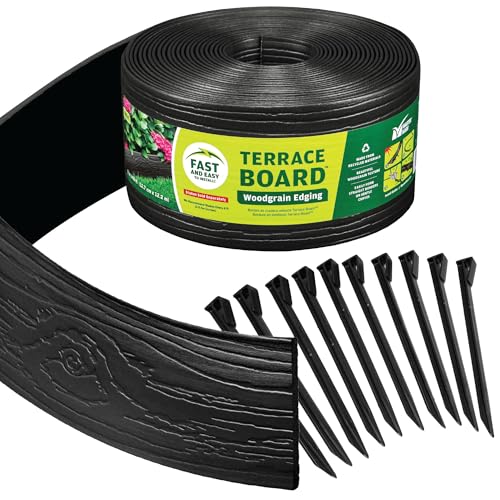
Bender board with a wood-grain finish and serious flexibility. The Master Mark Terrace Board ships as a 40-foot coiled strip, 5 inches tall, with a textured face that mimics rough-sawn lumber. Because it’s a coil rather than rigid sections, you can sweep it into arcs, kidney-shaped beds, or terraced step-downs along a sloped yard without sawing miters.
Ten anchoring stakes come in the box, though most installers end up adding more for long runs. The strip cuts easily with a handsaw, and the dark brown tone reads like aged wood against green foliage. It’s a strong pick for vegetable gardens where you want a soft, natural edge that doesn’t shout, and for curved flower beds where rigid stone-look systems would force awkward piecing.
What Works In Its Favor
- 40-foot coil handles big curved beds in one continuous run.
- Wood-grain texture feels organic in cottage and vegetable garden settings.
- Bends cleanly around established trees and existing irrigation lines.
- Cuts with standard tools, so you can tailor length to the actual bed shape.
Soft Spots
- Includes only ten stakes, so larger layouts need extras.
- Coil memory can fight you on the first few feet before the strip relaxes into shape.
Key Product Details
Best Suited To
Vegetable gardeners and cottage-style bed designers who want flowing curves over rigid geometric lines.
Reach For A Different Pick When
The Orgrimmar Pound-In Interlocking Kit is easier to install if you want a modular, repeatable pattern for tree rings or stepping-stone paths.
Extra wall height for beds that lose the mulch war. The Shsyue 33-foot kit is a 4-inch tall flexible PE strip, which is taller than the typical 1.5 to 2.5 inches you’ll find on budget edging. That extra inch makes a real difference if you top-dress beds with bark, cocoa hulls, or river rock, since the mulch stops short of spilling onto the lawn.
Fifty 8-inch spiral nylon spikes come in the box, which is a generous count for a 33-foot run. The PE bends without cracking, holds a curve, and cuts with scissors if you need a custom length. The spiral spikes anchor firmly and don’t rust, which keeps the look clean if the edging ever shifts and exposes a stake head. Most owners find installation goes fastest on a day after rain, when softer ground accepts the spikes with less effort.
Advantages To Know
- 4-inch wall height contains deeper mulch layers and decorative stone.
- 50 spiral spikes give you secure anchoring along the entire run.
- PE construction flexes for curves but won’t crack in cold weather.
- Cuts with household scissors, no specialty tools required.
Practical Considerations
- Taller profile is more visible from across the yard, which may not suit minimalist landscapes.
- Hard, dry ground makes spike installation more physically demanding.
Who Will Love This
Gardeners applying thick mulch or river rock who need an edging that holds back a deeper material layer without buckling.
Not Your Match When
The Jorvila No-Dig 1.5-Inch Edging is the better low-profile option for separating lawn from a flat bed.
Modular pavers that snap together like Lego for your garden. The Orgrimmar kit ships 40 interlocking PP pieces, each roughly 20 by 5.3 inches, that you pound into the ground individually with a rubber mallet. Because the pieces connect at the ends, you can build straight runs, gentle arcs, or sharp corners without buying specialty corner units.
PP plastic is fully recyclable, holds up to weather, and stays flexible enough that the segments don’t snap in cold weather. The 5.3-inch height gives beds a defined frame, and the black color recedes into soil and mulch, so the edging frames the planting without competing for attention. It’s well suited to tree rings, where the modular pieces wrap a circle cleanly, and to garden paths where the straight-edge profile doubles as a casual mowing guide.
What Helps Most
- 40 modular pieces give you the parts to build long runs or several smaller projects.
- Interlocking joints let you shape tight curves around established trees.
- PP construction is recyclable and weather-stable across seasons.
- Each piece pounds in independently, so you can correct mistakes without redoing the whole line.
Trade Offs
- 40 separate pieces mean more individual stake points than a continuous strip.
- Visible segment joints show up at close range, so the look is more “modular” than “seamless.”
Perfect Match For
DIYers building tree rings, island beds, or geometric garden paths who want a kit that adapts to multiple shapes from one box.
Where A Sibling Pick Shines
The EasyFlex Pound-In Edging is a faster install for a long, mostly straight border where the modular joints would feel excessive.
A 50-foot run of corrugated steel for yards that lean modern. The SnugNiture strip is 6 inches tall, brown with a white coating, and shaped with a repeating corrugated profile that catches shadow and gives the bed a graphic edge. Metal edging like this is the category favorite for contemporary landscapes because the rigid line holds up next to gravel, concrete, and architectural plantings.
Installation is more demanding than plastic strips. The metal is tough but workable, and you bend it by hand for gentle curves or use a mallet for tighter angles. Stake counts and placement depend on your soil, since loose or sandy ground asks for more anchors than compacted clay. Wear gloves; the cut edges of metal edging are a frequent complaint from first-time installers.
A Favorable Mix
- 50-foot coil covers large beds or multiple smaller ones in one order.
- Corrugated profile adds visual texture that reads as a deliberate design choice.
- Steel construction holds shape through temperature swings and foot traffic.
- Brown and white finish blends with wood and pale stone palettes.
Honest Caveats
- Sharp cut edges mean gloves are mandatory during install.
- Heavy compared to plastic strip edging and harder to ship back if you over-order.
- May require extra stakes in sandy or loose soils to stay anchored.
Feature Snapshot
Right Fit For
Design-minded homeowners building a contemporary landscape where the edging is meant to be seen as a feature, not a hidden frame.
Consider Something Else When
The Gardzen 40-Foot Edging Kit is easier on the hands for DIYers who don’t want to wrestle with metal during install.
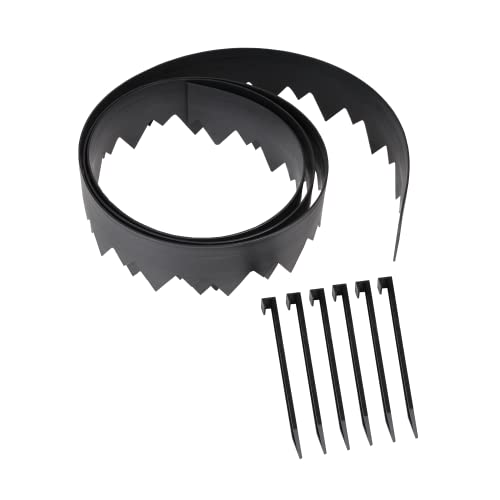
The friendly entry point for first-time landscapers. EasyFlex ships a 20-foot recycled plastic strip with a 4.5-inch straight-top profile, designed to be pounded into the ground with no trenching. You score the soil with a spade, set the edging, and tap it down with a rubber mallet until the top ridge sits at grade.
The strip flexes enough to handle gentle curves, and the recycled plastic construction holds up to sun and rain without becoming brittle. Bonus anchoring stakes ship in the box, which removes the step of sourcing compatible hardware. For a single flower bed or a tree ring, 20 feet is enough to finish the project without leftover material taking up garage space.
Notable Upsides
- No-dig install means you skip the trench and finish in an afternoon.
- Recycled plastic build is flexible enough for curves yet rigid enough to hold line.
- Bonus stakes included so you can start the project the day the box arrives.
- 4.5-inch height provides a visible frame without dominating the bed.
Less-Strong Areas
- Only 20 feet in the box, so larger yards need more than one kit.
Who Should Grab It
First-time DIYers tackling a single bed who want a forgiving material that doesn’t punish small mistakes.
A Better Fit Elsewhere
The Jorvila No-Dig 1.5-Inch x 100ft Edging covers a much longer run when you need a low-profile line for a big lawn edge.
Maximum length for minimum visible profile. The Jorvila kit ships three 33.3-foot strips for a total of 100 feet of plastic edging, plus 120 metal spikes to anchor every foot of run. The 1.5-inch height is the lowest on this list, which is exactly the point: this edging is meant to disappear into the lawn and leave only a clean line between grass and bed.
Low-profile edging like this is popular for separating lawn from a planting bed where you mow right up to the edge. The strip doesn’t bulge above the turf line, so a standard mower wheel rides over it without scalping. The trade-off is that it doesn’t retain much mulch, so deep-bark or stone-topped beds will overflow the 1.5-inch wall.
A Few Strong Suits
- 100 feet of edging handles most suburban front yards in a single order.
- 120 metal spikes keep the strip anchored even in loose or amended soil.
- 1.5-inch profile stays below mower wheels for clean, scalpless cuts.
- No-dig install keeps the project within a single afternoon.
Where It May Fall Short
- 1.5-inch height won’t retain thick mulch or decorative stone.
- Low profile means the edging is less visible as a deliberate design element.
Built With In Mind
Lawn-first yards where the goal is a clean mowing line rather than a visible frame around the bed.
Skip It When
The Shsyue 33ft Flexible 4-Inch Edging is the stronger call for deep mulch beds that need real wall height.
Corrugated metal with a built-in patina, ready to look aged on day one. The GTSABWAY strip comes pre-rusted, so you skip the awkward first-year phase when new metal looks too clean against established landscaping. The 6-inch height gives a strong vertical line, and the 40-foot length fits most medium-size beds without splices.
The metal is flexible enough to bend into gentle arcs and circles, so you can wrap a tree surround or follow the curve of an island bed without kinking. Rust continues to develop over time, which is part of the look. The honest read: pre-rusted edging is intentional, so if you wanted a polished steel finish, the SnugNiture brown and white option is the cleaner read.
A Few Highlights
- Pre-rusted finish looks established the moment you finish installation.
- 40-foot coil wraps a tree surround or island bed in one continuous run.
- 6-inch height gives a deliberate, visible frame to larger plantings.
- Metal construction holds its line through seasons of freeze-thaw.
Things That May Matter
- Continuing rust means runoff can stain adjacent concrete or light stone.
- Metal edges are sharp, so install calls for gloves and a long-sleeve plan.
Whose Shelf It Belongs On
Rustic and farmhouse-style landscapes where a weathered metal edge is part of the design language.
Where Another Pick Suits Better
The SnugNiture Corrugated Metal Edging is the cleaner choice for modern homes where you don’t want rust patina bleeding onto pale hardscape.
A no-dig strip with a sensible 3-inch profile and a generous spike count. The Gardzen kit includes 40 feet of weather-resistant plastic edging and 40 spikes, which gives you an anchor roughly every foot of run. The 3-inch height splits the difference between low-profile lawn edging and tall mulch retention, which is why it works for so many common bed setups.
Installation follows the standard no-dig pattern: stake through every few holes, work your way around the bed, adjust angles by hand for curves. The plastic is sturdy without being rigid, so it flexes for a kidney-shaped bed and holds a straight line on the long side of a rectangular one. The included spikes are plastic, which is fine for most soils but worth noting if your ground runs rocky.
Noteworthy Benefits
- 40-foot coil covers a generous single-bed perimeter.
- 40 spikes mean consistent anchoring along the entire run.
- 3-inch height works for typical 2-inch mulch top-dressing.
- No-dig install keeps the project within a single afternoon.
Where It Is Less Suited
- Plastic spikes may struggle in rocky or heavily compacted soils.
- 3-inch wall isn’t tall enough for deep bark or stone mulch layers.
The Right Fit
Homeowners tackling a first DIY flower bed who want a complete kit with enough stakes to do the job right the first time.
Another Choice May Suit
The Master Mark Terrace Board is the better answer if the bed calls for flowing curves rather than straight runs.
What To Match Between Your Yard And The Edging
Material matters more than brand in this category. Plastic strip edging is the easiest to install and the cheapest to ship, but it fades in full sun and rarely holds a sharp line after a few seasons. Polyrock composite (the Beuta products above) gives you the stone look without the weight, and it handles freeze-thaw better than real cobble. Corrugated metal is the most rigid and the longest-lasting, but it asks for gloves and a real plan for stakes and curves.
The second decision is height. Anything under 2 inches works as a lawn-to-bed separator where the mower rides over the line. Anything from 2.5 to 4 inches is the sweet spot for a typical 2-inch mulch layer. Anything over 4 inches is built for deep bark, river rock, or terraced bed walls. Going taller than you need is a common mistake, since high edging casts visible shadow and competes with low plantings.
Soil type changes the install. Soft, loamy, recently-watered ground accepts plastic spikes with a tap of the mallet. Hard clay, rocky fill, or compacted paths call for metal spikes, and sometimes a starter hole punched with a screwdriver. Curved beds are easiest with continuous strip edging (Master Mark, Jorvila, Gardzen) rather than modular pieces (Orgrimmar), which work best for tight rings and geometric patterns.
Style is the final call. Modern homes pair well with corrugated metal in either the clean SnugNiture finish or the aged GTSABWAY patina. Cottage and traditional homes read better with the polyrock or wood-grain finishes. Vegetable gardens are usually best with the simplest strip edging, since the plants and the trellises do most of the visual work.
Shopping Smart Across This Category
Pitfalls Shoppers Hit
The most common mistake is buying edging that’s too short and ending up with a half-finished bed after one weekend. Measure the full perimeter of every bed you plan to edge, then add roughly 10 percent for cutting waste and layout adjustments. A second frequent miss is underestimating stake count; one stake every two to three feet is the typical minimum, and soft soils call for more.
Height is the third trap. Most first-time shoppers reach for a 4-inch wall because it sounds more substantial, then realize the edge visually overwhelms a low border of pansies or sedum. Match the wall to the mulch depth you actually plan to maintain, not to the maximum the edging can hold.
Where The Extra Money Goes
Spending up buys three things in this category: material, height, and hardware. Polyrock and metal edging cost more than plastic strip because the raw material and forming process are pricier, and they last longer in full sun. Taller walls (4 inches and up) cost more because they use more material per foot. Kits with abundant metal or heavy-duty nylon spikes cost more because the hardware holds up to soil movement and repeated mow-line impacts.
The upgrade pays off when the edging is in a high-visibility spot, when the bed holds heavy mulch or stone, or when you don’t want to redo the project in three years. For a back-yard vegetable bed that nobody photographs, the budget plastic strip is the smarter spend. For a front-yard foundation bed that frames the house, the upgrade to polyrock or metal earns its keep in the long run.
Frequently Asked Questions
How deep should garden edging be buried?
Most plastic strip edging performs best with about two-thirds of its height buried, leaving the top third above the soil line. For a 4-inch strip, that means roughly 2.5 inches in the ground and 1.5 inches visible. Metal edging is similar, but the rigidity means you can get away with slightly less buried depth in soft soil.
Can I install garden edging without digging a trench?
Yes, and most of the kits in this roundup are designed for exactly that. No-dig edging works best when you score the soil first with a flat spade to create a starting line, then drive the edging or its stakes into the ground. The method is faster and avoids disturbing established lawn roots and irrigation lines.
What is the longest-lasting garden edging material?
Corrugated steel and polyrock composite both outlast standard plastic strip edging by several years in outdoor conditions. Steel can last decades but develops a patina that some homeowners love and others find messy. Polyrock holds its color and shape longer than plastic, especially in full sun.
How do I keep plastic edging from popping out of the ground?
Add more stakes, especially through curves and at any joint. Frost heave is the usual culprit in cold climates, and a stake every 12 to 18 inches through the curve keeps the strip seated. Mowing too close to the edging also works it loose over time, so leave a small grass margin if you can.
Should I edge before or after mulching?
Install the edging first, then mulch inside it. The order matters because mulch that spills onto the lawn defeats the purpose of the edging, and the edging gives you a clean line to pour mulch against without it creeping back into the turf. Stake the edging solidly before the mulch goes in, since the added weight tests any weak anchor points.
The Takeaway
Garden edging is one of those upgrades that costs less than a Saturday and pays back every time you step outside. Match the material to your style, the height to your mulch depth, and the install method to your soil. Start with one bed, get a feel for the system, then expand to the rest of the yard once you know what works in your specific conditions.
