

Running one hose from a single spigot gets old fast once the backyard grows. A second drip line, a sprinkler, a kid’s slip-and-slide, and suddenly the spigot becomes the bottleneck of the whole yard. Garden hose splitters solve that by turning one tap into two (or four) controllable outlets, so you can water the front beds while the back lawn gets soaked at the same time. The picks below cover brass, zinc, and stainless builds across two-way and four-way layouts, with options for casual weekend waterers and people who run irrigation on a schedule.
The Shortlist At A Glance

Dalmbox Brass Hose Splitter 2 Way Heavy Duty
Sanpaint Hose Splitter 2 Way Heavy Duty Y Valve

Craft911 2 Way Hose Splitter Heavy Duty Brass (Green)

SNUTUYA 304 Stainless Steel Garden Hose Splitter 2 Way
LNEZCDB Hose Splitter 2 Way Heavy Duty Full Flow (Black)

LFSEMINI 4 Way Hose Splitter with Extension Adapters
Melnor Hose Splitter

BILAL Garden Hose Splitter 2 Way Heavy Duty Y Splitter

RAINPOINT Garden Hose Splitter 2 Way All Metal (Green)

SANTONG High Flow Solid Metal 2 Way ├ Type Splitter (Gold)
The Strengths Of Each Pick
The Dalmbox brass splitter is the kind of piece you screw on once and stop thinking about. Its all-brass body holds up to weather swings, and the dual shut-off valves let you run a sprinkler on one side while you hand-water with a wand on the other. For most yards with a single front-yard spigot and a couple of watering zones, it covers the basics without overcomplicating things.
It comes with rubber washers and Teflon tape in the box, so you can install it right out of the package without a second trip to the hardware store. Compare that to the Sanpaint pick below, which skips the tape; this one is friendlier for first-timers who want everything in one shot.
Everyday Advantages
- All-brass body resists corrosion across seasons, so it stays outdoors year-round without flaking or pitting.
- Two independent valves let you shut one zone off completely while the other runs, saving water and pressure.
- Standard 3/4 inch GHT (Garden Hose Thread, the typical U.S. outdoor tap fitting) threading fits the hose and spigot most people already own.
- Included washers and tape mean a tight, drip-free install on the first try.
Things To Consider
- The lever handles are shorter than the SNUTUYA and RAINPOINT picks, so grip with thick garden gloves is slightly tighter.
- Like most brass units, owners commonly report mineral buildup on the threads in hard-water areas, so a quick annual wipe-down keeps the seal clean.
Key Specs
Who It Suits Best
Homeowners with two watering zones and a standard 3/4 inch outdoor spigot who want a set-it-and-forget-it brass splitter.
Where Another Pick Suits Better
If you want the longest possible lever reach for arthritic hands, the SNUTUYA 304 Stainless Steel Garden Hose Splitter 2 Way offers a noticeably longer handle and a stainless body instead.
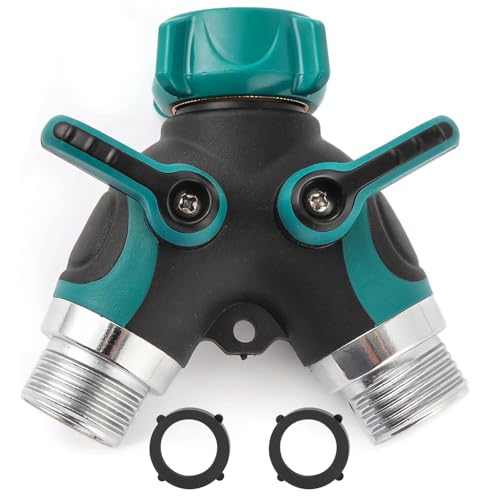
The Sanpaint Y valve leans into a friendlier price without giving up the two-outlet layout most people need. Its zinc alloy body is lighter than the brass picks above, but the metal threaded connections and rubber-coated handles feel solid in the hand. For a small patio garden or a single side-yard tap, the savings are real and the function is the same.
The handles are wrapped in soft non-slip rubber, which makes a bigger difference than you would expect with wet hands or gloves. It is a sensible first splitter for someone who isn’t sure how much they will use it.
Notable Upsides
- Two high-flow valves let both outlets run at the same time without one starving the other.
- Rubber-coated handles stay grippy in rain or with muddy gloves, which most people notice within the first week of use.
- Zinc alloy body keeps the unit light, so it doesn’t weigh down a plastic wall-mounted faucet.
- Standard threading makes it a drop-in replacement for any brass splitter you already have.
Honest Caveats
- Zinc isn’t as corrosion-resistant as the brass or stainless options, so owners in coastal or humid climates may see surface wear faster.
- No Teflon tape included in the box, so first-time installers may need to pick some up separately.
Right Fit For
First-time splitter shoppers running one or two hoses from a patio or side-yard tap who want an easy-grip, lower-cost option.
Consider Something Else When
If you want a heavier, all-metal body for year-round outdoor exposure, the Dalmbox Brass Hose Splitter 2 Way Heavy Duty trades the lighter zinc for brass and ships with tape included.
The Craft911 two-way splitter is built for people who lose track of small metal parts in the grass. The green powder-coated finish makes it easy to spot against mulch or stone, which sounds trivial until you have spent ten minutes hunting for a silver valve among lavender. The brass and metal body underneath the color holds up to the same seasonal abuse as the uncolored brass options above.
Independent shutoff valves on each outlet let you isolate one hose for repair without shutting the whole spigot down. That is genuinely useful when a sprinkler head breaks and you still need the other zone running.
A Few Highlights
- Green finish stands out visually in mulched or stone beds, reducing the chance of misplacing it during seasonal removal.
- Dual independent valves isolate each zone, simplifying mid-season repairs.
- Standard 3/4 inch GHT thread matches U.S. outdoor taps and hose ends without adapters.
Worth Noting
- The finish can scratch if you drop the splitter on concrete, exposing raw metal that may weather differently over time.
- Like the other brass units, hard-water deposits can build on the screen area; an annual descale keeps flow steady.
Best Suited To
Households with multiple gardeners sharing a single tap who want a visible, easy-to-find splitter in busy garden beds.
Skip It When
If you prefer a more neutral finish that disappears against a wall, the LNEZCDB Hose Splitter 2 Way Heavy Duty Full Flow (Black) keeps a low profile by comparison.
The SNUTUYA splitter is the one you buy when you want to stop thinking about hose fittings for the next decade. The 304 stainless body is a grade commonly used in kitchen and food equipment, so it shrugs off rust, salt air, and weather in ways plain brass can struggle to match. The full-flow ball valve inside is sized to keep the stream as open as the spigot itself.
A 0.59 inch ball valve diameter paired with 0.81 inch outlets keeps the water path straight, which matters more than most people realize. A standard splitter narrows the flow at each turn, and you feel the loss as a sluggish sprinkler at the far end of a long run.
The Helpful Details
- 304 stainless body holds up in coastal, humid, or high-UV environments where brass eventually patinas.
- Full-channel ball valve keeps flow resistance low, so two long hoses run without a major pressure drop.
- Long handle makes turning the valves easier with cold or gloved hands.
- Lead-free construction is a quiet plus for edible gardens and kid play areas.
Trade Offs
- Stainless costs more than brass for a similar two-outlet layout, so the upfront is heavier than the Dalmbox option above.
- Stainless threads can gall if you over-tighten; hand-tight plus a quarter turn is the common pattern owners report.
Who Will Love This
Homeowners in coastal or high-rainfall climates who want a long-life, low-maintenance splitter they can leave outdoors for years.
Look Elsewhere When
If you want four outlets instead of two for a large or complex yard, the LFSEMINI 4 Way Hose Splitter with Extension Adapters is the natural sibling in this list.
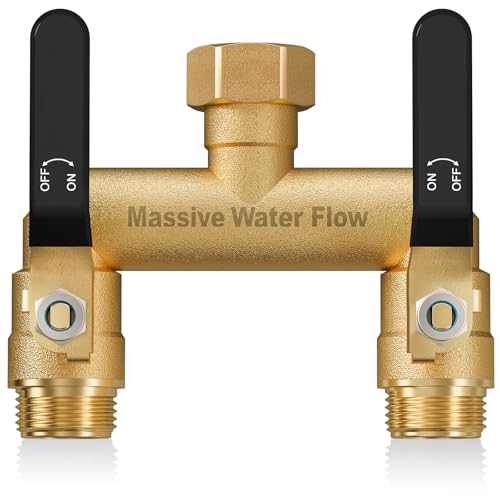
The LNEZCDB is built like it expects to live through real winters. Its brass body is on the thicker side, and the manufacturer specifically calls out rust and freeze resistance for year-round outdoor use. Two long metal handles give you real leverage, which matters when the valves are stiff on a cold morning.
The flow path is also more open than a typical splitter. A 0.1 inch wall thickness and 0.6 inch inner diameter sound modest, but together they keep water moving with less turbulence at each outlet, so a sprinkler at the end of a 50 foot hose still gets decent pressure.
Positive Points
- Thicker brass walls resist splitting during freeze-thaw cycles, which is the most common splitter failure in cold climates.
- Long metal handles give better leverage than the shorter plastic-coated levers on cheaper units.
- Full-flow internal design limits pressure loss across both outlets.
Points To Keep In Mind
- The black finish shows water spots and mineral dust more readily than the green Craft911 or the silver Dalmbox.
- Heavier body can stress a plastic wall-mounted faucet over time; a brass or metal spigot is a better match.
Quick Facts
Perfect Match For
Gardeners in cold or four-season climates who need a splitter that stays on the spigot through winter without cracking.
A Better Fit Elsewhere
If you want a four-outlet layout for a larger property, the LFSEMINI 4 Way Hose Splitter with Extension Adapters handles more zones from one tap.
When two outlets aren’t enough, the LFSEMINI four-way splitter takes over. It is a brass body with four independently controlled valves, which turns one spigot into a small irrigation manifold. The package also ships with hose coiled spring protectors, spare rubber washers, and thread sealing tape, so you have what you need for a clean install the first time around.
The four-outlet layout is genuinely useful for a property with multiple zones: a front lawn, a side bed, a vegetable row, and a drip line. With two-way splitters, you would need two of them stacked or accept running back and forth to switch.
Useful Highlights
- Four independent valves give you zoned control from a single spigot, which is rare at this level.
- Accessory kit includes spring protectors, spare washers, and thread tape for a complete install out of the box.
- Solid brass body holds up to weather exposure and frequent on-off cycling.
Minor Gripes
- Four outlets run at once will reduce pressure at each one, so it is not ideal for a long soaker hose run on a low-pressure supply.
- The splitter is wider than a two-way unit, so leave clearance on the spigot for the body and the four hoses.
Feature Snapshot
Who Should Grab It
Property owners with three or more watering zones who want one tap to drive them all at the same time.
Not Your Match When
For a simple two-hose setup, the Dalmbox Brass Hose Splitter 2 Way Heavy Duty is a more compact and lower-cost alternative.
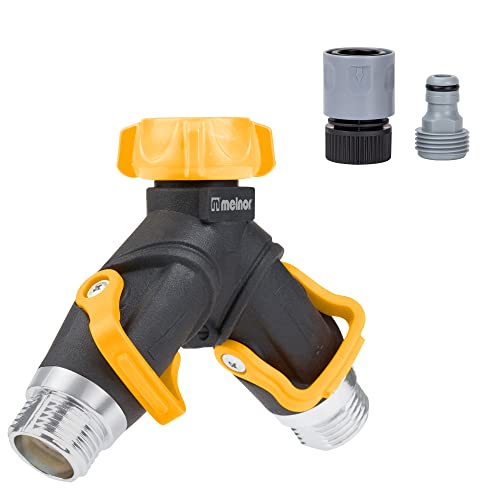
Melnor has been in the home watering space long enough that the name alone signals an easy install and a sensible design. This splitter fits that reputation. It is a simple two-outlet unit that focuses on the basic job of giving you a second hose without adding weight or complexity to the spigot.
For a casual gardener who waters a small lawn and a flower bed, the appeal is the no-fuss experience. The brand is widely available, the unit is inexpensive, and the parts you need to swap it in are standard.
Reasons It Performs
- Established watering brand with broad accessory compatibility, so replacement washers are easy to find.
- Lightweight body is gentle on plastic wall-mounted faucets.
- Simple two-valve layout is approachable for first-time users.
A Few Limitations
- The construction is lighter than the heavy brass and stainless options above, so high-frequency daily use may wear it faster.
- Source details are limited on materials, so shoppers wanting a clear brass or stainless spec may prefer the Dalmbox or SNUTUYA options.
Built With In Mind
Casual weekend gardeners who want a familiar brand and a simple two-zone split without extra weight on the spigot.
Reach For A Different Pick When
For a heavier brass build with included tape and washers, the Dalmbox Brass Hose Splitter 2 Way Heavy Duty is the more robust alternative.
The BILAL Y splitter keeps the design honest: brass body, two valves, one extended handle. That extended handle is the part you actually notice in daily use, because it gives your fingers more room to grip and turn without crowding the hose connections underneath. For a tight side-yard spigot where the wall is six inches away, that extra clearance is genuinely useful.
It is a strong middle-ground pick for people who don’t need four outlets but want something more substantial than the budget zinc option.
Advantages To Know
- Extended handle improves access in tight installations where a short lever would hit the wall.
- Brass body matches the corrosion resistance of the Dalmbox option at a similar footprint.
- Two independent valves let you run, shut off, or redirect each line without affecting the other.
Room For Improvement
- Flow rate is the typical splitter kind, not the full-flow design of the LNEZCDB or SNUTUYA picks.
- Only one handle is extended; the other is shorter, which can feel uneven until you get used to it.
Whose Shelf It Belongs On
Gardeners working with tight side-yard or wall-mounted faucets who want a brass splitter with extra handle clearance.
Swap It Out When
For maximum flow on long hose runs, the SNUTUYA 304 Stainless Steel Garden Hose Splitter 2 Way with its full-flow ball valve is the stronger pick.
The RAINPOINT splitter is built for the gardener who actually uses the tap every day. The all-metal valves and body are coated in a TPR (thermoplastic rubber) finish that adds grip and weather protection, and the side handle stretches out to 2.05 inches for a long lever. If you have ever fumbled a stiff splitter valve in February with numb fingers, that handle reach is the whole reason to look at this pick.
The manufacturer also claims a 60,000-plus cycle durability test, which is the kind of detail that matters if you run the splitter on a daily irrigation timer rather than a casual once-a-week watering.
What It Does Well
- All-metal internal valves (no plastic seats) hold up to high-frequency daily cycling.
- 2.05 inch extra-long side handle is the longest lever in this roundup, easing operation for stiff or gloved hands.
- TPR weather coating adds grip and helps the green finish resist UV fading over seasons.
Points To Note
- Higher cost than the basic brass picks, so the upgrade mainly pays off for heavy daily users.
- All-metal valves are slightly heavier, so consider the spigot’s mounting strength before leaving it through winter.
At A Glance
The Right Fit
Heavy users running a daily irrigation timer or large property who want an all-metal splitter with the longest handle reach in this list.
Another Choice May Suit
For a lighter two-way setup without paying for the premium metal valves, the Dalmbox Brass Hose Splitter 2 Way Heavy Duty covers the same basic job at a lower tier.
The SANTONG splitter is the one to reach for when flow matters more than count. It uses a ├ (T) style outlet configuration, a solid metal body, and a wider internal bore to keep water moving. The 360 degree rotation at the spigot end is a small detail that pays off when you have two hoses pulling in awkward directions and you need the body to spin instead of the spigot.
Pressure washers and soaker lines are the two setups that benefit most from a high-flow design. Both can suffer badly at the kind of splitter that chokes the stream, and this one doesn’t.
Where It Delivers
- Wider internal bore and full-flow path keep pressure high for pressure washers and long soaker hose runs.
- 360 degree rotation at the spigot end prevents hose kinks when outlets face different directions.
- Solid metal body with silicone washers (silicone holds seal better than rubber over time) resists corrosion across seasons.
Things To Weigh
- Two outlets only, so it isn’t a substitute for the four-way LFSEMINI if you need more zones.
- Gold finish is decorative, which some shoppers like and others find loud in a garden setting.
Made For
Homeowners running a pressure washer or long soaker lines who need maximum flow with no choke at the splitter.
Where A Sibling Pick Shines
For four-zone control instead of high flow on two, the LFSEMINI 4 Way Hose Splitter with Extension Adapters serves a different layout need.
What Matters Most Before Choosing Garden Hose Splitters
Material And Climate Fit
Brass is the workhorse material for most splitters and handles mild climates well. Stainless steel (especially 304 grade) is the next step up for coastal, humid, or high-UV exposure, where plain brass can patina faster. Zinc alloy keeps the cost down and works fine for shaded or sheltered taps, but it will weather faster outdoors than brass.
Cold-climate gardeners should look for freeze-resistant bodies and thicker walls. The LNEZCDB specifically calls out freeze resistance, and the wider flow path inside keeps ice from forming in trapped pockets of standing water.
Valve Layout And Flow
Two-way Y splitters are the common choice and cover most home setups. Four-way splitters are the right call when you have three or more distinct watering zones, but be aware that running four lines at once drops the pressure at each outlet. A full-flow or wide-bore design (SANTONG, SNUTUYA, LNEZCDB) keeps that pressure drop smaller.
Independent shut-off valves on each outlet cost a little more but save real hassle. They let you isolate a broken sprinkler head or a leaky hose without shutting the whole spigot down, which is the kind of convenience you appreciate the first time you need it.
Threading, Handles, And Install Details
Standard 3/4 inch GHT is the U.S. outdoor norm, and every pick here uses it. If you see a different thread size, you will need adapters, so stick with GHT unless you have a specific reason not to. Handle length matters more than most shoppers expect: longer levers (SNUTUYA, RAINPOINT, LNEZCDB) are easier on stiff hands, cold mornings, and thick gloves.
Look at what ships in the box. Rubber washers are essential; Teflon tape and spare washers (Dalmbox, LFSEMINI) save a trip to the hardware store. Spring protectors on the LFSEMINI kit also help prevent hose-end kinking right at the connection.
Practical Notes Across These Picks
Where Shoppers Go Wrong
The most common slip-up is buying by outlet count alone. Four outlets sound great until pressure at each one drops to a trickle on a low-flow supply. Match the splitter to the actual number of zones you run at the same time, not the maximum you might use on a busy day.
Another trap is ignoring spigot material. Heavy brass and stainless splitters can stress a plastic wall-mounted faucet over years of use. If your tap is plastic, look for lighter builds (Sanpaint, Melnor) or plan to upgrade the faucet before mounting the heavier units.
Where The Extra Money Goes
The upgrade from budget zinc to brass is mostly about corrosion resistance and valve longevity, and it pays off for anyone leaving the splitter on the tap year-round. The step from brass to stainless (SNUTUYA) or coated all-metal (RAINPOINT) buys you freeze tolerance, longer cycle life, and noticeably less wear in harsh weather.
For pressure-sensitive tools like soaker hoses and pressure washers, the wider flow path on the SANTONG and LNEZCDB is a real-world performance upgrade, not just a spec-sheet difference. You feel it at the end of a long hose run.
Frequently Asked Questions
How many outlets do I really need on a hose splitter?
Count the zones you water at the same time, not the total you might use across a week. Two is plenty for most home yards, while four is justified only when you have multiple distinct beds or irrigation lines running simultaneously.
Does brass or stainless last longer outdoors?
Stainless steel (such as 304 grade) generally outlasts brass in coastal, humid, or high-UV settings. Brass is plenty durable in temperate climates and costs less upfront, making it the more common choice for most backyards.
Will a splitter reduce my water pressure?
Any splitter narrows the flow path slightly, so expect a small drop. Full-flow designs with wider internal bores (SNUTUYA, LNEZCDB, SANTONG) minimize the loss, while four-way splitters running all outlets at once will show the biggest drop per outlet.
Are silicone washers better than rubber?
Silicone washers tend to hold a tighter seal longer and resist deformation better than standard rubber. They are a quiet upgrade, especially in splitters that get cycled on and off frequently through the season.
Can a hose splitter stay on the spigot through winter?
Most brass and stainless units handle winter fine if the hoses are drained and disconnected, and the valves are left slightly open to prevent trapped water from freezing. Plastic and thin-wall zinc units are more likely to crack in repeated freeze-thaw cycles.
Wrap Up
For a dependable two-zone setup that just works, the Dalmbox brass splitter and the SNUTUYA stainless unit cover the most common needs at different price points. Larger properties with more zones benefit from the LFSEMINI four-way kit, and pressure-sensitive tools like washers and soakers run best through a full-flow design like the SANTONG. Pick by climate, outlet count, and how often you actually turn the tap, and the rest of the choice gets easier.
