

Tap water carries more than you think. Chlorine, chloramine, sediment, and trace metals ride every drop from the spigot to your tomato bed, your RV tank, or the inflatable pool your kids cannonball into. Garden hose water filters slot in at the hose bib and quietly strip out the worst of it, no plumbing required.
Most people reach for one when plants start sulking, when the dog starts refusing the kiddie pool, or when the RV’s first fill smells like a public pool. This list covers ten options built for different jobs: hydroponics, RV travel, hot tubs, pressure washers, and plain old lawn care. The right filter depends on what’s in your water and what you need it not to do.
A Quick View Of The Lineup

Camco GardenPURE Carbon Water Filter for Improved Plant Health (40691)

Camco Tastepure RV Water Filter GAC & KDF (40043)

Camco Tastepure XL RV Water Filter with Hose Protector

Camco Hydro Life 52700 Inline Water Filter C-85

Bringpure RV Water Filter with 90-Degree Elbow
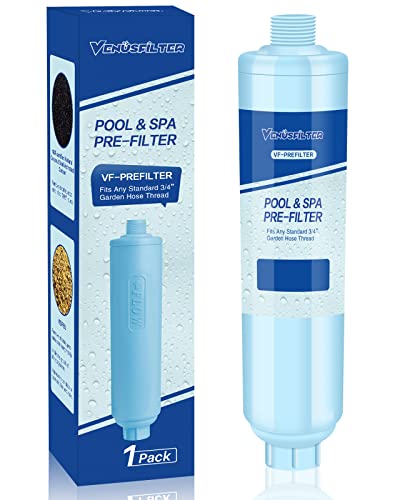
VENUSFILTER Garden Hose Filter for Hot Tub and Pool

Beckacher 2-Pack RV Inline Water Filter

POOLPURE Garden Hose End Pre Filter 2-Pack
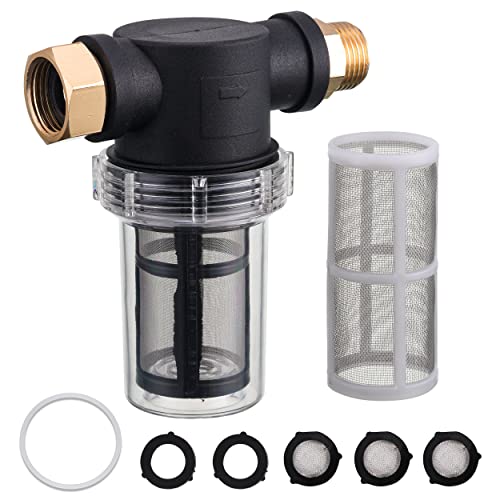
JOEJET Garden Hose Sediment Filter Attachment

BEETRO Garden Hose Filter with 100 and 40 Mesh Screens, 3 Sets
More Details On Our Top Picks
The Camco GardenPURE is the first pick in the lineup, and it earns that spot for one simple reason: it focuses on the chemicals that actually stress plants. Where most hose filters chase chlorine alone, the GardenPURE uses granular activated carbon to strip both chlorine and chloramine from municipal water. That matters for anyone running a hydroponic or aeroponic system, where the wrong water can quietly smother the beneficial bacteria living in the root zone.
Inline installation keeps things tidy. You snap the filter between the spigot and the hose, run water through it for a minute to flush carbon fines, and you’re done. Compared to the RV-focused Camco Tastepure covered later, this one skips the high-flow marketing angle and stays focused on gardening chemistry. The trade-off shows up in capacity, since smaller carbon beds mean more frequent replacement in busy setups.
A Strong Showing
- Targets both chlorine and chloramine, not just one of them
- Inline design means no extra fittings or adaptors
- Activated carbon media is well suited to soil-less growing systems
- Standard 3/4-inch garden hose threading fits most setups
Things To Consider
- Carbon media has a finite lifespan and needs periodic replacement
- Not designed to handle sediment-heavy well water
- Flow rate may slow slightly as the carbon loads up over time
At A Glance
Who It Suits Best
Organic-leaning gardeners and hydroponic growers whose municipal supply runs heavy on chloramine.
Where Another Pick Suits Better
Road-trippers filling an RV tank will get more from the Camco Tastepure RV Water Filter GAC & KDF (40043), which is built for high-flow campsite hookups.
Ask any seasoned RVer what filter lives in their bay, and the Tastepure name usually comes up first. This unit pairs granular activated carbon (GAC) with KDF media, a copper-zinc alloy that reduces heavy metals through a redox reaction. Together, they tackle the unpleasant taste and smell of campground water, plus the iron and sulfur that some well-fed park hookups carry.
The flexible hose protector is the small detail that earns real appreciation. Without it, the rigid filter housing can kink the line at tight hookups, and a kinked hose is a slow-flow hose. Compared to the gardening-focused Camco GardenPURE Carbon Water Filter at the top of this list, the Tastepure is tuned for drinking-water scenarios rather than root-zone chemistry. For most weekend campers, the balance is exactly right.
A Few Highlights
- KDF media reduces heavy metals that activated carbon alone misses
- Flexible hose protector cuts down on kinks at awkward hookups
- High-flow design keeps water pressure steady during tank fills
- Standard garden hose threading fits RV, marine, and home use
Worth Noting
- Capacity is best matched to short trips, not full-time RV living
- Heavy-metal reduction claims are tied to specific flow rates and contact time
Feature Snapshot
Made For
Weekend and seasonal RVers who want reliable drinking-water taste at campground spigots.
Consider Something Else When
Full-time road life drains filters fast, so the Camco Tastepure XL RV Water Filter with Hose Protector is the better call for year-round travelers.
Where the standard Tastepure handles a long weekend, the XL version stretches to a full season. The housing is larger, the carbon bed is denser, and the rated capacity roughly doubles, so you spend less time tracking replacement intervals and more time enjoying the trip. For full-timers, snowbirds, and anyone hauling a marine tank through unfamiliar water systems, that headroom matters.
The flexible hose protector is the same thoughtful touch carried over from the standard unit. Compared to the smaller Tastepure, the trade-off is bulk: this filter takes up more bay space and weighs noticeably more. For most weekend RVers, the standard Camco Tastepure RV Water Filter GAC & KDF (40043) is plenty, and the XL’s extra capacity goes unused.
Strengths Worth Knowing
- Larger carbon bed extends filter life between swaps
- Same GAC and KDF media combination as the standard Tastepure
- Flexible hose protector reduces stress on bay plumbing
Trade Offs
- Bulkier housing is less friendly to small RV storage bays
- Higher media cost when replacement time arrives
Best Suited To
Full-time RVers, extended-stay campers, and marine owners who burn through more gallons per trip than casual travelers.
Not Your Match When
Light weekend use doesn’t justify the size, in which case the standard Camco Tastepure RV Water Filter GAC & KDF (40043) makes more sense.
The Hydro Life 52700 sits in an interesting middle ground. It’s labeled as a hydroponics filter, but the technology under the hood, catalytic carbon paired with KDF-85, makes it just as useful for any household that draws chloramine-heavy municipal water. KDF-85 is the variant of KDF specifically tuned for iron and hydrogen sulfide reduction, which adds an extra layer if your supply carries either.
The flexible hose protector is a familiar Camco touch. Compared to the gardening-only Camco GardenPURE Carbon Water Filter for Improved Plant Health (40691) at the top of this list, the Hydro Life trades a slimmer profile for tougher chemistry. For most chloramine-heavy municipalities, that extra protection is the right call.
Where It Delivers
- Catalytic carbon handles chloramine where standard carbon falls short
- KDF-85 media adds iron and hydrogen sulfide reduction
- Inline design drops into existing hose and spigot setups
- Flexible hose protector keeps tight installations stress-free
Points To Note
- Pricier than basic carbon-only options
- Heavier housing in the hand than simpler garden-hose filters
Who Will Love This
Hydroponic growers and homeowners whose municipal reports show chloramine or trace iron.
Skip It When
You only need chlorine reduction and a lightweight setup, in which case the Camco GardenPURE Carbon Water Filter for Improved Plant Health (40691) is the simpler match.
The Bringpure does something most RV filters ignore: it accounts for the awkward angle between the campground spigot and your water bay. A built-in 90-degree elbow rotates the inlet so the hose drops naturally instead of fighting a straight filter body. For anyone whose hookup sits low, close to the ground, or pinned against a wall, that small change removes a real headache.
The media inside is a familiar GAC and KDF pairing, the same recipe used in the Camco Tastepure RV Water Filter GAC & KDF (40043) covered earlier. Where the Camco leans on brand familiarity, the Bringpure leans on geometry. For most RVers, the difference shows up on the very first hookup.
What It Does Well
- 90-degree elbow takes strain off the hose and filter body
- GAC and KDF combo addresses chlorine taste and trace metals
- Flexible hose protector shields the connection point
Minor Gripes
- Less widely stocked than legacy RV filter brands
- Elbow orientation takes a moment to plan for tight bays
Quick Facts
Perfect Match For
RVers with low-clearance hookups or unusually tight bay layouts where straight filters won’t sit cleanly.
Look Elsewhere When
Your hookup is already spacious, and you’d rather lean on the brand familiarity of the Camco Tastepure RV Water Filter GAC & KDF (40043).
Hot tub owners live with a small chemistry problem. Every time you top off the tub with a garden hose, you dump chlorine, heavy metals, and sediment straight into balanced water. The VENUSFILTER takes aim at that problem with coconut shell activated carbon, a finer and more porous carbon source than the coal-based carbon in many garden filters, layered with KDF media for metal reduction.
The 3/4-inch garden hose thread is standard, so it threads onto any outdoor spigot without adaptors. Compared to the gardening-only Camco GardenPURE Carbon Water Filter for Improved Plant Health (40691) earlier in this list, the VENUSFILTER skews toward recreational water chemistry. You may find the carbon bed life shorter under the high flow rates of filling a 400-gallon tub, but for monthly top-offs, the chemistry is on point.
Practical Pluses
- Coconut shell carbon offers finer adsorption than standard carbon
- KDF media strips heavy metals that bother spa water balance
- Standard garden hose threading fits any outdoor spigot
Honest Caveats
- Large-volume hot tub fills consume media capacity quickly
- Not a substitute for proper spa sanitizers after the fill
Right Fit For
Hot tub, spa, and small pool owners who want cleaner source water during top-offs and seasonal fills.
A Better Fit Elsewhere
Large pool owners topping up weekly should consider the POOLPURE Garden Hose End Pre Filter 2-Pack, which spreads the workload across two cartridges.
The Beckacher lands here because of math, not just chemistry. Two filters in a single box means you always have a fresh cartridge ready when the current one reaches the end of its service life, and that single fact removes the most common reason campers end up drinking unfiltered water mid-trip. The media inside is the now-familiar GAC and KDF pairing, so the actual filtration matches what the larger single-unit options deliver.
Compared to the Camco Tastepure RV Water Filter GAC & KDF (40043) earlier, the Beckacher trades brand reputation for redundancy. The flexible hose protector is included, which keeps the connection stress-free. For most casual travelers, this is the practical choice: one filter in use, one in the storage bin, no last-minute rush.
Everyday Wins
- Two filters means a backup is always on hand
- GAC and KDF media handles taste, odor, and trace metals
- Flexible hose protector reduces strain on the connection
Softer Spots
- Per-unit replacement cycles are shorter than the larger XL cartridges
- Storage of two filters takes more bay space than a single unit
Feature Card
Whose Shelf It Belongs On
Road trippers and weekend RVers who want a backup filter on hand without buying two separate single units.
Swap It Out When
Longer trips drain single units faster; the Camco Tastepure XL RV Water Filter with Hose Protector stretches capacity further between swaps.
Inflatable pools and kiddie pools are everywhere in summer, and the water inside them comes straight from whatever the hose delivers. The POOLPURE end-of-hose pre-filter keeps that water friendlier on sensitive skin, since chlorine and sediment are the two complaints you hear most. Two units in a pack means one stays installed at the pool while the other handles a separate hose for the lawn.
Compared to the hot tub-focused VENUSFILTER Garden Hose Filter for Hot Tub and Pool, the POOLPURE skews toward casual, higher-volume residential use. The threaded connection is standard garden hose sizing, so it fits any outdoor spigot. For most families, the dual-pack format is the real selling point.
Points In Its Favor
- Two filters in a pack spreads workload across multiple hoses
- Standard garden hose threading fits any outdoor tap
- Helpful for households with both a pool and a garden
Points To Keep In Mind
- Filtration media is tuned for pools, not hydroponic nutrient control
- Carbon life shortens under heavy summer fill schedules
Built With In Mind
Families topping up inflatable pools, kiddie pools, and slip-and-slides throughout the summer.
Another Choice May Suit
Hydroponic growers need different media chemistry, and the Camco GardenPURE Carbon Water Filter for Improved Plant Health (40691) is the better gardening match.
Pressure washers are surprisingly picky about incoming water. Sand, rust flakes, and scale fragments passing through the inlet can score pistons and clog nozzles in a single season, and that’s an expensive repair to trace back to a cheap hose bib. The JOEJET sits between the spigot and the pressure washer inlet to catch that debris before it gets into the pump.
This is a sediment filter, not a chemical filter, so it doesn’t bother with chlorine or chloramine. The 3/4-inch garden hose threading matches standard pressure washer inlets, and the housing is rated to typical residential working pressure. Compared to the carbon-and-KDF media used in the RV filters earlier in this list, this is a fundamentally different job: mechanical, not chemical.
Bright Spots
- Stops sediment and rust that damage pressure washer pumps
- Standard 3/4-inch threads fit most pressure washer inlets
- Inline design keeps the hose run clean and direct
Room For Improvement
- Doesn’t address chlorine or chemical taste concerns
- Screen needs occasional rinsing to maintain flow
The Right Fit
Homeowners running pressure washers off outdoor spigots that pull from older municipal or well-fed lines.
Reach For A Different Pick When
Drinking-water taste is the goal, in which case the Camco Tastepure RV Water Filter GAC & KDF (40043) is a more targeted match.
Mesh size is the secret vocabulary of pressure washer protection. A 100-mesh screen catches very fine particles but restricts flow, while a 40-mesh screen lets more water through but lets finer grit pass. The BEETRO package includes both, plus the washers and gaskets you need to swap between them. That flexibility is the reason it earns a spot here.
You get three filter housings in the box, so the package suits multi-tool households or anyone with a workshop, garden, and driveway setup. Compared to the single-unit JOEJET Garden Hose Sediment Filter Attachment just before it, the BEETRO trades compactness for choice. The trade-off shows up in storage, since three housings take more shelf space than one.
Positive Points
- Two mesh sizes (100 and 40) cover fine sediment and higher flow
- Three filter housings suit multi-hose households
- Standard 3/4-inch garden hose threading fits common spigots
Less Ideal Details
- Mechanical filtration only, no chemical treatment
- Three housings take more shelf space than single-unit options
Key Specs
Who Should Grab It
First-time pressure washer owners who want a forgiving package that grows with their tool collection.
Where A Sibling Pick Shines
Single-spigot households can skip the extras and lean on the simpler JOEJET Garden Hose Sediment Filter Attachment.
Choosing The Right Garden Hose Water Filter For Your Setup
Filter type should match your goal before brand loyalty ever enters the picture. Carbon-only filters handle chlorine taste and odor in soil and tap water, while GAC and KDF combinations go further by addressing trace metals. Catalytic carbon steps up further for chloramine-heavy municipal supplies, and pure sediment screens protect pressure washer pumps from grit that would otherwise score moving parts.
Hose threading matters more than people expect. Standard 3/4-inch garden hose thread fits most outdoor spigots in the US, but RV and marine hookups can sit at awkward angles that demand a flexible hose protector or a 90-degree elbow. Pick a filter that fits the geometry of the bay, not just the chemistry of the water.
Capacity sets the replacement rhythm. Small carbon cartridges work for occasional gardening and short RV weekends, but full-time travelers and large hot tub owners run through them fast. A larger XL cartridge or a two-pack reduces the chance of mid-trip surprises, and a clear replacement habit matters more than the brand on the housing.
Build details and connection hardware shape day-to-day ownership. Flexible hose protectors cut down on kinks and stress fractures, and rigid housings tend to outlast flimsy plastic at high flow rates. Where the filter sits also affects its lifespan, since a filter that lives outside in direct sunlight will need more frequent replacement than one stored indoors between uses.
Things Worth Knowing Before You Buy
Where Shoppers Go Wrong
The most common mistake is matching the filter to the water problem you imagine rather than the water you actually have. Municipal supplies vary widely, and a carbon-only filter that handles chlorine well can leave chloramine completely untouched. Pulling a recent water quality report, even a free one from your utility, saves you from buying the wrong media twice.
Another trap is forgetting about flow rate. Pressure washers and large hot tub fills punish undersized filter housings, and the resulting pressure drop is easy to misread as a clogged filter. The fix is sizing the filter housing to the job, not to the cheapest option on the page. A pressure washer deserves a sediment filter with adequate mesh area, while a small herb garden needs a lightweight carbon unit that won’t choke a watering wand.
When Paying More Pays Off
Spending up makes sense when the filter’s job is critical, like hydroponic nutrient water or a full-time RV drinking supply. Higher-tier models use catalytic carbon or KDF media that lasts longer and handles tougher chemistry, and the larger housings stretch the time between swaps. The upgrade payoff is the difference between replacing a filter every few weeks and every few months, which adds up fast for anyone running serious volume through the hose.
Frequently Asked Questions
How often should a garden hose water filter be replaced?
Replacement depends on use volume and source water quality, but most carbon cartridges need swapping every few months under typical residential use. RV filters on the road often reach the end of service life faster because campground water can carry more sediment.
Can a garden hose filter be used for drinking water?
Many inline filters are built specifically for drinking water on RV and marine trips, and the GAC and KDF media combinations target taste, odor, and heavy metals. Residential use for drinking water is less common and depends on the local supply.
Will a carbon filter remove chloramine from tap water?
Standard activated carbon handles chlorine well but struggles with chloramine, which is a more stable compound. Filters labeled as catalytic carbon or paired with KDF media are the reliable option for chloramine-heavy municipal supplies.
Do pressure washer sediment filters affect water pressure?
Yes, finer mesh screens restrict flow more than coarser ones, and undersized housings create pressure drop. Choosing a mesh size that matches the tool’s flow demand keeps pressure steady.
Is inline installation safe for all hose bibs?
Standard 3/4-inch garden hose threading fits the vast majority of US outdoor spigots, but very old or specialty fittings may need an adaptor. Hand-tightening the connection and checking for drips is the safest first step.
Wrap Up
A garden hose water filter is one of those small upgrades that quietly pays for itself the moment you taste the difference. The right pick depends on what you’re filtering for: hydroponic chemistry, RV drinking water, hot tub balance, or pressure washer protection. Match the media to the water and the housing to the job, and the rest of the decision takes care of itself.
