

Pulling leaves out of corners or breaking up crusted soil asks different things from a rake, and most gardeners end up owning at least two. This roundup sorts ten metal-tined and specialty rakes by what each one actually does well in the yard, so you can match a tool to the job instead of guessing at the garden center. Whether you tend a small flower bed or a full half-acre, the right rake saves your back and finishes the work in fewer passes.
A Side-By-Side Look

Bully Tools 16-Tine Bow Rake, Heavy Duty Steel

Oliynedy Adjustable Metal Garden Rake 30-60″

Coopvivi 25-Tine Garden Leaf Rake 6FT, 18.5″

YEELOR 16-Tine Heavy Duty Bow Rake, Metal

CKLT 2-in-1 Garden Hoe and Weed Puller Rake

DIIG 63″ Bow Rake, 17 Tines, Stainless Steel Handle
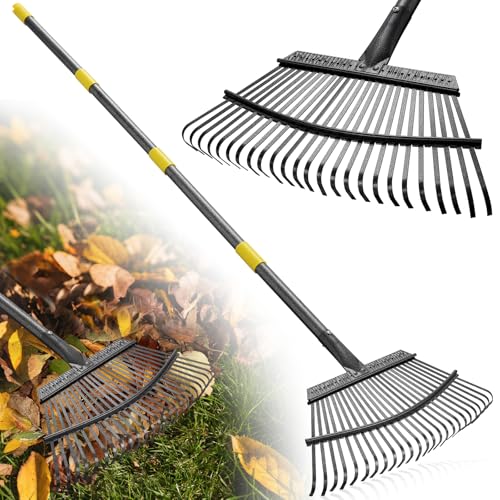
Lilyvane 18″ Metal Leaf Rake, 65″ Adjustable Handle

VIVOSUN 30″ Lawn Leveling Rake, 78″ Handle

Feblomst 9″ Narrow Garden Rake, 65″ Handle

TCBWFY Adjustable Leaf Rake 33-69″, Expandable Head
Inside Each Recommended Option
A bow rake earns its keep when the soil fights back, and this Bully Tools model leans into that job. The head is cut from 10-gauge American steel (steel thickness measured by gauge, where lower numbers mean thicker metal), then robotically overwelded where the tines meet the spine, which is where cheaper rakes usually give up. You feel the weight difference the first time you pull it through packed gravel or tease apart a clay-heavy bed.
The fiberglass handle ships in either a 58″ or 66″ length and snaps together with a single Phillips screwdriver. A rubberized grip keeps the tool planted in your hand during long sessions, and the polyester veil over the shaft keeps splinters off your palms. For homeowners with rough ground to repair, this is the pick that handles the worst chore in the shed.
What Makes Sense
- 10-gauge USA steel head resists bending during serious soil work.
- Robotically overwelded tine connections hold up under load.
- Fiberglass handle stays light, and the rubber grip reduces hand fatigue.
- Choice of 58″ or 66″ length suits different user heights.
- Assembles in under a minute with a basic screwdriver.
Points To Note
- Heavier than leaf rakes, so it can tire out smaller gardeners.
- Powder coat finish can scuff at the welds after rocky seasons.
Who Will Love This
Homeowners restoring neglected beds or anyone grading gravel and mulch will appreciate the head and build.
Consider Something Else When
The Coopvivi 25-Tine Garden Leaf Rake is a lighter, wider option for homeowners whose main job is sweeping leaves rather than breaking ground.
Small beds and uneven borders punish a wide rake head, which is why this Oliynedy model keeps things tight. The 9-inch head fits between perennials and under low shrubs, and the 11 steel tines are spaced closely enough to catch pine needles and small debris without clogging. The handle telescopes from 30 to 60 inches, so shorter gardeners stop crouching and kids can join the cleanup without fighting an adult-sized tool.
The 1-inch-diameter pole gives the rake a sturdier feel than the typical thin tubing, and the rust-resistant coating helps when you forget to bring it in after a rain shower. It collapses for storage, which matters if your shed is already crowded with long-handled tools. If your yard is more flower bed than lawn, this is a sensible everyday fit.
Noteworthy Benefits
- Telescoping 30-60″ handle adapts to different user heights.
- 9-inch head reaches into tight spots a wide rake cannot.
- Closely spaced 11 tines catch small debris without clogging.
- Collapses for compact storage in small sheds.
Small Caveats
- Narrow head means more passes across large lawns.
- Telescoping joint benefits from a periodic check to stay tight.
Right Fit For
Gardeners with raised beds, narrow borders, and mixed user heights will find the adjustable length and slim head useful.
Swap It Out When
The Lilyvane 18″ Metal Leaf Rake is a better match for anyone who wants a wider sweep across an open lawn.
Autumn leaves pile up fast, and a wide fan head shortens the work considerably. This Coopvivi rake stretches 18.5 inches across with 25 stainless steel tines, so each pass moves a meaningful volume of debris. The 6-foot total length keeps your back upright while you work, and the rust-proof tines handle wet leaves and morning dew without complaint.
It also doubles as a leveling rake for spreading soil or mulch, since the dense tine count leaves a smoother finish than wider, sparser fan heads. The handle adjusts so different family members can use the same tool at a comfortable length. For most suburban yards with a mix of lawn and borders, this is the everyday workhorse that earns its place in the shed.
What Stands Out
- 18.5-inch head with 25 tines clears large areas quickly.
- Stainless steel tines resist rust through wet seasons.
- Adjustable handle suits different user heights.
- Doubles as a leveling tool for soil and mulch.
Points To Note
- Wider head is awkward in narrow flower beds.
- Stainless tines add a bit of weight compared to plastic fans.
Feature Snapshot
Best Suited To
Suburban homeowners with broad lawns and a steady leaf fall will get the most from the wide fan head.
Look Elsewhere When
The Feblomst 9″ Narrow Garden Rake is the better pick for gardeners who spend most of their time reaching under shrubs.
Bow rakes handle the rough work: breaking clods, pulling thatch, leveling topdressing. This YEELOR design mixes carbon and stainless steel in the head, which keeps the tines from snapping while the rust-resistant finish holds up across damp seasons. The 16-inch width strikes a balance between coverage and control, so you can work a bed without overreaching.
The rake head fastens with screws rather than a single weld, which means the connection is less likely to loosen mid-job. It pulls dead grass, smooths soil, and spreads compost without complaint. For someone who wants a single bow rake that handles spring prep and fall cleanup equally well, this lands in the middle of the pack on purpose.
Why It Works Well
- Carbon and stainless steel head resists rust and bending.
- 16-inch head balances reach and maneuverability.
- Screw-fastened head connection stays secure during heavy use.
Worth Noting
- Not as heavy-duty as the Bully Tools 10-gauge option for rocky ground.
- Handle assembly may need a quick retightening after first uses.
Made For
Homeowners who want a versatile bow rake for both soil work and light leveling across changing seasons.
Reach For A Different Pick When
The DIIG 63″ Bow Rake suits families better if adjustable handle length is a priority.
Most rakes do one job well. This CKLT tool skips between two, combining a trapezoid hoe blade with a small 9 cm rake end. Flip it around to slice through compacted soil and pull deep-rooted weeds, then turn it to clear dirt from brick joints and groom beds. The one-piece 59-inch handle means no wobble at a connection point during hard pulls.
Spring steel gives the head enough flex to absorb shock when you hit a root without bending permanently. It is a niche tool, but if your weekends involve both weeding and light soil prep, you can leave the full-size bow rake in the shed and grab this instead. The tradeoff is head size: this is a precision tool, not a coverage tool.
A Favorable Mix
- Two tools in one head: hoe blade plus small rake.
- Spring steel head absorbs shock and resists permanent bending.
- One-piece 59-inch handle eliminates joint wobble.
A Few Limitations
- Small rake end cannot replace a wide leaf rake.
- Specialty shape takes practice for gardeners used to standard rakes.
Quick Facts
Whose Shelf It Belongs On
Vegetable gardeners and homeowners who battle weeds weekly will appreciate the dual-action head.
Not Your Match When
The YEELOR 16-Tine Heavy Duty Bow Rake is the better choice for spreading mulch across larger areas.
Different gardeners want different handle lengths, and the DIIG bow rake solves that with a modular pole. You connect the sections you need, which means the same tool works for a tall adult, a shorter partner, or a kid helping with fall cleanup. The 17-tine head covers a useful amount of ground while still fitting between established plants.
The stainless steel handle and anti-rust coating keep the tool looking clean even after a wet season stored outside. Triple-welded connections at the tine base aim to keep the head from loosening, which is the failure point on most cheap bow rakes. For households where more than one person rakes, the adjustable length is the real selling point.
Strong Points
- Modular handle sections let multiple users share one tool.
- Stainless steel construction resists rust across seasons.
- 17-tine head balances coverage and control in planted beds.
Honest Caveats
- Multi-section pole adds a small amount of flex under heavy load.
- Setup takes a few minutes the first time you assemble the sections.
Spec Overview
Perfect Match For
Families who share garden tools and want one rake that fits a range of heights will find the modular handle useful.
A Better Fit Elsewhere
The Bully Tools 16-Tine Bow Rake is a stronger pick for professionals who want a single fixed-length heavy-duty tool.
Lightweight enough for kids but wide enough to clear a real lawn, this Lilyvane rake threads a useful needle. The 18-inch head with 25 metal tines handles grass clippings, leaves, and pine needles without the flex of plastic fans. The adjustable handle telescopes so younger helpers can use it without dragging the head.
The steel build is more durable than the bargain-bin plastic rakes, and the 0.27-inch tine thickness resists bending when it meets an acorn or small stick. For households that want one rake everyone can use, this avoids the heavy-duty weight that tires out smaller hands. It is a sensible middle ground between toy and tool.
Everyday Wins
- Light enough for kids and shorter adults to swing comfortably.
- 18-inch head with 25 steel tines handles common yard debris.
- Adjustable handle grows with younger users.
Some Limits To Know
- Not designed for breaking soil or moving gravel.
- Steel tines add a touch more weight than all-plastic fans.
Who Should Grab It
Households with kids or mixed user heights who want a shared rake for leaf and debris cleanup.
Skip It When
The Coopvivi 25-Tine Garden Leaf Rake is the better match for homeowners who want maximum coverage and stainless tines.
Topdressing a lawn or smoothing sand into low spots is a different job than raking leaves, and a regular fan rake just pushes the material around. The VIVOSUN leveling rake uses a flat 30-inch stainless steel plate to drag soil, sand, or compost into a uniform surface. The 78-inch handle keeps you upright while you work across a full lawn.
The plate is wide enough to make quick work of mid-size yards, and the spray coating helps it shrug off rust through repeated wet use. The non-slip rubber grip is a quiet detail that matters during long leveling sessions. This is a specialty tool, and it earns its place if you topdress or level regularly. If leaves are your only concern, a fan rake will serve you better.
The Upside
- Flat 30-inch stainless plate smooths topdressing efficiently.
- 78-inch handle reduces back strain during long leveling passes.
- Non-slip rubber grip stays comfortable over extended use.
Things To Consider
- Specialty tool that does not replace a fan or bow rake.
Feature Rundown
Best Suited To
Homeowners who topdress, level, or repair small lawn depressions will find this tool pays for itself fast.
Another Choice May Suit
The Coopvivi 25-Tine Garden Leaf Rake is a better everyday tool for general leaf and debris cleanup.
Wide rakes cannot get under low shrubs or between flagstones, and that is exactly where debris collects. The Feblomst rake keeps a tight 9-inch head with 11 closely spaced steel tines, so it slips into the gaps that bigger tools skip. The 65-inch adjustable handle lets you angle into corners without kneeling.
The anti-rust coating on the steel tines helps when the rake lives outdoors between uses, and the tine spacing is tight enough to keep leaves from wedging between them. It is not a coverage tool, and that is the point. Pair it with a wide fan rake and you have a cleanup system that handles both lawn and detail work without switching between three or four tools.
Benefits That Matter
- 9-inch head reaches into beds and under shrubs.
- 11 closely spaced tines prevent leaves from wedging in.
- Adjustable 65-inch handle reduces kneeling.
Where It May Fall Short
- Too narrow for fast coverage of large open lawns.
- Not suited for soil work or grading.
Made For
Detail-oriented gardeners with established beds, borders, and shrubs will find this rake earns its keep.
Where A Sibling Pick Shines
The Lilyvane 18″ Metal Leaf Rake is a better everyday match for general lawn cleanup across larger areas.
Storage is the silent problem with most rakes: long handles eat shed space. The TCBWFY collapses on both ends. The handle telescopes from 33 to 69 inches, and the head expands from 8 to 15 inches, so you shrink the tool for a closet or apartment closet and stretch it back out when leaves start falling. It is a useful design for renters and small-space gardeners.
The reinforced steel tines handle dense leaf piles without the flex that cheaper expandable rakes show. Pull it out for a small bed, expand it for a wider sweep, and the same tool covers both jobs. For anyone who has put off buying a rake because they have nowhere to store one, this layout solves that problem directly.
Everyday Perks
- Collapsing handle and head shrink to fit small storage spaces.
- Adjustable head width adapts to bed size.
- Steel tines with reinforced frame handle dense debris.
Trade Offs
- More moving parts than a fixed rake, which can loosen over time.
- Expanded head is narrower than dedicated wide fan rakes.
Right Fit For
Apartment dwellers, renters, and gardeners with limited shed space will appreciate the collapsible design.
Look Elsewhere When
The Oliynedy Adjustable Metal Garden Rake is a sturdier pick for gardeners prioritizing a fixed narrow head over full collapsibility.
What To Weigh Before Choosing a Garden Rake
Match the Rake to the Job
Bow rakes and leaf rakes look similar from across the yard, but they do different work. A bow rake has short, rigid tines set perpendicular to the handle for breaking soil, spreading mulch, and pulling thatch. A leaf rake has long, flexible tines fanned out wide for sweeping debris. Buying the wrong type means fighting the tool on every pass.
Tine Material and Spacing Matter
Steel tines handle rough use and resist bending, while plastic fans are lighter but wear out faster on rocky ground. Tine spacing changes how the rake behaves: closely spaced tines catch pine needles and small debris, while wider spacing moves leaves faster but lets smaller material slip through. Stainless steel costs more but shrugs off rust through wet seasons.
Handle Length and Weight
A handle that is too short bends your back; one that is too long feels unwieldy. Most adults do well with a 60 to 66-inch total length, and adjustable handles add flexibility for households with multiple users. Fiberglass stays light and resists weather, while wood feels traditional but can splinter or crack after years outdoors.
Storage and Adjustability
Long-handled tools eat shed space. Collapsible or telescoping rakes solve that for apartment dwellers, and modular handles let families share one tool. The tradeoff is more joints to check periodically, so factor a quick tightening into your routine if you go that route.
Key Considerations Across These Picks
Mistakes Worth Dodging
Many gardeners grab the widest fan rake they can find, only to find it useless in tight beds. Match the head width to your typical cleanup zone, and resist buying on head size alone. Another common slip is choosing a plastic fan rake for rough ground; the tines bend or snap quickly when they meet sticks and acorns. Finally, ignore handle length at your own risk. A too-short handle is the most common cause of back strain during fall cleanup.
Where The Extra Money Goes
Higher-tier rakes spend your money on thicker steel, better welds, and rust-resistant coatings. The Bully Tools 10-gauge head, for example, outlasts lighter bargain options on rocky soil. Adjustable and modular systems add convenience, and stainless components cost more but hold up across wet seasons. The upgrade makes sense if you rake often, store tools carelessly, or share equipment across users with different heights.
Frequently Asked Questions
What is the difference between a bow rake and a leaf rake?
A bow rake has short, rigid tines for breaking soil, leveling, and spreading materials. A leaf rake has long, flexible tines fanned wide for sweeping debris off the lawn.
How wide should a leaf rake head be?
For open lawns, 18 to 25 inches covers ground quickly. For tight beds and borders, a 9-inch head reaches spaces wider rakes skip.
Are metal tines better than plastic?
Metal tines resist bending and last longer on rough ground, while plastic fans are lighter and cheaper but wear out faster. Stainless steel adds rust resistance at a higher cost.
How long should a rake handle be?
Most adults do well with a 60 to 66-inch total length. Adjustable handles work well for households with multiple users of different heights.
Can one rake handle both leaves and soil work?
Not really. A bow rake manages soil but is awkward for leaves, and a leaf rake breaks under soil work. Most gardeners benefit from owning one of each.
Bottom Line
The best rake for your yard depends on what you actually do in it. Soil work calls for a heavy bow rake like the Bully Tools 16-Tine, while general leaf cleanup favors a wide fan like the Coopvivi. Tight beds, family use, and small storage each point to a different specialty tool. Match the rake to the job, and the work goes faster with a lot less frustration.
