

A good fork turns the worst part of gardening, breaking up compacted soil, into something close to satisfying. The wrong one bends, snaps, or just bounces off clay. This list covers long-handled digging forks for serious bed prep, mid-length workhorses for compost and mulch, and small hand forks for weeding tight spots. Pick by soil type, by the work you do most, and by how much leverage you want at the handle.
The Main Contenders

Truper 4-Tine Spading Fork 30-Inch D-Handle
Ymachray 5-Tine Heavy Duty Pitch Fork

VNIMTI 4-Tine Garden Fork 45-Inch Y-Grip

Berry & Bird Stainless Steel Hand Fork

WORKPRO 11.5″ Dandelion Weeder Puller

WORKPRO Weed Puller with V-Shaped Forks

Spear & Jackson Neverbend Digging Fork

MECHEER 3-Claw Hand Rake Cultivator

Garden Guru Stainless Steel Hand Weeder Fork

Nohovu 5-Tine Pitchfork 58-Inch Fiberglass
The Details Behind The Selections
Short-shaft digging forks get a bad rap for being “starter tools,” but the Truper 4-Tine Spading Fork earns its spot for a specific reason: close-quarter work. At 30 inches, the shaft keeps you standing nearly upright over a raised bed, and the D-grip wood handle sits comfortably in either hand for prying motions. For gardeners working waist-high beds, a long-handled fork is awkward; this one feels right.
The four steel tines are spaced for breaking new ground, lifting perennials, and turning small compost piles. It is the kind of fork that becomes the most-used tool in the shed without anyone planning it that way.
Useful Highlights
- 30-inch shaft keeps your weight centered over the tines for better leverage
- Four-tine spacing pulls up whole root balls without slicing them apart
- Wood D-grip stays grippy when hands are wet or muddy
- Steel head handles rocky soil without flexing
Points To Note
- Shorter shaft means more bending on ground-level beds
- Wood handle benefits from an annual oil rub to prevent splitting
Key Specs
Made For
Gardeners maintaining waist-high raised beds or working in tight urban plots where a full-length fork is unwieldy.
Swap It Out When
For in-ground beds with heavy clay, the Spear & Jackson Neverbend Professional Digging Fork offers the longer shaft and forged head suited to deeper penetration.
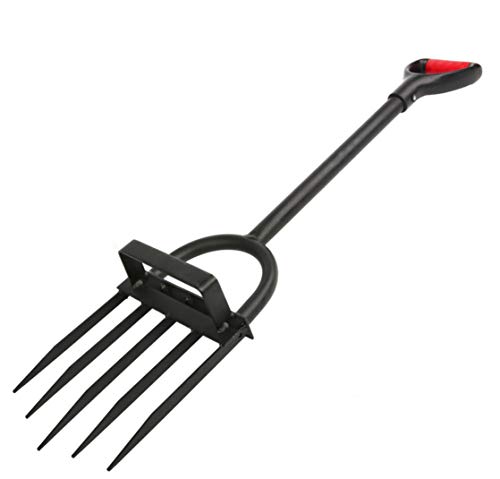
Five tines spread the load across more surface area than the Truper, which makes the Ymachray 5-Tine Heavy Duty Pitch Fork a natural fit for moving loose material rather than slicing through sod. Compost scoops, leaf piles, and finished mulch all benefit from a wider bite. Where the four-tine Truper digs, this one carries.
The long handle gives plenty of swing for lifting and tossing, and the steel build holds up to repeated contact with stones buried in compost. For most households, this is the fork that lives by the bin.
The Value In It
- Five-tine head moves more material per scoop than four-tine designs
- Long handle suits users who prefer standing upright while working
- Steel tines resist bending when catching hidden debris
Trade Offs
- Wider spacing can let small stones slip through the gaps
- Heavier than shorter models, which may matter for smaller-framed gardeners
Right Fit For
Home gardeners turning compost piles, spreading mulch, and clearing leaf mounds throughout the season.
Reach For A Different Pick When
For tough sod and unworked ground, the Spear & Jackson Neverbend Professional Digging Fork is the more purposeful tool.
At 45 inches, the VNIMTI 4-Tine Garden Fork splits the difference between the stubby Truper and a full-length digging fork. That middle ground is where most weekend gardening actually happens: ground-level beds, double-digging, lifting clumps of turf, flipping a small compost heap. The steel Y-grip at the top is a departure from a traditional D-handle, and for many users it lands more naturally in the palm.
For anyone not sure which size they need, this is a reasonable place to start.
Features That Help
- 45-inch shaft works for average-height users without forcing a deep bend
- Steel Y-grip distributes pressure across the knuckles during heavy lifts
- Four-tine layout balances bite size and tine strength
Small Caveats
- Y-grip takes some getting used to if you are accustomed to D-handles
- Wooden shaft benefits from storage out of constant rain
Quick Facts
Who It Suits Best
First-time buyers and intermediate gardeners who want one fork that handles beds, compost, and transplanting.
Consider Something Else When
For routine compost hauling where digging power matters less, the Ymachray 5-Tine Heavy Duty Pitch Fork is the friendlier choice.
Shifting to hand tools, the Berry & Bird Stainless Steel Hand Fork is the right scale for work the long forks cannot touch: prying out tap-rooted weeds, loosening soil in a container, settling transplants into a tight pocket. Stainless steel is the headline here. The head resists rust even when you forget to dry it after a session, and soil tends to release from the polished tines instead of caking on.
It pairs naturally with a hand trowel and a pair of gloves for the close-up part of the garden.
Advantages To Know
- Stainless head shrugs off rust and seasonal moisture
- Compact length gives precise control around seedlings
- Balanced weight reduces wrist fatigue during long weeding sessions
Honest Caveats
- Too small for turning soil or breaking new ground
- Wooden handle benefits from occasional oil to stay smooth
Best Suited To
Container gardeners, balcony growers, and anyone tackling weeds in tight perennial borders.
A Better Fit Elsewhere
For uprooting dandelions from a full lawn, the WORKPRO 11.5″ Dandelion Weeder Puller Tool reaches deeper with less effort.
Dandelions are the most common lawn weed, and the WORKPRO 11.5″ Dandelion Weeder Puller is built for exactly that fight. The two-prong stainless fork sinks down along the tap root, and the soft PP+TPR handle gives a comfortable grip for the levering motion that follows. It is short, which is the point: you want to feel the root release, not yank from a distance.
For homeowners without a full garden shed, this fills the gap between a hand trowel and a chemical sprayer.
The Practical Payoff
- Stainless prongs resist rust from damp soil and morning dew
- Soft handle is comfortable during repeated weed pulls
- Compact 11.5-inch length stores easily in a small caddy
Worth Noting
- Best for soft, loamy lawns; struggles in compacted clay
- Kneepads or a pad are still needed for long sessions
Feature Snapshot
Who Should Grab It
Homeowners dealing with scattered dandelions in a maintained lawn who want a chemical-free approach.
Skip It When
For a large patch of weeds and a bad back, the WORKPRO Weed Puller Tool with its foot leverage base requires much less kneeling.
Where the short WORKPRO dandelion weeder has you on your knees, this sibling standing weeder flips the script. The metal leverage base rests on the ground, you step on it, and the V-shaped forks below drive into the soil around the root. Pull back on the handle and the whole plant comes out, stem and all. For gardeners with knee or back issues, the standing geometry is the selling point.
It is a niche tool, but the right tool for a specific problem.
Notable Gains
- Standing design removes kneeling from the workflow
- Leverage base multiplies the force your body applies
- Stainless forks handle repeated contact with soil and small roots
A Few Limitations
- Footprint is bulkier than a hand weeder for storage
- Works best on softer ground; very compacted lawns may need pre-watering
Perfect Match For
Older gardeners and anyone avoiding repeated kneeling during long weeding sessions.
Look Elsewhere When
For raised-bed and container work at close range, the Berry & Bird Stainless Steel Hand Fork gives far more control.
The Spear & Jackson Neverbend sits at the serious end of the list. The forged carbon steel head is the headline; “forged” here means a single piece of shaped steel, not a stamped and welded assembly, which translates to real resistance under heavy load. Pair that with a weatherproofed hardwood shaft and a long-lipped socket that absorbs prying stress, and you have a fork built for ground that fights back.
If your soil is heavy clay, unworked for years, or full of roots, this is the one that will not let you down.
Where It Delivers
- Forged carbon steel head holds up to clay and rocky soil
- Long shaft gives leverage for breaking new ground
- Weatherproofed hardwood handle resists seasonal warping
Practical Considerations
- Heavier than casual-use forks, which can wear out smaller gardeners
- Higher price tier than general-purpose options
Feature Rundown
Whose Shelf It Belongs On
Serious gardeners, landscapers, and homeowners inheriting compacted or neglected ground that cheaper forks will not survive.
Where Another Pick Suits Better
For light seasonal composting in a small yard, the VNIMTI 4-Tine Garden Fork 45-Inch Y-Grip is a kinder match at a lower commitment.
Hand cultivators sit between forks and rakes, and the MECHEER 3-Claw Hand Rake Cultivator leans into that middle ground. Three curved aluminum alloy claws scratch up the surface of a bed, break crusted soil, and pull small weeds without flipping the whole layer over. The 0.28-inch claw thickness is on the heavier side for this category, which matters when gardeners push down to break through a crusted top.
It is the right tool for the “between crops” window when you want to freshen a bed without fully turning it.
Positive Points
- Aluminum alloy keeps the head light without feeling flimsy
- Curved tines dig in at an angle, easing wrist strain
- Three-claw design covers ground faster than a single-tine tool
Things To Consider
- Claws can clog with wet clay, requiring frequent cleaning
- Not suited for prying up established root systems
Built With In Mind
Raised bed growers and vegetable gardeners refreshing soil between plantings.
Not Your Match When
For deeper bed work, the VNIMTI 4-Tine Garden Fork 45-Inch Y-Grip reaches further with less effort per stroke.
The Garden Guru Stainless Steel Hand Weeder Fork is what you reach for when a hand fork needs to feel like a real tool, not a disposable. The stainless tines slide into soil cleanly and resist rust through wet seasons, and the ergonomic handle stays comfortable during longer transplanting sessions. Compared with the Berry & Bird, the head profile is slightly broader, which spreads force a little better across the knuckles.
For gardeners who keep their tools clean, dry, and stored indoors, this one ages well.
The Upside
- Stainless head holds its finish over years of use
- Ergonomic handle reduces grip pressure on the hand
- Multi-purpose shape suits weeding, transplanting, and mulching
Minor Gripes
- Premium feel comes at a higher price tier than basic hand forks
- Smooth handle can feel slick in heavy rain without gloves
Who Will Love This
Gardeners who value a clean, rust-free finish and use a hand fork weekly through the season.
Another Choice May Suit
For a lighter, more budget-leaning hand fork, the Berry & Bird Stainless Steel Hand Fork covers the same ground with fewer frills.
The Nohovu 5-Tine Pitchfork rounds out the list with a tool tuned for moving bulky loads. The 58-inch fiberglass handle keeps the angle gentle on the lower back, and the 8.26-inch head width means each pass carries more hay, manure, or mulch than a narrower fork would. Fiberglass is the practical choice for the shaft, since it shrugs off the weather cycles that age wooden handles over time.
For anyone managing a small flock, a stable, or simply large compost volumes, this is the workhorse pick.
What Helps Most
- 58-inch length reduces bending during repetitive scooping
- Fiberglass handle resists weather damage and splintering
- Wide 5-tine head moves more material per scoop
Trade-Offs To Consider
- Long shaft is awkward in tight shed storage
Feature Overview
Right Fit For
Smallholders, stable owners, and gardeners moving significant volumes of mulch, manure, or compost regularly.
Where A Sibling Pick Shines
For turning over garden soil rather than hauling loose material, the Spear & Jackson Neverbend Professional Digging Fork is the more precise tool.
Choosing A Fork That Fits Your Soil And Habits
Match the tine count to the work
A four-tine digging fork is your all-rounder: breaking new ground, lifting perennials, double-digging. A five-tine pitchfork moves loose material faster, with each pass carrying more hay, mulch, or compost. Pick by what you do most; gardeners who mainly turn compost want five tines, while gardeners who mainly prep beds want four.
Mind the shaft length
A short 30-inch shaft gives leverage close to the work, which is ideal for raised beds. A 45-inch middle length is the everyday default. A 58-inch shaft is for hauling and reduces the need to bend. Height matters: a fork that is too long or too short turns a pleasant afternoon into a sore back by sundown.
Consider the head material
Stainless steel shrugs off rust and releases sticky soil more easily, which is why it dominates the hand-fork category. For long-handled digging forks, forged carbon steel offers more rigidity under load, since “forged” means a single shaped piece rather than stamped and welded sheets. Aluminum alloy suits lighter cultivator claws where weight matters more than raw strength.
Look at handle and grip
Wood grips absorb vibration and feel familiar, though they benefit from an occasional oil rub. Fiberglass handles are weatherproof and splinter-free. Steel Y-grips and D-grips both work; Y-grips fit a natural palm angle, while D-grips suit users who wrap both hands around the top.
Key Considerations Across These Picks
Common Shopping Slip Ups
The most common error is choosing a long-handled fork for raised beds, where the extra length works against you. The opposite mistake is buying a short fork for ground-level beds and ending up with a sore back after an hour. Soil type matters too: a basic fork in hard clay can bend the tines within a season, while a heavy-duty fork in soft loam is overkill. Match the tool to the ground, not the other way around.
Where The Extra Money Goes
Higher-tier forks cost more for two reasons: better head material and better handle construction. Forged steel heads resist bending under load, and weatherproofed or fiberglass shafts outlast untreated wood by years. For a casual weekend gardener, the jump is hard to justify. For anyone working heavy soil weekly, the upgrade pays off through fewer replacements and less frustration when the fork actually sinks in.
Frequently Asked Questions
What is the difference between a digging fork and a pitchfork?
A digging fork has fewer, thicker tines designed to break and lift soil. A pitchfork has more, thinner tines suited to moving loose material like hay, mulch, or compost.
How do I keep my gardening fork from rusting?
Wipe the head dry after use, store it in a shed or garage, and apply a thin coat of oil to steel heads each season. Stainless steel resists rust on its own.
What handle length is best for an average adult?
Most adults find 45 inches a comfortable middle ground. Taller gardeners may prefer 58 inches, while shorter gardeners or raised-bed growers often prefer 30 inches.
Can a hand fork really handle weeding?
Yes, especially for tap-rooted weeds and tight spaces. A two-prong weeder or hand fork reaches what a long-handled tool cannot, though it requires kneeling or sitting.
Are fiberglass handles better than wood?
Fiberglass resists weather and splintering, while wood offers a traditional feel and easier replacement. For outdoor storage, fiberglass lasts longer with less maintenance.
Wrap Up
The right gardening fork comes down to your soil, your height, and the work you do most. Long-handled forged forks handle clay and new beds, mid-length four-tiners cover daily bed prep, five-tine pitchforks move loose material, and hand forks finish the close-up work. Pick the one that matches your real routine, and the rest of the season gets easier.
