

A gas hedge trimmer earns its place the moment your cordless model taps out halfway up a privet wall. For property owners with long fence lines, overgrown shrub borders, or acreage hedges, gas power still delivers the runtime and torque that electric models struggle to match. The trade-off is weight, noise, and a bit more maintenance, but the best of these tools make that overhead feel small.
You do not need the heaviest engine on the shelf to handle a typical suburban yard. You need a balanced combination of blade length, engine displacement, and ergonomics that matches your hedging style. The list below spans compact dedicated trimmers, long-reach articulating heads, and multi-tool systems for those who want one engine to drive an entire lawn-care routine.
A Closer Look At The Lineup

SENIX 4QL 26.5cc 22-Inch Gas Hedge Trimmer 4-Cycle

Wild Badger Power 26cc 2-Cycle Gas Weed Wacker 4-in-1
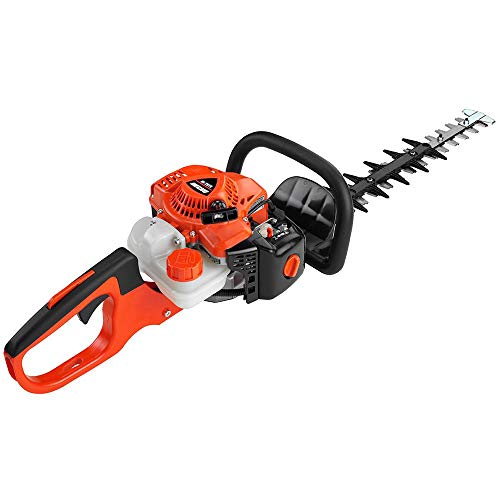
Echo 20 in. 21.2 cc Gas 2-Stroke Cycle Hedge Trimmer
VEVOR Gas Hedge Trimmer 2 Cycle 63 cc 5-in-1 Handheld

Husqvarna 122LKH Gas Hedge Trimmer Multi-Purpose
VEVOR 23.2-Inch 26cc Gas Hedge Trimmer Dual Sided

Husqvarna 322HD60 Gas Hedge Trimmer 24 inch Blade

DCA 22 inch Cordless Hedge Trimmer 20V Dual-Action
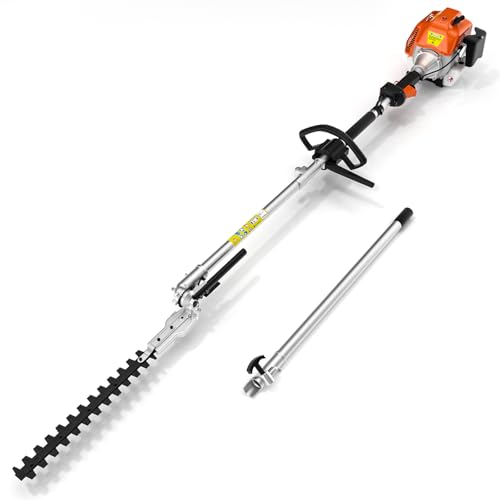
Bavnnro 48cc 2-Cycle Gas Hedge Trimmer Brush Cutter

GTHAN 5-in-1 Gas Hedge Trimmer 41.5cc Multi-Function
More On The Choices That Made The List
The SENIX 4QL stands out in this list because it sidesteps the single biggest headache of gas trimmer ownership: mixing oil and fuel. A 4-cycle engine (a motor with four internal pistons that uses separate oil and gas reservoirs instead of a premixed blend) runs on straight gasoline, which makes refueling simpler and cuts down on the residue that fouls 2-cycle carburetors. The 26.5cc displacement delivers usable torque for typical suburban hedges, while the 22-inch dual-action blades (blades that move in opposite directions to cancel vibration) give you a long enough reach for most fence-line work without making the tool unwieldy in tight corners.
For a homeowner who trims two or three times per season and wants a familiar gas experience without the maintenance curve, this trimmer reads as the sensible starting point. The 1-1/8 inch cutting capacity handles woody growth up to privet and young lilac, and the full-crank design (where the crankshaft spans the full width of the engine for smoother operation) tends to last longer than entry-level engines at this displacement. It is heavier than the multi-tool systems ahead, but that weight comes with straightforward, dedicated trimming power.
The Good Stuff
- 4-cycle design removes the need to pre-mix oil and gas, simplifying routine use.
- 26.5cc displacement with a full crank provides reliable torque for established shrubs.
- 22-inch dual-action laser-cut blades deliver smooth cuts across wider hedge faces.
- 1-1/8 inch cutting capacity handles moderately woody growth without bogging down.
- Dedicated hedge trimmer design avoids the weight and balance compromises of multi-tools.
Things To Consider
- Heavier than the 2-cycle picks, which can fatigue shorter sessions overhead.
- Long-term carburetor maintenance still applies; owners commonly clean the unit seasonally.
Built With In Mind
Suburban homeowners trimming established shrubs a few times per season who want gas power without fuel-mixing fuss.
Where Another Pick Suits Better
Reach for the Husqvarna 322HD60 when you need a longer 24-inch blade for extended hedge runs across a larger property.
The Wild Badger Power kit is a 4-in-1 system, meaning a single powerhead accepts string trimmer, brush cutter, articulating hedge trimmer, and pole saw attachments, plus an optional wheeled edger. For a property with mixed vegetation, that flexibility matters more than any single-tool spec. You start the same 26cc 2-cycle engine (which requires a gas-and-oil mix) and snap on whichever head matches the job, which beats dragging four separate tools out of the shed.
The articulating hedge trimmer attachment reaches upward and across awkwardly angled shrubs, while the pole saw handles branches that would otherwise need a ladder. Compared with the SENIX 4QL, you trade dedicated trimming weight for tool-swapping versatility, and you will need a small amount of garage space to store the attachments. For shoppers with more than hedges to manage, the trade often feels worth it.
Positive Points
- One powerhead drives four or more attachments, reducing overall storage and cost.
- Articulating hedge trimmer head reaches awkward angles without ladder work.
- 26cc 2-cycle engine delivers familiar power-to-weight ratio for handheld tools.
- Optional wheeled edger attachment cleans up walkways after trimming.
Trade Offs
- 2-cycle fuel mix adds a small maintenance step the SENIX 4QL avoids.
- Switching heads mid-task interrupts workflow on longer sessions.
- Edger attachment is sold separately, raising the total investment.
- Attachment connections can loosen over time and may need periodic checks.
Made For
Property owners managing lawns, hedges, and overhead branches who want one engine to handle every task.
Look Elsewhere When
Pick the VEVOR 23.2-Inch 26cc Gas Hedge Trimmer if you mostly shape small ornamental shrubs and do not need the pole saw or edger attachments.
Echo builds the HC-2020 for landscapers and serious homeowners, and the design choices reflect that focus. The 21.2cc 2-cycle engine is on the smaller side, but Echo pairs it with double-sided blades that carry twice the cutting edges of typical consumer trimmers, which translates to cleaner cuts at slower passes. The whole tool reads light in the hand, so longer detail sessions on topiary or shaped shrubs stay comfortable.
Where the SENIX 4QL chases raw reach and the Wild Badger Power chases versatility, the Echo chases precision. A zero-type grease fitting and a tool-less air filter cover speed up routine maintenance, which matters once a trimmer is part of your weekly routine rather than a seasonal tool. The trade-off is a shorter 20-inch blade, which means more passes along wide hedges.
Everyday Wins
- Lightweight chassis reduces arm fatigue during longer shaping sessions.
- Double-sided blades with extra cutting edges deliver cleaner, slower-pass results.
- Tool-less air filter cover simplifies routine cleaning.
- Grease fitting streamlines blade lubrication for consistent cut quality.
Worth Noting
- 20-inch blade means more passes on wide hedge faces than longer-bladed picks.
- Smaller 21.2cc engine may bog down on thick, neglected growth.
Right Fit For
Detail-oriented trimmers and homeowners with shaped topiary, boxwood, or smaller ornamental hedges.
Skip It When
Choose the Husqvarna 322HD60 for sweeping 24-inch passes across long fence-line hedges where speed matters more than fine detail.
The VEVOR 5-in-1 is the brute-force pick in this lineup, built around a 63cc 2-stroke engine that spins up to 8500 rpm. That displacement puts it well above the SENIX 4QL’s 26.5cc, so it chews through overgrown brush, thick vines, and neglected shrubs that would stall smaller engines. The package combines hedge trimmer, string trimmer, brush cutter (with both 3T and 40T blades, where the number indicates tooth count for finer or rougher cutting), and pole saw attachments in one bundle.
The honest read is that this is a tool for messy yards, not pristine ones. Heavier engine displacement means more vibration through the handles, and a longer learning curve for users who have only operated smaller residential trimmers. Where it earns its place is on properties with brush that has been allowed to grow unchecked, or for users who want one system to cover hedging, trimming, and tree work in a single purchase.
Strengths Worth Knowing
- 63cc engine delivers serious torque for thick, neglected growth and woody brush.
- 5-in-1 system covers hedge trimming, string trimming, brush cutting, and pole sawing.
- 8500 rpm operating speed keeps blades moving through heavy material.
- Brush cutter blades (3T and 40T) handle both saplings and tall grass.
Points To Keep In Mind
- Higher displacement translates to more vibration and arm strain on long sessions.
- 2-cycle fuel mixing required; not as convenient as 4-cycle alternatives.
- Heavier overall weight may be tiring for smaller-framed users.
Best Suited To
Owners of larger rural or semi-rural lots facing overgrown brush, saplings, and heavy hedge restoration work.
Consider Something Else When
The SENIX 4QL 4-cycle trimmer is a friendlier match for tidy suburban yards where power overkill is unnecessary.
The Husqvarna 122LKH flips the usual trimmer format on its head. Instead of a short handheld blade at hip height, you get a 21-inch precision laser-cut blade mounted on a long shaft with 180-degree one-handed adjustability. The detachable shaft accepts other attachments in Husqvarna’s multi-tool family, so it pulls double duty as a pole hedge trimmer and a base for additional heads.
Where this tool earns its keep is on tall hedges, deep shrub borders, and any trimming that would otherwise require a ladder. The articulating head pivots through a full half-rotation, letting you approach hedge tops and sides from a stable standing position. The trade-off is the longer shaft shifts the balance point higher, so a longer session overhead can tire arms faster than the compact SENIX 4QL or Echo HC-2020.
Practical Advantages
- Long-shaft design extends reach to tall hedges without ladder work.
- 180-degree articulating head adjusts one-handed for varied cutting angles.
- 21-inch laser-cut blade provides clean cuts across wider sections.
- Detachable shaft accepts compatible attachments for added versatility.
Less Ideal Details
- Longer shaft shifts weight away from the operator, increasing arm strain overhead.
- Not as maneuverable for low, tight shaping work as the shorter Echo HC-2020.
Who Will Love This
Homeowners with tall hedge rows, deep borders, or topiary that benefits from extended reach and ladder-free trimming.
Reach For A Different Pick When
Step down to the VEVOR 23.2-inch handheld trimmer if your hedges stay under six feet and you prefer a compact tool.
The 23.2-inch VEVOR handheld is the lightweight pick of the gas category, built around a 26cc 2-stroke engine spinning at 8500 rpm with blade speed around 6500 rpm. The dual-sided blade handles standard hedge work, and the 180-degree adjustable cutting head lets you angle the bar to match the slope of your shrubs. It ships with a blade cover, gloves, and ear protectors, which saves a separate shopping trip for safety gear.
Compared with the VEVOR 5-in-1 at 63cc, this is a far more approachable tool for first-time gas users. The engine output is enough for residential shrubs and bushes, though it will not power through the same heavy brush the bigger VEVOR handles. The certifications indicate the unit meets EPA, CE, and EMC requirements, which matters for homeowners who care about emissions compliance in their region.
What Pays Off
- Lightweight handheld design reduces fatigue during shorter trimming sessions.
- 180-degree adjustable head improves access to angled or sloped hedge faces.
- Includes blade cover, gloves, and ear protectors in the box.
- 26cc engine and 23.2-inch blade suit typical residential hedge dimensions.
Potential Drawbacks
- 26cc displacement is light for thick, neglected growth on a single pass.
- 2-cycle engine still requires pre-mixed fuel at refills.
Perfect Match For
First-time gas trimmer owners working with manageable shrubs who want an approachable, lighter tool.
Not Your Match When
The SENIX 4QL 4-cycle is a better match for users who would rather skip the fuel-mixing step entirely.
The Husqvarna 322HD60 is the longest dedicated handheld blade in the lineup, with a 24-inch stainless steel dual-action cutting bar on a 21.7cc 2-cycle engine. The combination weighs around 11 lbs, which is on the lighter side for a full-size professional trimmer. The longer blade lets you cover more hedge face per sweep, which is the entire point for users with extensive hedge runs.
Where the SENIX 4QL provides homeowner-friendly convenience, the 322HD60 leans professional. The stainless blade holds its edge through heavy seasonal use, and the dual-action design keeps vibration manageable across long passes. For users with acre-plus properties, this trimmer covers ground noticeably faster than shorter-bladed alternatives. It is a step up in build quality, and that step shows up in the price of admission as well as the components.
Where It Delivers
- 24-inch dual-action blade covers more hedge face per pass for faster work.
- Stainless steel blade construction holds an edge across heavy use.
- Around 11 lbs of total weight for a full-size professional trimmer.
- Cuts twigs and shrubs up to 4/5 inch in a single pass.
Honest Caveats
- 2-cycle engine requires fuel mixing, unlike the SENIX 4QL 4-cycle option.
- Longer blade is less maneuverable for tight shaping or narrow passages.
Who Should Grab It
Owners of larger properties with long hedge runs who want to cover more ground per sweep and value professional-grade components.
Swap It Out When
Choose the Echo HC-2020 for tighter shaping work on smaller ornamental hedges where a shorter blade handles curves better.
The DCA 22-inch is a cordless outlier in a list of gas tools, included for shoppers weighing the gas-versus-electric decision. It runs on a 20V motor that delivers 2800 strokes per minute through a laser-cut dual-action blade, and the whole trimmer weighs around 5.2 lbs. The 180-degree rotating handle and 3/4 inch cutting capacity cover most residential shrub work without engine noise or fuel mixing.
Where it does not keep up with the gas models is on thick, woody growth or extended sessions. The included 2.0Ah battery will run a small yard in one charge, but large hedge runs may need a spare. For homeowners with manageable shrubs and a preference for quieter, lighter tools, this trimmer sidesteps nearly every maintenance chore that comes with gas engines.
The Value In It
- Lightweight 5.2 lb design makes overhead trimming noticeably easier.
- Cordless operation removes fuel mixing, engine noise, and exhaust.
- 22-inch dual-action blade covers typical residential hedge widths.
- 180-degree rotating handle adapts to angled cuts and topiary shaping.
A Few Limitations
- Battery runtime is finite; large properties may need a spare or pause to recharge.
- 3/4 inch cutting capacity is thinner than every gas pick on this list.
Made For
Suburban homeowners with small to mid-size yards who prefer a quieter, low-maintenance trimmer over gas power.
A Better Fit Elsewhere
Step up to the SENIX 4QL 4-cycle if you need longer runtime, thicker cutting capacity, and gas torque for established shrubs.
The Bavnnro 48cc fills a middle slot between the VEVOR 26cc handheld and the VEVOR 63cc 5-in-1. A 48cc 2-stroke engine gives it the muscle for thicker hedge growth and small tree branches, and the 10-angle rotating head reaches the awkward spots a fixed-angle trimmer cannot access. The extension pole adds reach for taller hedges and tree limbs without a ladder.
Where it sits compared to the Wild Badger Power 4-in-1 is in raw engine size. Both systems accept multiple attachments, but this one leans toward heavier cutting rather than the full attachment ecosystem. For users who want a step up in power from a basic handheld without committing to a 63cc engine, the 48cc slot makes practical sense.
Standout Benefits
- 48cc engine splits the difference between compact and heavy-duty displacement.
- 10-angle rotating head reaches awkward cuts across varied hedge shapes.
- Extension pole allows overhead and elevated work without ladder access.
- Engine output supports both hedge trimming and light branch cutting.
Practical Considerations
- 2-cycle fuel mix required; not as convenient as a 4-cycle option.
- Mid-range power may not satisfy users with consistently heavy brush.
Whose Shelf It Belongs On
Homeowners with mixed hedging and light tree work who want more power than a basic handheld without going to 63cc.
Another Choice May Suit
Pick the VEVOR 5-in-1 63cc if your property regularly throws saplings and heavy brush at you.
The GTHAN 5-in-1 closes the list with a 41.5cc 2-stroke engine producing 1.9 kW of output, paired with a 9500 rpm ceiling. The bundle covers string trimmer, 3T blade, 40T blade, hedge trimmer, and pole saw attachments, so the same powerhead handles grass, brush, hedges, and overhead branches. Compared to the Wild Badger Power system, you get similar attachment variety at a slightly larger engine displacement.
The honest read is that 5-in-1 systems reward users who actually rotate through all five attachments. Owners who only ever use the hedge trimmer head would be better served by a dedicated tool like the SENIX 4QL or Husqvarna 322HD60. For those managing full-property care with one engine, the GTHAN consolidates a garage full of separate tools into a single modular system.
What Earns Its Place
- 41.5cc engine produces 1.9 kW for reliable cutting across varied tasks.
- Five attachments cover grass, brush, hedges, and pole saw work.
- 9500 rpm operating speed keeps blade and trimmer head responsive.
- Single powerhead reduces total tool storage and maintenance overhead.
Where It Is Less Suited
- 2-cycle fuel mix required at every refuel.
- Modular design adds connection points that benefit from periodic checks.
Who Should Grab It
Property caretakers juggling lawn edges, brush, hedges, and tree limbs who value one system over a wall of dedicated tools.
Look Elsewhere When
Step down to the Echo HC-2020 if hedges are your primary job and you want a lighter, dedicated trimmer for shaping work.
What Matters Most Before Choosing Gas Hedge Trimmers
Engine Displacement and Cycle Type
Displacement, measured in cubic centimeters (cc), tells you how much air and fuel the engine moves per cycle, and bigger numbers generally mean more torque. For typical suburban hedges, 21 to 27cc is plenty, while overgrown rural properties often justify 40cc or higher. Cycle type matters as much as size: 4-cycle engines run on straight gas and need less fiddling, while 2-cycle engines are lighter and more common in multi-tool systems but require pre-mixed fuel.
Blade Length and Cutting Capacity
A longer blade covers more hedge face per pass, which speeds up long runs but reduces maneuverability in tight spaces. For most home yards, 20 to 24 inches is the sweet spot. Cutting capacity, the maximum branch thickness the blade can handle in a single pass, ranges from around 3/4 inch on lighter models to over an inch on heavy-duty trimmers. Match the spec to the thickest stems you actually face, not the worst-case branch you can imagine.
Reach, Weight, and Ergonomics
Long-shaft and articulating models extend your reach without a ladder, which is valuable for tall hedges but adds weight further from your body. Compact handhelds keep the balance close to your grip and stay comfortable for longer shaping sessions. The right call depends on whether your hedges grow up, out, or both.
Maintenance and Storage Realities
Gas trimmers need seasonal care: air filter cleaning, spark plug checks, blade lubrication, and fresh fuel mix. Storage should be dry and ideally elevated off concrete floors. Buyers who dislike routine maintenance should weigh a 4-cycle or cordless model more heavily, since those reduce or eliminate the fuel-mixing and carburetor-cleaning steps that gas engines demand.
Key Considerations Across These Picks
Where Shoppers Go Wrong
Picking the longest blade available is a common mistake that leaves shoppers with a tool they cannot maneuver around tight corners or low shrubs. Matching blade length to the narrowest section of your hedge matters more than chasing reach. Another misstep is ignoring weight distribution: a lighter tool with the weight far from your grip can tire you faster than a heavier tool with a centered balance point. Always consider the balance, not just the number on the spec sheet.
The Upgrade Payoff
Stepping up to a premium gas trimmer typically buys you a longer blade, lower vibration, and a more durable engine that runs cooler under sustained load. For users trimming a small yard once per season, the upgrade rarely justifies itself. For owners of larger properties, weekly trimming routines, or commercial landscaping work, the better components pay back in faster work, fewer stalls, and a longer service life across years of use.
Frequently Asked Questions
How often should I service a gas hedge trimmer?
Basic maintenance like air filter cleaning and spark plug checks should happen at least once per season, with more frequent checks during heavy use. Blade lubrication after every few sessions keeps cuts clean and reduces friction wear.
Are 4-cycle hedge trimmers better than 2-cycle models?
Neither is universally better. A 4-cycle engine avoids the fuel-mixing step and tends to run cleaner, but 2-cycle models are usually lighter and more common in modular multi-tool systems. The right choice depends on how much you value convenience versus weight savings.
Can a gas hedge trimmer handle thick branches?
It depends on the cutting capacity rating. Most residential trimmers handle branches up to about 3/4 to 1 inch, while heavy-duty models can chew through thicker growth. For branches beyond an inch, a dedicated pole saw or pruning tool is the safer bet.
How loud are gas hedge trimmers compared to cordless?
Gas hedge trimmers are noticeably louder, typically producing 95 to 110 decibels at the operator’s ear, while cordless models run closer to 75 to 85 decibels. Ear protection is strongly recommended around any gas trimmer.
What fuel mix ratio do 2-cycle hedge trimmers use?
Most 2-cycle hedge trimmers specify a 50:1 gas-to-oil ratio, though some require 40:1. Always check the engine manual before mixing, since the wrong ratio can cause carbon buildup or engine damage.
Wrap Up
The right gas hedge trimmer depends less on engine size than on the shape and size of your yard. Suburban homeowners with manageable shrubs get along well with a 4-cycle or compact 2-cycle model, while larger properties benefit from longer blades and heavier displacement. For shoppers who want one tool across multiple yard jobs, multi-tool systems keep the garage simpler at the cost of slightly less focused performance per task. Match the tool to the actual work in front of you, and the rest of the decision usually lines up.
