

Geotextile fabrics sit underneath the parts of your property you barely think about, like the gravel path out back, the French drain along the foundation, or the long driveway that took a beating last winter. Picking the wrong roll means weeds pushing through, soil washing into your drainage stone, or a fabric that tears before the first season ends. This roundup sorts through ten options built for different jobs, from heavy commercial driveways to delicate garden beds and even roofing repairs, so you spend your money on the roll that matches the work.
An Overview Of The Picks
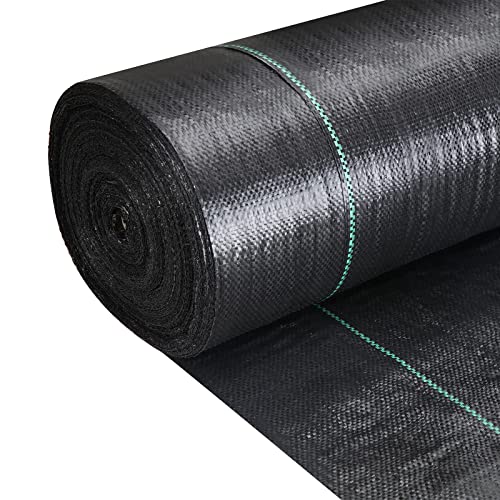
DWALE Driveway Fabric 6×300 ft Commercial Weed Barrier
Liquid Rubber Geo-Textile Fabric Roll 4 in. x 160 ft

VEVOR 6 ft x 100 ft Non-Woven Geotextile 8 oz
VEVOR Geotextile 6 ft x 50 ft 8 oz Non-Woven PP

VEVOR Geotextile 3 ft x 100 ft 8 oz Non-Woven PP
VEVOR Geotextile 4 ft x 100 ft 8 oz Non-Woven PP

FEED GARDEN 4 ft x 100 ft Landscape Fabric with Stakes

NDS FWFF67 Filter Fabric Wrap for Flo-Well

Groweco Weed Barrier Landscape Fabric 6 ft x 100 ft 3.2 oz
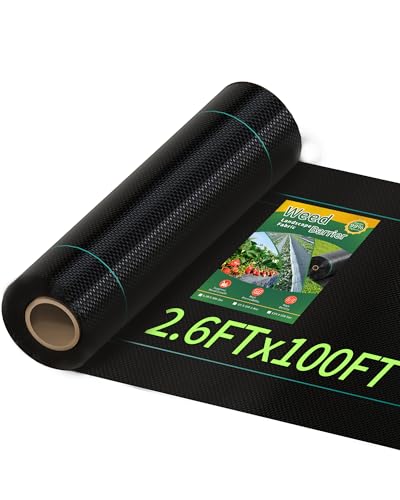
Pterying Weed Barrier Landscape Fabric 2.6 ft x 100 ft
Why These Options Stand Out
If your project is a long rural driveway or a sizeable French drain that needs a single continuous run, DWALE’s 6 by 300 foot roll is the kind of coverage that saves you from awkward seams. The polyethylene construction lands at 3.5 oz, which puts it in the heavy range for ground cover fabrics, and the manufacturer calls out tear resistance and durability as core traits. Most users unroll this over a graded sub-base before adding gravel, and the width handles a standard two-track driveway without needing joins.
Compared to the VEVOR options lower on this list, DWALE trades a slightly lower weight rating for a much longer continuous run. For a long, straight job site, fewer seams means fewer weak points where weeds can sneak through.
What Helps Most
- 300 ft continuous length covers long driveways without splicing.
- 3.5 oz weight handles light vehicle traffic over gravel.
- Polyethylene build resists tearing during installation over rough sub-grades.
- Wide 6 ft format matches common driveway footprints.
Things To Consider
- Folded packaging means you spend time unrolling and flattening before layout.
- Heavier than typical garden fabrics, so trimming takes sharper tools.
Built With In Mind
Property owners laying down a long gravel driveway, a French drain along a foundation, or an erosion-control run where one continuous sheet beats a patchwork of smaller rolls.
Skip It When
The VEVOR 6 ft x 100 ft 8 oz roll is a better fit when you need higher tensile and load ratings on a shorter project and want to skip the heavier weight of this polyethylene build.
This 4 inch by 160 foot roll from Liquid Rubber plays a totally different role than the ground-cover fabrics above. It’s a stitch-bonded polyester reinforcement strip designed to embed inside a Liquid Rubber waterproof coating, building layered protection over cracks, seams, vents, and skylights. The polyester composition is among the strongest fabrics used in roofing work, and the narrow width lets you trace a tight seam without waste.
For homeowners patching a flat-roof leak or sealing an RV seam, this acts as the structural sandwich between coats of sealant. Unlike the broad ground fabrics, you don’t lay it directly on soil. It earns its keep in the can of coating.
Useful Touches
- Stitch-bonded polyester delivers high tensile reinforcement for thin coating layers.
- Narrow 4 in. width traces roof seams, vents, and skylight edges cleanly.
- 160 ft length handles a long perimeter or multiple patch sites.
- Compatible with Liquid Rubber waterproof and color sealants for flexible use.
Worth Noting
- Limited to projects where you’re applying a Liquid Rubber coating on top.
- Not a substitute for ground-covering landscape fabric for weed or drainage work.
Key Product Details
Who Will Love This
DIYers sealing a flat roof, RV owner patching seams, or anyone building a multi-layer waterproofing system with Liquid Rubber coatings.
Reach For A Different Pick When
DWALE’s commercial driveway roll is the better match when you need ground-cover fabric for drainage or weed control under gravel, not coating reinforcement.
VEVOR’s 8 oz non-woven polypropylene (a felt-like fabric made from heat-bonded fibers, not woven threads) roll hits a sweet spot for serious ground work. The 350N tensile strength (a measure of how much pulling force the fabric can take before tearing) and 440N load capacity handle gravel, French drain stone, and erosion-prone slopes without stretching out. At 6 by 100 feet, it suits a typical suburban driveway, a sizeable patio base, or a long drainage run where a single sheet covers the job.
Compared to the lighter 3.2 oz landscape fabrics later in this list, this 8 oz material gives you more headroom under vehicle loads. You trade flexibility for stiffness, but for ground that has to hold up, that trade is worth making.
Everyday Perks
- 8 oz density handles vehicle and pedestrian loads over gravel.
- Non-woven PP allows water to pass through while blocking soil migration.
- Resists tearing, damp, and erosion for multi-year installations.
- Cuts to size with a utility knife for custom shapes around planters.
Trade Offs
- Stiffer than lighter fabrics, so tight curves take more effort to lay.
- Heavier roll is awkward for one person to position on a slope.
Feature Snapshot
Right Fit For
Homeowners and small contractors installing a gravel driveway, a French drain system, or an erosion-control layer that needs to last several seasons.
Look Elsewhere When
The VEVOR 3 ft x 100 ft version is a smarter pick when you need a narrower strip for trench work or edging where a 6 ft roll creates excess waste.
Same 8 oz non-woven polypropylene build as the longer VEVOR above, but trimmed to 50 feet for projects where 100 feet would be overkill. The 350N tensile strength and 440N load capacity stay identical, so you’re not giving up the structural backbone. For a short French drain, a small patio base, or a back-garden retaining wall, this size lands closer to what you’ll actually use.
Choosing between this and the 100 ft sibling comes down to math: how much ground you need to cover, and how much leftover roll you want to store. The honest read is that a 50 ft roll suits tight urban lots more than sprawling properties.
A Few Strong Suits
- 8 oz non-woven PP matches the heavier VEVOR build for consistent results.
- 50 ft length fits smaller projects without bulky leftover material.
- Lighter to handle alone than the 100 ft roll on uneven ground.
- Drains well while blocking soil migration into gravel.
Points To Note
- Limited coverage means it won’t suit a full-length driveway.
- Same stiffness as the longer 8 oz roll, so curves are still a workout.
Best Suited To
Urban gardeners and homeowners handling a short French drain, a small patio sub-base, or a section of erosion control where the 100 ft roll would leave waste.
Not Your Match When
The VEVOR 6 ft x 100 ft 8 oz roll suits you better if your project spans most of a property and you want one continuous sheet rather than a join in the middle.
The narrow 3 foot width of this VEVOR roll is built for the long, slim jobs: drainage trenches, edging strips, the back of a raised bed, or a strip behind a retaining wall. You still get the 8 oz non-woven PP build and the same 350N tensile and 440N load ratings, so performance tracks with the wider 8 oz siblings above. It just packages those specs into a more manageable strip.
For a single 100 ft trench run, the 3 ft width minimizes waste and makes handling easier on a slope. The catch is that wider ground projects need two or three strips laid side by side, which adds seams.
Positive Takeaways
- 3 ft width fits drainage trenches without trimming waste.
- Same 8 oz density as the broader VEVOR rolls for matching performance.
- Easier to carry and position solo than a 6 ft wide roll.
- Permits water flow while stopping soil and silt from clogging drains.
Small Caveats
- Wide projects require multiple parallel strips with overlap seams.
- Stiff at this weight, so it doesn’t drape easily over uneven contours.
Perfect Match For
Property owners running a long French drain, a strip drain along a patio edge, or a foundation-side drainage line where narrow coverage is the point.
Consider Something Else When
FEED GARDEN’s 4 ft x 100 ft kit is a better fit for broad garden beds where anchor stakes and woven flexibility matter more than a 3 ft trench-friendly width.
The 4 foot width here splits the difference between the 3 ft and 6 ft VEVOR options, which makes it the most flexible general-purpose roll in the lineup. Same 8 oz non-woven PP, same 350N tensile and 440N load ratings, so you’re not trading strength for size. It works equally well in a medium garden bed, a gravel path, or a moderate drainage run.
For most suburban projects that don’t fit neatly into “long trench” or “wide driveway” categories, this 4 ft width tends to land closest to the mark. The trade-off is that you still need to anchor and overlap strips for anything wider.
Standout Benefits
- 4 ft width balances coverage and handling for general landscaping work.
- 8 oz PP build supports gravel paths and light foot traffic.
- Same tested tensile and load ratings as the broader VEVOR rolls.
- Resists moisture and tearing across multiple seasons of use.
Points To Keep In Mind
- Not wide enough for a single-pass driveway coverage.
- Stiff non-woven texture complicates tight curves around hardscape.
Quick Facts
Made For
Homeowners tackling mid-sized garden beds, gravel paths, or drainage projects where the 4 ft width hits the mark without leaving bulky waste.
A Better Fit Elsewhere
The VEVOR 6 ft x 100 ft 8 oz roll is a smarter pick for full driveway coverage where 4 ft strips would create too many overlap seams.
FEED GARDEN packages its 3.2 oz woven polypropylene (a fabric made by interlacing flat threads, which gives it a grid-like feel and good tear resistance in both directions) into a 4 by 100 foot split pack and throws in 30 U-shaped stakes. For a first-time gardener laying out a vegetable bed or weed-suppressing ground cover, having the anchors in the box skips a second order. The fabric includes printed green guide lines for straight plant alignment, which is a small but useful touch for tidy rows.
Compared to the 8 oz VEVOR rolls, this lands in the lighter weight class. It’s woven rather than non-woven, so the feel and water behavior differ. For a residential garden rather than a load-bearing driveway, that lighter build is plenty.
Positive Points
- 30 included U-stakes save a separate supply run.
- Green guide lines help align plant rows during install.
- Woven PP resists tearing when cut or repositioned.
- Two 4 by 50 ft rolls fit easier in a car than one giant roll.
Honest Caveats
- 3.2 oz is too light for vehicle or heavy gravel loads.
- Woven fabric sheds less water than non-woven options in soggy soil.
Who Should Grab It
First-time gardeners and homeowners setting up vegetable plots, flower beds, or shrub borders who want a complete kit with anchoring hardware included.
Where A Sibling Pick Shines
Groweco’s 6 ft x 100 ft 3.2 oz roll is a better fit when you need broader coverage from a single sheet and don’t need anchor stakes included.
The NDS FWFF67 is a purpose-built wrap, not a general landscape roll. At 2 by 7 feet, it fits around the NDS Flo-Well dry well tank to keep soil out of the punched-out weep holes. If you’re installing a Flo-Well stormwater system, the manufacturer recommends wrapping the unit with this filter fabric before backfilling, and the result is a longer-lasting dry well that doesn’t silt up.
This isn’t the roll you’d use for a driveway or a flower bed, and trying to repurpose it for one would be a waste of money. Where it shines is the specific drainage scenario it was designed for.
A Favorable Mix
- Custom-sized for NDS Flo-Well dry well installations.
- Non-woven geotextile blocks soil without choking water flow.
- Extends dry well life by preventing silt buildup in weep holes.
Worth Bearing In Mind
- Limited to dry well and similar drainage assemblies.
- Single pack means you buy multiples for multi-tank setups.
Feature Card
The Right Fit
Homeowners installing or upgrading an NDS Flo-Well dry well system and want the matching filter wrap for the install.
Swap It Out When
The VEVOR 6 ft x 100 ft 8 oz non-woven roll is the better choice for any broader French drain or general ground cover work, since this wrap is too narrow and too short.
Groweco’s 3.2 oz polypropylene landscape fabric covers a broad 6 by 100 foot area, which makes it a practical choice for a flower bed, a walkway border, or a sizeable garden plot. The lighter weight means easier handling than the 8 oz VEVOR rolls, and the green guide stripes help with straight cuts. You give up the heavy load ratings, so this isn’t a driveway material, but for weed suppression under mulch it pulls its weight.
For most home garden projects, the difference between this and the heavier 8 oz options rarely shows up until you put a vehicle on top. For a backyard vegetable or flower bed, 3.2 oz is plenty.
What It Does Well
- Broad 6 x 100 ft coverage for full garden beds.
- Lightweight build makes it easier to cut and position.
- Green guide stripes simplify plant alignment and trimming.
- Blocks sunlight to stop weed seed germination under mulch.
Some Limits To Know
- 3.2 oz won’t hold up under vehicle loads.
- Commonly reported wear at stake puncture points over multiple seasons.
Whose Shelf It Belongs On
Home gardeners laying out large flower beds, walkways, or vegetable plots where broad weed suppression matters more than load capacity.
Another Choice May Suit
The VEVOR 6 ft x 100 ft 8 oz roll is the smarter pick for a gravel driveway or French drain where the heavier weight and higher load ratings pay off.
Pterying’s 2.6 by 100 foot roll adds UV stabilization to its woven polypropylene build, which is the key detail for any fabric that sits exposed to direct sun for months at a time. Standard landscape cloth breaks down faster when sunlight reaches it, and a UV-stabilized version stretches its useful life across more growing seasons. At 2.4 oz (the source notes 2.4 oz in the description context), it’s on the lighter end, so this is a garden product, not a structural one.
The narrow width suits strip installations along fence lines, between raised beds, or in narrow vegetable rows. In tight layouts, a 2.6 ft strip often fits without trimming waste.
Features That Help
- UV stabilization extends fabric life in full-sun installations.
- Woven PP resists tearing across the roll and along it.
- Narrow 2.6 ft width fits strip gardens and row crops.
- Blocks sunlight at the soil level to suppress weed germination.
Things To Weigh
- Light 2.4 oz weight limits use to pedestrian and garden settings.
- Narrow format requires many parallel strips for broad beds.
Right Fit For
Gardeners with full-sun plots, narrow raised beds, or row-crop layouts where UV resistance and a strip-friendly width matter more than heavy load capacity.
Look Elsewhere When
FEED GARDEN’s 4 ft x 100 ft kit makes more sense for broad vegetable beds where you want included stakes and a wider starting format.
Choosing Geotextile Fabric That Actually Fits the Job
Material, weight, and project scale do most of the decision-making. Non-woven polypropylene lets water pass through while blocking soil migration, which is why it dominates drainage and French drain work. Woven polypropylene is tighter and resists tearing in two directions, suiting garden beds and weed control where the soil doesn’t need as much water exchange. The number after “oz” tells you density, and density drives strength: 3.2 oz handles mulch and foot traffic, 8 oz handles gravel and light vehicles.
For long, continuous runs like a rural driveway, the bigger the single sheet, the fewer seams, and seams are where weeds eventually exploit weak points. Narrow rolls of 3 ft or less make sense for trenches and strip work, while 6 ft widths cover driveways in one pass. Cut to size with a sharp utility knife, anchor with U-stakes every few feet, and overlap parallel strips by at least 6 inches to keep soil from sneaking through.
Weight and Load
If your fabric sits under a footpath, 3.2 oz usually suffices. If it sits under a gravel driveway, an 8 oz non-woven gives you the structural margin to handle vehicle weight and stone settlement. Choosing a fabric that’s too light for its job is the most common reason these installations fail.
Width and Roll Length
Match the roll dimensions to the project footprint. A 300 ft run makes sense for a long rural lane. A 50 ft run is plenty for an urban patio base. Buying a roll far larger than the project creates leftover storage problems and wasted material.
Breathability and Drainage
Non-woven fabrics excel at letting water through while filtering sediment. Woven fabrics hold back more water and work better in dry garden beds where over-saturation isn’t a concern. For a French drain or a dry well installation, the breathable choice is the right one.
UV and Weather Resistance
Any fabric that sits in direct sun for more than a season benefits from UV stabilization. Standard landscape cloth breaks down faster under sunlight, and a UV-treated version is worth the small premium for long installations.
Smart Spending Across the Category
Common Shopping Slip Ups
The biggest mistake is choosing a 3.2 oz landscape fabric for a driveway. It looks similar to the heavier options on the shelf but won’t survive the load. The reverse mistake also happens: buying 8 oz fabric for a small flower bed where the heavier weight makes cutting and positioning harder without adding useful life.
Another common slip is ignoring the overlap. Single strips placed edge to edge leave a gap where weeds and soil push through. Overlap parallel strips by at least 6 inches and anchor generously.
What The Higher Tier Buys
The jump from 3.2 oz to 8 oz isn’t a marketing label, it’s a meaningful structural upgrade. Higher-tier rolls handle vehicle loads, hold up longer under gravel, and resist tearing during installation over rough sub-grades. For ground that needs to last, the heavier fabric pays for itself in fewer repairs and longer service life.
Frequently Asked Questions
What weight geotextile fabric do you need for a driveway?
For a residential gravel driveway, 8 oz non-woven polypropylene is the typical starting point. Lighter 3.2 oz fabrics are designed for garden and landscape use and don’t carry the load capacity for vehicle traffic over stone.
Can geotextile fabric stop weeds completely?
It blocks the sunlight that weed seeds need to germinate, which dramatically reduces weed pressure under mulch or gravel. It doesn’t stop every weed, especially aggressive rhizome-based species that push through fabric, so pairing it with mulch gives the best result.
What’s the difference between woven and non-woven geotextile fabric?
Woven fabrics interlace flat threads in a grid pattern, giving strong tear resistance and limited water flow. Non-woven fabrics bond fibers into a felt-like sheet that lets water pass through freely while filtering sediment, which is why drainage projects favor non-woven.
How do you anchor geotextile fabric in place?
U-shaped stakes every 3 to 5 feet along the edges and seams keep the fabric flat while you backfill with soil, mulch, or gravel. For long runs, overlap parallel strips by at least 6 inches and stake through both layers at the seam.
How long does geotextile fabric last in the ground?
In a covered installation under mulch or gravel, most quality geotextile fabrics last several years without issue. UV-stabilized options exposed to direct sun last longer than standard cloth, which can break down within a couple of seasons if left uncovered.
Closing Remarks
The right geotextile fabric depends entirely on what you’re covering, how much weight it carries, and how long you want it to last. Match the weight to the job, the width to the footprint, and the weave to the drainage needs, and the roll you buy will quietly do its job for years.
