

A patchy lawn or stubborn bare spot can turn a tidy yard into a source of frustration, especially when sun, shade, and heavy foot traffic all show up in the same space. The right seed blend matched to your conditions saves you from reseeding the same area twice. This list covers ten grass seed options built to handle a wide range of climates, soil types, and household wear patterns, so you can pick with confidence instead of guessing.
A Closer Look At The Lineup

Jonathan Green Black Beauty Heavy Traffic Grass Seed 3 lb

Jonathan Green Black Beauty Dense Shade Grass Seed 1 lb

Jonathan Green Black Beauty Heat & Drought Resistant Grass Seed 3 lb

Jonathan Green Black Beauty Tall Fescue Grass Seed Blend 15 lb

Pennington Annual Ryegrass Grass Seed 10 lb

Scotts Turf Builder Grass Seed Sunny Mix 2.4 lb
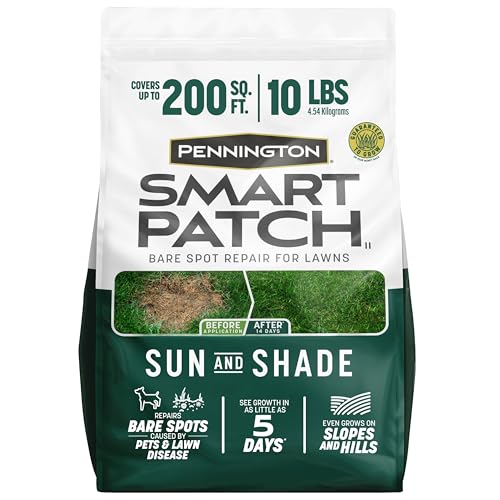
Pennington Smart Patch Sun and Shade Mix 10 lb

Pennington Bermudagrass Grass Seed 5 lb

Scotts Kentucky 31 Grass Seed Mix 7 lb

Scotts Grass Seed Drought Tolerant Mix 4 lb
More On The Choices That Made The List
Backyards that double as soccer fields need seed that rebounds from cleats and paws without going patchy. Jonathan Green’s Heavy Traffic mix leans on tall fescues and perennial rye turfgrass varieties, a pairing chosen for wear tolerance rather than showy color. Compared with the Dense Shade option below, this one trades light economy for sheer durability underfoot.
For most households, that means a backyard that holds up to rough play without constant reseeding. You plant in cooler months for best results, and the cool-season profile matches much of the Northeast and Midwest.
Notable Gains
- Built around tall fescue and perennial rye, two species known for recovering from wear
- Uniform leaf texture that holds up on sports fields, where ball roll matters
- Cool-season blend that thrives where summers are mild and winters are cold
- Real-world payoff: less reseeding after a summer of backyard games
Things To Consider
- Cool-season species struggle in deep South heat, so this is not a match for Florida or south Texas
- The 3 lb bag covers a modest area, and large yards may need multiple bags
- Owners commonly report germination timing varies with soil temperature and watering consistency
Feature Snapshot
Who It Suits Best
Families with active kids or dogs who need a lawn that tolerates rough use without constant patching.
Where Another Pick Suits Better
Homeowners in the deep South should consider the Pennington Bermudagrass Grass Seed 5 lb instead, since Bermuda thrives in heat where cool-season fescues fade.
Tree-lined lots and north-facing lawns present a real problem: most turf blends thin out where sunlight barely reaches. This Dense Shade mix from Jonathan Green is engineered for exactly that scenario, with varieties chosen to germinate and fill in under canopy cover. Where the Heavy Traffic pick handles wear, this one handles light deprivation.
For most shaded yards, the dark-green color payoff is the real draw. The mix germinates in roughly 14 to 21 days and contains beneficial endophytes, which are naturally occurring fungi that help grass resist insect damage and environmental stress.
Useful Touches
- Formulated for areas with limited sunlight penetration
- Produces dense, dark-green turf under tree canopy and structure shade
- Endophyte-enhanced varieties help resist surface-feeding insects
- Real-world payoff: thick growth under oak and maple canopies where sun mixes drop
Worth Noting
- The 1 lb bag is best for smaller patches, so large shaded lots may need to scale up
- Even shade-tolerant blends need some filtered light to truly establish
- Germination in cooler soils can slow the visible fill-in window by a week or more
Made For
Homeowners with mature trees casting deep shade across a meaningful portion of the lawn.
Consider Something Else When
Yards that get more sun than shade should reach for the Scotts Turf Builder Grass Seed Sunny Mix 2.4 lb, which leans into full-sun performance instead.
Transition-zone lawns sit in a tough middle ground: too hot for traditional fescues, too cool for full Bermuda country. This Jonathan Green blend combines tall fescue with Texas bluegrass, a hybrid pairing that pushes heat tolerance higher than either species alone. The mix handles full sun to light shade and is rated to take temperatures up to 100°F.
For most homeowners in the upper South or lower Midwest, the waxy leaf coating is the feature that pays off in practice, since it preserves moisture by limiting evaporation through the blade surface. The trade-off versus the Dense Shade option above is that this blend wants more sun to thrive.
Useful Strengths
- Tall fescue and Texas bluegrass pairing extends heat tolerance into the 100°F range
- Waxy leaf coating helps preserve moisture during dry spells
- Adapts to full sun or lightly shaded growing conditions
- Real-world payoff: a cool-season blend that does not collapse the first 100-degree week
Points To Keep In Mind
- Still a cool-season profile, so deep South summers will eventually stress the stand
- Establishment takes patience during peak heat, when growth naturally slows
Best Suited To
Homeowners in transition zones who want a fescue-family lawn that survives brutal August afternoons.
Look Elsewhere When
Garden beds and turf in full southern exposure may do better with the Pennington Bermudagrass Grass Seed 5 lb, which is built for sustained heat.
Full-yard renovations call for a different scale of bag. The 15 lb Black Beauty Original blend gives you enough seed to tackle a serious project without piecing together smaller packs. Roots reportedly reach up to 4 feet deep, and the waxy leaf coating helps the turf hold moisture when conditions turn dry.
For most cool-season lawns, the 100% tall fescue composition keeps the texture uniform and the color a consistent dark green. It grows in both sunny and shady areas, and unlike the 3 lb Heavy Traffic bag earlier, this one is built to feed a much larger footprint.
The Upside
- 100% turf-type tall fescue for a uniform dark-green appearance
- Roots engineered to grow up to 4 feet deep for drought tolerance
- Performs in both sunny and shady parts of the same yard
- 15 lb size supports full-lawn seeding or large patch repair
- Real-world payoff: fewer bare spots when late-summer dry spells hit
Trade Offs
- Cool-season profile still struggles in southern heat
- Best planting window is mid-August to mid-October, with spring as a secondary option
- Owners should plan to mow regularly, as tall fescue grows steadily through the season
Quick Facts
Who Should Grab It
Homeowners planning a full cool-season lawn renovation or overseed across a substantial yard.
Swap It Out When
South-facing lawns with intense summer sun may perform better with the Jonathan Green Heat & Drought Resistant Grass Seed 3 lb, which adds Texas bluegrass for heat endurance.
Annual ryegrass is the speed merchant of the seed world. Pennington’s 10 lb bag germinates in 3 to 7 days, which is a useful answer when a lawn needs visible green almost immediately. The classic use is overseeding southern Bermuda lawns for winter color, since rye stays green in cool months when warm-season turf goes dormant.
For most households, this is a temporary tool rather than a permanent lawn. Northern homeowners can also use it as a quick cover while a slower fescue blend establishes, since it acts as a nurse crop that holds soil in place.
Strong Points
- Germination in as little as 3 days gives fast visible results
- Strong fit for overseeding southern lawns through winter
- 10 lb bag covers a meaningful overseeding area
- Real-world payoff: green winter lawn instead of dormant brown Bermuda
Soft Spots
- Annual species means it dies back in summer heat, so it is not a permanent lawn
- Coarser texture than perennial rye or fescue, which some homeowners find less refined
Perfect Match For
Homeowners in the South who want a green lawn through winter when warm-season grass goes brown.
Another Choice May Suit
Anyone establishing a permanent cool-season lawn should look at the Jonathan Green Black Beauty Tall Fescue Grass Seed Blend 15 lb for long-term results.
Open lawns that soak up six or more hours of direct sun need a blend that actually wants the light, rather than tolerating it. Scotts Turf Builder Sunny Mix is designed for exactly that environment, with Root-Building Nutrition mixed into the seed to push early root development. It also handles light shade, which is helpful in yards with one or two trees.
For most suburban yards without heavy canopy, the medium-to-high drought resistance keeps the lawn from going crispy during dry stretches. The 2.4 lb size fits a patch or modest new lawn rather than a full-acre overhaul.
Standout Benefits
- Root-Building Nutrition supports deeper early root development
- Formulated for full sun, with light-shade flexibility
- Medium-to-high drought resistance for sun-baked sites
- Real-world payoff: less watering required during typical dry spells
Minor Gripes
- 2.4 lb bag is sized for patches or smaller lawns, not full renovations
- Not the right pick for deep shade, which the Jonathan Green Dense Shade option handles better
At A Glance
Whose Shelf It Belongs On
Homeowners with open, sun-drenched lawns who want a brand-name blend with built-in starter nutrition.
Reach For A Different Pick When
Yards with heavy tree cover should turn to the Jonathan Green Black Beauty Dense Shade Grass Seed 1 lb for better establishment under low light.
Spot repairs call for a different approach than full seeding. Pennington Smart Patch combines seed, starter fertilizer, and added microbials, which are beneficial microorganisms that support root zone health, in a single product. That mix is designed to prevent disease and improve overall lawn health while new grass establishes.
For most dog owners, this is a common-sense answer to the typical yellow patches left behind by pet activity. The 10 lb bag covers up to 600 sq ft, which handles multiple repairs without buying a separate fertilizer.
The Case For It
- Built-in fertilizer and microbials simplify patch repair
- Works in both sun and moderate shade for versatile spot use
- Covers up to 600 sq ft in a single bag
- Real-world payoff: faster recovery on dog spots and traffic damage
Possible Compromises
- Designed for repair, not full-lawn establishment, so it is not the most efficient choice for large projects
- Once a bag is opened, the fertilizer component has a finite window before it loses potency
Right Fit For
Pet owners and families dealing with persistent bare spots who want an all-in-one repair product.
Where A Sibling Pick Shines
Whole-yard renovations are better served by the Pennington Annual Ryegrass Grass Seed 10 lb for fast cover or the Jonathan Green Black Beauty Tall Fescue Grass Seed Blend 15 lb for permanent cool-season turf.
Southern lawns with full sun and long, hot summers are Bermuda territory. This Pennington Bermudagrass seed produces a thick, aggressively self-spreading turf with a deep root system. The improved cold-tolerant varieties extend its range slightly north of traditional Bermuda country, which is helpful for transition-zone homeowners.
For most southern yards, the wear resistance is the headline feature. The low-growing blend also means fewer grass clippings during peak season, so mowing is less of a chore. The honest trade-off is dormancy: Bermuda turns brown in winter, which matters if year-round green is a priority.
Key Advantages
- Thick, self-spreading growth fills in bare patches over time
- Deep root system supports wear resistance and drought tolerance
- Cold-tolerant varieties extend Bermuda’s usable range
- Low-growing blend reduces mowing and clipping volume
A Few Limitations
- Goes dormant and turns brown in winter, so it is not year-round green
- Aggressive spreading can creep into garden beds without edging
Built With In Mind
Southern homeowners with full-sun lawns who want a wear-resistant, heat-loving turf they can mow less often.
Skip It When
Anyone who wants green winter color should pair this with the Pennington Annual Ryegrass Grass Seed 10 lb as an overseed during the cool months.
Kentucky 31 tall fescue has been a workhorse variety for decades, valued for durability and lower maintenance. Scotts Kentucky 31 Mix wraps that heritage variety in a curated blend designed for both new lawns and overseeding. The composition aims to deliver thicker, greener results than plain Kentucky 31 alone.
For most homeowners, the appeal is straightforward: a known variety with a brand-name blend. It works for new lawns and for thickening up an existing stand, which gives it two roles in a single bag.
Well-Handled Touches
- Curated blend built around Kentucky 31 tall fescue for durability
- Suitable for new lawn installation and overseeding existing turf
- Designed to require less maintenance than more demanding blends
- Real-world payoff: a familiar fescue feel with a brand-name formulation
Things That May Matter
- Kentucky 31 has a coarser blade than modern turf-type fescues, which some homeowners find less refined
- 7 lb bag is mid-sized, so very large lawns may need additional product
Right Fit
Homeowners who want a traditional, low-maintenance fescue lawn without chasing the newest cultivar on the market.
A Better Fit Elsewhere
Anyone wanting a darker green color and finer leaf texture may prefer the Jonathan Green Black Beauty Tall Fescue Grass Seed Blend 15 lb instead.
Drought-prone regions punish shallow-rooted turf. Scotts pairs Tall Fescue with Kentucky Bluegrass, a combination that pushes roots deeper into the soil profile to reach water that other blends miss. The bluegrass component also helps the lawn self-repair by filling in small bare spots over time.
For most homeowners in dry climates, the 99.99% weed-free seed purity is a practical benefit that reduces competition during the critical establishment window. Air temperatures between 65°F and 85°F in spring or fall give the best results.
Positive Takeaways
- Tall fescue and Kentucky bluegrass pairing supports deep roots and self-repair
- 99.99% weed-free seed gives new grass a clean establishment window
- Works for both new lawns and overseeding existing turf
- Real-world payoff: a lawn that stays greener longer between waterings
Honest Caveats
- Best applied during the spring or fall temperature window, so timing matters
- Still needs consistent watering during establishment, even though mature turf is drought tolerant
Feature Rundown
Who Will Love This
Homeowners in dry or water-restricted regions who want a lawn that holds color through typical dry spells.
Not Your Match When
Yards with deep shade should consider the Jonathan Green Black Beauty Dense Shade Grass Seed 1 lb for a better match to low-light conditions.
Choosing Grass Seed That Matches Your Yard
Start with your climate before you look at anything else. Cool-season grasses, like the tall fescues in most Jonathan Green blends, thrive where winters are cold and summers are mild. Warm-season options, such as the Pennington Bermudagrass, prefer long hot summers and go dormant in winter. Picking the wrong season type is the most common reason a new lawn fails, since the seed germinates and then cannot handle the first extreme weather window.
Sunlight exposure matters just as much. The Scotts Turf Builder Sunny Mix wants full sun, while the Jonathan Green Dense Shade blend is engineered for areas where sunlight barely penetrates. Many yards have both conditions, which is why a versatile blend like the Jonathan Green Tall Fescue 15 lb often works as an all-purpose cool-season choice.
Traffic and use case should drive your next call. A backyard hosting daily soccer games needs the wear tolerance of tall fescue and perennial rye in the Heavy Traffic mix. A spot repair situation, especially with pets, is a better match for the Pennington Smart Patch with its built-in fertilizer and microbials. New full-lawn projects call for larger bag sizes with deeper-rooted species, such as the 15 lb Black Beauty blend or the 4 lb Scotts Drought Tolerant mix.
Timing and coverage round out the decision. Most cool-season blends establish best in fall, while warm-season grasses want late spring soil temperatures. Calculate your square footage, account for overseeding rates if you are thickening an existing lawn, and buy a bag size that covers the project with a little headroom for patchy spots.
Key Considerations Across These Picks
Where Shoppers Go Wrong
A common mistake is buying a shade mix for a sunny yard or vice versa, since the seed establishes slowly under the wrong light conditions and never fills in properly. Another frequent error is underestimating bag size, which leaves a half-finished project waiting on a second order. Skipping soil preparation, like loosening the top layer and clearing debris, also limits how well new seed takes hold regardless of the brand.
Where The Extra Money Goes
Premium blends invest in improved cultivars with deeper roots, better disease resistance, and finer leaf texture than economy options. The Jonathan Green Black Beauty line, for example, builds in waxy leaf coatings and endophyte enhancements that reduce water loss and insect pressure over the life of the lawn. Higher-tier drought-tolerant mixes add bluegrass components for self-repair, which is a long-term durability feature rather than a marketing claim. The upgrade is worth it for full-lawn projects where reseeding costs quickly outpace the initial savings of a basic bag.
Frequently Asked Questions
What time of year should grass seed be planted?
Cool-season blends establish best in mid-August through mid-October, with mid-March through mid-May as a secondary window. Warm-season grasses like Bermuda prefer late spring once soil temperatures rise consistently.
How long does grass seed take to germinate?
Most blends in this list germinate within 7 to 21 days, depending on species, soil temperature, and watering consistency. Annual ryegrass is the fastest at 3 to 7 days, while fescue blends typically run the longer end of the range.
Can grass seed grow in shade?
Yes, but only shade-tolerant varieties like the Jonathan Green Dense Shade mix. Even those blends need some filtered light, so deep canopy with zero sun exposure is not a realistic target for any turf seed.
How much seed do I need for my yard?
Coverage depends on whether you are starting a new lawn or overseeding an existing one. New lawns generally need more seed per square foot, while overseeding uses about half that rate to thicken the existing stand.
Do I need to water new grass seed daily?
Yes, light watering once or twice daily during the first two to three weeks keeps the topsoil moist for germination. Once grass reaches mowing height, you can transition to deeper, less frequent watering to encourage root growth.
Closing Remarks
The best grass seed for your yard comes down to matching the blend to your climate, sunlight, and how the lawn gets used day to day. Cool-season fescues handle northern and transition-zone conditions, warm-season Bermuda owns the southern sun, and specialty mixes fill in the gaps for shade, traffic, and quick repairs. Pick the option that fits your conditions, give the seed a properly prepared seedbed and steady water during establishment, and your lawn should reward the effort for seasons to come.
