

Sloped yards tell two stories at once: the patch you want to keep green and the soil you don’t want sliding into the driveway after the next heavy rain. Choosing the right grass seeds for erosion control on slopes means thinking about what anchors soil, what survives shallow topsoil, and what germinates before runoff can strip it away. The picks below pair seed blends suited to tough root work with protective blankets that buy seedlings time to establish. Use them as a starting point, then match the blend and the slope to your specific grade and sun exposure.
Your Options, Compared

Jonathan Green Black Beauty Tall Fescue Blend (15 lb)

Scotts Kentucky 31 Tall Fescue Mix (20 lb)
American Excelsior QuickGrass Pro Blanket 2.5’x50′

Scotts Turf Builder Rapid Grass Sun & Shade (2.4 lb)

O.M. Scott & Sons Tall Fescue Blend (8 lb)
DeWitt Single Net Excelsior Blanket 4’x112.5′
EZ Straw Seed Germination Blanket 4’x50′

Farm Plastic Supply Straw Blanket 8’x112.5′

American Excelsior QuickGrass Pro Blanket 4’x50′

Scotts Turf Builder Sun & Shade Mix (5.6 lb)
A Deeper Look At The Lineup
For sloped lawns in the cool-season belt, this tall fescue blend earns the top spot for a reason. Its roots stretch deep into the soil column, which is exactly the kind of anchoring that keeps a hillside from shedding its seed bed after a storm. You’ll find the most reliable establishment window falls in early autumn, when soil is still warm but air temperatures have cooled, though a spring slot works in a pinch.
If your slope shifts between full afternoon sun and tree-canopy patches, this blend handles both without thinning out. Compared to the Kentucky 31 option later in this lineup, it leans toward a more uniform leaf texture and a darker green color, which matters on a slope that doubles as your front-yard focal point.
The Practical Payoff
- Root system designed to reach deep into subsoil, giving seedlings real holding power on an incline.
- Waxy leaf coating helps each blade hold onto moisture during the dry weeks after germination.
- Performs consistently across both sunny and shaded sections of the same slope.
- Uniform leaf texture means the finished turf looks tidy rather than patchy on visible hillsides.
Things To Consider
- Establishment slows if you seed outside the recommended autumn or spring windows.
- Bare seed on a steep grade can still wash before roots take hold, so a protective blanket is worth pairing on sharper pitches.
Right Fit For
Homeowners with mid-sized cool-season slopes who want a deep-rooted anchor and a uniform-looking turf in mixed sun and shade.
Look Elsewhere When
Your project covers a very large, rough embankment where the bigger 20 lb Scotts Kentucky 31 Tall Fescue Mix will stretch further per pass.
Long, rough inclines demand seed that can take some abuse, and Kentucky 31 tall fescue has decades of farm and roadside use behind it. The 20 lb bag is sized for sizable hillside work, giving you enough seed to overseed aggressively without rationing coverage. The blend pairs a time-tested fescue base with supporting varieties that thicken the stand beyond what a single cultivar delivers.
You may find the leaf texture a touch coarser than the Black Beauty blend above, but on a back-of-property slope that matters less than raw durability. For erosion-control seeding, the focus is on getting a dense, fibrous mat in place quickly, which is exactly what this mix is built to encourage.
The Upside
- Large 20 lb format suits expansive slopes and roadside-style applications.
- Kentucky 31 parentage offers proven toughness in adverse soil and weather conditions.
- Multi-component blend produces a thicker stand than single-cultivar tall fescue options.
Worth Noting
- Leaf texture runs slightly broader than turf-type tall fescue, so front-yard appearance may feel less refined.
- Needs consistent moisture during the first few weeks to overcome the seed’s larger energy reserves.
Key Product Details
Made For
Property owners tackling long, rugged inclines or back-forty slopes where coverage volume and proven toughness matter more than fine leaf texture.
Consider Something Else When
Your slope is a visible front-yard feature, in which case the finer-bladed Jonathan Green Black Beauty Tall Fescue Blend will read as more polished.
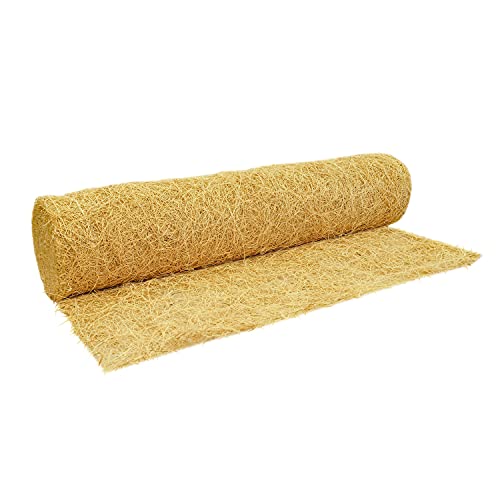
Erosion-control blankets do the unglamorous work that lets seed succeed on a slope, and this 2.5-foot-wide roll from American Excelsior is purpose-built for it. Note that the blanket itself does not contain seed. You broadcast or hydroseed first, then lay this over the top to hold everything in place while germination happens underneath. The narrow width makes it easy to handle on tight access points or a curved drainage swale.
The fibers mat together and grip the soil surface, slowing runoff and giving seedling roots a stable bed to colonize. On slopes where stormwater concentrates, that protection is the difference between a stand that takes and one that washes into the curb after the first downpour.
Real-World Strengths
- Holds seed in place on concentrated-flow zones where bare seed would otherwise wash downhill.
- Compostable construction breaks down naturally, so removal isn’t part of the project plan.
- Narrow roll format fits tight garden access and curved swales where wider blankets are awkward to lay.
- Made in the USA by a long-established manufacturer of erosion-control materials.
Trade Offs
- Does not include any grass seed, so you’ll need to source and apply seed separately before installation.
- Smaller coverage area per roll means more seams and more stapling on bigger slopes.
Whose Shelf It Belongs On
Homeowners repairing a narrow drainage channel or a short, steep pitch where concentrated runoff is the main threat to a new stand.
Reach For A Different Pick When
You’re covering a wide, open embankment, where the longer Farm Plastic Supply Straw Blanket at 8’x112.5′ will cover ground in fewer seams.
When a slope washout can’t wait a full season to fill in, a combined seed-and-starter-fertilizer mix shaves real time off the establishment clock. The 2.4 lb pack size is well-matched to small repair patches and thin spots where you’d otherwise be buying a full-size bag and storing the rest. For a freshly graded backyard slope that needs fast cover, that compression of the timeline is the main draw.
You should still pair it with an erosion blanket on anything steeper than a gentle grade, since rapid germination means nothing if the seed washes off the hill first. The sun-and-shade versatility also makes it forgiving for slopes that straddle a fence line or tree shadow.
Noteworthy Benefits
- Seed and starter fertilizer in a single application, simplifying the prep step on patch repairs.
- Designed to germinate noticeably faster than uncoated seed when soil and watering are on schedule.
- Adapts to both full sun and partial shade along the same stretch of slope.
Points To Note
- Small pack size means it’s better suited to spot repairs than a full hillside overseeding.
- Fast germination still depends on staying on top of watering during the first few weeks, which can be tricky on a steep pitch.
Who Should Grab It
Homeowners repairing a small eroded patch on a residential slope who want a faster turnaround than traditional seed allows.
Skip It When
You’re seeding a brand-new large slope from scratch, in which case the bigger Scotts Kentucky 31 Tall Fescue Mix will give you more coverage per dollar.
An 8 lb bag hits a useful middle ground between the small patch-repair packs and the heavy 20 lb contractor sizes. For a typical suburban slope that doesn’t need commercial-scale coverage, this format lets you seed without much leftover. The tall fescue base handles the kind of mixed-soil, partial-shade conditions common in established neighborhoods.
The brand leans on a long family history in lawn care, and the formulation targets homeowners handling their own yard work rather than professional crews. On a moderate slope with decent existing topsoil, you can expect a reasonable establishment without aggressive soil amendments.
Practical Advantages
- Mid-size bag is well-suited to single-project use without storing half a bag in the garage.
- Tall fescue base delivers durable root structure for typical residential slope work.
- Formulated for DIY homeowners managing their own seeding timeline.
A Few Limitations
- Won’t cover a large property in one pass, so bigger lots will need multiple bags or a larger-format alternative.
- Performance depends heavily on prep work and watering consistency during establishment.
Best Suited To
Homeowners with a modest residential slope who want a manageable bag size and a straightforward tall fescue blend.
Swap It Out When
Your project covers a broad, steep hillside that demands the heavier-duty 20 lb Scotts Kentucky 31 Tall Fescue Mix for full coverage.
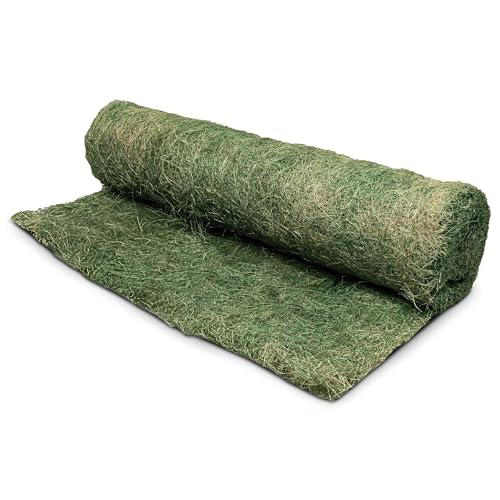
Long slopes, ditch bottoms, and grading-site edges call for a blanket that can stretch a long run without constant seams, and the 112.5-foot length of this DeWitt roll delivers that. The excelsior fibers are aspen wood, curled and distributed so they grip both each other and the soil surface. A photodegradable top net holds the matrix together through the establishment window before breaking down under sunlight.
This isn’t a small-project product, so you should plan on stapling, some helpers, and a clear installation day. On a roadside-style embankment or any disturbed area where seed would otherwise wash, the work pays off in a stand that holds through heavy rain events.
Where It Delivers
- Long 112.5-foot run minimizes seams on big embankments and drainage channels.
- Curled aspen excelsior fibers interlock for reliable surface grip on disturbed soils.
- Top net is photodegradable, so it breaks down naturally once the stand is established.
Practical Considerations
- Heavy roll length requires a clear plan for transport, unrolling, and stapling on site.
- Like the other blankets in this lineup, it does not include seed, which must be applied separately.
Feature Snapshot
Perfect Match For
Property owners with a long, steep embankment or drainage channel who want a single, long blanket run rather than pieced-together sections.
Not Your Match When
You only need to cover a small backyard patch, in which case the more manageable 4’x50′ American Excelsior QuickGrass Pro Blanket will be easier to handle.
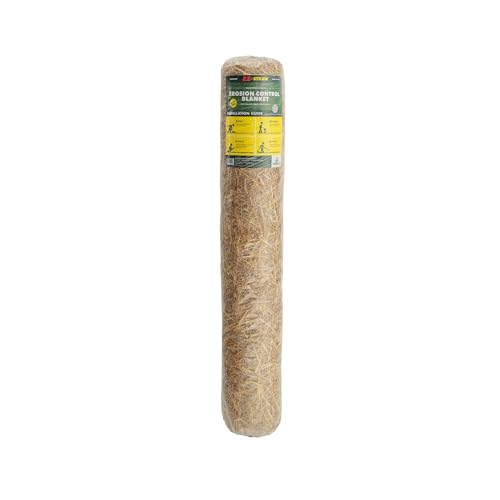
Straw blankets remain a familiar choice for first-time slope seeders, and this EZ Straw version simplifies the process. The processed straw is woven into a blanket-style mat that you roll out over a freshly seeded area, which keeps the seed in place, holds moisture near the surface, and shields it from birds. The 200-square-foot coverage fits a typical backyard patch without leftovers crowding the shed.
If you’ve never installed an erosion blanket before, the soft straw construction is more forgiving to handle than stiff excelsior mats. The trade-off is that straw tends to break down faster, so the protection window is shorter than you’d get from heavier wood-fiber products.
Everyday Wins
- Processed straw mat is soft and easy to cut, staple, and shape around contours.
- Covers 200 square feet, a useful size for typical DIY residential slopes.
- Biodegradable construction means no removal step at the end of the project.
Honest Caveats
- Straw breaks down faster than excelsior, so the protection window is shorter on long, hot, or rainy slopes.
- Like the other blankets here, it does not contain seed, which must be applied underneath first.
Who Will Love This
First-time slope seeders who want a forgiving, easy-to-handle blanket for a moderate residential project.
A Better Fit Elsewhere
You’re seeding a serious drainage channel with high flow, where the longer-lasting DeWitt Single Net Excelsior Blanket will outlast straw.
When your slope is wide as well as long, the 8-foot width of this straw blanket covers serious ground per pass. You unroll it down a hillside, staple it in place, and the mat retains moisture while shielding the seed bed from raindrop impact and sheet flow. The 112.5-foot length complements the wide format for full hillside coverage with fewer transverse seams.
The product is a natural fit for newly constructed slopes after grading, roadside shoulders, or any disturbed-soil situation where topsoil is thin. The broad roll is heavier than narrower options, so plan on an extra set of hands during install.
What Earns Its Place
- 8-foot width covers wide slopes in a single pass, reducing overlap seams.
- 112.5-foot length handles long inclines without constant roll changes.
- Straw matrix retains moisture in the underlying soil to support germination.
Some Limits To Know
- Wide, heavy roll is awkward to maneuver on tight access points or curved contours.
- Does not include seed, so broadcast or hydroseeding must be completed before installation.
Quick Facts
Who Should Grab It
Homeowners or contractors covering a broad, freshly graded slope where wide-roll coverage and fewer seams are the priority.
Where Another Pick Suits Better
You have a narrow, high-flow drainage channel, where a heavier excelsior product like the DeWitt Single Net Excelsior Blanket will resist flow longer.
The 4’x50′ QuickGrass Pro format strikes a useful middle ground for residential projects, and the green tint keeps the blanket from standing out as an eyesore during the establishment window. On a front-yard slope where neighbors will see the work in progress, that color choice actually matters. Underneath, the same excelsior fiber matrix grips the soil and slows runoff while seedlings establish.
This is a seedless blanket, so you’ll still need to apply your own seed first. The 50-foot length handles most single-lot slopes without leaving half a roll sitting in the garage, and the green color fades naturally as the mat breaks down.
Where It Helps
- Green-tinted mat blends into landscaped areas better than natural-straw color during the establishment window.
- Excelsior fibers hold seed in place on slopes, hills, and concentrated-flow zones.
- 4-foot width is manageable for one person to carry and unroll on most residential jobs.
Worth Bearing In Mind
- Does not include seed, so application and timing of the seeding step is on you.
- Like other biodegradable blankets, performance depends on getting good soil contact during install.
Best Suited To
Homeowners who want a residential-friendly erosion blanket that looks tidy in visible front-yard settings during establishment.
Skip It When
You need to cover an extra-long slope in one run, where the DeWitt Single Net Excelsior Blanket at 112.5 feet will save you from piecing multiple rolls together.
The 5.6 lb Turf Builder Sun & Shade Mix rounds out this list as a versatile option for overseeding an existing sloped lawn that has thinned but not failed. The combination of seed, fertilizer, and soil improver in one bag saves a step, and the sun-and-shade tolerance is helpful on a slope that crosses a tree line. It’s not a heavy-duty erosion-control seed by design, but it can do double duty for a moderately sloped yard that needs thickening.
You may find it less aggressive on bare, steep patches than a dedicated fescue blend, so save it for areas where some existing turf is still in place. On those transitional slopes, the root-building nutrition helps push the stand through summer stress once established.
A Few Strong Suits
- Combination of seed, fertilizer, and soil improver simplifies the overseeding step.
- Sun-and-shade tolerance fits mixed-light slopes without separate seed blends.
- Designed to support deep root development, which helps hold soil on a moderate grade.
Soft Spots
- Less specialized for severe erosion than the tall fescue blends earlier in this lineup.
- Performs best where some existing turf is present, not on fully bare fresh grading.
Feature Snapshot
Right Fit For
Homeowners looking to thicken an existing sloped lawn with mixed light conditions rather than seed a bare, freshly graded hillside.
Where Another Pick Suits Better
You’re starting from bare soil on a tough grade, in which case the O.M. Scott & Sons Tall Fescue Blend will be a more focused erosion-control choice.
What Matters When Buying Grass Seeds For Erosion Control On Slopes
Root Depth And Soil Grip
The first thing to assess on any slope seed is what kind of root system the variety produces. Deep-rooting species like tall fescue reach well into the subsoil, anchoring the plant against the kind of sheet flow that strips shallow roots off a hill. Shallow-rooted blends may green up faster, but they offer less holding power in a real storm. Match the root profile to your slope’s grade: gentle inclines tolerate shallower roots, while anything over roughly 3:1 benefits from a fescue-based or similarly aggressive rooter.
Bare Seed Versus Protected Seed
Slope seeding is one of the few lawn jobs where a protective cover often matters more than the seed itself. Erosion-control blankets (sometimes called rolled erosion-control products) mat the seed in place, slow water velocity across the surface, and keep birds from picking off expensive seed before germination. On flat ground you can skip the blanket, but on anything steeper than a gentle grade, pairing the seed with a straw or excelsior mat is the difference between a stand that holds and one that washes into the curb.
Site, Sun, And Timing
Slopes are microclimates. A south-facing grade bakes in summer, while a north-facing one stays damp and cool. Tall fescue handles both reasonably well, but mixes labeled for sun and shade give you a wider margin of error where conditions shift down the hill. Pay attention to seeding window too: cool-season blends establish best in early autumn, while warm-season work waits for late spring. Slopes seeded outside their window tend to struggle regardless of how much you spend on the bag.
Matching Coverage To The Job
Bag size, blanket dimensions, and slope area all have to line up, or you end up mid-project buying a second bag. Measure your slope’s square footage, then compare to the coverage on the seed bag and the dimensions on the blanket. Wider blankets (8 feet) cover big open grades in fewer seams, while narrower rolls fit tight access points and curved swales.
Key Considerations Across These Picks
Pitfalls Shoppers Hit
The most common mistake is treating a slope seed purchase like a flat-lawn seed purchase. A cheaper bargain blend with shallow roots looks identical in the bag, but the first heavy rain reveals the difference fast. Another frequent miss is skipping the erosion blanket on steeper grades to save a step, then watching seed migrate downhill into the driveway. Measure your slope’s grade before deciding the seed alone will do the job.
The Upgrade Payoff
Spending a bit more on a deeper-rooting blend and a heavier blanket pays back in two ways. First, you avoid the reseeding cycle that bare seed on a bare slope often demands after the first storm. Second, the established root mass continues to hold soil for years afterward, so the up-front cost spreads across the life of the lawn. The premium tier earns its place by reducing the work you do over the next several seasons, not by looking different in the bag.
Frequently Asked Questions
Do I really need an erosion blanket for a slope?
On gentle grades with good existing topsoil, you can sometimes get away without one. Steeper pitches, freshly graded areas, and slopes with stormwater concentration almost always benefit from a protective mat. Think of the blanket as buying the seed time to anchor before water moves it.
What grass seed holds soil best on a slope?
Deep-rooting cool-season grasses like tall fescue are the most common residential choice, because their roots can reach several feet into the subsoil. Warm-season options like Bermuda or buffalo grass work in southern regions with the same anchoring principle. Match the species to your climate zone, then prioritize root depth within that species.
When is the best time to seed a slope?
For cool-season grasses, early autumn is ideal, with mid-spring as the second-best window. Warm-season grasses go in once soil temperatures have warmed in late spring. Seeding outside those windows usually means slower establishment and higher reseeding risk.
How do I keep seed from washing off my slope?
The two main tools are good seed-to-soil contact and a protective cover. Press the seed into the soil with a roller or rake so it isn’t sitting loose on the surface, then add a straw or excelsior blanket on anything steeper than a gentle grade. Water lightly but frequently to avoid runoff.
Can I just throw seed on a slope and let it grow?
You can, but germination will be patchy and much of the seed will wash or blow away. Slopes reward a little extra prep: rough up the surface so seed has something to grip, press the seed in, water gently, and cover with a blanket on steeper grades. The result is a denser, more even stand with far less reseeding.
Wrap Up
A slope is one of the few places in a yard where the right seed and the right cover genuinely pay for themselves. Pair a deep-rooting cool-season blend with a protective mat matched to your slope’s grade, water consistently through establishment, and the work tends to hold for years. Start by measuring your slope and identifying its light conditions, then pick the seed and blanket that fit both.
