

Bare spots happen to almost every lawn at some point. Pet traffic, summer heat, fungal damage, or a rough winter can leave patches that the surrounding turf never quite fills in. Grass seeds for patches are formulated to tackle that specific job, blending seed, mulch, and sometimes fertilizer into a single product that holds moisture long enough for new grass to establish. The ten options below cover a wide range of climates, sun conditions, and patch sizes, so you can match the right blend to the rough spots in your yard.
The Picks In Brief

Jonathan Green Black Beauty SeedRoll Grass Seed Mat

Jonathan Green Blue Panther Bermudagrass Grass Seed

Jonathan Green Black Beauty Ultra Grass Seed

Scotts Turf Builder Grass Seed All-Purpose Mix
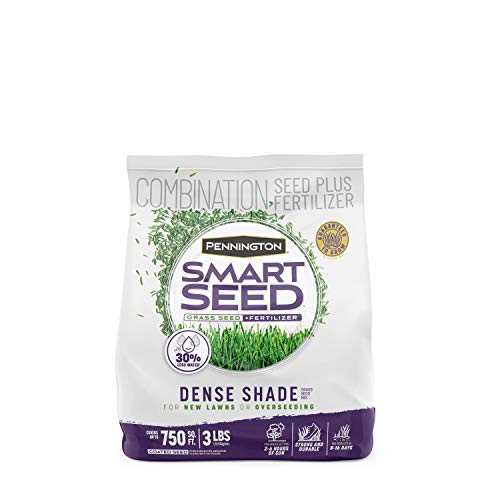
Pennington Smart Seed Dense Shade Mix
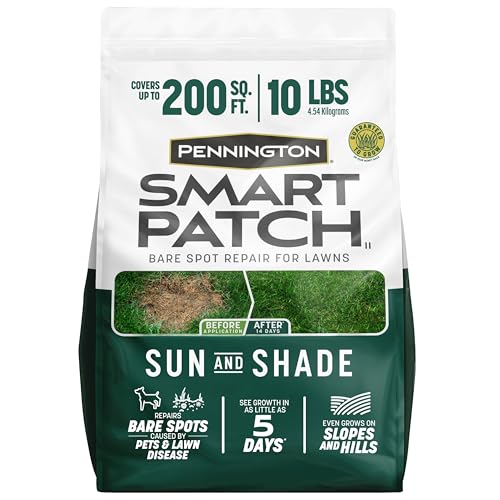
Pennington Smart Patch Sun and Shade Repair Mix

Scotts Kentucky 31 Tall Fescue Mix

Pennington Smart Patch Tall Fescue Repair

Scotts Grass Seed Drought Tolerant Mix

X-Seed Ultra Premium Quick and Thick Lawn Seed Mixture
More On The Choices That Made The List
Spots on a slope are usually the first to fail, and the Jonathan Green SeedRoll is built for that exact job. The mat rolls out flat, then stays put long enough for the seed beneath to root, even on a grade where loose seed would normally wash away after the first rain. The package includes a mix of tall fescue, perennial rye, and Kentucky bluegrass (a cool-season blend that thrives in much of the country), so the finished patch blends in with most northern lawns.
For most homeowners, the appeal is speed. You unroll, water, and walk away instead of measuring, spreading, top-dressing, and tamping. The biodegradable mat breaks down on its own, so there is no cleanup later. Coverage runs to roughly 50 square feet, which is enough for several medium patches or one long repair strip along a walkway.
Where It Excels
- Three-in-one design combines seed, starter fertilizer, and mulch in a single mat, so you skip the extra spreading steps.
- The biodegradable (naturally decomposing) fabric holds seed in place on slopes and hills where loose seed would wash out.
- Covers about 50 square feet, which suits multi-patch repairs without ordering multiple bags.
- Cool-season blend of tall fescue, perennial rye, and Kentucky bluegrass matches most northern lawns visually.
Worth Noting
- Best applied during narrow windows: mid-August to mid-October or mid-March through mid-May, so timing matters.
- You may find the mat slow to green up in deep shade, since the blend leans toward sun and partial sun.
Who It Suits Best
Homeowners with sloped yards or several mid-sized bare spots who want a roll-out solution without buying seed and mulch separately.
Look Elsewhere When
The Pennington Smart Seed Dense Shade Mix is the better match for deeply shaded patches under mature trees.
If you live anywhere from the Carolinas across to Arizona, cool-season patch products are the wrong tool. Blue Panther Bermudagrass is a warm-season grass, meaning it thrives in heat and goes dormant (turns brown and stops growing) only after the first hard frost, so it makes sense for southern patches that struggle to recover through July and August. The 4-pound bag is sized for spot repair rather than full-lawn renovation.
Compared to the SeedRoll mat that opened this list, Blue Panther is a bag of straight seed, so you will need to rake the area, top-dress lightly, and water consistently. The payoff is aggressive vertical and lateral rooting, which establishes a dense turf that holds up to foot traffic once mature.
Where It Delivers
- Formulated for southern states where warm-season grasses outperform cool-season blends in summer heat.
- Strong vertical and lateral rooting helps establish a dense, durable lawn quickly.
- Reduces the need for winter overseeding compared to traditional Bermudagrass varieties.
Trade Offs
- Performs poorly in cool or northern climates, so it is a regional purchase rather than a universal patch fix.
- Like most Bermudagrass, it browns out in winter dormancy, which can look uneven against evergreen turf.
Made For
Southern homeowners repairing warm-season Bermuda lawns who need a seed that actually likes the heat.
Where Another Pick Suits Better
The Jonathan Green Black Beauty Ultra Grass Seed is the better call for cool-season northern patches where Bermudagrass would not survive.
Black Beauty Ultra sits in the middle of Jonathan Green’s lineup and pulls double duty: it establishes new lawns and fills in bare spots without forcing you to buy two products. The mix combines tall fescue and Kentucky bluegrass, both cool-season grasses that germinate (sprout from seed) reliably in spring and fall. The two-bag 7-pound pack gives you enough seed for serious patch work plus some leftover for thin areas in the same yard.
Where this differs from the SeedRoll above is in the application. You will spread it manually with a broadcast or drop spreader, then keep the area moist. Homeowners comfortable with that routine tend to prefer loose seed because it integrates more smoothly with the existing turf than a pre-formed mat.
Useful Touches
- Germinates quickly, which shortens the window when a patch is bare and vulnerable to erosion.
- Produces a dark-green color that blends well with most cool-season lawns, hiding the repair line.
- Functions for both new lawn establishment and patch repair, so the same bag covers multiple jobs.
Honest Caveats
- Without the mat structure, seed can wash or shift on a slope unless you top-dress with compost or straw.
- Owners commonly report needing a starter fertilizer alongside the seed for the fastest fill-in on poor soils.
Best Suited To
DIYers in the Northeast, Mid-Atlantic, and Upper Midwest who want one bag to handle both patch repair and overseeding.
Skip It When
The Scotts Kentucky 31 Tall Fescue Mix is the better fit for anyone who wants a pure fescue lawn with lower maintenance.
Big lawns need big bags, and the 20-pound Turf Builder All-Purpose Mix is built for that workload. Scotts designed this mix to grow in both sun and shade, with a coarse-bladed texture and medium drought resistance that suits a wide range of northern properties. The seed is coated to absorb roughly twice as much water as uncoated seed, a useful trait during the dry first two weeks after sowing when germination is most fragile.
The tradeoff for the bulk size is bulk weight and storage. Twenty pounds is a serious bag to move and store, and the mix is specifically formulated for the Northern region, so it is not the right call if you are patching a Bermuda or Zoysia lawn in the South.
Reasons It Performs
- Coated seed absorbs about 2x more water than uncoated seed, which speeds germination in dry conditions.
- Handles both sun and shade, so the same bag covers open lawn areas and patches near trees or fences.
- 20-pound size suits full-lawn overseeding or multiple seasonal patch repairs from a single purchase.
- Listed as 99.9% weed free, meaning very few unwanted plant seeds ride along with the grass seed.
Room For Improvement
- Northern-region formulation means it is the wrong match for southern warm-season lawns.
- The 20-pound bag is heavy to haul and tough to store in a small garage or shed.
Who Should Grab It
Homeowners with larger northern lawns who need enough seed to overseed the whole yard while still leaving plenty for spot repairs.
Where A Sibling Pick Shines
The Pennington Smart Seed Dense Shade Mix is a smarter call for small yards with heavy tree cover, where 20 pounds is overkill.
Most patch products assume your lawn gets at least a few hours of direct sun. The Pennington Smart Seed Dense Shade Mix is built for the opposite case: heavily shaded patches under maples, oaks, or north-facing walls where ordinary grass simply will not establish. Pennington’s “Smart Seed” line uses a water-conserving coating that holds moisture around the seed, an important feature under trees where rain can be blocked by the canopy.
The 3-pound bag covers up to 1,750 square feet, so it is sized for spot work and small shaded sections rather than full-lawn coverage. Used alongside the Turf Builder All-Purpose Mix above, it is a good second bag for the homeowner whose yard has both sunny and deeply shaded zones.
Everyday Wins
- Specifically engineered for dense shade, where standard grass seed typically fails to germinate.
- Water-saving formulation holds moisture around the seed, which is critical under tree cover where the canopy blocks rain.
- 3-pound bag covers up to 1,750 square feet, so a small bag handles several shaded patches.
Points To Note
- Not a multi-purpose seed, so it underperforms in full sun compared to general-purpose blends like the Turf Builder above.
Right Fit For
Homeowners whose main patch problem is bare ground under mature trees or along north-facing fences.
Not Your Match When
The Scotts Turf Builder All-Purpose Mix handles a wider mix of sun and shade in one bag, which fits most small yards better.
Dog spots are the classic patch problem that regular seed struggles with, because the urine kills the existing grass and leaves a small but stubborn dead circle. Pennington Smart Patch is one of the few products formulated with that exact use case in mind. The mix combines seed, fertilizer, and mulch, plus added microbials (beneficial microorganisms that live in the soil and support plant health) to reduce disease pressure on the young grass.
The 10-pound bag covers around 600 square feet, sized for yards with several pet-related trouble spots and the occasional thin area. It is also a reasonable choice for general sun-and-shade patch repair, even in households without pets.
Bright Spots
- All-in-one blend of seed, fertilizer, and mulch cuts down on the number of products you have to buy.
- Includes microbials that help prevent disease and improve overall lawn health as the new grass establishes.
- Listed as a dog spot repair mix, making it a targeted solution for the most common patch problem in pet households.
- Covers around 600 square feet per bag, which fits medium-sized yards with several trouble spots.
Softer Spots
- Listed as a Northern-region formulation, so it is not the right call for southern Bermudagrass lawns.
- Like most patch mixes with mulch, you may find the young grass slower to fill in if you skip daily watering for the first two weeks.
Who Will Love This
Dog owners in northern climates dealing with recurring urine spots and worn patches near fences or play areas.
Another Choice May Suit
The Jonathan Green Black Beauty Ultra Grass Seed is the better fit for homeowners with large patch areas who do not need the built-in mulch and microbial package.
Kentucky 31 is one of the oldest tall fescue varieties still in widespread use, prized for toughness and low maintenance. Scotts packages it in a 20-pound bag with additional seed varieties blended in, so you get the classic fescue durability plus better texture and density than straight KY-31 alone. Tall fescue is a cool-season grass with a notably deep root system, which is why it tolerates heat and dry spells better than most cool-season options.
For patch repair, KY-31 mixes well into existing tall fescue lawns, and it is a good match for the homeowner who wants a traditional front-lawn look rather than a manicured golf-green finish. The trade-off is a coarser blade compared to the Black Beauty Ultra mix reviewed earlier.
Well-Handled Touches
- Built around Kentucky 31 tall fescue, a heritage variety prized for durability and lower maintenance needs.
- Blended with additional seed varieties for thicker, greener results than single-variety KY-31 mixes.
- 20-pound bag covers new lawn establishment and ongoing patch repair from a single purchase.
Things To Consider
- Coarser blade texture stands out against finer-bladed lawns, so the repair line may show on bluegrass or ryegrass turf.
- Cool-season grass, so it struggles in southern heat and is best suited to transition-zone and northern lawns.
Perfect Match For
Homeowners with existing tall fescue lawns who want a heritage-grade seed for matching repairs and full overseeding.
Where Another Pick Suits Better
The X-Seed Ultra Premium Quick and Thick Mix is a better fit for a finer-textured blend that establishes more uniformly in mixed seed lawns.
Where the larger 10-pound Pennington Smart Patch covers general sun-and-shade repair, this 5-pound jug version targets tall fescue lawns specifically. Tall fescue repairs blend in cleanly when you use a tall fescue patch product rather than a generic mix, so the finished spot looks like it was always part of the original lawn. The jug format also makes it easier to pour precisely where you need it, with less spillage than a wide-mouth bag.
The combination of seed, fertilizer, and mulch in one container means a single purchase covers the typical patch repair routine, no separate starter fertilizer required. It is essentially the smaller, more focused sibling of the 10-pound Smart Patch reviewed above.
A Few Strong Suits
- Tall fescue-specific blend repairs tall fescue lawns without the color or texture mismatch that generic mixes leave behind.
- Combines seed, fertilizer, and mulch in one jug, simplifying the typical patch repair routine.
- 5-pound jug format pours cleanly with less spillage than a wide-mouth bag.
Some Limits To Know
- Tall fescue only, so it stands out against bluegrass or ryegrass lawns.
- Smaller coverage area than the 10-pound jug, so it suits targeted repair rather than multi-zone work.
Whose Shelf It Belongs On
Tall fescue homeowners with a few recurring bare spots who want a dedicated fescue patch product rather than a general-purpose mix.
Reach For A Different Pick When
The Pennington Smart Patch Sun and Shade Mix is the better match for lawns that combine fescue with other grass types.
Where summers are getting hotter and water bills are getting bigger, the Scotts Drought Tolerant Mix is built to take the heat. The blend combines tall fescue with Kentucky bluegrass, and the seed is formulated to grow long roots that reach moisture deeper in the soil profile. The mix also self-repairs, meaning the grass spreads laterally over time to fill in small bare spots without re-seeding.
The 10-pound bag covers a substantial area, sized for full-lawn overseeding on a medium-sized property. Apply during the spring or fall window when air temperatures sit between 65 and 85 degrees Fahrenheit, which gives the seed the warm-but-not-stressful conditions it needs to germinate.
Why It Works Well
- Blends tall fescue and Kentucky bluegrass, both known for deep root systems that access water well below the surface.
- Self-repairing quality means the grass spreads laterally to fill small bare spots without re-seeding.
- Listed as 99.99% weed free, meaning very few unwanted plant seeds arrive in the bag.
- Application window falls during typical spring and fall seeding seasons, which is convenient for most homeowners.
Practical Considerations
- Best applied when air temperatures sit between 65 and 85 degrees Fahrenheit, which limits your seeding window.
- Like most bluegrass blends, it can be slower to germinate than pure ryegrass or fescue products.
Built With In Mind
Homeowners in dry or water-restricted regions who want a self-repairing lawn that holds up through hot summers.
Swap It Out When
The Jonathan Green Blue Panther Bermudagrass is a better fit for southern regions where a true warm-season grass is more drought-tolerant than fescue-bluegrass blends.
If speed matters, X-Seed’s Ultra Premium blend lives up to the “Quick and Thick” name. The mix combines perennial ryegrass (the fastest cool-season grass to germinate), fine fescue, and Kentucky bluegrass, and it is built for rapid germination in both sun and shade. Perennial ryegrass can sprout in as little as a week under good conditions, so this is a strong pick when you want a visible green patch before the next neighborhood barbecue.
The 3-pound bag covers up to 2,100 square feet for overseeding an existing lawn or 1,050 square feet for starting a new one, which is generous coverage for the size. It is well suited to high-traffic areas and the patchy wear zones near driveways and play sets, where the perennial rye component bounces back quickly from foot traffic.
Strong Points
- Rapid-germination blend leads with perennial ryegrass, the fastest cool-season grass to sprout.
- Versatile across sun and shade, which makes it useful for mixed-light yards.
- 3-pound bag covers up to 2,100 square feet for overseeding or 1,050 square feet for new lawns.
- Built for high-traffic areas, so it suits patches near driveways, paths, and play zones.
Possible Compromises
- Perennial ryegrass is a short-lived perennial in some regions, so you may need to overseed within a few seasons.
- Best suited to central and northern climates, so it underperforms in southern heat.
The Right Fit
Homeowners in northern and transition-zone climates who need fast patch repair and a versatile blend for mixed sun and shade.
Consider Something Else When
The Pennington Smart Seed Dense Shade Mix handles deeply shaded areas more reliably than this general-purpose blend.
What Matters Most Before Choosing Grass Seeds For Patches
Match The Seed To Your Region And Climate
Cool-season grasses (tall fescue, Kentucky bluegrass, perennial ryegrass) and warm-season grasses (Bermudagrass, Zoysiagrass) are not interchangeable. Pick a Bermudagrass product in Minnesota and it will not survive the first winter, while a Kentucky bluegrass mix in Phoenix will cook by July. Identify your climate zone first, then narrow the choices to the blends formulated for it.
Decide Between Loose Seed And All-In-One Repair Products
Loose seed gives you flexibility on large or irregular patches and integrates smoothly with existing turf. All-in-one products (like the Jonathan Green SeedRoll or Pennington Smart Patch) combine seed, mulch, and starter fertilizer in a single application, which saves time and helps on slopes where loose seed would wash out. For a one-spot repair, all-in-one is faster. For a yard full of thin areas, loose seed in a broadcast spreader is more efficient.
Read The Sun And Shade Requirements
A patch under a maple tree and a patch in the middle of a sunny lawn need different seed. Dense shade mixes like the Pennington Dense Shade are formulated for tree-covered areas, while general-purpose blends assume at least a few hours of direct sun. Mismatching sun requirements is the most common reason patch seed fails to establish.
Check Coverage Against Your Actual Patch Size
Bag coverage is usually listed in two numbers: overseeding coverage (thinner application on existing lawn) and new lawn coverage (denser application on bare ground). A 5-pound jug that covers 600 square feet for overseeding covers far less for a brand-new patch, so match the bag size to the work you actually have.
Key Considerations Across These Picks
Where Shoppers Go Wrong
The most common mistake is buying a “great grass seed” without checking whether it matches the existing lawn. A Kentucky bluegrass patch in a fescue lawn, or vice versa, creates a visible color and texture difference that takes a full growing season to blend. The other frequent error is skipping watering during the first two weeks. Seed needs consistent moisture to germinate, and a single dry day in that window can wipe out half the new grass.
Where The Extra Money Goes
Premium patch products earn their higher price by bundling seed, mulch, and starter fertilizer in one bag, adding microbials for disease resistance, or using coatings that hold water around the seed. For small repair jobs, the all-in-one convenience is often worth the markup. For larger projects, buying seed and a separate starter fertilizer is usually more economical, even if it requires an extra step at planting time. The right choice depends on how much you value convenience over cost per square foot.
Frequently Asked Questions
How long does it take for grass seed to grow in a patch?
Most cool-season patch seeds germinate within 7 to 21 days, with perennial ryegrass at the fast end and Kentucky bluegrass at the slow end. Warm-season Bermudagrass can take 14 to 30 days. Full coverage usually takes 6 to 8 weeks of active growth.
When is the best time of year to seed bare patches?
Late summer to mid-fall (mid-August through mid-October) is the ideal window for cool-season grasses, because the soil stays warm while the air cools. Spring seeding works too, but the young grass has to survive summer stress sooner. Warm-season grasses establish best when planted in late spring through early summer.
Can you just throw grass seed on bare spots and hope it grows?
You can, but results are inconsistent. Loosening the top quarter inch of soil, removing dead grass and thatch, and keeping the area consistently moist for two weeks dramatically improves germination rates. Skipping those steps is the most common reason patch seed fails.
How often do you water new grass seed?
Water lightly once or twice a day for the first two weeks, just enough to keep the top inch of soil moist. After germination, switch to deeper, less frequent watering to encourage the roots to grow downward.
Do patch repair products really work better than regular grass seed?
For small patches, the all-in-one format is genuinely useful because the mulch holds moisture and the included starter fertilizer removes a step. For large or irregular areas, regular grass seed plus a separate starter fertilizer produces comparable results at a lower cost per square foot.
Wrap Up
A bare patch is one of the easier lawn problems to fix, as long as the seed matches your climate, sun conditions, and existing grass type. Start with a clear read on your region and your sun exposure, then match the product to the size of the repair. Water consistently for the first two weeks, and most of these blends will have you back to a uniform lawn before the next mowing cycle.
