

Starting a greenhouse from scratch feels exciting until you stand in the garden center staring at glazing options, frame materials, and ventilation choices. The right beginner-friendly resource makes that first season far less guesswork and far more harvest. These eight titles cover the planning, building, planting, and year-round care that new greenhouse owners actually need, written for people who have never grown under cover before.
The Main Contenders

Greenhouse Gardening for Beginners by Michael York
The Complete Guide to Greenhouse Gardening for Beginners by Raymond Charles

The Absolute Beginners Blueprint to Greenhouse Gardening by Barb Knight

Effortless Greenhouse Gardening for Beginners by F. S. Moose

Beginner’s Guide to Greenhouse Gardening by Taylor Dillahunty

The Absolute Beginners Blueprint to Greenhouse Gardening by Barb Knight
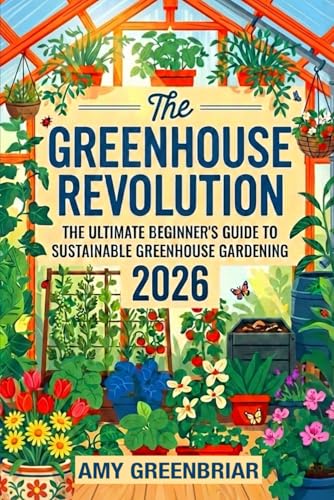
The Greenhouse Revolution by Amy Greenbriar
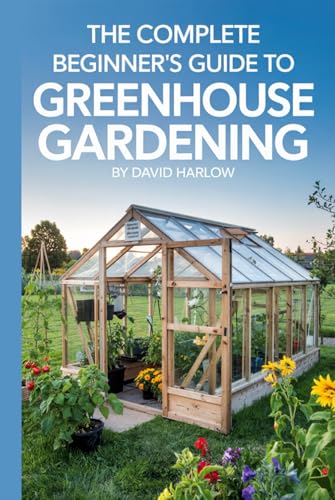
The Complete Beginner’s Guide to Greenhouse Gardening by David Harlow
The Picks, Examined More Closely
Greenhouse Gardening for Beginners by Michael York leans into the building side of the hobby, which is where many first-timers stall out. The book walks through choosing and planning a structure before moving into plant care, so you do not have to flip back and forth between resources when you hit a framing question.
For anyone who wants a single book that doubles as a build manual and a planting guide, the format keeps things orderly. You may find the build section heavier than Raymond Charles’s all-purpose coverage later in this list, but the trade-off is more greenhouse project variety in one place.
A Strong Showing
- Ten full greenhouse projects give you options across small, medium, and larger footprints.
- A step-by-step planning process removes the early “where do I start” paralysis.
- The year-round planting calendar helps you schedule seed starts and transplant windows with confidence.
- Techniques for extending the growing season are useful for cold-climate owners trying to stretch harvests past first frost.
Trade-Offs To Consider
- Plant-variety selection is lighter than competitors focused purely on cultivation.
- Some hobbyists report that the chapter on extending the season is brief relative to the build content.
Who Will Love This
First-time builders who want greenhouse plans and seasonal planting guidance in a single volume.
Skip It When
You mainly want a planting-first read; The Complete Guide to Greenhouse Gardening for Beginners by Raymond Charles leans harder into crop selection.
The Complete Guide to Greenhouse Gardening for Beginners by Raymond Charles splits its attention evenly between structure and crop, which makes it a comfortable middle-of-the-road choice. Compared with Michael York’s build-heavy first pick, this one spends more pages on selecting plants, adjusting the indoor environment, and protecting what you grow.
For most new owners, the title reads like a calm reference manual. You may find the plant-pairing section more practical than the project catalog in the previous title if you already have a greenhouse kit on order.
Key Advantages
- Covers choosing, building, and maintaining the structure without skimping on plant guidance.
- Guidance on creating the ideal growing environment explains temperature, humidity, and airflow in plain language.
- Includes a chapter on protecting plants naturally, which suits gardeners avoiding synthetic sprays.
- Year-round framing helps you plan successive crops rather than a single spring planting.
Honest Caveats
- Build plans are less detailed than the project-style catalog in Greenhouse Gardening for Beginners by Michael York.
- Does not dig as deeply into organic pest control as Beginner’s Guide to Greenhouse Gardening by Taylor Dillahunty.
Best Suited To
All-season vegetable growers who want a balanced read on structure, environment, and crop selection.
Look Elsewhere When
Sustainability is your main concern; The Greenhouse Revolution by Amy Greenbriar covers that angle more directly.
The Absolute Beginners Blueprint to Greenhouse Gardening by Barb Knight is the warmer, more personal entry in this list. The author clearly writes for readers who have failed a garden or two and want a kinder on-ramp, which is why the language is encouraging rather than technical-heavy.
Where Raymond Charles’s guide stays neutral and instructional, this title leans into motivation. The trade-off is that the operational detail, like irrigation and pest schedules, is thinner than what you will find in the second edition reviewed further down.
What Pays Off
- Encouraging tone helps anxious beginners move past the planning stage and into actual planting.
- Frames the greenhouse as a productivity and wellness project, not just a hardware purchase.
- Addresses new homeowners and self-sufficiency seekers directly, which narrows the guesswork.
Soft Spots
- Calendar and irrigation specifics are lighter than the alternate Barb Knight title covered later in this list.
- Some readers may want more visual reference for layout and spacing.
Made For
New homeowners and returning gardeners who need a confidence-first read before they touch a seed tray.
Another Choice May Suit
You prefer a more detail-driven approach; The Absolute Beginners Blueprint to Greenhouse Gardening by Barb Knight (the second edition reviewed below) is the operational follow-up.
Effortless Greenhouse Gardening for Beginners by F. S. Moose targets owners with limited square footage, the patio-and-balcony crowd who treat the greenhouse as a small, intentional addition rather than a backyard anchor. The book concentrates on small-footprint planning and on preserving what you grow, which is the part most first-timers underestimate.
Compared with the broader Barb Knight title, this one assumes a tighter physical stage. If your gardening happens on a deck or in a courtyard, the layout guidance and preservation methods land in a way a large-yard guide simply cannot match.
What Stands Out
- Planning and organizing chapters are tuned for tight spaces, not multi-row backyard beds.
- Includes four produce preservation methods so you can store excess harvests from a small space.
- Research-backed plant-selection tips are useful for new growers overwhelmed by nursery choices.
Points To Note
- Small-space focus may feel limiting if you plan a full backyard greenhouse build.
- Winter gardening coverage is shorter than Effortless Greenhouse Gardening for Beginners (the broader Moose guide if a wider edition is released).
Right Fit For
Patio, balcony, and courtyard growers who want greenhouse output without sacrificing their outdoor seating area.
Where A Sibling Pick Shines
You have full yard space available; Greenhouse Gardening for Beginners by Michael York is built for that scale.
Quick Facts
Beginner’s Guide to Greenhouse Gardening by Taylor Dillahunty is the most natural-medicine-friendly title in this lineup. The emphasis sits on stable climate control, organic pest management, and companion planting, so it reads like a working manual for someone trying to avoid sprays entirely.
For most backyard growers who already compost and mulch, this is the volume that finally connects greenhouse humidity and airflow to soil biology. You may find the build-side coverage lighter than Michael York’s catalog, but the cultivation depth is the point.
What It Does Well
- Companion-pairing guidance helps you stack crops without overcrowding the beds.
- Organic pest and disease prevention is explained with realistic options, not just ideals.
- Seed-starting and transplant sections cover the timing and hardening-off process clearly.
- Climate-stability tips apply whether you heat the greenhouse or rely on passive warmth.
A Few Limitations
- Build plans are minimal compared with the project catalog in Greenhouse Gardening for Beginners by Michael York.
Perfect Match For
Chemical-free gardeners who want a cultivation-first read with strong pest-management detail.
Swap It Out When
You need help with the structure itself first; Greenhouse Gardening for Beginners by Michael York leads with the build.
The second edition of The Absolute Beginners Blueprint to Greenhouse Gardening by Barb Knight trades the warmer tone of the first edition for a more operational structure. You get an explicit step-by-step build plan, a year-round calendar, beginner-smart plant lists, and a plain-language breakdown of climate and irrigation.
Compared with the encouraging first entry, this one feels more like a workbook. You may find the irrigation section especially useful if you have never set up a drip line or a timed mister in an enclosed space before.
A Few Strong Suits
- Step-by-step build plan walks through framing, glazing, and anchoring.
- Year-round planting calendar removes scheduling guesswork for new growers.
- Beginner-smart plant lists narrow the overwhelming nursery catalog down to reliable starters.
- Organic pest and disease control chapter keeps the cultivation side practical.
Things To Weigh
- Reads more like a reference manual than a motivational primer, which can feel dense.
- Companion-planting depth is lighter than Taylor Dillahunty’s dedicated organic guide.
The Right Fit
Detail-oriented planners who want explicit checklists, calendars, and irrigation guidance from day one.
Reach For A Different Pick When
You want the warmer, more encouraging read first; the earlier Barb Knight title provides that on-ramp.
The Greenhouse Revolution by Amy Greenbriar frames the hobby as part of a wider sustainable-living shift. The book covers building, maintaining, and harvesting, with an eco-friendly lens that touches material choice, water use, and soil practices.
For most new owners who compost and recycle rainwater, this title connects greenhouse work to a larger household ethic. You may find the operational detail thinner than the second Barb Knight entry if you want explicit irrigation tables, but the sustainability framing is the standout feature.
Well-Handled Touches
- Sustainability-first framing suits gardeners reducing their household footprint.
- Build, maintain, and harvest coverage in a single volume keeps the season-to-season workflow connected.
- Eco-friendly practice notes apply to materials, water, and inputs rather than just plants.
Room For Improvement
- Beginner-specific scaffolding is lighter than the more instructional Barb Knight second edition.
- Crop-by-crop guidance is less detailed than a cultivation-focused title like Taylor Dillahunty’s.
Whose Shelf It Belongs On
Eco-minded backyard growers who want the greenhouse to fit into a broader sustainable routine.
A Better Fit Elsewhere
You want a year-round calendar; The Complete Guide to Greenhouse Gardening for Beginners by Raymond Charles covers that scheduling more explicitly.
The Complete Beginner’s Guide to Greenhouse Gardening by David Harlow closes the list on a practical, money-aware note. The book steps through materials, low-cost watering systems, and climate control in ways that suit someone building a greenhouse without a large upfront spend.
For most beginners pinching pennies, the budget framing is the appeal. You may find the plant-selection section less detailed than Raymond Charles’s guide, but the build-side cost-savings detail is genuinely useful.
Where It Delivers
- Step-by-step instructions cover the structure without assuming a workshop full of tools.
- Best materials and designs section compares cost-versus-durability trade-offs directly.
- Year-round planting calendars help you budget seed purchases across the season.
- Low-cost watering systems keep ongoing costs in check alongside the build cost.
Things That May Matter
- Plant-profile depth is lighter than cultivation-focused titles in this roundup.
- Some DIYers may want more advanced plans as their skills grow.
Who Should Grab It
Tight-budget beginners who want a wallet-friendly path to a functional, productive greenhouse.
Consider Something Else When
Crop variety is your priority; The Complete Guide to Greenhouse Gardening for Beginners by Raymond Charles covers a wider plant list.
What Matters Most Before Choosing Greenhouses For Beginners
Structure Style and Footprint
Walk your available space before you open any book. A lean-to greenhouse against a south-facing wall behaves differently from a freestanding dome in an open yard, and the heating, ventilation, and benching choices that follow all depend on that first decision. Beginners with small patios should match a guide to that footprint rather than retrofitting a backyard plan later.
Climate, Ventilation, and Watering
A greenhouse without airflow turns into a solar oven by midsummer, so any book that glosses over roof vents, side vents, and shade cloth will leave you troubleshooting mid-July. Pair that climate reading with a watering approach: drip lines, hand watering, or self-watering benches each have a learning curve, and your book should at minimum acknowledge the choice.
Plant List and Seasonal Cadence
The right plant list for your zone determines whether the greenhouse earns its keep. Look for guides that offer a year-round calendar with seed-start and transplant dates, plus a small set of forgiving crops for first-timers, like lettuce, herbs, and bush tomatoes. Skip titles that skip the calendar entirely.
Material and Build Cost
Frame material (aluminum, galvanized steel, or wood) and glazing (glass, twin-wall polycarbonate, or polyethylene film) drive both upfront cost and ongoing maintenance. Beginners on a tight budget should weigh the long-term replacement cycle of film against the higher entry cost of polycarbonate panels.
Key Considerations Across These Picks
Common Slip-Ups First-Timers Make
Jumping straight to crop selection before settling the structure, glazing, and ventilation is the most common mistake. Buy or build the greenhouse, then run it empty for a week to learn its temperature swings before any seedlings go in. Skipping that observation window is how beginners cook their first tomato flats in May.
When Paying More Actually Pays Off
Higher-tier greenhouse books tend to include detailed irrigation and climate-control chapters, plus longer plant-by-plant profiles, rather than just longer page counts. If your climate swings hard between seasons, that operational detail saves more plants than any amount of motivational prose. For flat, mild climates, a budget title like the David Harlow guide is plenty.
