

Cold mornings, short days, and frost creeping into the garden don’t have to end your growing season. The right greenhouse holds onto daytime heat, blocks punishing wind, and gives seedlings a fighting chance when the temperature drops outside. Picking one comes down to footprint, frame strength, and how much winter weather you actually deal with, since a portable tent handles a light frost very differently than a full polycarbonate build standing up to heavy snow. The list below covers nine solid options across small, mid-size, walk-in, and premium setups, so you can match the structure to your climate, your space, and the kind of growing you want to do through the colder months.
The Shortlist At A Glance
Ohuhu Mini Greenhouse for Indoor Outdoor

Grezone Walk-in Greenhouse with Dual Screen Doors
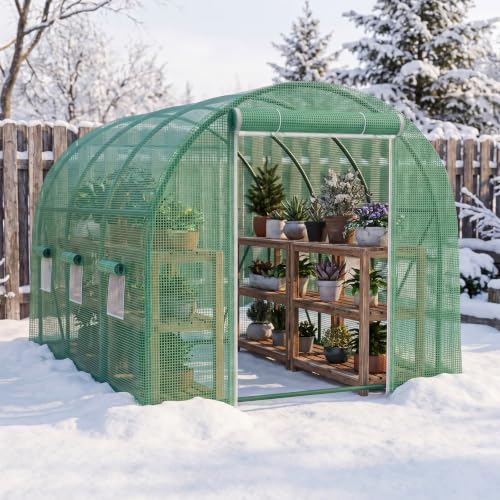
gaildon 10x7x7 FT Heavy Duty Walk-in Greenhouse

Outsunny 10′ x 6′ Polycarbonate Greenhouse

Backyard Discovery Bellerose XL Cedar Walk-in Greenhouse

KING BIRD 56x56x78 in Walk-in Greenhouse

Outsunny 20′ x 10′ x 7′ Walk-in Tunnel Greenhouse

Devoko Instant Pop Up Walk-in Greenhouse
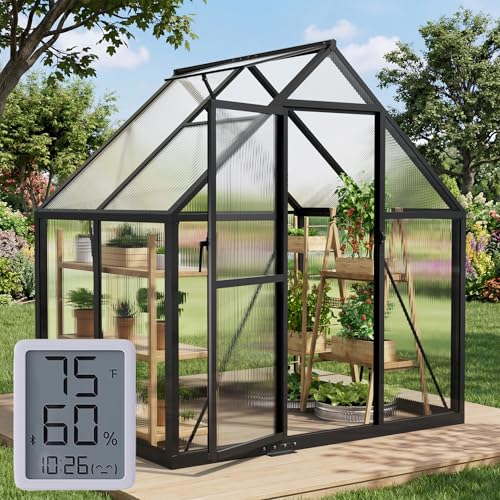
Sylviera 6x4FT Greenhouse with Hygrometer
A Deeper Look At The Lineup
For growers working with a patio, a sunroom, or a corner of the garage, the Ohuhu Mini Greenhouse stretches upward rather than outward, standing roughly 58.5 inches tall across a 36-by-36-inch base. That extra vertical room is what makes it useful for tomato starts, herb towers, and taller seedlings that would crouch inside a standard cold frame.
The frame is reinforced metal with a rust-resistant coating, paired with a clear PVC cover (PVC, or polyvinyl chloride, is a flexible, transparent plastic film) you can roll up for airflow on warmer afternoons. Compared with the larger walk-in picks further down this list, this one trades floor space for portability, so it works best as a starter house rather than a full winter garden.
Good Reasons To Consider
- Tall 58.5-inch interior handles leggy seedlings without bending them
- Tear-resistant PVC cover keeps humidity steady for germination
- Lightweight frame moves easily between indoor and outdoor spots
- Roll-up zipper door gives quick access during daily misting
Things To Weigh
- Compact footprint means you won’t fit large raised beds or many full-size pots
- PVC cover can cloud over time with heavy UV exposure, so plan on replacing it sooner than a polyethylene cover would last
Who It Suits Best
First-time growers and apartment gardeners starting herbs or early spring seedlings indoors through the cold months.
Look Elsewhere When
You want full walk-in space for raised beds, in which case the gaildon 10x7x7 FT Heavy Duty Walk-in Greenhouse is a stronger match.
The Grezone Walk-in Greenhouse covers 10 by 7 feet of ground and stands 7 feet tall at the peak, which is enough headroom to actually walk inside and tend a row of plants without stooping. The frame is galvanized steel (galvanized means coated in zinc to resist rust) with crossbars and four diagonal braces, so it has the kind of backbone that handles wind gusts better than lighter pop-up tents.
Two doors are layered: a mesh screen for ventilation on mild days and a PE (polyethylene, a tough, weather-resistant plastic film) cover door for keeping warmth in during a cold snap. Six screened windows let you fine-tune airflow without unzipping the whole front, which matters once daytime sun pushes the interior temperature up.
Where It Excels
- Walk-in height makes routine watering and pruning far less awkward
- Dual-door setup balances airflow and insulation through changing weather
- Diagonal bracing adds stability compared with basic pole-frame tunnels
- Mesh windows reduce the need to open the main door on breezy days
Honest Caveats
- Butterfly-screw assembly is straightforward but takes a couple of hours with two people, so set aside an afternoon
- The PE cover will need to be re-tensioned once or twice a season as it settles
Right Fit For
Backyard growers with mild-to-moderate winters who want walk-in space without the price tag of a rigid polycarbonate build.
Consider Something Else When
You face heavy snow loads regularly, where the Outsunny 10′ x 6′ Polycarbonate Greenhouse offers stronger panel support.
Sharing the same 10 by 7 by 7-foot dimensions as the Grezone, the gaildon 10x7x7 FT Heavy Duty Walk-in Greenhouse leans hard on reinforced structure to extend its working life. The galvanized steel frame is paired with crossbars plus four diagonal braces, and the cover is a 140g/m² PE grid (grams per square meter, a measure of cover thickness; higher numbers mean tougher material), which feels notably sturdier than the thin films on budget tunnels.
Six mesh windows along the sides give you strong cross-ventilation, and a roll-up zippered door at the front makes it easy to wheel in a flat of seedlings or a small cart. For most raised-bed gardeners, this is the sweet spot between the compact Ohuhu and the much larger Outsunny tunnel later in the list.
Everyday Advantages
- Thicker PE cover holds up better to wind flapping and UV wear over multiple seasons
- Walk-in clearance keeps daily chores comfortable for most adults
- Six mesh windows create strong cross-breezes on unexpectedly warm winter days
Points To Keep In Mind
- The footprint needs a fairly level patch of yard, so ground prep matters before assembly
- Cover tension can loosen at the corners after big temperature swings, requiring an occasional retie
Best Suited To
Growers running raised beds through winter in a moderate climate who want a heavier cover than budget tunnels offer.
A Better Fit Elsewhere
You need real headroom for tall plants like fig trees, where the Backyard Discovery Bellerose XL Cedar Walk-in Greenhouse has the ceiling for it.
This is the first pick in the lineup that steps away from soft PE covers and into rigid polycarbonate panels (polycarbonate is a tough, lightweight plastic that handles impacts and insulates far better than glass). The Outsunny 10′ x 6′ Polycarbonate Greenhouse is a true four-season build, with twin-wall panels that hold heat overnight and let enough light through for vegetables, herbs, and flowers.
An adjustable roof vent is the key detail for winter use, since sunny midday hours can spike interior temperatures fast, and cracking the vent prevents the humidity swings that stress sensitive plants. A built-in rain gutter on the front edge is a small but useful touch for collecting runoff if you want to recycle water for irrigation.
Strong Points
- Rigid panels resist wind, snow load, and accidental knocks far better than film covers
- Roof vent offers real climate control instead of just an open door
- Rain gutter can be plumbed into a barrel for water-conscious gardeners
Worth Noting
- Assembly is more involved than a pop-up or pole-frame tunnel, so plan a full weekend with a helper
- Base anchoring matters in exposed yards, since the rigid panels catch more wind than soft covers
Made For
Growers in colder regions who need a real winter-rated structure rather than a three-season film cover.
Skip It When
You only need a quick seasonal cover, in which case the Devoko Instant Pop Up Walk-in Greenhouse is far easier to deploy.
Where most of the picks on this list lean toward portable or semi-permanent builds, the Backyard Discovery Bellerose XL Cedar Walk-in Greenhouse is a full backyard structure. At 13 by 11 feet, it brings cedar framing, polycarbonate panels, a pergola-style roof accent, and an integrated staging area with five fixed shelves, so the interior functions more like a small garden studio than a basic growing tent.
It also includes an exhaust fan for active airflow, multiple windows for passive ventilation, hose hook-ups for direct watering, and a built-in power port. The whole setup is aimed at people who treat greenhouse time as a hobby space, not just somewhere to stash trays of lettuce.
The Helpful Details
- Cedar frame brings real weather resistance and a much more finished look than tubular steel
- Built-in staging shelves and plant hooks eliminate the need to buy separate benching
- Exhaust fan plus windows give you layered airflow control through changing weather
- Power port and hose hook-ups let you run lighting or irrigation without improvising
Trade Offs
- Size and weight mean this is a serious yard project, not a weekend impulse buy, and you may need help with delivery and assembly
- Price tier reflects the build, so it’s overkill if you only need a small propagation space
Who Should Grab It
Dedicated home gardeners who want a permanent, full-featured greenhouse they can spend real time in through winter.
Another Choice May Suit
You mostly need tall clearance for climbing plants on a smaller budget, where the Outsunny 20′ x 10′ x 7′ Walk-in Tunnel Greenhouse delivers scale without the cedar.
The KING BIRD 56x56x78 in Walk-in Greenhouse takes a compact walk-in footprint and packs it with shelving. You get four tiers of wire shelves running along the sides and the back, which is more storage surface than most small greenhouses offer and is a real advantage for seed starts, potted herbs, and overwintering smaller houseplants.
The cover is reinforced to roughly 4.7 mil thickness (a mil is one-thousandth of an inch; higher mil means a tougher film), heavier than many budget covers, and the powder-coated steel frame is rated for higher shelf loads than typical models in this size class. The trade-off is that the floor footprint is modest, so this is a vertical grower rather than a place for raised beds.
Notable Gains
- Extra shelves on three sides triple the usable surface for trays and pots
- Thicker PE cover holds up better through cold snaps and wind
- Higher per-shelf capacity handles heavier terra-cotta pots without bowing
A Few Limitations
- Compact square footprint doesn’t suit gardeners who want to walk in with a cart
- Shelves are fixed in position, so very tall plants need a cleared corner
Whose Shelf It Belongs On
Serious seed-starters and herb growers who need maximum vertical storage in a small backyard or patio footprint.
Swap It Out When
You want to walk inside with a watering can, where the Grezone Walk-in Greenhouse gives you more open floor space.
For gardeners scaling up a serious winter operation, the Outsunny 20′ x 10′ x 7′ Walk-in Tunnel Greenhouse offers 200 square feet of covered growing room. The galvanized steel frame is paired with slant bracing tubes, a front crossbar, and middle reinforcement, which gives the long tunnel shape the rigidity it needs to resist wind from the side rather than just the front.
A zippered roll-up door on the green PE cover gives you access for a wheelbarrow or flat cart, and the long footprint makes it easy to set up several rows of raised beds or a mix of in-ground beds and benching. Compared with the Bellerose XL, you trade the finished cedar look for raw growing space at a more approachable cost.
The Upside
- Generous 20-foot length handles full bed layouts rather than just a few trays
- Reinforced crossbars keep the long tunnel shape from sagging under snow
- Roll-up door accommodates carts and wheelbarrows for serious soil work
Points To Note
- You need a large, level patch of yard to anchor it properly, since the long profile catches crosswinds
- Single-door access means traffic jams during busy planting days, so plan your workflow
Perfect Match For
Garden-scale growers who want to extend a serious vegetable patch through the cold months.
Reach For A Different Pick When
You want a more finished backyard structure with staging and power, where the Bellerose XL fills that role.
Setup speed is the headline feature of the Devoko Instant Pop Up Walk-in Greenhouse. The retractable steel frame unfolds in roughly ten minutes for one person, which is a different experience entirely from the multi-hour assemblies of pole-frame or polycarbonate builds. The 8 by 6-foot footprint lands between the compact Ohuhu and the larger walk-ins, and a triangular internal structure plus ground stakes help it handle wind better than typical pop-up tents.
The PE cover shields plants from harsh sun, rain, and snow without the clouding issues of thinner PVC films, and zippered roll-up doors plus mesh windows give you flexibility on ventilation. You may find the 6-foot 8-inch peak a little tight if you’re tall, but the trade-off is genuine portability.
Well-Handled Touches
- One-person, ten-minute setup makes seasonal repositioning realistic
- Triangular frame geometry adds real stability for a pop-up design
- PE cover resists UV clouding better than thin PVC alternatives
Less-Strong Areas
- Pop-up frame isn’t as rigid under heavy snow as galvanized pole-frame or polycarbonate structures
- Interior height is shorter than the walk-in tunnel options, so taller plants need a corner
The Right Fit
Renters, seasonal growers, and anyone who wants a greenhouse they can fold up and move without a truck.
Where A Sibling Pick Shines
You face serious winter wind and want a heavier permanent frame, where the gaildon 10x7x7 FT Walk-in Greenhouse brings more backbone.
For someone stepping into winter growing for the first time, the Sylviera 6x4FT Greenhouse with Hygrometer makes the entry point painless. The parts arrive clearly labeled with a step-by-step manual and the tools you need, so the build feels less like a puzzle and more like a guided project, which matters when you’ve never assembled a greenhouse before.
The included thermometer and hygrometer (a hygrometer measures humidity, useful for spotting condensation and damp spots before they cause rot) help you learn the climate inside the cover as you go, rather than guessing. A 6 by 4-foot footprint fits a small patio or side yard, and the design handles full-year use in mild climates without complaint.
Positive Points
- Labeled parts and included tools shorten the learning curve for first-time builders
- Onboard thermometer and hygrometer remove the guesswork from winter humidity control
- Compact footprint suits patios and narrow side yards
Where It May Fall Short
- Small interior limits you to a handful of plants, so this is a starter house rather than a full garden room
- Less headroom than walk-in options if you want to tend plants standing up
Built With In Mind
First-time greenhouse owners who want a friendly build and the right monitoring tools to learn winter growing without overwhelm.
Not Your Match When
You want a full walk-in for raised beds, where the Outsunny 10′ x 6′ Polycarbonate Greenhouse offers much more room.
Picking The Right Greenhouse For Your Winter Garden
Match The Structure To Your Climate
The first question is how harsh your winter really gets. A portable PVC tent like the Ohuhu handles light frost and chilly nights, but it won’t stand up to heavy snow loads or sustained sub-freezing wind. In regions with serious cold, a galvanized frame with reinforced bracing (like the gaildon or Grezone) or a rigid polycarbonate build (like the Outsunny 10′ x 6′) gives you a structure that holds heat and resists wind rather than just keeping frost off the leaves.
Wind exposure matters as much as temperature. An open yard that catches crosswinds punishes tall, narrow tunnels, so a wider base or a pop-up design with triangular bracing (such as the Devoko) often performs better than you might expect from a portable unit.
Footprint And Headroom Trade Offs
Greenhouses come in three general size classes. Compact vertical units (Ohuhu, KING BIRD) fit on a patio and excel at seed-starting and herb storage. Mid-size walk-ins (Grezone, gaildon, Devoko, Sylviera) add a couple hundred cubic feet of interior and let you stand or crouch comfortably. Full garden-scale builds (Outsunny 20-footer, Bellerose XL) give you raised-bed space and room to work with carts, but they require a real patch of level ground.
Headroom is the detail people forget about. A 6-foot 4-inch peak feels fine for trays, but if you’re tall or want to grow climbing plants, 7 feet of clearance makes a meaningful difference in how often you use the space.
Cover Material And Ventilation
PE (polyethylene) covers are the workhorse of portable greenhouses: tough, UV-resistant, and easy to replace. PVC (polyvinyl chloride) films are clearer and cheaper but tend to cloud faster. Polycarbonate panels cost more and take longer to install, though they insulate far better and shrug off snow. The right pick depends on whether you want flexibility or permanence.
Ventilation is non-negotiable in winter. Sunny days can push interior temperatures high enough to cook seedlings, so look for roll-up doors, mesh windows, or roof vents. The picks with multiple opening points (Grezone, gaildon, Outsunny polycarbonate) give you finer climate control than a single-zipper design.
Smart Choices For Cold-Weather Growing
Where Shoppers Go Wrong
The most common slip is buying the largest greenhouse the yard can fit, then realizing the cover, anchoring, and ventilation all need more attention at scale. Start with the size your plant count actually requires, not the biggest footprint you can afford. A smaller, well-managed greenhouse outperforms a sprawling one you can’t ventilate properly.
Another trap is ignoring anchoring. Portable frames need ground stakes, weighted base bags, or permanent anchors in exposed yards, and a toppled greenhouse in a January wind can crush the plants it was meant to protect.
When Paying More Pays Off
Higher-tier models like the Bellerose XL and the Outsunny polycarbonate build cost more because they replace ongoing maintenance with upfront engineering. Rigid panels don’t need re-tensioning, cedar frames outlast painted steel, and built-in exhaust fans handle the humidity swings that film covers can’t. The upgrade pays off when you actually use the greenhouse year-round rather than only for a single propagation season.
Frequently Asked Questions
What size greenhouse do I need for winter growing?
A 6×4-foot greenhouse fits a handful of potted herbs and small starts, while a 10×7 walk-in handles a couple of raised beds or benching. Match the size to how many plants you actually want to keep active through winter, not the largest footprint your yard can fit.
Can portable greenhouses survive heavy snow?
Pop-up and lightweight tunnel designs handle moderate snow if you brush it off regularly, but they aren’t built for sustained heavy loads. Galvanized pole-frame tunnels with bracing or rigid polycarbonate panels perform much better in regions with regular snow.
Do I need a heater inside a winter greenhouse?
In mild climates, solar gain during the day plus an insulating cover is often enough to keep plants above freezing overnight. In colder regions, a small thermostat-controlled heater protects tender plants when temperatures drop well below freezing for days at a time.
How important is ventilation in winter?
Very important, since sunny winter days can spike interior temperatures high enough to damage plants even when it’s cold outside. Roll-up doors, mesh windows, and roof vents let you release that heat before it causes problems.
What’s the difference between PE and PVC greenhouse covers?
PE (polyethylene) covers are tougher, resist UV clouding better, and handle wind flapping over multiple seasons. PVC (polyvinyl chloride) covers are clearer and cheaper but tend to degrade and yellow faster under sun exposure.
Closing Remarks
The best winter greenhouse is the one that matches your climate, your space, and how much time you want to spend tending it. For a small patio, a compact vertical unit like the Ohuhu covers germination without taking over the yard. Backyard growers get the most versatility from a mid-size walk-in with reinforced framing, while serious gardeners in colder regions will appreciate what a rigid polycarbonate build or a full cedar kit brings to year-round growing. Pick the structure that fits your situation now, and you’ll have a working winter garden before the first hard frost arrives.
