

Rough ground, overgrown fields, and roadside ditches are unforgiving on equipment. A standard rotary mower can stall out in thick brush, leaving you with half-cut saplings and a frustrated afternoon. Heavy Duty Flail Mowers solve that problem with hammer-style blades that chew through dense vegetation, tall weeds, and uneven terrain that would bog down a conventional deck. Whether you maintain pastures, food plots, or rural acreage, the right attachment turns your compact tractor into a serious land-clearing tool. This guide covers eight well-regarded options across PTO-driven flails, tow-behind rough cutters, and a remote-control alternative for tricky slopes, so you can match the hardware to your tractor, terrain, and workload.
A Fast Comparison Of The Options

MechMaxx 60″ Standard Duty Flail Mower (EFS60)

MechMaxx 78″ Offset Ditch Bank Flail Mower (VBM78)

BILT HARD 53″ 3 Point PTO Flail Mower
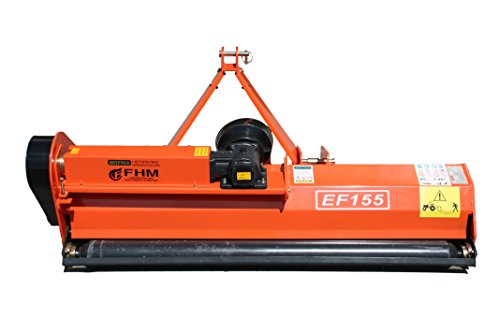
Farmer Helper 60″ Flail Mower (FH-EF155)

Earthquake Acreage 44″ Tow-Behind Rough Cut Mower

Mowrator S1 4WD Remote Control Lawn Mower
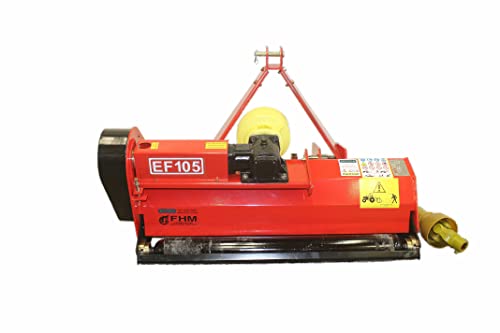
Farmer Helper 41″ Field & Brush Flail Mower (FH-EF105)
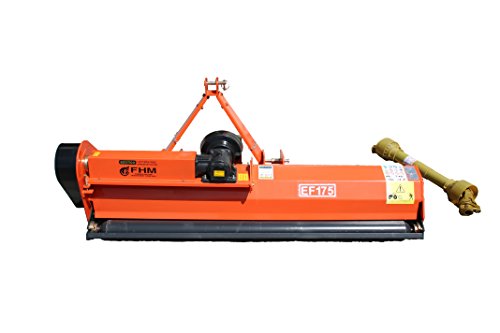
Farmer Helper 68″ Field Flail Mower (FH-EF175)
A Closer Look At Each Pick
The MechMaxx EFS60 is built for the smaller end of the compact-tractor world, pairing a 60-inch cut with a Category 1 three-point hitch. Owners running 15 to 35 horsepower tractors get a manageable width that fits through gates and trails without sacrificing ground coverage. The included PTO drive shaft connects straight to a standard 540 RPM rear PTO, so setup stays close to a plug-and-play experience for anyone familiar with three-point implements.
Hammer-style flail blades give this deck its appetite for thick grass, weeds, and light brush, while a belt drive keeps power transfer smooth under load. Front safety chains are worth noting: they deflect thrown debris before it leaves the housing. Compared with the heavier MechMaxx VBM78 reviewed later, this unit trades offset reach for a simpler, more compact footprint, which is exactly the right call for tight fields and orchard work.
Where It Delivers
- Wide 60-inch cut covers ground quickly on open pasture while still fitting through standard farm gates.
- 540 RPM PTO compatibility matches the rear PTO found on most subcompact and compact utility tractors.
- Hammer flails power through dense growth that would stall a finishing mower deck.
- Belt-drive transmission cushions shock loads when blades hit hidden stumps or rocks.
- Three-point hookup is familiar territory for anyone who already runs a box blade or rotary cutter.
Things To Consider
- Not compatible with quick-hitch systems, so attaching takes a few extra minutes of lining up pins.
- Standard-duty rating means it is best matched to lighter tractors; pushing it past 35 HP invites belt wear.
- Owners commonly report needing a quick visual inspection of belt tension after the first few hours of break-in.
Who Will Love This
Small-acreage property owners running 15 to 35 HP compact tractors who want a real flail cut without the bulk of a commercial unit.
Look Elsewhere When
Operators working roadside ditches and embankments will find the MechMaxx VBM78 offset design far better suited to angled terrain.
The MechMaxx VBM78 leaves the realm of general pasture mowing and steps into specialized roadside work. Its arm reaches 122 inches out from the tractor centerline, letting the cutter head work over pond banks, drainage ditches, and guardrails without sending the tractor itself into soft shoulders. The head pivots 55 degrees down and 90 degrees up, covering slopes that would leave a rigid-deck mower scraping dirt.
Eighteen heavy hammers spin on a dynamically balanced rotor, which matters when the working angle keeps changing throughout a pass. The Category 2 hitch and 80 to 110 HP rating put this firmly in commercial-territory equipment, sized for farms, municipalities, and roadside contractors. Relative to the EFS60 above, this is a different machine entirely, trading simplicity for articulated reach.
Useful Strengths
- 122-inch offset reaches well past fence lines and into drainage channels without compromising the tractor.
- 55-degree down / 90-degree up pivot handles embankments and overhead hedge work in a single tool.
- Eighteen hammer blades chew through woody growth that would defeat lighter flail setups.
- Dynamic balancing reduces vibration transferred back through the tractor frame during long days.
Worth Noting
- Requires 80 to 110 HP at the PTO, ruling out most compact and subcompact tractors on the market.
- Hydraulic hookups for arm control add setup complexity compared with rigid three-point units.
- The size and weight make storage and transport between job sites more of a logistics exercise.
Best Suited To
Roadside maintenance crews, drainage contractors, and large-acreage owners running mid- to large-frame tractors who need true offset reach.
Reach For A Different Pick When
Pasture owners on smaller tractors should consider the Farmer Helper FH-EF155, a far simpler match for everyday field mowing.
The BILT HARD 53-inch flail mower focuses on durability where it counts most: the cutting tools. Its hammer blades are forged from 40Cr alloy steel, a chromium-bearing grade chosen for toughness and wear resistance against grit, saplings, and rocky soil. For property owners who log serious hours each season, that material upgrade is the headline feature.
The triple belt drive system distributes load across three belts rather than one, reducing slippage when the rotor hits dense patches. An adjustable rear roller lets you fine-tune cutting height from rough cut down to a tidier finish. Compared with the MechMaxx EFS60, this deck is narrower, which helps in orchard rows and around landscape features, but you trade swath width for material quality and a quieter driveline.
Good Reasons To Consider
- 40Cr alloy steel hammers resist wear far longer than standard mild-steel flails in sandy or abrasive conditions.
- Triple-belt driveline spreads load to reduce slip during heavy cuts and protect the gearbox.
- Adjustable rear roller delivers height control for everything from brush clearing to a cleaner park-like finish.
- 53-inch width slips between tree rows and narrow access lanes where wider decks cannot go.
Trade Offs
- Narrower 53-inch swath means more passes per acre than the 60-inch or wider options.
- Heavy blade and rotor mass can demand more from smaller tractors on steep inclines.
The Right Fit
Mid-size property owners with 15 to 35 HP tractors who mow frequently and value blade longevity over maximum swath width.
Consider Something Else When
If your priority is finishing the widest possible swath on open pasture, the Farmer Helper FH-EF175 at 68 inches will cover ground faster.
Farmer Helper has been producing the EF series long enough that the FH-EF155 has become a familiar sight on small farms and equestrian properties. The 60-inch cutting width paired with a 20 HP minimum rating lands it in the sweet spot for compact utility tractors, the kind many homesteads and small ranches already own. A standard Category 1 three-point hitch keeps attachment simple.
Where this mower fits best is uneven ground. Flail designs in general handle bumps and contours without scalping the way a rigid rotary deck can, and the EF series in particular delivers a smoother finish than a rotary brush mower while still tackling heavier weeds. Compared with the BILT HARD reviewed just above, the FH-EF155 uses a conventional belt setup rather than a triple-belt system, which keeps cost down at the expense of some load capacity.
A Few Strong Suits
- Proven EF series platform with a long track record on small-acreage farms.
- 20 HP minimum opens it up to a wide range of compact utility tractors.
- Smoother finished cut than typical rotary brush mowers on the same material.
- Flail action handles uneven terrain without the scalping common with rigid decks.
Honest Caveats
- Light-duty rating means it is not the right tool for saplings and heavy brush.
- Finish quality falls short of a dedicated finishing mower on lawn-quality turf.
Who Should Grab It
Pasture owners with small acreage and 20+ HP compact tractors who want a balanced cut on mixed grass and weed fields.
A Better Fit Elsewhere
Those needing a wider swath on bigger tractors should look at the Farmer Helper FH-EF175, the 68-inch sibling in the same series.
Not everyone owns a compact tractor, and the Earthquake Acreage exists for that exact gap. A 17.5 HP Briggs and Stratton engine lives on the deck itself, so you tow it behind an ATV, UTV, or subcompact tractor using a 2-inch ball hitch. The 44-inch steel deck cuts a respectable path through tall grass, thick weeds, and brush, including saplings up to roughly 3 inches in diameter.
Electric start with a battery takes the pain out of cold starts, and a manual blade-engagement lever keeps operation simple. Where this machine really earns its place is hunting land, food plots, and trail clearing, situations where a full tractor setup would be overkill or unavailable. Compared with the PTO-driven flails earlier in this list, the Earthquake trades tractor integration for self-sufficiency, and the cut quality is closer to a brush mower than a true flail finish.
Why It Works Well
- Self-contained 17.5 HP engine removes the need for a tractor with a PTO.
- 44-inch steel deck handles saplings up to 3 inches thick for clearing trails and overgrown fields.
- Tow-behind design uses a standard 2-inch ball hitch found on most ATVs and utility vehicles.
- Electric start with included battery simplifies cold-morning startups.
Points To Keep In Mind
- Finish is rougher than true flail mowers, leaning more toward brush-mower results.
- 44-inch swath means more passes on larger open acreage.
- Engine maintenance adds an extra ownership layer compared with pure PTO-driven implements.
Made For
Landowners managing hunting property or food plots with an ATV or UTV who do not own a tractor with PTO capability.
Skip It When
Tractor-equipped operators seeking a finer pasture cut will get better results from the MechMaxx EFS60 with its flail blade action.
The Mowrator S1 sits in a different category from the rest of this list, but it earns its place on properties where safety rules out a rider mower. It climbs slopes up to 50 degrees (about a 119 percent grade), a figure that puts most riding equipment firmly out of its depth. A 21-inch deck, 4WD grip-tread tires, and remote-control operation let you stand safely at the top of a bank while the unit works down or across it.
An 18 Ah battery powers the drive system, and the unit covers spring cleanup, summer mowing, and fall leaf shredding with swappable blades and a trailer-hitch kit for towing carts. The honest read is that this is a niche tool: it solves slope problems that no tractor attachment can touch safely, but it is not a replacement for broad-acre mowing. Relative to the Earthquake above, it trades raw path width for precision and steep-terrain capability.
Notable Upsides
- 50-degree climb rating handles slopes that would tip a traditional riding mower.
- Remote operation keeps you on stable ground while the mower works hazardous terrain.
- 4WD grip-tread tires maintain traction on wet grass and loose soil.
- Multi-season versatility with swappable blades and an optional tow-hitch kit for yard carts.
Where It Is Less Suited
- 21-inch deck is small for anyone managing several open acres at a time.
- Battery runtime requires planning for larger properties and recharge breaks.
- Remote-control operation adds a learning curve compared with sitting on a mower.
Who It Suits Best
Property owners with steep banks, drainage channels, or pond edges where walking a traditional mower is risky or impossible.
Swap It Out When
Large flat pastures call for a wider PTO-driven flail like the Farmer Helper FH-EF175 to cover ground efficiently.
The FH-EF105 is the narrowest flail in the Farmer Helper EF series, built for 16 to 45 HP tractors that need to slip through gates, between trees, or along fence lines where wider decks simply will not go. Its 41-inch cut is the smallest in this roundup, which sounds modest until you realize how much more nimble that makes the unit around landscape obstacles.
Like its larger siblings, it relies on a Category 1 three-point hitch and standard 540 RPM PTO input. The trade-off is clear: you give up swath width, and in exchange you get a unit that handles tight work without trampling ornamentals or scalping terraces. For owners of subcompact and small-frame compact tractors, this is often the most realistic entry point into flail mowing.
What Pays Off
- 41-inch width navigates gates, orchard rows, and narrow trails where larger decks fail.
- 16 HP minimum rating suits subcompact tractors that cannot handle bigger implements.
- Flail cutting action handles uneven terrain without scalping like a rotary deck would.
- EF-series design benefits from a long production history and widespread parts availability.
Points To Note
- Narrow swath demands more passes to cover larger open areas.
- Light-duty classification means it is not designed for saplings and heavy brush.
Perfect Match For
Subcompact and small-frame tractor owners with tight spaces, narrow gates, or landscaping features that rule out wider implements.
Where Another Pick Suits Better
Owners with open acreage and a 20+ HP compact tractor will finish jobs faster on the wider Farmer Helper FH-EF155.
The FH-EF175 is the wide-cut flagship of the Farmer Helper EF series, pairing a 68-inch cutting width with a 28 HP minimum requirement. That combination targets mid-size compact tractors with enough muscle to push a serious swath through pasture grass, weed-choked fields, and light brush. Each pass covers noticeably more ground than the 60-inch and narrower siblings.
On open acreage, width is the single biggest productivity multiplier, and this deck delivers it without stepping up to commercial-grade equipment. The trade-off shows up in maneuverability: 68 inches is too wide for many gates and tight lanes, so this is a dedicated open-field tool. Set against the MechMaxx VBM78 reviewed earlier, the FH-EF175 has no offset reach and no articulation, but it costs less and suits flat pasture work that does not need ditch-bank geometry.
Everyday Perks
- 68-inch swath covers open pasture faster than any other unit in the EF series lineup.
- EF-series proven design carries a long track record on small to mid-size farms.
- Flail cutting action handles uneven pasture terrain better than rigid rotary decks.
- Category 1 three-point hitch stays compatible with most compact utility tractors.
Things To Weigh
- 68-inch width rules out narrow gates, tight orchard rows, and small fenced enclosures.
- 28 HP minimum requirement limits compatibility to mid-size and larger compact tractors.
- Wide deck needs more storage space in barns and sheds compared with narrower models.
Right Fit For
Pasture owners with 28+ HP mid-size compact tractors and wide-open acreage who prioritize finishing passes quickly.
Not Your Match When
Properties with narrow gates, tree rows, or roadside ditches are better served by the offset reach of the MechMaxx VBM78.
What To Weigh Before Choosing Heavy Duty Flail Mowers
Tractor Compatibility And Hitch Class
Every attachment in this category hinges on a single detail: matching the mower to your tractor’s horsepower and hitch. A Category 1 three-point hitch is the standard on most compact and subcompact tractors up to about 45 HP, while Category 2 appears on bigger utility tractors. PTO speed is the other essential spec, and 540 RPM is the universal standard for flail mowers in this category. Running an undersized tractor wastes fuel and strains belts, while an oversized tractor overwhelms light-duty units and shortens their service life.
Cutting Width And Terrain
Width drives productivity, but only when the terrain allows it. Open pasture rewards wide 60 to 68-inch decks, while narrow gates, orchards, and ditch work call for narrower or articulated units. PTO horsepower requirements climb with cutting width, so wider decks need correspondingly stronger tractors. For mixed properties, two implements (one wide, one narrow) sometimes make more sense than one compromise unit.
Blade Type And Durability
Hammer-style flails excel at rough cutting, brush, and uneven ground. Material grade matters more than brand name here: alloy steel hammers like 40Cr outlast mild steel in sandy or rocky soil. Belt-drive configuration is worth a look too, and triple-belt systems spread load more evenly than single-belt setups, reducing slip during heavy cuts. For commercial use, dynamic balancing of the rotor cuts down on vibration fatigue over long days.
Tow-Behind And Remote Alternatives
Not every property needs a PTO setup. Tow-behind rough cutters like the Earthquake pull behind an ATV or UTV, sidestepping the need for a tractor entirely. Remote-control slope mowers address steep banks where no tractor can safely operate. These alternatives cost less or work in places tractor implements cannot, but they do not replace a true flail cut on broad pasture.
Smart Choices Across This Lineup
Common Shopping Slip Ups
The biggest mistake is matching a mower to the wrong tractor horsepower. A 60-inch flail on a 20 HP compact is asking for stalled blades and burned belts, while a 41-inch unit on a 60 HP tractor wastes the tractor’s capability. Width temptation plays a close second, and overshooting gate widths or property boundaries leaves you with a deck you cannot actually deploy where it matters. Confirm hitch class, PTO speed, and minimum horsepower before anything else.
What The Higher Tier Buys
Stepping up to commercial-grade units like the MechMaxx VBM78 buys offset reach, articulation, and heavier hammer counts that handle ditches, embankments, and woody growth standard-duty flails cannot touch. The upgrade pays off for roadside work, municipalities, and contractors logging serious hours. For flat pasture owners, the extra cost is hard to justify when a mid-size EF-series unit covers the workload at a fraction of the price.
Frequently Asked Questions
What tractor horsepower do most heavy duty flail mowers require?
Most compact-tractor flails in this category ask for 15 to 35 HP, while commercial offset units jump to 80 to 110 HP. Always match the mower’s published minimum to your tractor’s PTO horsepower, not just engine rating.
Can flail mowers handle saplings and brush, or only grass?
Flail designs handle more than grass, including thick weeds, brush, and saplings up to roughly 1 to 3 inches depending on the unit. Commercial hammer flails like the MechMaxx VBM78 push that limit further, while light-duty EF-series models stick to weeds.
What is the difference between a flail mower and a rotary cutter?
A flail mower uses many small hammer blades on a horizontal rotor, producing a finer cut and handling uneven ground better. A rotary cutter uses heavier rigid blades built for fast sapling work but leaves a rougher finish and scalps more easily on bumps.
Do I need a quick hitch for these mowers?
Some units explicitly exclude quick-hitch compatibility because of their weight and geometry. Standard three-point pin attachment works on every mower in this list, while quick-hitch users should confirm compatibility before purchasing.
How wide should the cutting deck be for my acreage?
For properties under 5 acres, a 41 to 53-inch deck keeps maneuvering manageable. For 5 to 15 acres, 60 inches hits a productivity sweet spot, while larger open pastures over 15 acres benefit from 68-inch or wider units paired with adequate horsepower.
Closing Remarks
The right flail mower comes down to your tractor, your terrain, and the kind of growth you face each season. Compact-tractor owners with mixed pasture and weed fields will find the Farmer Helper EF lineup and MechMaxx EFS60 hit the practical sweet spot, while commercial operators with serious reach needs should look at offset units like the VBM78. Tow-behind and remote options fill the gaps where a tractor is unavailable or unsafe. Match the spec sheet to your situation, and the rest of the decision tends to fall into place.
