

Pruning season waits for nobody, and a dull or undersized pair of shears turns a tidy Saturday into a wrestling match with your shrubs. Picking the right tool means less hand fatigue, cleaner cuts that heal faster, and fewer trips to the garden shed. The eight picks below cover handheld bypass work, anvil-style heavy cuts, long-reach loppers, and even a cordless electric option for thicker branches.
The Picks In Brief

GARDENA Adjustable Bypass Pruning Shears 08906

Original LÖWE Professional Anvil Pruner 1.104

YRTSH Loppers, Hedge Shears & Pruners Combo Set

Anttctig Electric Pruning Shears 2.56″ Opening
YRTSH Loppers Branch Cutter with Compound Action

VOTREK Pruning Shears Stepless Handle Opening
Original LÖWE 10 Anvil Pruning Shears 10.107

GARDEN GURU Bypass Loppers 15-Inch
The Details Behind The Selections
A bypass blade design cuts like a pair of overlapping blades passing each other, the way scissors work, which makes clean cuts on live green wood without crushing the stem. The GARDENA 08906 takes that geometry and adds an aluminum body that keeps the tool light without making it feel flimsy in the hand.
With a roughly one-inch maximum cutting diameter, this pair handles most rose canes, small fruit-tree suckers, and shrub thinning you encounter during a typical weekend session. Homeowners who want a reliable pair they can leave by the back door without thinking about it will appreciate the integrated spring and the soft-grip ergonomic handle. Compared to the German-made LÖWE options further down this list, the GARDENA trades replaceable parts for a friendlier price tag.
The Upside
- Aluminum frame keeps weight low for overhead trimming work
- Soft-component ergonomic handle reduces slippage when hands sweat
- One-inch capacity covers most common garden pruning tasks
- Integrated spring design avoids loose parts that can fall out
- Bypass geometry gives clean cuts that help plants heal faster
Worth Noting
- No published spec on replaceable blades, so sharpening eventually matters
- Synthetic construction may feel less rugged than steel-bodied competitors
- Best suited to green wood; dry hardwood wears the edge faster
Feature Card
Made For
Weekend gardeners managing roses, hedges, and light shrub maintenance across a typical suburban yard.
Consider Something Else When
You regularly cut dry, mature hardwood branches, where the Original LÖWE 1.104 anvil pruner offers better long-term durability.
An anvil pruner uses a single sharp blade that closes onto a flat metal surface, crushing against it rather than slicing past a second blade. That crushing action is exactly what you want for dead or dry wood, where clean living-stem cuts matter less than raw cutting force. The LÖWE 1.104 leans hard into that geometry.
Made in Germany with a long-lasting carbon steel blade coated in sliding lacquer for corrosion protection, this tool is built for decades of service. Every part is replaceable, which sets it apart from the sealed GARDENA option above and the budget combo set coming next. Landowners with mature trees, neglected orchard recovery, or brush-clearing duties will find the LÖWE 1.104 well-matched to the work, though the anvil design means you should not use it on tender green growth.
Strengths Worth Knowing
- Carbon steel blade with sliding-lacquer coating resists rust and friction
- All parts are replaceable, extending the tool’s working life indefinitely
- One-handed safety lock for convenient storage and transport
- German engineering translates to consistent blade alignment over time
Trade Offs
- Anvil design can crush soft green stems, so use on living wood with caution
- Optimized for medium to large hands, smaller grips may feel stretched
- Heavier than aluminum-bodied bypass options for overhead work
Feature Snapshot
Best Suited To
Homeowners tackling neglected mature growth, deadwood removal, and routine orchard cleanup across larger properties.
A Better Fit Elsewhere
You mainly snip tender live growth like rose canes and vegetable stems, where the GARDENA 08906 bypass design protects delicate tissue.
Most pruning tasks do not demand three separate specialty tools, but many yards do need more than one. The YRTSH combo set bundles a 26-inch compound-action lopper, a 23-inch hedge shear, and an 8-inch pruning shear into a single package, giving you a tool for almost every common job around the yard.
The alloy steel blades with low-friction coating are the connective tissue across all three pieces, cutting smoothly whether you shape a privet hedge or trim back a wayward branch. New homeowners or renters who want one purchase to cover seasonal cleanup will appreciate the bundled approach, even though individual build quality does not match the LÖWE 1.104. Compared to the single-purpose GARDENA above, you give up refined ergonomics for range and variety.
Positive Takeaways
- Three coordinated tools handle lopping, hedging, and detail pruning
- Low-friction coated alloy steel glides through green and dry wood
- Compound-action lopper multiplies hand force for thicker cuts
- Single purchase simplifies tool selection for new homeowners
Room For Improvement
- Individual pieces may not match the durability of dedicated single-purpose tools
- No published cutting-diameter spec, so capacity varies by branch type
- Storage requires space for three full-length tools rather than one compact shear
Perfect Match For
First-time homeowners or renters who want a complete pruning setup without buying each piece separately.
Swap It Out When
You need orchard-grade precision on fruit trees, where the Original LÖWE 10.107 anvil pruner handles orcharding work with better control.
Cordless electric pruning shears change the math when you face dozens or hundreds of cuts in one session. The Anttctig model delivers a maximum opening of 2.56 inches with two selectable settings (about 1.97 inches and 2.56 inches), letting you toggle between smaller twigs and serious branches without swapping tools.
Two batteries and a set of spare blades come included, which addresses the two most common anxieties around electric pruners. Land managers, orchard owners, and anyone cleaning up after a storm will find the cordless format dramatically reduces hand fatigue compared to manual options like the YRTSH loppers reviewed earlier. You do trade some quiet simplicity for charging routines, though, and the tool itself is heavier than a basic handheld shear.
Why It Works Well
- 2.56-inch opening handles thicker branches than manual pruners typically reach
- Dual batteries extend working sessions without forced downtime
- Adjustable opening adapts to branch size on the fly
- Spare blades included so a dull edge does not end your day
- Reduces repetitive strain compared to manual lopper work
Practical Considerations
- Heavier than a manual bypass shear for delicate overhead work
- Battery charging adds a step to your workflow
- Electric mechanism means more components that could eventually need service
Whose Shelf It Belongs On
Property owners managing fruit orchards, large shrub borders, or storm-cleanup situations where cut volume justifies the cordless format.
Not Your Match When
You only handle a handful of cuts per session, where the manual YRTSH compound-action lopper is simpler and lighter to use.
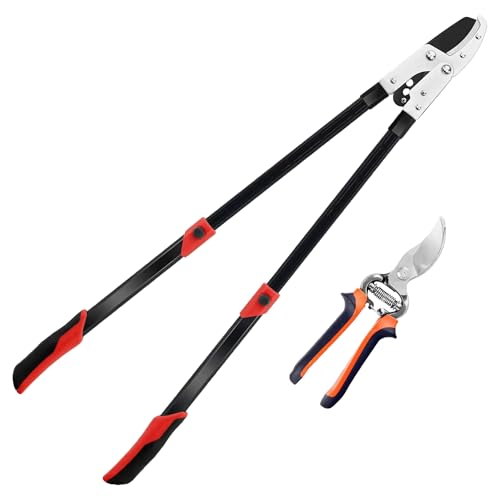
Compound-action loppers multiply your hand force through a pivoting linkage system, so what feels like a tough cut becomes noticeably easier. The YRTSH branch cutter uses that mechanism alongside an alloy steel blade with a Teflon coating designed to stay sharp through tough jobs.
The low-friction finish helps the blade glide through both green living and dry branches, and the design intends to reduce fatigue during long pruning sessions. Older gardeners and anyone with reduced grip strength will appreciate the mechanical advantage, since the compound action does a lot of the heavy lifting. Compared to the cordless Anttctig covered earlier, this tool is simpler and lighter, though it does not match the electric version’s maximum opening.
Useful Highlights
- Compound-action linkage multiplies applied hand force
- Teflon-coated alloy steel blade resists sap and friction buildup
- Works through both green and dry branches without switching tools
- Reduces fatigue for older gardeners or those with limited grip strength
Small Caveats
- Manual power still depends on your hand strength and stamina
- Long handles can feel unwieldy in tight spaces between shrubs
- Periodic blade cleaning extends coating life
The Right Fit
Gardeners with mature trees or overgrown branches who want mechanical cutting assistance without battery maintenance.
Look Elsewhere When
You face very thick branches exceeding an inch or two, where the Anttctig electric pruner reaches a wider cutting diameter.
Most pruning shears give you a fixed handle span, which can feel too wide for smaller hands or uncomfortably narrow for larger ones. The VOTREK design solves that with a stepless thumb slider that adjusts both handle span and blade opening to match your grip and the branch size.
The blade itself uses high-carbon SK5 steel with a Teflon nonstick coating that resists sap buildup and wipes clean easily. Seniors, gardeners with arthritis, and anyone whose hands tire quickly will find the adjustable opening genuinely useful, while the nonstick surface speeds cleanup after sticky work. Compared to the GARDENA 08906 earlier, you trade the integrated spring for a more customizable fit.
Reasons It Performs
- Stepless thumb slider adapts to any hand size or grip strength
- SK5 high-carbon steel holds a sharp edge through repeated cuts
- Teflon nonstick coating resists sap and speeds post-job cleanup
- Adjustable blade opening handles varied branch thicknesses
A Few Limitations
- Adjustable mechanism adds moving parts that could wear over time
- Slider position may shift mid-cut without a positive lock
Quick Facts
Who Should Grab It
Seniors, gardeners with arthritis, or anyone with smaller or larger-than-average hands who struggles with fixed-span pruners.
Reach For A Different Pick When
You mainly tackle dry hardwood branches, where the Original LÖWE 1.104 anvil design delivers stronger cutting force.
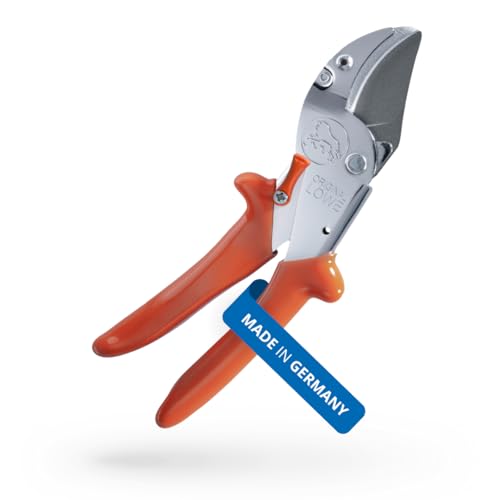
The Original LÖWE 10.107 takes the anvil concept and layers in bypass-style geometry, so the blade meets the anvil at an angle that prevents material from slipping during the cut. The result is a clean, controlled slice on hard branches, twigs, and dry wood up to about 1.18 inches in diameter.
The non-stick steel blade and ergonomic handles make the tool comfortable across long orcharding sessions, and the curved contact surface grips branches rather than pushing them away. Serious orchardists and hobbyist fruit growers will appreciate the thoughtful engineering, though this model sits at a noticeably higher tier than the budget YRTSH combo covered earlier. Compared to the LÖWE 1.104 above, this model upgrades precision at the cost of slightly less raw crushing force.
Where It Delivers
- Bypass-style anvil geometry prevents branch slippage mid-cut
- Non-stick steel blade reduces sap drag and cleanup time
- Ergonomic handles reduce wrist strain during extended orcharding work
- Up to 1.18-inch capacity covers most fruit-tree pruning needs
- Curved contact surface grips rather than pushes branches
Things To Consider
- Higher tier pricing than basic anvil options
- Specialized design rewards consistent orcharding use over casual trimming
Built With In Mind
Orchard hobbyists and fruit-tree growers who prune regularly and want precise control on hardwood branches.
Skip It When
You mostly cut green shrubbery and light growth, where the GARDENA 08906 bypass pruner offers a friendlier fit for tender stems.
Long-handled loppers give you reach, but they can feel clumsy in tight spaces between rose bushes or along narrow fence lines. The GARDEN GURU 15-inch bypass loppers keep things compact while still delivering the cutting power of a larger tool, thanks to high-carbon steel blades that slice through branches cleanly.
Soft non-slip grips on the handles make long sessions more comfortable, and the bypass geometry gives cuts that heal cleanly on living growth. City gardeners and apartment dwellers with small yards will find the compact size easy to store and maneuver, even though you sacrifice some reach compared to the 26-inch YRTSH combo lopper covered earlier. For most routine yard cleanup, the size tradeoff works in your favor.
Useful Touches
- High-carbon steel blades deliver clean cuts on living growth
- Compact 15-inch length fits tight spaces and small storage areas
- Soft non-slip handles stay comfortable across longer sessions
- Bypass geometry supports plant healing after pruning
Some Limits To Know
- 15-inch reach is shorter than full-size loppers for overhead branches
- Smaller handles may feel cramped for users with very large hands
- Bypass design means thicker deadwood may require more effort
Who Will Love This
Urban gardeners and anyone with a smaller yard who needs maneuverable pruning reach without a bulky tool.
Where A Sibling Pick Shines
You regularly prune overhead branches above head height, where the longer YRTSH compound-action lopper extends your effective reach.
What To Weigh Before Choosing Your Pruning Shears
Cut Style Shapes Your Results
Bypass pruners work like scissors, with two curved blades that pass each other to make a clean slice on living green wood. Anvil pruners crush a single blade down onto a flat surface, generating more force for dry and dead branches but risking damage to tender green stems. Your typical workload should drive this choice: landscapers maintaining lush gardens lean bypass, while landowners clearing winter brush lean anvil. The LÖWE 10.107 cleverly blends both by angling the anvil contact to mimic bypass geometry.
Handle Fit Matters More Than You Think
Fixed handle spans frustrate smaller hands and oversized ones alike, and that frustration compounds across dozens of cuts. Adjustable designs like the VOTREK slider give every user a customized grip, which pays off if you share tools across family members. Handle ergonomics with soft components also help during overhead work, where sweat and fatigue meet.
Capacity and Reach Set Your Limits
Maximum cutting diameter tells you what the tool can handle, and a one-inch bypass shear covers most flowering shrubs and small fruit-tree work. Loppers extend reach and multiply force for branches a handheld shear cannot manage, while cordless electric pruners push capacity higher at the cost of charging routines. Match the tool to the largest branch you realistically face, not the average one.
Build Materials Affect Long-Term Ownership
Carbon steel blades hold an edge longer than stainless ones but may need oiling to prevent rust, and coatings like Teflon or sliding lacquer add sap resistance and easier cleanup. Replaceable parts, as found on the LÖWE models, extend working life well beyond sealed designs. Considering how often you prune and how willing you are to maintain your tools helps narrow the field.
Quick Considerations Across These Picks
Common Buying Traps
Pruning by aesthetics alone leads to gorgeous tools that cannot handle your branches. Buying the largest-capacity pruner available sounds safe but often means unnecessary weight and cost for routine work. Skipping handle-fit testing is another classic mistake, since a poorly matched grip turns every cut into a strain. Finally, ignoring maintenance reality (oiling, sharpening, part replacement) means premium tools underperform and budget tools wear out faster than expected.
Where The Upgrade Money Goes
Higher-tier pruners justify their cost through replaceable parts, refined blade geometry, and materials that hold an edge across years of use. German engineering in the LÖWE line, for example, reflects precision manufacturing that keeps blade alignment tight over decades. Ergonomic refinements like adjustable spans and soft-grip compounds reduce long-term hand and wrist strain. For casual gardeners, a mid-tier pick handles the job well; for daily users and orchardists, the upgrade compounds into fewer replacements and more comfortable sessions.
Frequently Asked Questions
What Is The Difference Between Bypass And Anvil Pruning Shears?
Bypass shears use two blades that pass each other like scissors, making clean cuts ideal for live green growth. Anvil shears crush a single blade against a flat plate, delivering more force for dry or dead wood at the cost of stem damage on tender growth.
How Often Should Pruning Shears Be Sharpened?
For typical home use, a light sharpening once or twice per season keeps blades cutting cleanly, with more frequent touch-ups for heavy orchard or commercial work. Wipe blades dry after each session and oil the pivot occasionally to extend intervals between sharpenings.
Can Pruning Shears Handle Thick Branches?
Standard handheld pruners typically manage branches up to about one inch in diameter, while loppers extend reach and capacity for thicker growth. Electric pruners like the Anttctig model push capacity further, with openings around 2.5 inches for serious branches.
Are Replaceable Blade Models Worth The Higher Cost?
Replaceable parts extend a tool’s working life well beyond sealed designs, so gardeners who prune frequently often recover the higher initial cost through years of service rather than replacements. Casual users pruning a handful of times per season may not see the same payback.
What Should Seniors Or Those With Arthritis Look For In Pruners?
Adjustable handle spans, ratchet or compound-action mechanisms, and lightweight bodies all reduce hand strain significantly. Models like the VOTREK with a stepless opening slider or the YRTSH compound-action loppers address grip strength and fatigue directly.
Bottom Line
The right pruning shears depend on what grows in your yard and how often you cut. Lightweight bypass models like the GARDENA 08906 fit routine backyard care, while the LÖWE anvil options handle dry wood and orchard work with replaceable-part longevity. For thick branches and high cut volumes, the Anttctig cordless pruner or the YRTSH compound-action loppers reduce fatigue dramatically. Match the tool to your workload, and pruning stays a pleasure rather than a chore.
