

A neglected lawn doesn’t care how expensive your mower is; it cares about torque, blade quality, and a deck that can take abuse. Heavy duty push mowers target exactly that problem, pairing high-displacement engines or beefy brushless motors with reinforced steel decks and aggressive cutting geometry. The picks below cover flat suburban lawns, overgrown rural grass, sloped yards, and acreage that ends where the neighbor’s fence starts. Each one earned its spot by solving a specific problem real homeowners hit every weekend, from dense fescue to brush-thick weeds.
How The Shortlist Stacks Up

PowerSmart EasyCut 18-Inch 144cc Gas Lawn Mower

PowerSmart EasyGlide 21-Inch 3-in-1 Push Gas Lawn Mower

PowerSmart 18-inch 144cc Gas Push Mower

PowerSmart EasyCut 18-Inch Gas Lawn Mower 144cc

YARDMAX 22 in. 201cc CVT Self Propelled Mower (YG2860)
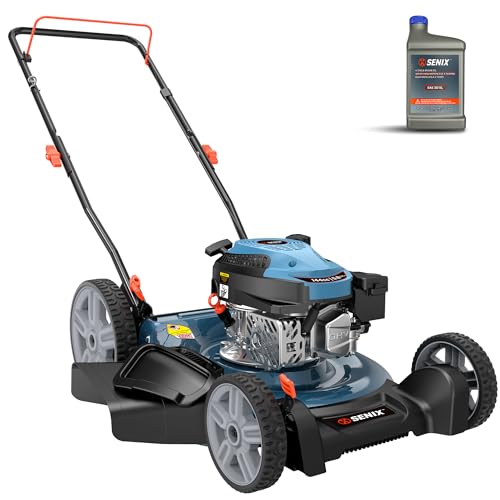
SENIX 21-Inch Gas Push Lawn Mower 144cc

BILT HARD 170cc 4-Cycle Brush Hog Mower

Greenworks 80V 21in Push Lawn Mower
Why These Options Stand Out
The PowerSmart EasyCut slots in as a versatile everyday workhorse for homeowners running a typical quarter-acre lot. Its 144cc four-cycle OHV engine (an overhead-valve design that tends to run cooler and cleaner than side-valve alternatives) fires up through a recoil starter with auto choke, which removes one of the usual frustrations of budget gas mowers. An 18-inch deck keeps the footprint compact enough for tight side yards and fenced backyard corners.
Where this mower separates from the rest of the field is the 3-in-1 deck: rear bagging for clean finish cuts, side-discharge for tall grass you want to leave in place, and mulching for nutrient-cycling trimmings. Compared to the side-discharge-only PowerSmart covered later in this list, this version gives you more flexibility without stepping up to a wider 21-inch cut.
Reasons It Performs
- 3-in-1 deck offers bagging, side-discharge, and mulching modes for different seasonal needs.
- Auto choke and primer system reduce starting effort across cold mornings and warm afternoons.
- Compact 18-inch deck navigates narrow gate openings and tight landscaping beds with ease.
- OHV engine design typically improves fuel economy and lowers operating temperatures during long sessions.
Points To Note
- Smaller 18-inch deck means more passes on open lawn areas than the 21-inch or 22-inch options below.
- Gas engine requires seasonal oil changes and air filter checks that battery models skip entirely.
Right Fit For
Homeowners with a small to mid-sized suburban lawn who want one mower that handles bagging, mulching, and discharge without owning separate machines.
Look Elsewhere When
Step up to the YARDMAX YG2860 if your yard covers more than half an acre or includes noticeable slopes, since its self-propelled drive saves real effort over long stretches.
PowerSmart’s EasyGlide takes the same 144cc OHV platform from the EasyCut and stretches the deck to 21 inches, giving you about 36% more cutting swath per pass. That’s a meaningful upgrade for anyone tired of endless trips back and forth across a quarter-acre lot. The steel deck construction is built for the kind of contact with hidden rocks and roots that ruins lighter-gauge metal.
This model keeps the same 3-in-1 versatility (bagging, side-discharge, mulching) so the wider deck doesn’t lock you into one cutting style. For most homeowners managing a mid-sized yard with mixed seasonal demands, the trade-off here is simple: slightly more weight and footprint in exchange for fewer total passes.
Where It Excels
- 21-inch steel deck reduces mowing time on open lawn areas compared to the 18-inch EasyCut.
- Same 3-in-1 bagging, discharge, and mulching flexibility as the smaller sibling model.
- Stabilized engine body structure helps reduce vibration transfer during longer sessions.
Trade Offs
- Heavier and wider than the 18-inch EasyCut, which can be a strain in fenced side yards with narrow gates.
- Still a push mower without drive assist, so slopes demand real leg effort compared to self-propelled picks.
- Steel deck holds up well but owners commonly report the occasional paint touch-up needed after a season of contact with abrasive debris.
Made For
Homeowners with a mid-sized lawn who want a wider cutting swath and the same multi-mode versatility as compact mowers.
Consider Something Else When
The Greenworks 80V Push Lawn Mower is a better match if you want to skip gas maintenance and your lawn stays under half an acre with minimal slope.
This PowerSmart variant trades the 3-in-1 system of the EasyCut for a focused side-discharge design, and the streamlined setup has real appeal for specific mowing conditions. The 144cc four-stroke OHV engine and 18-inch heavy-duty blade combination targets tall, thick grass where you want clippings spread back into the lawn as natural ground cover.
For homeowners who mow less frequently and regularly deal with overgrown patches after rainy stretches, side-discharge-only mowers actually cut more cleanly because there’s no bag or mulching chamber constricting airflow. Auto choke and primer bulb keep the starts predictable. Compare this to the SENIX 21-inch covered later, which takes the opposite approach by pairing mulching capability with a wider deck.
The Helpful Details
- Dedicated side-discharge design handles tall grass without the clogging risk of bagging systems.
- Heavy-duty 18-inch blade delivers clean cuts in dense turf where thinner blades tend to bog down.
- Steel deck construction handles season-after-season contact with hidden yard debris.
- Auto choke plus primer bulb shortens the learning curve for first-time gas mower owners.
Small Caveats
- No bagging or mulching mode limits versatility for homeowners who want a manicured, clippings-free lawn finish.
- Side-discharge clippings can drift onto walkways and driveways during dry summer cuts.
Best Suited To
Homeowners cutting tall or overgrown grass regularly who prefer clippings spread back into the turf rather than collected.
Swap It Out When
The SENIX 21-Inch Gas Push Lawn Mower is a better alternative if you want mulching capability along with a wider 21-inch deck for fewer passes.
Compact yards with mixed grass types demand flexible cutting heights, and this EasyCut variant delivers that with a 5-position adjustment system. The 144cc four-stroke OHV engine pairs with auto choke for the kind of reliable cold-start behavior that matters when spring arrives unpredictably. For most homeowners with a small suburban lot, the side-discharge design keeps the mower simple and the workflow fast.
The 18-inch steel deck hits a sweet spot: wide enough to finish a small yard quickly, narrow enough to navigate the side strips beside fences and garages. This is the most compact PowerSmart in the roundup, and for tight properties where a 21-inch or 22-inch mower feels like overkill, it makes a lot of sense.
What Helps Most
- 5-position height adjustment covers everything from low-cut Bermuda to tall fescue without changing mowers.
- Compact 18-inch footprint fits through standard garden gates and stores easily in small shed spaces.
- Steel deck resists denting from the kind of contact that destroys thinner stamped-metal alternatives.
- Auto choke system reduces the cord-pulling frustration that pushes first-time owners toward battery models.
Honest Caveats
- Side-discharge-only configuration limits options for homeowners who want bagged clippings for composting.
- Manual height adjustment takes more setup time than single-lever systems found on higher-tier mowers.
Who Should Grab It
Homeowners with a small yard under a quarter acre who need flexible cutting heights and a compact deck that stores easily.
Not Your Match When
The PowerSmart EasyGlide makes more sense if you want both side-discharge and mulching flexibility on a slightly wider 21-inch deck.
The YARDMAX YG2860 is the roundup’s clear heavy hitter, and the specs explain why: a 201cc OHV engine with automatic choke, front-wheel-drive self-propulsion, and a 22-inch deck. The CVT (continuously variable transmission) lets you dial in ground speed without discrete gear steps, so you can match pace to grass thickness rather than fighting fixed speed settings.
High rear wheels (the “high wheel” design) help it roll over uneven ground, roots, and tall grass without the front end digging in. For larger properties, sloped terrain, or homeowners tired of pushing rather than steering, the self-propelled drive is the difference between finishing a mow session fresh or wiped out. Note that this unit ships under hazardous materials regulations and may have specific return terms on the listing.
Standout Benefits
- 201cc engine provides substantially more torque than the 144cc class for thick, tall, or wet grass conditions.
- CVT transmission lets you fine-tune ground speed without stopping, matching pace to grass type and terrain.
- Front-wheel-drive self-propulsion handles slopes and longer distances without exhausting the operator.
- 22-inch cutting deck finishes large yards faster than any 18-inch or 21-inch mower on this list.
- High rear wheel design improves stability and traction on uneven or rough ground.
Trade-Offs To Consider
- Larger engine and self-propelled drive add weight that makes storage and transport harder than compact mowers.
- Gas and oil maintenance demands exceed what battery-powered alternatives require.
- Self-propelled drive components introduce additional mechanical complexity compared to a basic push mower.
Feature Card
Perfect Match For
Homeowners managing larger yards with slopes or uneven terrain who want the self-propelled drive and engine power to finish without exhaustion.
A Better Fit Elsewhere When
The BILT HARD Brush Hog Mower is the smarter pick if your property includes brush, saplings, or field areas that no lawn mower can handle.
SENIX positions this 21-inch push mower for homeowners who want mulching capability without stepping into a self-propelled or wide-deck machine. The 144cc four-stroke engine holds steady RPMs under load, which matters in dense turf where smaller engines tend to bog down and leave ragged cuts. The 2-in-1 system pairs mulching with rear bagging for homeowners who alternate between feeding clippings back to the lawn and collecting them.
For most backyards up to half an acre, this sits in a comfortable middle ground: wider than the 18-inch PowerSmart models, lighter than the YARDMAX, and built for the homeowner who mulches regularly as part of their lawn care routine.
What Stands Out
- Engine maintains steady RPMs in dense turf where smaller-displacement mowers typically stall.
- 2-in-1 mulching and bagging combo covers the two most common finishing preferences without extras.
- 21-inch deck balances fast coverage with manageable storage footprint.
- Four-stroke design eliminates the oil-gas mixing step that two-stroke engines require.
A Few Limitations
- No side-discharge option means less flexibility for tall grass where bagging or mulching chokes easily.
- Push design without drive assist makes slopes harder than the YARDMAX YG2860’s self-propelled system.
Built With In Mind
Homeowners who mulch regularly as part of their lawn care routine and want a wider 21-inch deck without the cost or weight of self-propelled models.
Reach For A Different Pick When
The PowerSmart EasyGlide is the alternative if you want the same engine class but prefer 3-in-1 versatility with side-discharge included.
The BILT HARD is the odd one out in this roundup, and that’s exactly why it earns a spot. It’s a walk-behind string trimmer, sometimes called a brush hog, built for the kind of overgrowth no lawn mower can handle: tall weeds, brush, and field areas where a steel blade would be dangerous. The 170cc four-cycle OHV engine and 22-inch cutting diameter deliver the swing needed for dense vegetation.
The 14-inch flat-free wheels keep the unit rolling over uneven ground without flats, and the heavy-duty nylon line cuts through material that would stall or shatter a traditional mower blade. For rural properties, food plots, fence lines, and neglected acreage, this fills a gap none of the other picks on this list can.
Notable Upsides
- 170cc engine handles brush and weeds that bog down or destroy traditional mower blades.
- 22-inch cutting diameter clears large overgrown areas much faster than handheld string trimmers.
- Flat-free 14-inch wheels eliminate downtime from punctures on rough rural ground.
- One-piece steel deck resists vibration and damage from rocks and roots hidden in brush areas.
Some Limits To Know
- String cutting system leaves rougher finish cuts than a traditional blade mower on maintained turf.
- Not designed for weekly lawn mowing, and owners commonly report that line replacement becomes a recurring task in rocky conditions.
- Heavier and more specialized than the other picks, making it a poor fit if your property is primarily maintained lawn.
Whose Property It Belongs On
Homeowners with rural acreage, fence lines, or neglected areas where brush and weeds overwhelm any standard lawn mower.
Where A Sibling Pick Shines
The YARDMAX YG2860 handles maintained large lawns far better, since its blade deck produces cleaner cuts on turf than string cutting geometry.
The Greenworks 80V is the roundup’s answer for homeowners who want serious cutting power without the noise, fumes, or maintenance of a gas engine. The brushless motor (a design without carbon brushes that typically delivers more torque, longer life, and better efficiency than brushed alternatives) drives a 21-inch deck at performance levels approaching gas competitors. The included 4.0Ah battery and rapid charger mean you can finish a typical lawn on a single charge.
For noise-restricted neighborhoods, HOA communities, or anyone tired of fuel mixing, oil changes, and pull-cord frustration, battery mowers finally clear the performance bar. The 4-in-1 system (mulching, bagging, side-discharge, and a turbo leaf mode) gives you more versatility than any gas model in this price range. The honest read is that runtime and battery lifespan matter: extreme wet grass or large acreage may demand a second battery for uninterrupted mowing.
Real-World Strengths
- Brushless motor delivers higher torque and longer service life than brushed battery alternatives.
- 4-in-1 cutting system (mulch, bag, side-discharge, leaf mode) exceeds the versatility of most gas mowers.
- 80V battery platform runs quieter and produces zero direct emissions during operation.
- Push-button start eliminates pull-cord effort for homeowners who find recoil starters physically demanding.
Where It May Fall Short
- Battery runtime depends on grass thickness and may require a second battery for lawns approaching half an acre.
- Higher upfront cost than the 144cc gas alternatives, though owners save on fuel and maintenance over time.
Feature Card
Who Will Love This
Homeowners in noise-restricted neighborhoods or those who want push-button starts without giving up 21-inch cutting performance.
Skip It When
The YARDMAX YG2860 is the better fit for large rural properties where self-propelled drive and longer runtime outweigh the appeal of cordless operation.
Key Factors When Choosing a Heavy Duty Push Mower
Engine displacement matters more than marketing copy. A 144cc four-stroke engine handles most residential lawns, but anything approaching half an acre or with regular thick growth benefits from the 170cc to 201cc class. Displacement (the total volume swept by the pistons, measured in cubic centimeters) correlates directly with torque output and the ability to maintain blade speed under load.
Deck width sets your time budget. An 18-inch deck navigates tight spaces but requires more passes on open lawn; 21 to 22 inches finishes the same area faster but demands more storage space and struggles through narrow gates. Self-propelled drive becomes worthwhile once slopes exceed a gentle grade or yard size pushes past a quarter acre.
Cutting system configuration (bag, mulch, side-discharge) determines seasonal flexibility. Homeowners who mow frequently and want a manicured finish need bagging. Those cutting tall or less often usually prefer mulching or side-discharge. The 3-in-1 and 4-in-1 designs cost slightly more but eliminate the seasonal swap-out problem.
Power source is a real trade-off. Gas delivers unlimited runtime and higher torque at the cost of noise, fumes, and maintenance. Battery mowers have closed the performance gap significantly, especially with 80V brushless platforms, but runtime and battery replacement cost remain legitimate considerations for larger properties.
What Separates Budget and Premium Models
Pitfalls Shoppers Hit
Choosing by deck width alone ignores engine class. A wide 22-inch deck on a small-displacement engine bogs down in thick grass and leaves ragged cuts. Match engine size to deck width: 144cc handles up to 21 inches, while 22-inch decks benefit from 170cc or higher. Skipping the height-adjustment check leaves you stuck with one cutting length, which becomes a real limitation across seasonal grass types.
Assuming all-steel construction is the same leads to disappointment. Thinner stamped decks dent from minor contact, while thicker stamped or fabricated steel holds up across years of use. The BILT HARD one-piece deck design illustrates the difference that build quality makes in vibration transfer and longevity.
Why Top Tier Costs More
Premium models invest the extra cost in three places: engine displacement, drive systems, and cutting geometry. A self-propelled CVT drive like the YARDMAX YG2860 adds real manufacturing cost but eliminates the fatigue of pushing a heavy mower uphill. Higher-tier blade design and deck airflow engineering produce cleaner cuts at faster ground speeds, which matters for anyone mowing half an acre or more.
Battery platforms like the Greenworks 80V command a premium because brushless motors, rapid chargers, and high-capacity lithium cells cost more to produce than a basic recoil-start gas engine. The honest case for paying more comes down to your tolerance for noise, your local regulations, and how much runtime you actually need.
Frequently Asked Questions
What engine size do I need for a heavy duty push mower?
For typical residential lawns under a quarter acre, a 144cc four-stroke engine handles the workload well. Larger yards, thick grass, or regular commercial use pushes you toward the 170cc to 201cc class for the torque needed to maintain blade speed.
Can a push mower handle thick or wet grass?
Yes, but engine displacement and blade design determine how well. The 201cc YARDMAX and 170cc BILT HARD handle thick growth comfortably, while smaller 144cc engines can bog down in extreme conditions. Mowing wet grass always reduces cut quality regardless of mower class.
Are battery mowers powerful enough for heavy duty use?
Modern 80V brushless platforms like the Greenworks 80V have closed the gap with gas engines for most residential applications. Runtime remains the real limitation: lawns approaching half an acre in thick grass may require a second battery for uninterrupted mowing.
How wide should the cutting deck be?
An 18-inch deck suits small yards and tight spaces; 21 inches is the sweet spot for most suburban lawns; 22 inches belongs on larger properties where the wider cut pays off in fewer passes. Storage space and gate access often decide this for you.
What maintenance does a heavy duty push mower require?
Gas models need seasonal oil changes, air filter checks, spark plug replacement, and blade sharpening. Battery mowers skip most of these tasks, requiring only blade maintenance and battery care. Either way, end-of-season cleaning extends the life of any mower.
Closing Remarks
The right heavy duty push mower comes down to your lawn’s size, terrain, and how you want clippings handled. Compact 18-inch PowerSmart models suit small yards; the 21-inch and 22-inch decks finish mid-sized and large lawns faster; the BILT HARD addresses rural brush; and the Greenworks 80V covers anyone ready to leave gas behind. Match the mower to the property and the rest works itself out.
