

A cut stump is one of the most stubborn weed problems a homeowner can face. The tree is down, but the root system is still alive and ready to push up fresh shoots the moment conditions favor new growth. The right herbicide stops that cycle by soaking into the vascular tissue right where the cambium meets the wood, which is why stump-treatment formulas exist as a distinct category. This roundup covers eight options built to handle that specific job, from small backyard ornamentals to large pasture fence lines. You’ll find a mix of brush-and-stump combinations, dedicated stump killers, and broader triclopyr-based concentrates suited to a variety of property types.
The Essentials At A Glance
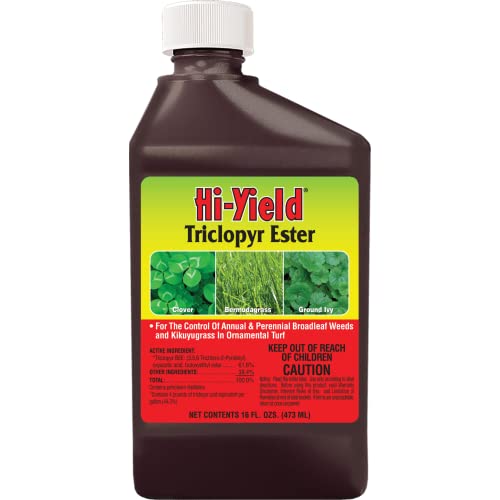
Hi-Yield (35262) Triclopyr Ester 16 oz
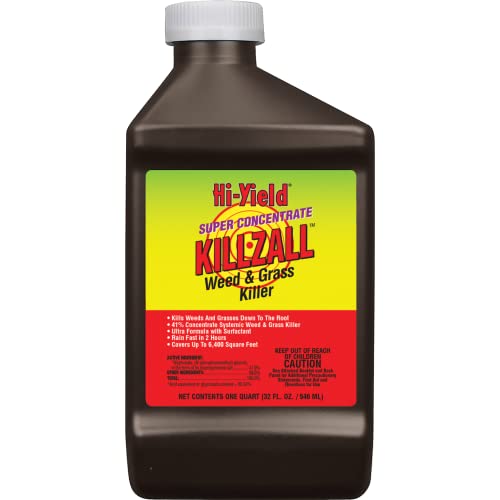
Hi-Yield (33692) Super Concentrate Killzall 32 oz
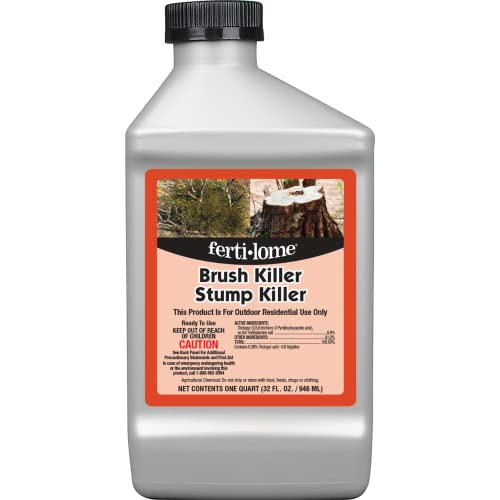
Fertilome (11485) Brush Killer & Stump Killer 32 oz

Southern AG 01113 Brush Weed Killer 32 oz

Roundup Poison Ivy Plus Tough Brush Killer2 32 oz
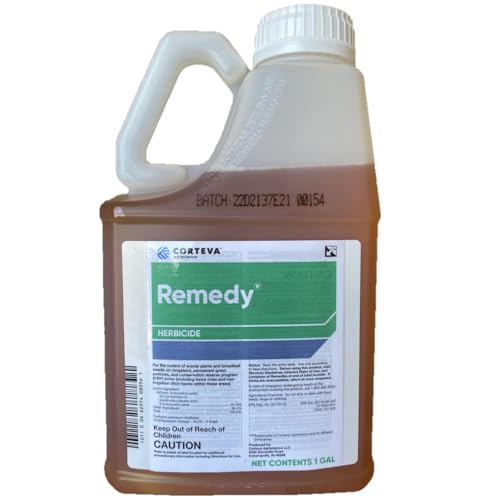
Remedy Specialty Herbicide Triclopyr Concentrate 1 Gallon
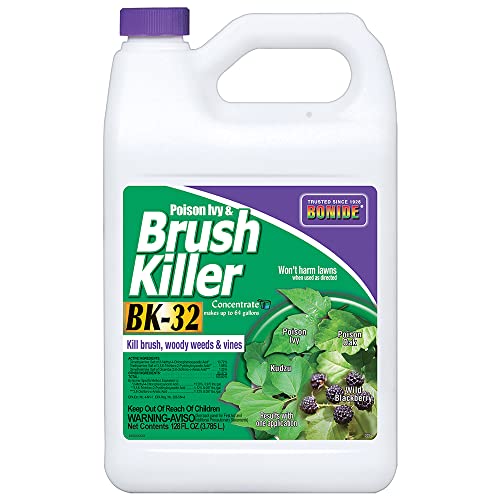
Bonide 332 Herbicide Poison Ivy & Brush Killer 128 oz

Hi-Yield 11484 Brush Killer Stump Killer 16 oz
Taking A Closer Look At The Options
Triclopyr ester is the workhorse active ingredient behind most professional stump treatments, and Hi-Yield’s 16 oz concentrate delivers that chemistry in a homeowner-friendly bottle. Unlike the broad-spectrum Killzall listed just below, the triclopyr ester here targets broadleaf weeds and woody plants without wiping out your cool-season turfgrass. In real terms, that means you can spray around ornamental beds and lawns where you want grass to survive, while still wiping out invasive vines and brush seedlings.
Homeowners dealing with a half-dozen cut stumps scattered across a quarter-acre lot find this size hits a sweet spot between coverage and concentration. The liquid concentrate also doubles as a bluegrass suppressor, which is a niche but useful trick for lawn renovation. You may find the small bottle limiting on multi-acre properties, where larger formats make more sense.
Key Advantages
- Triclopyr ester chemistry, the same active ingredient trusted for professional stump work
- Safe to use on perennial bluegrass, ryegrass, and tall fescue lawns without killing the turf
- Liquid concentrate mixes cleanly for either foliar spray or direct stump application
- Compact 16 oz size is approachable for first-time users with only a few stumps
- Doubles as a bluegrass suppressor for lawn renovation projects
Things To Consider
- Not suited for warm-season grasses like St. Augustine, Bermuda, or Centipede
- 16 oz bottle runs out quickly on properties with more than a handful of stumps
- Storage in a dry, shaded spot extends shelf life between treatment seasons
Best Suited To
Cool-season lawn homeowners managing a small batch of cut stumps and broadleaf weeds like wild violet.
Where Another Pick Suits Better
Large acreage and pasture owners get better value from Remedy Specialty Herbicide Triclopyr Concentrate 1 Gallon, which scales to fence-row projects.
Killzall is a non-selective glyphosate-style herbicide, which means it treats the entire plant rather than targeting just broadleaf species. That makes it useful in two distinct stump-treatment scenarios: foliar spraying of brush and grasses you want completely cleared, and direct application to fresh-cut stumps in areas where no desirable vegetation is nearby. The double-surfactant formula helps the active ingredient dry onto plant surfaces quickly and start moving through the tissue.
A 32 oz bottle covers roughly 6,400 square feet when used as a foliar spray, which is enough for a typical suburban lot prep job. For stump-specific work, the coverage math shifts entirely toward how many stumps you cut and how carefully you brush the cambium ring. Owners commonly report that careful brushing on freshly cut stumps gives the best kill, so timing matters as much as bottle size.
The Practical Payoff
- Non-selective action handles brush, grass, and woody species in one product
- Double-surfactant blend helps the active ingredient absorb and start working fast
- One 32 oz bottle covers up to 6,400 square feet of foliar treatment
- Works for both leaf spray and direct stump brushing applications
Honest Caveats
- Cannot be used on lawns, since the non-selective chemistry kills any grass it contacts
- Drift onto ornamentals is a real risk on windy days, so calm conditions help
- For dedicated woody-stump work, the triclopyr ester options in this list may outperform it
Feature Snapshot
Right Fit For
Homeowners clearing bare-ground areas and treating fresh stumps where no turf needs preserving.
Swap It Out When
Lawn-friendly stump work in cool-season turf fits Hi-Yield (35262) Triclopyr Ester 16 oz better, since Killzall kills grass on contact.
Fertilome’s dual-action formula is one of the more straightforward choices for a homeowner who needs to handle both standing brush and freshly cut stumps in the same project. Apply it undiluted with a brush onto the cut surface for stump work, or mix 8 oz per gallon of water and spray the foliage for brush control. That flexibility means you can grab one bottle for a weekend cleanup that involves both a vine-choked fence line and a couple of saplings you finally cut down.
The critical timing window for stump application is within 45 minutes of cutting, which is a common rule across most dedicated stump killers. Treat the cut surface promptly, coat the cambium ring around the outside, and you give the active ingredient the best possible path into the vascular system. Compared with Hi-Yield’s Killzall above, this formula is selective to woody plants and won’t kill surrounding turfgrass at foliar rates.
What Stands Out
- One bottle handles both brush spraying and undiluted stump application
- Selective to woody plants, so it spares lawn grasses at recommended foliar rates
- 32 oz size covers multiple small-to-medium stumps per season
Points To Note
- The 45-minute cut-to-treatment window is unforgiving during long cutting sessions
- Paintbrush is not included, so you supply your own applicator
- Mix ratios and timing vary between stump and foliar use, so reading the label matters
Made For
Homeowners managing a weekend project that mixes cut stumps with standing brush regrowth.
Consider Something Else When
Pasture owners clearing acres of brush and encroaching trees get more volume per dollar from Remedy Specialty Herbicide Triclopyr Concentrate 1 Gallon.
Southern AG markets this quart for non-crop areas like road right-of-ways, rangeland, pastures, and fence rows, which tells you exactly where it shines. The 8.8% triclopyr formulation matches the active ingredient profile of well-known brush products, so the chemistry is familiar to anyone who has treated invasive species before. For cut stump work, that same triclopyr base moves into the cambium and root collar to suppress resprouting.
The label calls for foliar spray mixes in the 4-8 oz per gallon range, which gives flexibility based on how stubborn the target species is. Hard-to-control vines and woody brush respond to the higher end of that range. Homeowners with suburban lots may find this formula more than they need, but small-acreage owners dealing with persistent regrowth along fence lines get a useful tool here.
Where It Delivers
- 8.8% triclopyr matches the active ingredient of widely used professional brush products
- Labeled for rangeland, pastures, fence rows, and other non-crop areas
- Effective on tough species including vines, stump sprouts, and invasive brush
- Adjustable mix ratio from 4 to 8 oz per gallon for varying weed pressure
Trade Offs
- Quart size is small for multi-acre pasture projects
- Pasture use requires care around desirable forage species and grazing timing
- Applicator and brush are not included with the bottle
Quick Facts
Perfect Match For
Small-acreage owners and rural homeowners fighting vine regrowth and persistent stump sprouts along fence lines.
Reach For A Different Pick When
Large pasture restoration projects get better gallon-scale value from Remedy Specialty Herbicide Triclopyr Concentrate 1 Gallon.
Roundup’s Tough Brush Killer2 formula targets the species homeowners most dread, including poison ivy, poison oak, poison sumac, wild blackberry, and kudzu. That’s a meaningful difference from a generic brush killer, since those vines are notoriously resilient and demand a chemistry built specifically to handle them. For someone who has tried weaker products on poison ivy only to see it return within a season, this formulation is worth the upgrade.
The rainproof window and replant window both matter when you are working in a backyard where rain or replanting comes quickly. Rainfall soon after application typically reduces effectiveness, so a fast rainproof time lets you spray with confidence when the forecast looks uncertain. Compared with the triclopyr options above, this one leans more toward residential brush control than dedicated stump treatment, though it still supports cut-surface application on smaller stumps.
Noteworthy Benefits
- Built specifically for poison ivy, poison oak, poison sumac, kudzu, and wild blackberry
- Rainproof window tight enough for unpredictable summer weather
- Visible results appear within hours of application
- Replant window of 1-30 days for follow-up plantings in treated areas
Room For Improvement
- Less specialized as a dedicated stump killer than triclopyr ester options above
- Concentrate mixing requires careful measurement for foliar applications
- Brand-name pricing typically runs above generic triclopyr concentrates
Whose Shelf It Belongs On
Suburban homeowners with recurring poison ivy and tough vine problems who want fast visible results.
Look Elsewhere When
Dedicated cut-stump projects with multiple large hardwood stumps are better served by Fertilome (11485) Brush Killer & Stump Killer 32 oz.
Remedy is the option that scales. The one-gallon jug is built for pasture restoration, fence-row maintenance, and large property brush encroachment, situations where a 16 oz or 32 oz bottle simply runs out mid-project. Its triclopyr chemistry works through both top growth and root systems, which is what you need when mid-size trees and woody brush have gotten a foothold in grazing acreage.
The low-odor profile sets it apart from harsher ester formulations, which matters when you’re mixing and spraying near livestock areas or family spaces. Remedy also functions as a tank-mix partner, which experienced users appreciate when building custom brush-control blends. Compared with the consumer-grade options earlier in this list, Remedy requires more label discipline and proper protective equipment, but rewards careful applicators with professional-level results.
Good Reasons To Consider
- One-gallon format covers fence rows and pasture restoration without constant refills
- Low-odor formulation is more pleasant to mix and apply than ester-heavy alternatives
- Works through both top growth and root systems for thorough control
- Tank-mix compatible with GrazonNext and ForeFront HL for custom applications
- Selective brush and mid-size tree control keeps desired grasses intact
Practical Considerations
- One-gallon size is overkill for typical suburban lots
- Pasture use requires attention to grazing intervals and label restrictions
- Proper protective equipment is essential when handling concentrate at this scale
- Storage in a locked, ventilated space is recommended between applications
Feature Rundown
Built With In Mind
Ranchers, hobby farmers, and acreage owners reclaiming pasture from encroaching brush and trees.
Skip It When
Backyard homeowners with just one or two cut stumps get more practical sizing from Hi-Yield 11484 Brush Killer Stump Killer 16 oz.
Bonide’s 128 oz jug is the largest consumer-grade format in this roundup, and it targets the same tough species Roundup covers, including poison ivy, poison oak, kudzu, wild blackberries, and broadleaf weeds. The advantage is the gallon-plus volume, which keeps you from running out mid-treatment when you have a long fence line or a property with persistent vine pressure. Used undiluted and brushed onto freshly cut stumps, it also handles tree removal follow-up.
The label lists compatibility with Bluegrass, Fescues, Rye, Bent, Bermuda, Bahia, and Zoysia lawns, which gives you broader turfgrass compatibility than many brush killers. For stump work specifically, that means you can treat cut stumps in the middle of a lawn without worrying about accidental turf kill from brush contact, as long as you apply carefully. Owners commonly report that the larger container pays for itself once you have more than a handful of cut stumps to handle.
Useful Highlights
- 128 oz size handles multiple cut stumps and large brush jobs from one container
- Targets over 240 tough weed species including woody vines and brush
- Compatible with most major turfgrass types at recommended rates
- Doubles as a stump killer when brushed onto fresh-cut surfaces undiluted
- Designed to kill roots and all, reducing regrowth from treated stumps
Points To Keep In Mind
- Large jug requires storage planning to keep it stable and sealed between uses
- Heavier container is harder to handle during mixing than quart formats
- Brush application requires a separate paintbrush purchase
The Right Fit
Homeowners with multiple cut stumps and recurring vine problems across a half-acre or larger property.
A Better Fit Elsewhere
Single-stump cleanups in small yards fit Hi-Yield 11484 Brush Killer Stump Killer 16 oz better, since the smaller bottle is easier to store.
Hi-Yield’s 11484 is purpose-built for the simplest version of the stump-treatment job: cut the tree, brush the product on undiluted, walk away. No mixing, no calibration, no tank to rinse afterward. For homeowners who only need to handle one or two stumps per year, the 16 oz bottle delivers exactly what’s needed without the complexity of larger concentrate systems. Vine control works the same way: cut the vine first, then treat the cut surface like a stump.
Triclopyr is the active ingredient, matching the chemistry used in professional applications. The label covers non-crop areas around homes, cabins, buildings, trails, and fences, which covers most residential scenarios. Compared with the dual-action Fertilome option earlier, this is a single-purpose formula, so it’s less useful for foliar brush spraying but more focused on getting stump work done right.
What Pays Off
- Ready-to-use undiluted formula removes mixing steps from the job
- Triclopyr chemistry matches the active ingredient used in professional stump work
- Small 16 oz size stores easily in a garden shed or garage
- Effective on woody plants, vines, and poison ivy around residential structures
Worth Bearing In Mind
- Not designed for foliar brush spraying, so it’s a single-purpose purchase
- Coverage per bottle is limited, so multi-stump properties need multiple containers
- Paintbrush applicator is not included with the bottle
Who Should Grab It
Homeowners with a single freshly cut stump and no interest in mixing concentrates or scaling up to foliar spraying.
Not Your Match When
Properties with both standing brush and cut stumps benefit more from Fertilome (11485) Brush Killer & Stump Killer 32 oz, which handles both modes.
Matching The Right Herbicide To Your Stump Job
Choosing a stump herbicide comes down to matching the product’s strengths to your property’s specific conditions. Start by identifying whether your project is purely a cut-stump job, or whether you’re also fighting standing brush and vines at the same time. Dual-action formulas save money when both situations exist, while dedicated stump killers tend to deliver cleaner results when cut-stump work is the only priority.
Active Ingredient And Target Species
Triclopyr is the most common active ingredient across this category, and it’s effective on woody plants, vines, and broadleaf weeds. Glyphosate-based products (like Hi-Yield Killzall) work as non-selective options that kill any plant they touch, which is useful for total clearing but risky near desirable turf. Brush killers built around triclopyr or selective broadleaf chemistry preserve lawn grasses when used at foliar rates, which matters for suburban lots with established turf.
Application Timing And Cut Surface Prep
Cut-stump herbicides work best when applied within minutes of cutting, since the cut surface begins to dry and seal off vascular pathways as time passes. Products like Fertilome’s brush-and-stump killer specify a 45-minute window for best results. Plan your cutting and treating as a coordinated sequence rather than two separate tasks spread across a day.
Site Restrictions And Turf Compatibility
Always check whether the product is labeled for your specific turf type before any foliar application. Cool-season grasses (bluegrass, ryegrass, fescue) tolerate most triclopyr formulations, while warm-season grasses (Bermuda, St. Augustine, Centipede, Zoysia) have stricter label restrictions. Pasture and rangeland products like Remedy and Southern AG carry grazing interval requirements that matter if livestock use the property.
Key Considerations Across These Picks
Pitfalls Shoppers Hit
The most common buying mistake in this category is picking a non-selective glyphosate product when you actually need a selective woody-plant formula. The reverse also happens: someone buys a brush killer designed for foliar spraying, then realizes it doesn’t perform well on cut stumps without undiluted brush application. Reading the label for “cut stump” instructions specifically, not just “brush control” language, saves a wasted season of regrowth.
What The Higher Tier Buys
A one-gallon concentrate like Remedy Specialty Herbicide costs more up front, but pays back quickly on properties with multiple fence rows and recurring brush pressure. The higher tier also buys lower odor, easier mixing, and professional-grade concentration that handles mid-size trees alongside brush. For small backyard jobs, that upgrade is overkill, so match the size to the scope rather than assuming bigger means better.
