

Ground ivy, often called creeping Charlie, slips through lawns with quiet stubbornness, sending out runners that root at every node and crowd out turfgrass. The right herbicide can stop the spread without damaging desirable grass, but choosing the wrong product on the wrong lawn type can leave you with brown patches and a still-thriving weed.
The picks below cover cool-season lawns, total vegetation control, and everything in between. Each option is matched to a specific situation, so matching the product to your grass type and patch size matters more than brand loyalty.
A Closer Look At The Lineup

Hi-Yield Triclopyr Ester, 8 oz
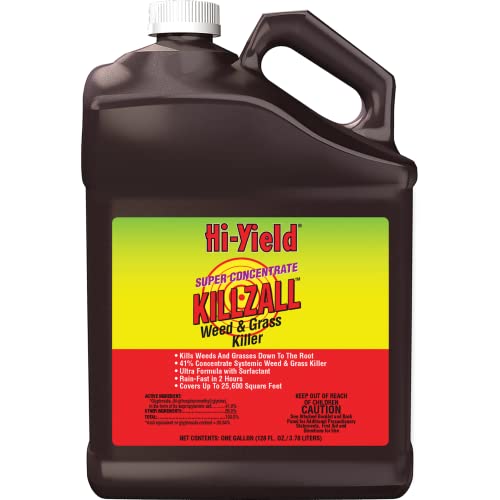
Hi-Yield Killzall Weed & Grass Killer, 1 gal
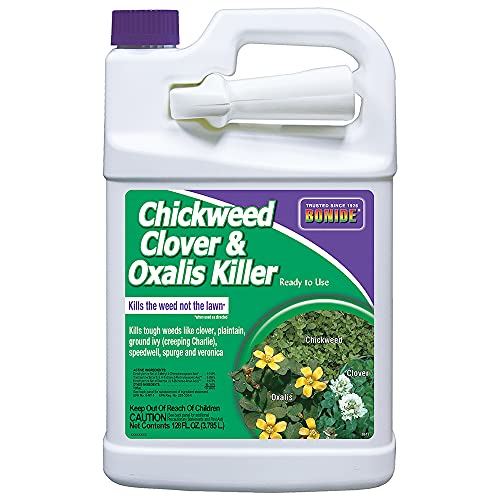
Bonide Chickweed, Clover & Oxalis Killer, 128 oz

Roundup Dual Action 365 Weed & Grass Killer + Preventer, 1.33 gal.

Ortho GroundClear Weed & Grass Killer Super Concentrate, 32 fl. oz.

Southern AG 01113 Brush Weed Killer, 1 Quart

Roundup Poison Ivy Plus Tough Brush Killer Concentrate, 32 fl. oz.

Roundup Weed & Grass Killer Concentrate, 1 gal.
What Each Pick Brings To The Table
Triclopyr is one of the few active ingredients that actually moves through ground ivy’s waxy leaves and reaches its sprawling root network, making it a go-to for cool-season turf. The 8 oz bottle is a liquid concentrate that you dilute with water and spray across affected patches, and it doubles as a Kentucky bluegrass suppressor if your lawn has shifted toward bluegrass dominance.
Homeowners with perennial ryegrass or tall fescue lawns tend to get the cleanest results here, since those grass types tolerate triclopyr far better than warm-season varieties. Always confirm your grass species before mixing, because the label flags several turfgrasses it should never touch.
Key Advantages
- Triclopyr targets the same broadleaf class as ground ivy, clover, and wild violet, so one product handles multiple lawn invaders.
- The 8 oz liquid concentrate format stretches across several mid-size lawn treatments when properly diluted.
- Approved for perennial bluegrass, perennial ryegrass, and tall fescue ornamental turf, the three most common cool-season lawn grasses.
- Doubles as a bluegrass suppressor for lawns where desirable bluegrass has overtaken other species.
Things To Consider
- Cannot be used on Bahiagrass, Bentgrass, Bermudagrass, Centipedegrass, St. Augustine, or Zoysiagrass, so warm-season lawns should look elsewhere.
- Mixing accuracy matters, and over-application can stress even tolerant turf during hot weather.
Feature Snapshot
Who It Suits Best
Homeowners with cool-season turf fighting entrenched ground ivy and other broadleaf weeds will find this concentrated option practical and lawn-compatible.
Look Elsewhere When
Warm-season lawn owners should consider Bonide Chickweed, Clover & Oxalis Killer instead, since its formulation is gentler on southern turf types.
This gallon jug sits on the opposite end of the spectrum from the small triclopyr bottle: it is a non-selective herbicide designed to clear every plant it touches. The double-surfactant formula helps the spray spread evenly across leaf surfaces and dries quickly, which speeds absorption into ground ivy foliage.
Where it earns its place is renovation projects and bare-ground reclamation. A single gallon covers a sizable area, so property owners prepping gravel driveways, fence lines, or overgrown corners before reseeding can finish the job in fewer refills.
Noteworthy Benefits
- The single gallon treats a large footprint, ideal for property-wide clearing and prep work.
- Double-surfactant blend improves coverage on waxy ground ivy leaves and reduces product runoff.
- Targets grasses, broadleaf weeds, and woody brush in one pass.
- Liquid concentrate format mixes easily for pump sprayers.
Worth Noting
- Do not use on lawns, since it will damage or kill any turfgrass it contacts.
- Storage in a sealed, labeled container away from pets and children is widely recommended for any non-selective concentrate.
Who Should Grab It
Landowners and homeowners doing full vegetation resets on driveways, fence rows, or empty beds will appreciate the bulk format and fast absorption.
Skip It When
Anyone needing to keep surrounding grass alive should reach for Hi-Yield Triclopyr Ester instead, since it is selective rather than total.
Bonide’s ready-to-use jug removes every barrier between you and treatment, since there is no measuring, mixing, or extra sprayer to clean. The label specifically lists ground ivy among more than 100 tough broadleaf weeds it targets, alongside chickweed, clover, dandelions, oxalis, and wild violet.
Residential turf is the intended setting, so the formulation is designed to travel down through ground ivy roots without destroying the surrounding lawn when applied as directed. It begins working overnight, which makes short work of patchy infestations in mild spring or fall weather.
Where It Excels
- Ground ivy is explicitly named on the label, which removes guesswork for homeowners.
- Pre-mixed format means no measuring mistakes and no leftover concentrate to store.
- Systemic action carries herbicide into the root zone for longer-lasting control.
- The 128 oz bottle covers multiple treatments across a typical suburban lawn.
Minor Gripes
- Ready-to-use weight is heavier than a concentrate equivalent, so hauling it around a yard can be tiring.
- Effectiveness depends on catching ground ivy during active growth, so timing matters.
Feature Card
Right Fit For
DIYers who want a grab-and-spray product without measuring cups or extra equipment will find the format genuinely easier than concentrates.
Reach For A Different Pick When
If your infestation spans well beyond a typical yard and you want bulk concentrate pricing, the Hi-Yield Killzall gallon is the better value.
Roundup’s Dual Action 365 is built around a two-stage promise: kill what’s actively growing, then keep new weeds from breaking through for an extended window. The Pump ‘N Go 2 sprayer is included on the bottle, so application does not require any separate equipment.
Ground ivy is a stubborn perennial that regenerates from runners, so a residual barrier matters as much as the initial burn-down. This jug fits driveways, patio edges, gravel paths, and other spots where you want months of low maintenance rather than monthly retreatments.
Advantages To Know
- Kills actively growing weeds and prevents new germination for an extended period.
- Targets broadleaf weeds, grassy weeds, and brush species in a single product.
- Rainproof quickly after spraying, which reduces wash-off concerns.
- Includes a Pump ‘N Go sprayer, so no extra gear is required.
Room For Improvement
- Long residual activity means you cannot replant treated areas for an extended stretch, which matters near flower beds.
- Total vegetation control means overspray will damage lawn grass and ornamentals.
Feature Rundown
Best Suited To
Homeowners who want fewer repeat treatments on driveways, gravel areas, or bare-soil zones will benefit most from the kill-plus-prevent approach.
Not Your Match When
If you need to preserve lawn grass and treat selectively, Bonide Chickweed, Clover & Oxalis Killer is the lawn-friendly alternative.
Ortho’s super concentrate is built for homeowners who want fast results around established landscape features. The label lists clover, dandelion, oxalis, chickweed, crabgrass, and several other broadleaf and grassy weeds as targets, and it works through plant roots for a complete kill rather than just leaf burn.
Application around trees and shrubs is part of the intended use pattern, making this a natural pick for mulched rings and foundation beds where ground ivy creeps in from the lawn edge. Rainfast timing lands well within typical spring weather windows, so a sudden shower is less likely to waste your spray.
Real Benefits
- Root-kill action reaches the rhizomes that allow ground ivy to return season after season.
- Suitable for use around trees and shrubs when applied as directed.
- Concentrate format dilutes for tank sprayers and stretches a single bottle across many treatments.
- Rapid rainfast window after application protects the spray from being washed away.
Small Caveats
- Like most non-selective herbicides, overspray will damage lawn grass and ornamental foliage.
- Mixing ratios must be followed carefully, since over-concentration can leave soil residue.
Quick Facts
Whose Shelf It Belongs On
Homeowners treating ground ivy along mulched rings, fence lines, and walkway cracks will find the fast rainfast timing and tree-safe labeling practical.
Consider Something Else When
If your priority is preserving turfgrass while treating patches, Hi-Yield Triclopyr Ester offers selective cool-season control instead.
Southern AG’s brush killer borrows the same active chemistry found in Garlon, with triclopyr doing the heavy lifting against vines, woody plants, and stubborn perennial weeds. The quart bottle is sized for property-scale jobs on non-crop land, and the formulation doubles as a stump-spray treatment to prevent resprouting.
Ground ivy is a less obvious target here, but the same active ingredient that controls vines and brush is effective against creeping broadleaf perennials on rural lots. Pastures, fence rows, and right-of-way edges are the natural fit, especially where mowing alone never keeps up.
What Earns Its Place
- Triclopyr-based formula targets vines, brush, and tough perennial weeds with one product.
- Functions as both a foliar spray and a stump treatment for long-term control.
- Quart concentrate format covers sizable acreage with sensible dilution rates.
- Designed for non-crop areas like pastures and fence rows.
Honest Caveats
- Not intended for residential lawn use, since surrounding grass can be damaged by triclopyr at brush-killing rates.
- Quart concentrate requires careful storage and clear labeling away from children and pets.
Made For
Rural property owners maintaining pastures, fence lines, or right-of-way edges will get targeted brush control without paying for residential lawn-grade products.
A Better Fit Elsewhere
Suburban homeowners fighting ground ivy in an actual lawn should consider Bonide Chickweed, Clover & Oxalis Killer for lawn-safe spot treatment.
This Roundup concentrate leans into the toughest perennial plants, with a formula that pushes herbicide deep into roots. Although the name highlights poison ivy, the same active package handles wild blackberry, kudzu, and ground ivy’s sprawling runner system with comparable effectiveness.
Concentrate format means one bottle covers multiple applications around yard edges, fence lines, and brushy borders. Rainfast timing within about half an hour of application helps the treatment stick when weather windows are narrow.
Well-Handled Touches
- Root-kill action targets the deep runner network that lets ground ivy return each year.
- Tough-brush formulation handles poison ivy, kudzu, wild blackberry, and similar perennials in one jug.
- 32 fl. oz. concentrate stretches across many spot treatments when properly diluted.
- Replanting timeline after application is shorter than long-residual products.
Points To Note
- Non-selective at effective rates, so careful spot spraying around desirable plants is essential.
- Mixing accuracy matters, and concentrate requires a dedicated sprayer to avoid cross-contamination.
Perfect Match For
Property owners with mixed infestations of ground ivy, poison ivy, and woody brush will appreciate one product handling several persistent perennials.
Another Choice May Suit
Homeowners treating ground ivy without surrounding brush pressure may find Roundup Weed & Grass Killer4 Concentrate simpler and more economical.
The one-gallon Weed & Grass Killer Concentrate is the workhorse option on this list, designed for homeowners who want broad-spectrum control across sizable yard areas. Dandelion, large crabgrass, poison ivy, clover, spotted spurge, and other broadleaf weeds all fall within its labeled range.
Ground ivy fits comfortably within that broadleaf category, though you would treat it as part of a larger cleanup rather than a targeted lawn application. Replanting windows are short enough that reseeding a cleared patch the same season is realistic, which is useful when ground ivy has overtaken a corner you want to reclaim.
Positive Points
- Multi-weed coverage handles ground ivy alongside crabgrass, clover, and other common invaders.
- Root-kill action stops regrowth from surviving rhizomes after the initial burn-down.
- Rapid rainfast window after application protects the spray investment.
- Replanting window is shorter than long-residual herbicide products.
Points To Keep In Mind
- Non-selective, so accidental overspray will damage lawn grass and ornamentals.
- Gallon concentrate requires secure storage and a clean dedicated sprayer to avoid residue transfer.
Who Will Love This
Homeowners tackling broad yard cleanups and reseeding projects will appreciate the wide weed spectrum and reasonable replanting timeline.
Where A Sibling Pick Shines
For selective ground ivy treatment without damaging lawn grass, Hi-Yield Triclopyr Ester is the smarter cool-season choice.
Picking The Right Ground Ivy Herbicide For Your Lawn
Ground ivy control comes down to three decisions: which grass you’re trying to save, how large the infestation is, and whether you want to keep replanting nearby. Cool-season lawns like Kentucky bluegrass, perennial ryegrass, and tall fescue tolerate selective herbicides built around triclopyr, which moves through the plant and reaches the runner network that makes ground ivy so persistent. Warm-season lawns need different chemistry or careful spot treatment, since many of the toughest herbicides will also damage Bermudagrass, Zoysiagrass, and Centipedegrass.
Know Your Grass Before You Spray
Identifying your turfgrass is the single most important step before buying any herbicide. A product that nails ground ivy in a fescue lawn can wipe out a St. Augustine lawn in the same yard. The label always lists safe and unsafe grass species, and reading that section first prevents costly mistakes that show up as yellow or brown patches weeks later.
Match Product Format To Your Workflow
Liquid concentrates cost less per treated area but require mixing, a sprayer, and basic cleanup. Ready-to-use jugs trade a higher price for grab-and-spray convenience, which matters for spot treatment and smaller yards. If your infestation spans hundreds of square feet, concentrate almost always wins on value, while a single bottle of ready-to-use covers most one-off patch jobs.
Decide Whether You Need A Residual Barrier
Ground ivy spreads from runners and seeds, so killing the visible plant is only half the job. Non-selective products with extended prevention keep new weeds from emerging for months, which is great for driveways and gravel but problematic near flower beds or future seeding areas. Selective herbicides without residual activity let you replant sooner but may require follow-up treatments.
Time The Application With Active Growth
Ground ivy responds best when it is actively growing and pushing out new leaves, typically spring or fall in most climates. Spraying during summer dormancy or winter quiescence wastes product because the plant is not moving herbicide through its tissues. A mild, overcast day with no rain in the forecast gives the spray time to dry and start working before weather interferes.
Key Considerations Across These Picks
Pitfalls Shoppers Hit
The most common mistake is treating the wrong grass type with the wrong herbicide, which shows up as yellow patches weeks later. Skipping the patch test on a small corner of the lawn is another slip, since even labeled-safe products can stress turf in unusual conditions. Finally, spraying during dormancy or right before rain wastes product and gives ground ivy a chance to recover.
What The Higher Tier Buys
Premium concentrates add dual-surfactant chemistry that helps spray spread across waxy ground ivy leaves and absorb faster. Higher-tier jugs often include better sprayer hardware, longer rainfast windows, and broader weed spectrums that cover poison ivy and brush alongside broadleaf weeds. For properties with mixed infestations, that extra coverage saves buying two separate products and simplifies treatment timing across the season.
Frequently Asked Questions
What Is The Best Time Of Year To Treat Ground Ivy?
Ground ivy responds best when actively growing, so spring and fall applications typically outperform summer or winter spraying. Mild temperatures and new leaf growth help herbicide move through the plant to the roots.
Will These Herbicides Harm My Lawn Grass?
Selective herbicides built around triclopyr or similar broadleaf-specific chemistry target weeds while leaving labeled turfgrass types unharmed. Non-selective herbicides will damage any plant they contact, including your lawn, so careful spot application matters.
How Long Does It Take To See Results?
Most broadleaf herbicides show visible yellowing and wilting within days, with full kill taking a couple of weeks. Ground ivy can require repeat treatments because its runners store energy that lets it regrow from surviving sections.
Can I Replant The Area After Treatment?
Replanting timelines depend on the product, but many selective herbicides allow reseeding within a few weeks. Long-residual products extend that window to months, so always check the label before planning any new seeding.
Do I Need A Special Sprayer For Concentrates?
A basic pump sprayer works for most concentrate products, but dedicating one sprayer to herbicides prevents residue from damaging desirable plants later. Clean the tank thoroughly between uses to avoid cross-contamination.
Bottom Line
Ground ivy is stubborn, but the right herbicide matched to your grass type turns a recurring frustration into a manageable chore. Cool-season lawns benefit most from selective triclopyr products, while total vegetation control belongs on driveways, fence lines, and renovation projects rather than in the lawn itself. Matching the product to the situation is what gets ground ivy out and keeps your grass intact.
