

Crepe myrtles look graceful in bloom, yet their root systems love to throw up volunteers along fence lines, driveway edges, and lawn borders. Choosing the right herbicide matters because a weak broadleaf formula only scorches the leaves while the crown keeps sending up fresh shoots. The eight products below run the gamut from brush killers built for woody stems to total vegetation controls for spot treatment in non-lawn areas. Each entry fits a slightly different situation, so match the chemistry to where the suckers actually grow.
The Main Contenders
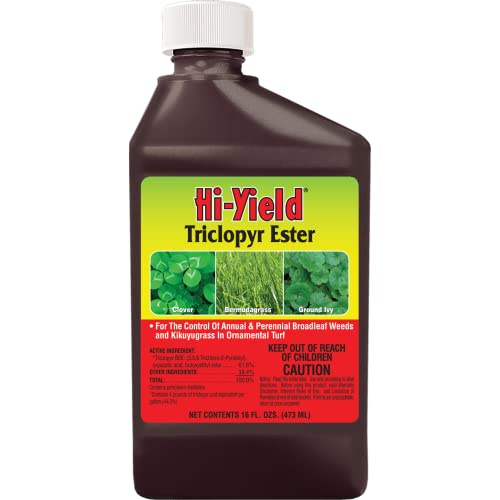
Hi-Yield Triclopyr Ester, 16 oz
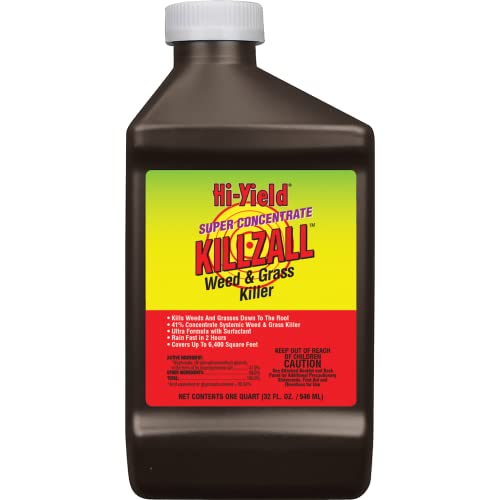
Hi-Yield Killzall Weed & Grass Killer (32 oz)
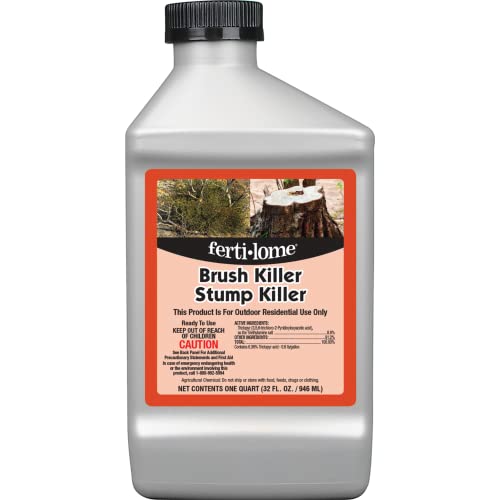
Fertilome Brush Killer & Stump Killer, 32 oz

Roundup Dual Action 365, 1.33 gal.

Spectracide Weed Stop For Lawns Plus Crabgrass, 32 oz

Southern AG 01113 Brush Weed Killer, 32 oz

Roundup Poison Ivy Plus Tough Brush Killer2, 32 oz
Roundup Pro Herbicide, 2.5 Gal.
Taking A Closer Look At The Options
Crepe myrtle shoots that pop up inside an existing lawn are the trickiest case, and that is exactly where Hi-Yield Triclopyr Ester earns its keep. Triclopyr is a selective herbicide (meaning it targets certain plant groups while leaving others alone) that mimics natural plant hormones, so susceptible broadleaf plants and woody growth twist, curl, and die while labeled turfgrasses keep growing.
The 16 oz liquid concentrate goes a long way in a typical backpack or pump sprayer, and for homeowners tired of slicing crepe myrtle suckers with pruners every other week, foliar application in late summer often pushes the herbicide down into the root zone for a cleaner kill. Unlike the total vegetation products later in this list, this one is built for lawns rather than gravel.
Where It Helps
- Targets actively growing broadleaf weeds such as Oxalis and Wild Violet without harming listed turf types.
- Approved for perennial bluegrass, perennial ryegrass, and tall fescue lawns, the three grasses most homeowners actually grow.
- Liquid concentrate mixes cleanly into a standard pump sprayer, so you avoid heavy jugs and foaming.
- Same active ingredient is also labeled as a bluegrass suppressor for spot reshaping along borders.
Things To Consider
- Labeled for lawn use only on cool-season turf; warm-season grasses like Bermuda or St. Augustine can be damaged or killed.
- Foliar uptake depends on actively growing weeds with healthy leaf area, so applications on drought-stressed plants tend to underperform.
- Smaller 16 oz bottle is a poor match for properties with widespread brush along miles of fence.
Feature Snapshot
Made For
Cool-season lawn owners who need to wipe out crepe myrtle suckers without scarring the surrounding turf.
Consider Something Else When
Suckers growing in a gravel driveway or cracked patio are a better match for Roundup Dual Action 365, which is built for non-lawn surfaces.
For bare-soil edges, fence lines, and overgrown corners where crepe myrtle seedlings pop up alongside other weeds, Hi-Yield Killzall works like a clean slate. It is a non-selective herbicide (one that kills nearly any green plant it contacts), so it treats whatever vegetation is in its path.
The double-surfactant formula (surfactants help the spray stick to waxy leaves and spread evenly) is the feature that sets Killzall apart from cheaper generics. Surfactants reduce the surface tension of water so droplets cling to leaves instead of beading off. Compared with the triclopyr option above, this one trades selectivity for raw coverage, which makes sense for spot work around hardscape and fencelines where you do not want anything green coming back.
The Case For It
- A single 32 oz bottle covers up to 6,400 square feet when diluted, so it stretches across most suburban side yards.
- Double-surfactant blend dries on foliage quickly and starts working the moment it sets.
- Handles grasses, broadleaf weeds, and woody brush in the same tank mix.
- Pour-and-measure bottle is easier to dose accurately than wide-mouth jugs.
Worth Noting
- Labeled only for non-lawn areas; a single drift event onto Bermuda or fescue can scorch a wide strip of turf.
- No residual activity, so freshly turned soil will sprout new weeds within weeks without a follow-up.
- Requires careful rinsing of sprayers before switching to any turf-safe product later in the season.
Right Fit For
Homeowners clearing neglected fence lines or garden edges where crepe myrtle seedlings sprout next to mixed brush.
Look Elsewhere When
Crepe myrtle suckers in the middle of a bluegrass lawn call for the selective chemistry of Hi-Yield Triclopyr Ester instead.
Once a crepe myrtle has been cut down and the stump keeps sprouting, foliar sprays alone rarely finish the job. Fertilome Brush Killer & Stump Killer handles both stages: a freshly cut stump gets treated straight from the bottle, and a leafy brush gets a diluted spray on the foliage.
The label recommends applying to cut stumps within 45 minutes of sawing, a window that catches the open vascular tissue before it seals over. Compared with the Hi-Yield Killzall covered above, this one focuses on woody growth rather than mixed weed patches, so it is the right tool when the priority is shutting down a parent root system that keeps throwing suckers across the lawn.
What It Does Well
- Doubles as a stump treatment and a foliar brush spray, which keeps the shed stocked with one bottle instead of two.
- Brush application mix is straightforward: 8 oz of concentrate per gallon of water.
- Targets vines, hard-to-control brush, and woody regrowth that survives weaker herbicides.
- Concentrate format keeps shipping weight low for the coverage you actually get.
Points To Keep In Mind
- Stump treatment must happen within 45 minutes of cutting, so timing matters when felling larger trees.
- Brush application requires a separate sprayer dedicated to woody-plant herbicides.
- Not labeled for broadcast lawn use; overspray onto turf can leave dead patches.
Best Suited To
Homeowners removing a parent crepe myrtle and wanting to stop root suckers from regenerating for good.
Reach For A Different Pick When
You are treating brushy fence rows across pasture acreage, where Southern AG 01113 Brush Weed Killer is the more common professional choice.
Crepe myrtle volunteers that erupt in gravel drives, between pavers, or along the edge of a concrete walkway benefit from a product that kills what is there and stops the next wave from germinating. Roundup Dual Action 365 combines a contact-kill herbicide with a 12-month preventer in a single 1.33 gal jug.
The included Pump ‘N Go 2 Sprayer is the real convenience play here. You pressurize the tank, walk the driveway, and hit each cluster of suckers without hauling a separate pump sprayer. Compared with Hi-Yield Killzall reviewed earlier, this jug trades pure coverage volume for long residual control, which is why it earns a place on the list even though it is heavier to store.
Notable Upsides
- Kills existing weeds and prevents regrowth for up to 12 months on hard surfaces.
- Comes with a Pump ‘N Go 2 Sprayer, so you skip buying a separate applicator.
- Targets tough species including crabgrass, dandelion, clover, and poison ivy.
- Rainproof in roughly 30 minutes after spraying.
Honest Caveats
- The 1.33 gal container is awkward for one-handed pouring and needs a storage shelf.
- Preventer chemistry can leach into nearby garden beds during heavy rain, so buffer zones matter.
- Not safe for use on lawns or any area where you want plants to come back the following spring.
Key Specs
Who Should Grab It
Homeowners who want one product to clean gravel, pavers, and driveway edges and keep them clean through the next growing season.
Skip It When
Suckers are growing in the middle of a lawn, where Hi-Yield Triclopyr Ester protects the surrounding turf.
Most homeowner-grade weed killers treat either broadleaves or crabgrass, and switching products mid-season is a hassle. Spectracide Weed Stop For Lawns Plus Crabgrass Killer Concentrate handles both groups in a single 32 oz bottle, which matters when the lawn is hosting crabgrass and broadleaf weeds at the same time of year.
Crepe myrtle seedlings in a turf setting respond to the broadleaf component when they are young and still in active leaf push. Compared with Fertilome Brush Killer earlier in this list, this Spectracide concentrate is built for broadcast lawn application rather than spot woody treatment, which is why the two products serve different jobs.
Practical Advantages
- Combines broadleaf and crabgrass control so you do not mix two separate herbicides mid-summer.
- Concentrate format lets you adjust dilution rates for hose-end or pump sprayer use.
- Designed for use on home lawns, so labeled turf species are clearly listed on the bottle.
- 32 oz size is manageable for most walk-behind spreader or sprayer setups.
Trade Offs
- Young crepe myrtle shoots may need repeat applications once they harden off mid-summer.
- Limited reach against established woody trunks, which still call for a brush-killer product.
- Application window is narrow in hot climates because young turf can yellow under summer stress.
Perfect Match For
Cool-season lawn owners who want one bottle to manage crabgrass plus broadleaf weeds, including small crepe myrtle volunteers.
Where Another Pick Suits Better
Larger woody regrowth along fence rows is a stronger match for Roundup Poison Ivy Plus Tough Brush Killer2 Concentrate.
Rural lots and small-acreage homesteads rarely have the same lawn chemistry constraints as a suburban yard. Southern AG 01113 Brush Weed Killer was formulated for non-crop sites like fence rows, pasture edges, and roadway right-of-way, and it carries the same active ingredient as Garlon.
Crepe myrtles that have escaped the yard into an open pasture are exactly the situation this product is designed for. Compared with the Hi-Yield Killzall reviewed earlier, Southern AG adds residual root activity for woody species, which is why pasture owners often reach for it.
Well-Handled Touches
- Carries triclopyr at 8.8 percent, which is the same active chemistry used in the Garlon brand.
- Labeled for non-crop areas including pastures, rangeland, and fence rows.
- Effective on vines and many hard-to-control brush species that survive broadleaf herbicides.
- Foliar spray rate of 4 to 8 ounces per gallon scales easily to small sprayers.
Some Limits To Know
- Not labeled for use on residential lawns, so any drift into a backyard turf area is on you.
- Pasture use requires livestock withdrawal considerations, which vary by region.
- Brush kill timing typically runs from full leaf-out through early fall for best uptake.
Whose Shelf It Belongs On
Rural homeowners managing fence rows and pasture edges where crepe myrtle volunteers keep coming back.
A Better Fit Elsewhere
Suburban homeowners with a small lawn and a few landscape beds will find Roundup Poison Ivy Plus Tough Brush Killer2 easier to dose for spot work.
Crepe myrtle roots creeping under a fence and pushing up volunteer shoots next to a poison ivy patch is a familiar sight, and one bottle can handle both. Roundup Poison Ivy Plus Tough Brush Killer2 Concentrate mixes the tough-brush chemistry with rainfastness in about 30 minutes.
For homeowners, the appeal is the broad brush list on the label. Compared with Spectracide Weed Stop reviewed earlier, this Roundup targets woody vines and brush rather than turf weeds, so the two products are not interchangeable.
A Strong Showing
- Kills wiry vines and brush down to the root, not just top growth.
- Rainproof in roughly 30 minutes under typical conditions.
- Visible results often show within hours of application.
- Label allows replanting 1 to 30 days after treatment depending on what you intend to grow there.
Less Ideal Details
- Concentrate must be diluted, so a dedicated sprayer is part of the real cost.
- Not labeled for broadcast lawn use; spot treatment only around turf.
- Established crepe myrtle trunks may need a cut-stump follow-up for a complete kill.
Who Will Love This
Homeowners clearing fence-line creep where crepe myrtle roots invade alongside poison ivy and wild blackberry.
Swap It Out When
You want to treat cut stumps from a removed parent tree, where Fertilome Brush Killer & Stump Killer is purpose-built for that job.

Multi-acre lots, utility rights-of-way, and inherited estate properties often outgrow homeowner-sized jugs. Roundup Pro Herbicide ships as a 2.5 gal concentrate built for industrial, turf, ornamental, forestry, roadside, utility rights-of-way, and railroad vegetation management.
The trade-off is real commitment. The jug is heavy, the label assumes a calibrated boom or ATV sprayer, and storage becomes a small planning project. Compared with the Roundup Dual Action 365 reviewed earlier, this Pro version skips the 12-month preventer and trades residual activity for raw coverage on woody brush.
Practical Pluses
- Post-emergent concentrate handles annuals, perennials, woody brush, trees, and vines.
- 2.5 gal format covers large tracts without frequent refills.
- Water-soluble formula mixes with water or approved carriers.
- Labeled for the broadest set of non-crop and right-of-way sites of any jug in this roundup.
Where It Is Less Suited
- 2.5 gal jug is heavy to lift, pour, and store in a residential garage.
- Requires a properly calibrated sprayer for accurate coverage and minimal waste.
- Professional labeling means application rates and protective equipment requirements are stricter than homeowner products.
Feature Rundown
Built With In Mind
Landowners with multi-acre lots, inherited estates, or roadside frontage who already own a tractor- or ATV-mounted sprayer.
Not Your Match When
A small urban lot will do just fine with the 1.33 gal Roundup Dual Action 365 jug reviewed earlier in this guide.
What Matters Most Before Choosing Herbicides To Kill Crepe Myrtle
Match The Chemistry To Where The Suckers Grow
The first decision is where the volunteers actually appear. Crepe myrtle shoots in a lawn call for selective herbicides like Hi-Yield Triclopyr Ester, which protects the surrounding turf. Suckers in gravel, along fence lines, or in pasture settings call for brush or non-selective products like Southern AG 01113 or Roundup Dual Action 365. Picking the wrong category usually means dead turf or surviving suckers.
Cut-Stump Versus Foliar Spray
Established crepe myrtle trunks that keep sprouting need a cut-stump treatment within the labeled window after sawing. Fertilome Brush Killer & Stump Killer is purpose-built for that, while foliar products struggle to push enough herbicide through bark to reach the roots. Treating a freshly cut stump is faster and more thorough than chasing new shoots for an entire growing season.
Understand Selectivity And Surfactants
Selective herbicides target specific plant groups, while non-selective herbicides kill almost anything green. Surfactants are additives that help spray droplets spread and stick to leaves, and they matter on waxy crepe myrtle foliage. Look for labels that mention surfactants if you are spraying in hot, dry weather or on hardened-off leaves.
Size The Jug To Your Property
A 16 oz bottle is plenty for spot treatment in a small yard, while a 2.5 gal jug only pays off on multi-acre lots. Buying concentrate also lets you tune dilution rates to the sprayer you already own, instead of paying for water weight in a ready-to-use jug.
Key Considerations Across These Picks
Pitfalls Shoppers Hit
One common slip is reaching for a non-selective herbicide when suckers are growing in the middle of a lawn. Total vegetation products like Hi-Yield Killzall will scorch turf on contact and leave bare patches that take a full season to fill in. Another trap is treating cut stumps days after sawing, when the vascular tissue has already sealed and the herbicide cannot reach the root system. Timing matters more than dose for stump work.
When Paying More Pays Off
The jump from a 32 oz homeowner bottle to a 1.33 gal jug with a built-in sprayer usually pays off when you are clearing multiple non-lawn areas in the same season. Paying up for a 2.5 gal Pro jug only makes sense when the property is large enough to justify the storage and sprayer investment. For most homeowners, the value tier sits in the middle of this list.
Frequently Asked Questions
What is the most effective herbicide for crepe myrtle?
For foliar spraying on actively growing suckers, triclopyr-based products like Hi-Yield Triclopyr Ester or Southern AG 01113 Brush Weed Killer tend to perform well because the active ingredient moves through the plant into the roots. For cut stumps, a dedicated stump and brush killer applied within the labeled window after sawing usually delivers the most complete kill.
Will regular weed killer kill crepe myrtle?
Standard non-selective weed killers like Hi-Yield Killzall can kill above-ground growth on contact, but they often fail to reach the root system on established plants, which is why cut-stump and brush-killer formulas are usually recommended for woody crepe myrtle.
How long does it take for crepe myrtle herbicide to work?
Foliar sprays typically show yellowing and curling within days, with full kill taking two to four weeks depending on temperature, soil moisture, and plant size. Cut-stump treatments work more slowly because the herbicide has to travel down into the root system, often taking a full growing season for complete dieback.
Can I spray herbicide on crepe myrtle without harming nearby plants?
Selective herbicides like Hi-Yield Triclopyr Ester protect labeled turf types when applied as directed. For non-selective products, shielding nearby desirable plants with cardboard and spraying on calm days reduces drift damage, though buffer zones are still wise around vegetable beds and ornamentals.
When is the best time to treat crepe myrtle suckers?
Late summer through early fall is generally the strongest window because the plant is moving carbohydrates down into the roots, carrying the herbicide with it. Spring applications can work on young seedlings but tend to underperform on established root systems.
Wrap Up
The right herbicide depends less on brand and more on where the suckers grow and how stubborn the root system has become. Lawn situations reward selective chemistry, while gravel, fence lines, and cut stumps call for brush and stump killers with stronger residual activity. Match the jug to your property size, time foliar applications for late summer, and treat cut stumps quickly for the cleanest result.
