

Turning kitchen scraps into garden gold used to mean hauling a stinky bucket to the curb. Today’s home compost bins handle that odor problem with sealed lids, charcoal filters, and modular outdoor setups that actually decompose material in weeks. With more city dwellers trying to cut landfill waste, the right caddy decides whether your composting habit sticks or stalls in week one.
This list covers countertop bins for daily scraps, sealed containers for clean kitchens, and outdoor tumblers or expanders for serious yard work. Each pick has a clear use case, so you can match the form factor to your routine rather than guess at capacity numbers.
The Lineup, Simplified

Perfnique 1.3 Gal Kitchen Compost Bin with Lid, Countertop Compost Caddy
Dullrout Compost Bin for Countertop, Compost Bucket Indoor Sealed, Food Waste Caddy, 1.13 Gallon
EKO Kitchen Compost Bin, 7L / 1.85 Gal Stainless Steel with Removable Inner Bucket

VIVOSUN 300 Gallon Outdoor Compost Bin, Expandable Composter (Black with Gloves)

KIBAGA Beautiful Kitchen Compost Bin with Smell Proof Lid, Rust Proof 1.1 Gallon

KIBAGA Beautiful Kitchen Compost Bin with Smell Proof Lid, Rust Proof 1.1 Gallon
Marcytop Compost Tumbler, 45 Gallon Dual Chamber Rotating Composter (Green Door)

KAZAI. Compost Bin Kitchen ‘Elin’, 1.2 GAL / 4.5L Countertop Compost Bin with Wooden Lid (Off-White/Bamboo)
The Picks, Examined More Closely
Perfnique leans into farmhouse style with a metal exterior that fits kitchens aiming for a warmer, lived-in look. The 1.3-gallon size, roughly five liters, holds a couple of days of peelings for a small household before it needs emptying. A removable inner pail keeps the mess out of the outer shell, so cleanup stays quick even when liquids pool at the bottom.
Compared to the Dullrout sealed bin below, this caddy trades some odor defense for visual character. The activated carbon filter in the lid handles light scraps, though you will replace it every couple of months depending on what you throw in.
Useful Touches
- The inner pail with handle lifts out cleanly, which matters when you haul scraps to an outdoor pile.
- Farmhouse styling complements cabinetry that already runs warm or rustic.
- Carbon filter setup is the kind of detail that helps a small caddy stay livable in a studio.
- Lightweight shell slides under the sink if you want it off the counter between meals.
Things To Consider
- The filter needs replacing every few months for full odor control, and replacements are an ongoing cost.
- The 1.3-gallon capacity fills up fast for households cooking from scratch daily.
Key Specs
Whose Shelf It Belongs On
Cooks in small kitchens who want a bin that doubles as decor and accept filter upkeep as part of the routine.
Swap It Out When
Pick the EKO Kitchen Compost Bin instead if you want a stainless body and prefer a built-in deodorizer compartment over a replaceable filter.
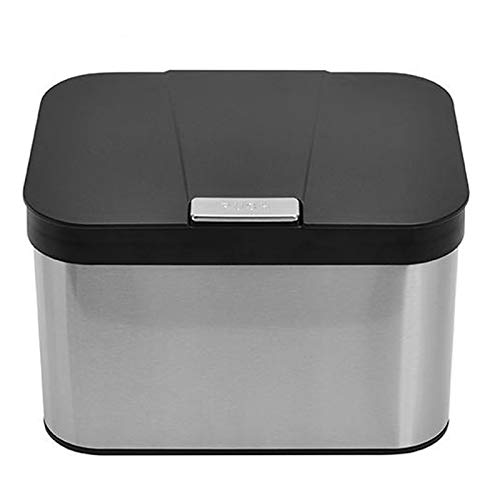
Dullrout keeps the shape quiet, with a black matte finish that blends into most counters instead of standing out. The sealed lid locks in light odors without needing a charcoal filter, which simplifies maintenance. At 1.13 gallons it sits a touch smaller than the Perfnique caddy above, making it a clean fit for apartments where every inch of counter matters.
The compact body helps if you cook for one or two and empty the bin every other day. It also rinses out fast, since the smooth plastic has no seams for grime to hide in.
Real Benefits
- Sealed lid cuts odor without forcing you to track filter replacements.
- Black matte finish hides smudges between wipes, useful for a hands-on cook.
- Slim profile slides beside a coffee maker or knife block.
Honest Caveats
- Smaller capacity means you empty more often than the EKO Kitchen Compost Bin below.
- No charcoal filter, so heavy meat or dairy scraps still need prompt attention.
- Plastic build can pick up light scratches over years of daily use.
Best Suited To
Solo cooks and couples who want a low-maintenance, minimalist caddy that disappears on the counter.
A Better Fit Elsewhere
Choose the KIBAGA Beautiful Kitchen Compost Bin with Smell Proof Lid if you want a similar minimalist feel with a slightly larger 1.1-gallon body.
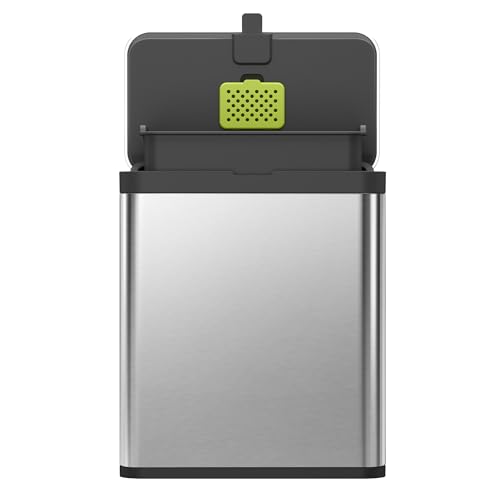
The EKO caddy steps up to a stainless steel shell that resists stains and wipes clean in seconds. Its 1.85-gallon size, the largest countertop option on this list, covers a family of four for several days of scraps. A built-in deodorizer compartment lets you drop in a charcoal pack without crowding the lid, which is one less moving part to think about.
What sets it apart from the plastic Dullrout bin is mounting flexibility: you can hang it over a cabinet door, mount it on a wall, or leave it on the counter. That matters when counter space is tight or you want the bin off the work surface entirely.
What It Does Well
- Stainless body resists rust and wipes down after wet scraps.
- Largest countertop capacity here, so households can skip a daily empty.
- Three placement modes free up counter real estate near the sink.
- Removable inner bucket simplifies transfer to an outdoor bin.
Room For Improvement
- Heavier than plastic bins, so wall mounting needs secure anchors.
- Deodorizer pack still requires periodic replacement for top odor control.
Right Fit For
Families and serious home cooks who want metal durability and the option to take the bin off the counter.
Reach For A Different Pick When
The KAZAI. Compost Bin Kitchen ‘Elin’ fits better if you prefer a smaller bin with a bamboo lid for a softer, Scandinavian-style counter look.
VIVOSUN shifts the conversation outdoors with a 300-gallon expandable composter built for serious yard waste. The HDPE construction (a tough, weather-resistant plastic) handles sun, rain, and seasonal swings without cracking. Expansion panels let you add height or width as your pile grows, so you can start small and scale up without buying a second bin.
This is the right tool once your countertop bin feeds a real outdoor operation. Yard clippings, leaves, and food scraps all go in together, and the ventilated sides keep airflow moving through the pile.
Advantages To Know
- Massive 300-gallon capacity handles seasonal yard cleanup in one go.
- Expandable panels adjust to your space and waste volume.
- HDPE body resists weather, which matters for year-round outdoor exposure.
- Included gloves save a trip to the shed for cleanup.
Practical Considerations
- Requires a flat backyard spot with reasonable drainage to perform well.
- No tumbling action, so turning the pile still takes a fork or shovel.
- Large footprint may not suit narrow side yards or HOA-restricted spaces.
Key Specs
Made For
Homeowners with mid to large backyards who generate steady yard waste alongside kitchen scraps.
Not Your Match When
The Marcytop Compost Tumbler is the better fit for gardeners who want a rotating bin that speeds decomposition without manual turning.
KIBAGA designs this bin around a sealed lid that claims odor control without a charcoal filter, which removes one recurring chore from your routine. The 1.1-gallon capacity sits in the same range as the Dullrout caddy but trades the matte black for a cleaner metal look. A rust-proof finish helps the body hold up against humid kitchens or occasional splashes from the sink.
The “no filters” pitch is the headline feature, though it works best with vegetable scraps rather than pungent leftovers. For most households that scrape plates and peel produce, the seal alone is enough to keep things livable between empties.
Useful Highlights
- Filter-free sealed lid cuts down on replacement parts and ongoing costs.
- Rust-proof finish holds up in steamy or humid cooking environments.
- Sleek metal exterior doubles as kitchen decor on open shelving.
Where It Is Less Suited
- Smaller capacity fills quickly for households that cook produce-heavy meals daily.
- Lacks a charcoal filter, so strong-smelling scraps may still surface.
Who It Suits Best
Apartment dwellers who want a tidy, filter-free caddy and cook moderate amounts of vegetable scraps.
Consider Something Else When
The Perfnique 1.3 Gal Kitchen Compost Bin is a stronger match if you want a charcoal filter for stronger odor defense.
This KIBAGA variant shares the same sealed lid and rust-proof shell as the previous entry but ships as a separate SKU, sometimes bundled with accessories depending on the listing. For shoppers who want a second matching bin, this version rounds out a tidy counter set without visual mismatch. The 1.1-gallon size still favors light scrap volumes and frequent emptying.
Treat it as the sibling pick rather than a replacement for the earlier KIBAGA caddy. If you already own one and want a coordinated pair, this fills that role without breaking the visual line of your counter.
Everyday Perks
- Matches the earlier KIBAGA bin, useful for two-zone composting setups.
- Sealed lid design keeps odors in check without disposable filters.
- Compact footprint works on narrow counters or inside cabinets.
Trade-Offs To Consider
- Same small capacity as the sibling model, so high-volume cooks empty often.
- Less odor defense than filter-based bins for strong scraps like fish or onion.
Perfect Match For
Shoppers outfitting a kitchen with two coordinated bins or stocking a vacation rental.
Look Elsewhere When
Pick the EKO Kitchen Compost Bin for a single, larger stainless bin instead of two smaller ones.
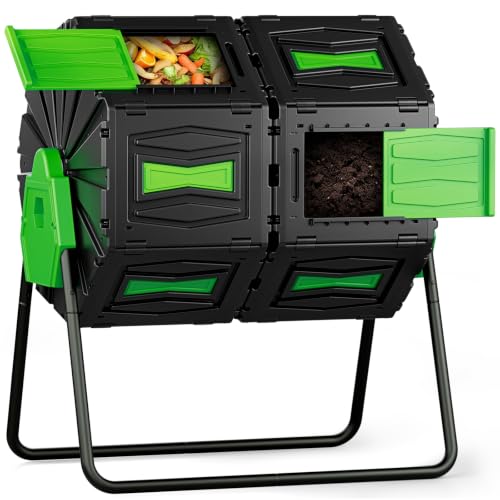
Marcytop’s tumbler swaps static composting for a rotating drum, which speeds decomposition by aerating the pile every time you spin it. Two 22.5-gallon chambers run side by side, so one side can finish curing while you load the other. The 45-gallon total sits well below the VIVOSUN bin above, but the active tumbling often produces finished compost in a fraction of the time.
The dual-chamber setup also means you never have to stop adding scraps while waiting on a batch to finish. For gardeners who want usable compost in a season rather than a year, that tradeoff in capacity is usually worth it.
The Case For It
- Rotation aerates the pile, which speeds decomposition compared to static bins.
- Dual chambers let one batch cure while another loads.
- Compact 45-gallon footprint fits smaller yards where the VIVOSUN would feel oversized.
Where It May Fall Short
- Smaller total capacity than the VIVOSUN, so high-volume yard waste may overflow.
- Manual rotation means you commit to turning the drum a few times a week.
- Assembly typically takes longer than a fold-out expandable bin.
Key Specs
Who Will Love This
Active gardeners who want faster compost cycles and have the room to spin a drum a few times a week.
Skip It When
The VIVOSUN 300 Gallon Outdoor Compost Bin suits larger properties that generate bulk yard waste beyond a tumbler’s capacity.
KAZAI. takes a different design lane with a bamboo lid and an off-white body that softens the visual weight on open shelves. The 1.2-gallon capacity lands between the Dullrout and Perfnique caddies, hitting a useful middle ground for one or two-person households. A charcoal filter sits in the lid for active odor control, and the inner bucket is dishwasher-safe for low-effort cleanup.
For small kitchens where every visible object matters, this bin reads as decor first and utility second. The dishwasher-safe rating is the practical hook, because most plastic bins only get a hand wash.
What Pays Off
- Bamboo lid gives a warm, natural counter look.
- Dishwasher-safe inner bucket simplifies weekly cleaning.
- Charcoal filter handles odor without scrubbing the lid.
- Compact 1.2-gallon size fits narrow counters and small kitchens.
Possible Compromises
- Wooden lid needs occasional oiling to stay looking fresh.
- Smaller capacity means more frequent trips to the outdoor pile.
- Bamboo can darken over time if placed in direct sunlight.
Right Fit For
Style-conscious renters or homeowners who want a bin that reads as part of the kitchen rather than hidden under the sink.
A Better Fit Elsewhere
Pick the EKO Kitchen Compost Bin if you prefer a stainless body and need a larger 1.85-gallon capacity for family use.
What Matters Most Before Choosing Home Compost Bins
Capacity and Household Size
A 1-gallon countertop bin covers about two days of vegetable scraps for a couple, while a family of four fills a 1.85-gallon container like the EKO in three days. Underbuying capacity forces daily trips to an outdoor pile, which wears out motivation fast. A useful rule: pick the smallest bin you can empty at least every three days without rushing.
Odor Control and Lid Design
Sealed lids, charcoal filters, and inner buckets all attack the same problem from different angles. Filter-based lids (Perfnique, KAZAI.) deliver strong odor control but cost you ongoing replacements. Sealed designs without filters (Dullrout, KIBAGA) simplify maintenance but lean on tight lid geometry. For most apartments, a filter-free seal is enough for produce scraps, though pungent items still need attention.
Indoor vs. Outdoor Form Factor
Countertop bins feed the routine; outdoor bins do the actual work. A VIVOSUN-style expandable composter handles bulk yard waste over months, while a Marcytop tumbler speeds up decomposition for gardeners who want fast turnover. Pair a small indoor caddy with an outdoor system that matches your yard size and ambition.
Material and Cleaning
Stainless steel wipes down faster than plastic but shows fingerprints. Plastic bins hold up against rough handling and often accept a dishwasher cycle. Wood accents like bamboo look beautiful but need a little care to age well in steamy kitchens.
Key Considerations Across These Picks
Pitfalls Shoppers Hit
Buying the smallest bin on the market because it looks tidy on the counter often backfires once you start cooking. A 1-gallon caddy that needs emptying twice a day turns composting into a chore. Another common miss is ignoring lid mechanics: a bin with a loose-fitting lid will leak odor regardless of how much you paid. Look for actual seal descriptions, not just “odor-free” marketing language.
Where The Extra Money Goes
Premium picks like the EKO and KAZAI. charge more for material upgrades and design details, stainless steel shells, bamboo lids, dishwasher-safe bodies. That extra spend pays off in two cases: households that cook daily and need a bin that cleans up fast, and renters who care about how the bin looks on open counters. For occasional scrap drop-offs, a basic plastic caddy covers the job without the markup.
Frequently Asked Questions
How often should you empty a countertop compost bin?
Most 1 to 1.85-gallon bins need emptying every two to four days depending on how much you cook. Waiting longer than a week risks odor breakthrough, even with a charcoal filter, especially in warm kitchens.
Do charcoal filters actually work in compost bins?
Filters help with mild odor from vegetable scraps and coffee grounds but struggle with strong-smelling waste like fish or cooked onions. They typically need replacement every two to three months for full effectiveness.
Can a countertop bin go in the dishwasher?
Only bins rated dishwasher-safe should go in the machine, and the KAZAI. ‘Elin’ is one of the few in this list built for it. Most plastic and metal caddies require a hand wash to protect finishes and seals.
Is a tumbler better than a static outdoor bin?
Tumblers produce compost more quickly because rotation adds oxygen, which speeds microbial activity. Static bins like the VIVOSUN hold much more material and suit properties with steady yard waste. The right pick depends on whether you value speed or volume.
Where should you place an outdoor composter?
Choose a level spot with reasonable drainage and partial sun, which helps the pile stay warm without drying out. Keep it reachable from the kitchen for convenient scrap transfer, and away from wooden fences, since moisture can shorten fence life over time.
Wrap Up
The right home compost bin matches the way you actually cook and dispose of scraps, not the spec sheet alone. A small filter-free caddy suits a quiet apartment, while a stainless upgrade or outdoor tumbler fits households and gardeners with bigger piles. Pick the form factor that fits your routine, and the habit usually follows.
