

Running a yard on a low-flow well pump, a pressure regulator, or a long hose run from a spigot changes what kind of sprinkler head actually works. High-velocity rotors throw thin streams that mist away in a breeze, while low pressure sprinkler heads keep their droplets heavy enough to land where you aimed them. The right pick depends on your water source, your lawn shape, and how much fiddling you want to do.
The eight options below cover pop-up sprays, multi-pattern gear drives, and classic impact heads that keep working when the pressure drops. Each one is broken down by what it does well, where it falls short, and which yard it actually fits.
The Lineup, Simplified

Rain Bird 1804VAN 1800 Series Pop-Up Sprinkler Head
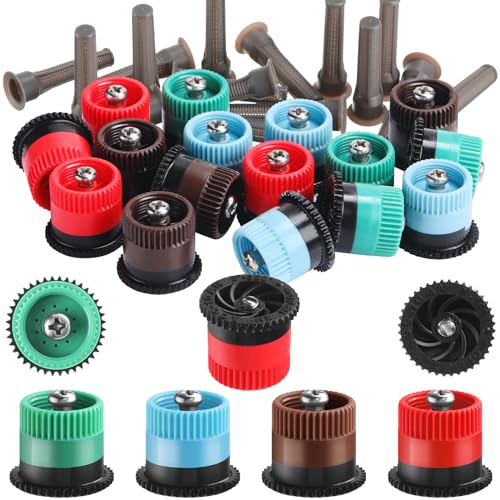
Honoson 16 Pcs Sprinkler Heads Replacement 4/6/8/10 Van

LIULO TOOL 2-Pack Gear Drive Sprinklers on Spike Base

Ferraycle 4 Pieces 1/2 Inch Brass Impact Sprinkler Heads

Honoson 1/2 Inch Plastic Impact Sprinkler Heads (4 Pieces)

Orbit 55015 Zinc Impact Sprinkler 1/2-Inch

Rain Bird LG-3 Impact Sprinkler Full Circle 26-36 Feet
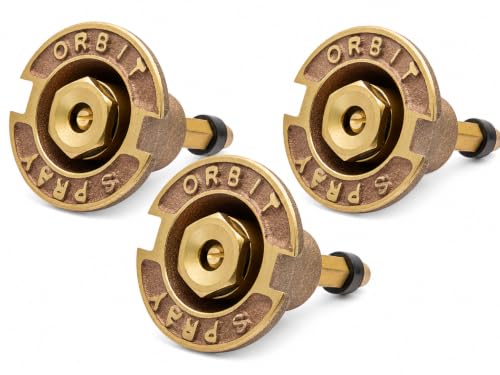
3-Pack Orbit 54070 Brass Pop-Up Flush Head Sprinkler
More Details On Our Top Picks
Pop-up spray heads are the workhorses of residential irrigation, and Rain Bird’s 1804VAN (where VAN stands for Variable Arc Nozzle) earns its long-standing reputation by letting you dial the spray pattern anywhere from a narrow slice to a full 360-degree circle. The 4-inch riser (the stem that pushes up out of the ground when the water starts flowing) keeps the nozzle above taller grass, and the 1/2-inch female threaded inlet fits standard swing-pipe and cut-off riser assemblies used in most installed systems.
Unlike the hose-end gear drive covered later in this list, this one is designed to live permanently in a buried line. Compared to the Orbit 54070 in pick eight, the Rain Bird gives you arc adjustability on the fly rather than a fixed full-circle spray.
Positive Points
- Arc adjusts from 0 to 360 degrees without swapping nozzles
- 4-inch pop-up clears most turfgrass for even distribution
- Standard 1/2-inch threaded inlet fits common swing-pipe setups
- Matched-precipitation nozzles help head-to-head coverage in multi-zone runs
- Wide compatibility with Rain Bird’s 1800 series accessories
Things To Consider
- Spray nozzles mist more than rotors at very low pressure
- Internal filter screen needs periodic pulling and rinsing
- Body cap threads can crack if overtightened during install
Key Specs
Best Suited To
Homeowners with mixed-shape lawn zones who want professional-grade adjustability without hiring an installer.
Where A Sibling Pick Shines
For large open acreage on a low-flow well, the Rain Bird LG-3 impact sprinkler in pick seven throws heavier streams that hold up better in wind.
Honoson’s 16-piece bundle ships four each of the 4, 6, 8, and 10 VAN nozzles, which means a single order can refit an entire zone where heads have been mismatched over the years. Each nozzle rotates a full 360 degrees when you twist the textured collar, and the throw radius scales with the nozzle number. At roughly 2.1 bar (around 30 psi), the 4 VAN reaches about 3.9 feet, while the 10 VAN pushes close to 9.8 feet.
This is a replacement-nozzle kit rather than a full sprinkler body, so it pairs naturally with existing Rain Bird or Hunter style spray heads. Compared to the Orbit 54070 flush head in pick eight, you get variable arcs in one box instead of fixed-pattern units.
The Case For It
- Sixteen nozzles in one kit covers a multi-zone refresh
- Textured collar makes wet-finger adjustments easy
- Four radius options solve patchy coverage without buying extra parts
- Color-coded tops help identify throw distance at a glance
Minor Gripes
- Plastic threads strip if cross-threaded during install
- Smaller radii lose pattern integrity under heavy wind
Right Fit For
Anyone rebuilding several spray heads at once on a residential system that already has compatible bodies in the ground.
Skip It When
You need full new sprinkler bodies rather than nozzles; the Rain Bird 1804VAN in pick one is the better starting point.
The LIULO TOOL gear-drive sprinklers sit on a spike base that pushes into soft soil, so there’s no trenching and no glue joints. A gear-drive mechanism (an internal set of gears that turns the head slowly and smoothly, unlike the jerky tick-tick of an impact head) makes them noticeably quieter than the plastic impact sprinklers later in this list, and the rotating collar lets you cap coverage at any arc you need. Five spray patterns, jet, flat, full, cone, and vertical, cover everything from a focused soak on a sapling to a wide lawn broadcast.
The 3/4-inch adapters accept standard garden hose fittings, and you can daisy-chain the two units together to expand reach. This is the most portable option in the roundup, made for renters, gardeners without a built-in valve manifold, and anyone who wants to stash the sprinklers in a shed between waterings.
Notable Gains
- Five spray patterns handle seedlings, lawns, and raised beds
- Spike base needs no tools and no digging
- Multi-unit connection extends coverage across larger yards
- Gear drive runs quietly compared to impact sprinklers
Points To Note
- Spike tips wobble in rocky or heavily compacted soil
- Gear assembly can wear faster than metal impact heads
- Not designed for permanent below-grade installation
Quick Facts
Who It Suits Best
Garden owners who want a portable, no-install sprinkler they can move with the hose.
Consider Something Else When
You need a permanent underground zone; the Rain Bird 1804VAN in pick one is built for that role.
The Ferraycle set is a four-pack of impact heads (impact heads work by the water stream striking a spring-loaded arm, which makes the head tick around in a circle) with a zinc-alloy and brass body that shrugs off the UV and mineral exposure that cracks cheaper plastic units over a few seasons. Each head threads onto a standard 1/2-inch male riser, and a collar twist sets the rotation anywhere from a partial arc to a full sweep.
Compared to the all-plastic Honoson impact sprinkler in pick five, these trade a little weight for noticeably longer service life in full sun. For an above-ground tripod or fixed riser setup on a low-pressure line, they punch well above their price tier.
Bright Spots
- Brass and zinc-alloy body resists corrosion season after season
- Adjustable 0 to 360 degree pattern without swapping parts
- Four-pack supports rotation between zones to extend service life
- Standard 1/2-inch male inlet fits common risers and manifolds
Room For Improvement
- Heavier metal body needs a sturdy riser or tripod base
- Tick of an impact head is louder than gear-driven alternatives
Made For
Property owners who install sprinklers once and expect them to last through multiple summers of hard sun.
Look Elsewhere When
You want a quieter tick near a patio or bedroom window; the LIULO TOOL gear drive in pick three is much softer.
Honoson’s plastic impact set is the cheapest way to get genuine rotating coverage across a sizable lawn. The deflector and distance screw tune the stream anywhere from about 26 to 39 feet, and the operating range of 150 to 250 kPa (roughly 22 to 36 psi) sits squarely in the low-pressure category that defines this roundup. Each head is light enough to perch on a cheap PVC riser without bracing.
Plastic construction means you’ll want to rotate these units between zones to spread wear, much like the Ferraycle brass set in pick four. For shoppers who want impact-head performance without the metal price tag, this is the natural fit.
Strong Points
- Low operating pressure matches well-pump and gravity-fed setups
- Deflector screw trims throw distance without extra parts
- Four heads per pack supports whole-property layouts
Softer Spots
- Plastic body can fade and become brittle after several seasons in direct sun
- Cheaper internal spring may need occasional cleaning to stay smooth
Feature Snapshot
Perfect Match For
Budget-focused shoppers covering a wide open yard where basic impact performance matters more than finish quality.
A Better Fit Elsewhere
Coastal or full-sun sites that punish plastic; the Ferraycle brass heads in pick four handle that exposure better.
The Orbit 55015 throws a single jet that, at full circle, can cover an 85-foot diameter circle and roughly 5,670 square feet. Its zinc body and uninterrupted flow path make it a strong match for pond-fed, ditch, or reclaimed water sources where grit would clog finer spray nozzles.
The 1/2-inch male threaded inlet fits standard Orbit risers, and a simple diffuser screw lets you trade radius for droplet weight when you need it. Compared to the Ferraycle set in pick four, you get a single premium-grade unit instead of a four-pack, which matters when one well-placed head covers a large section.
Why It Works Well
- Throws up to 85 feet in diameter from a single head
- Clog-resistant design handles dirty or reclaimed water
- Zinc construction holds up to outdoor exposure
- Simple arc adjustment from partial to full circle
Things That May Matter
- Single-head purchase costs more per unit than multi-packs
- Impact ticking is louder than gear-drive alternatives
Who Will Love This
Property owners on pond, ditch, or well-fed irrigation who need one strong head to cover a large area.
Another Choice May Suit
Suburban lawns on city water where spray heads are quieter; the Rain Bird 1804VAN in pick one fits that profile.
The LG-3 is a small, lawn-friendly impact head with a double-weighted arm that slows rotation, which sends each droplet farther before it falls. The brass spray-guide arm (PJ arm) shapes the stream to keep side splash off walls and walkways, and a diffuser screw lets you trim the radius by up to 25 percent for tighter layouts. Rain Bird rates throw between 26 and 36 feet depending on pressure and nozzle choice.
For low-pressure systems pulling from a pond, ditch, or hard-water well, the LG-3 keeps working when finer-spray heads would clog. The 3/4-inch female threaded inlet matches standard Rain Bird shrouds, and the all-brass body outlasts most plastic alternatives in this category.
What Helps Most
- Hard-water and reclaimed-water tolerance reduces clogging
- Double-weighted arm extends throw at lower pressures
- Brass spray-guide arm controls side splash effectively
- Diffuser screw allows up to 25 percent radius reduction
Potential Drawbacks
- Full-circle only, no partial arc adjustment
- Heavier brass body needs a stable riser or tripod
Feature Card
Who Should Grab It
Yards on hard-water wells or pond-fed systems that punish finer-spray nozzles.
Swap It Out When
You need arc adjustability around curved bed edges; the Rain Bird 1804VAN in pick one handles that better.
The Orbit 54070 is a low-profile pop-up designed to retrofit legacy systems that originally used flush-style heads (heads that sit at or just above grade rather than rising on a tall stem). The pop-up action adds about an inch of clearance over a fixed flush head, which lifts the spray above short turf without changing the spray pattern.
Brass construction keeps the body stable through freeze-thaw cycles, and the full-pattern nozzle delivers a consistent 360-degree spread. For anyone maintaining an older system installed two or three decades ago, this three-pack is the path of least resistance.
Standout Benefits
- Drop-in replacement for older brass flush heads
- Pop-up stem lifts spray above short grass
- Brass body tolerates seasonal freeze-thaw cycles
Honest Caveats
- Limited throw distance compared to rotor heads
- Fixed full-pattern nozzle offers no arc adjustment
Built With In Mind
Property owners maintaining legacy irrigation systems from earlier decades who need a like-for-like refresh.
Not Your Match When
You want variable arc coverage on a modern install; the Rain Bird 1804VAN in pick one is the more flexible upgrade.
What Matters Most When Picking Low Pressure Sprinkler Heads
Match The Head To Your Water Source
Low pressure sprinkler heads are most useful when your supply sits below the 30 to 40 psi range that standard rotors expect. Well pumps, gravity-fed tanks, and pressure-regulated municipal feeds all benefit from heads specifically rated for the lower end of the spectrum. An impact head like the Rain Bird LG-3 keeps a heavier droplet that survives low pressure, while a pop-up spray nozzle needs pressure it simply won’t get on a tired well.
Choose Pop-Up Or Above-Ground For Your Layout
Pop-up heads vanish into the lawn when off, which matters for curb appeal and foot traffic. Above-ground impact heads on risers or spikes install in minutes and move with the season. If you mow often or share the yard with kids and pets, pop-ups tend to win on durability and appearance. For renters, gardeners without an installed valve system, or anyone who likes rearranging the lawn, a spike-base gear drive or impact head is easier to live with.
Account For Water Quality
Hard water, pond water, and reclaimed water all carry sediment that clogs fine-spray nozzles. Brass-bodied impact heads with uninterrupted flow paths handle grit far better than delicate spray nozzles with internal filters. If your source is anything other than clean city water, lean toward impact heads.
Right-Size The Coverage Radius
A head’s throw should match the spacing of the next head in the zone. Spray nozzles in the 4 to 10 VAN range cover short radii, mid-range rotors handle 20 to 40 feet, and large-area impacts stretch beyond that. Spacing heads too far apart leaves dry stripes, and overlapping them too much wastes water.
Key Considerations Across These Picks
Common Shopping Slip Ups
The biggest mistake is buying a rotor head for a system that cannot deliver the GPM (gallons per minute) it demands, then wondering why the spray stalls. Equally common is matching a spray nozzle’s fine mist to a low-pressure supply, which produces fog instead of coverage. Always check both the pressure rating and the flow requirement before committing to a head type.
Where The Extra Money Goes
Spending more on a sprinkler head generally buys brass or zinc-alloy construction, slower and more deliberate rotation, and tighter machining on the nozzle. Those upgrades show up as longer service life in full sun, fewer clogs in dirty water, and quieter operation near living spaces. For occasional weekend watering, a budget-friendly head is plenty. For permanent install on a high-value lawn, the upgrade usually pays for itself within a few seasons.
Frequently Asked Questions
What pressure is considered “low pressure” for sprinkler heads?
Anything under roughly 30 psi falls into the low-pressure bucket. Many spray heads and rotors are rated for 20 to 40 psi, while impact heads can keep working below 20 psi, which is why they pair so well with well pumps and gravity tanks.
Do low pressure sprinkler heads use less water?
Not necessarily. They use water more efficiently at low pressure, meaning more of it lands on the lawn instead of misting away, but total gallons depend on the nozzle size and run time rather than the pressure class. Match nozzle size to your available GPM for the best results.
Can I mix spray heads and impact heads in the same zone?
Mixing types in a single zone is not recommended. Spray heads and impact heads apply water at very different rates, so a zone that runs long enough to soak the spray area will flood the impact area and vice versa.
How long do plastic impact sprinkler heads last?
Plastic impact heads typically last several seasons in moderate climates, while brass or zinc-alloy versions can run a decade or more. Rotating which head sits on the active zone each season helps spread wear across a multi-pack.
Are pop-up sprinklers better than spike-base sprinklers?
Pop-up heads are better for permanent installs where appearance and foot traffic matter. Spike-base heads are better for renters, gardeners without installed valve systems, or anyone who wants portable coverage they can move around the yard.
Closing Remarks
The right low pressure sprinkler head is the one matched to your water source, your lawn shape, and how permanent you want the install. Start with your available psi and GPM, then pick the head style that fits how you plan to use it. The picks above give you a strong starting point across every common scenario, from a quick hose-end setup to a full underground retrofit.
